.webp)


.webp)


.webp)


.webp)


- トップページ/
- ZUTTO Journal/
- 選び方・使い方/
- # The ZUTTO origi...

Everything you could want in loungewear, all in one place—ZUTTO's original linen home dress. An interview with the planner and a devoted user
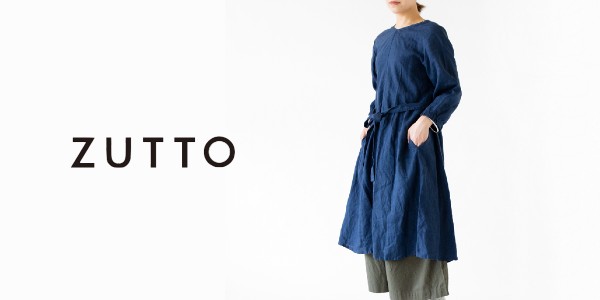
ZUTTO's newly created original linen home dress is a 3-way piece packed with everything you'd want in loungewear. Sometimes it works as a dress, sometimes as a robe, and sometimes as a kappogi (Japanese cooking apron/coat).
When we think of "loungewear," it's clothing no one else will see, so we tend to reach for whatever's easiest to wear. But if you had a piece that let you relax while still being stylish enough to transform into outerwear, and practical enough for housework, you'd feel at ease answering the door for a sudden delivery or running out to the convenience store, and you could wear it freely while moving around doing chores.
What does loungewear that feels comfortable to wear all day long actually look like? Here, we share the ideal shape for loungewear together with the staff member who planned it and another staff member who wears it regularly.

In search of the ideal loungewear. The starting point: balancing remote work and housework
The linen home dress was planned after ZUTTO's office shifted to remote work as part of infection prevention measures. When we asked the planner about it, it became clear that this item was born in response to that shift in lifestyle.
Planner M: Once remote work began, I started cooking at home more often during my weekday lunch break. I didn't want to get my work clothes dirty while cooking or washing dishes, so I used an apron, but aprons can strain your shoulders, and there are parts they don't cover—like the sleeves of a winter sweater, which get dirty easily without you noticing. That made me wonder if there was something more comfortable to wear.

Planner M: A traditional kappogi, which has long been used in Japan, covers the sleeves and doesn't strain the shoulders. But since aprons are the norm these days, a garment shaped exactly like a "kappogi" would stand out in an unwanted way. So I designed a dress-type piece that people would want to keep wearing for a long time.
Planner M: A conventional kappogi is usually white, falls straight down, and is knee-length. For the linen home dress, I drew inspiration from vintage smock dresses, adding a waist tie that lets you shape the silhouette, and a length that covers down to below the knee.
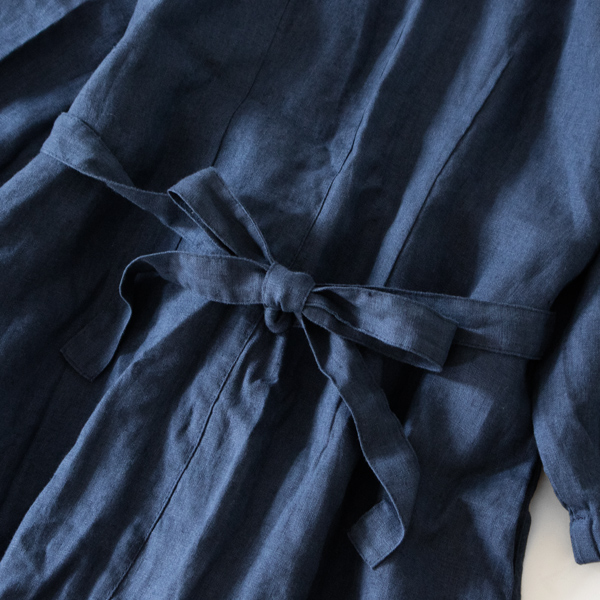
Planner M: White kappogi have a strong Japanese-style impression, so I chose marine blue to make it blend naturally into Western-style interiors as well. Like denim, it goes with any outfit and instantly brightens up your look.
Planner M: Thanks to the waist tie, the shape works well for people of relatively any height. Another key point is that instead of the thin linen fabric commonly used for aprons, we used a linen fabric with just the right amount of weight so it can also be worn as a dress or robe. That thickness also means wrinkles after washing are less noticeable.
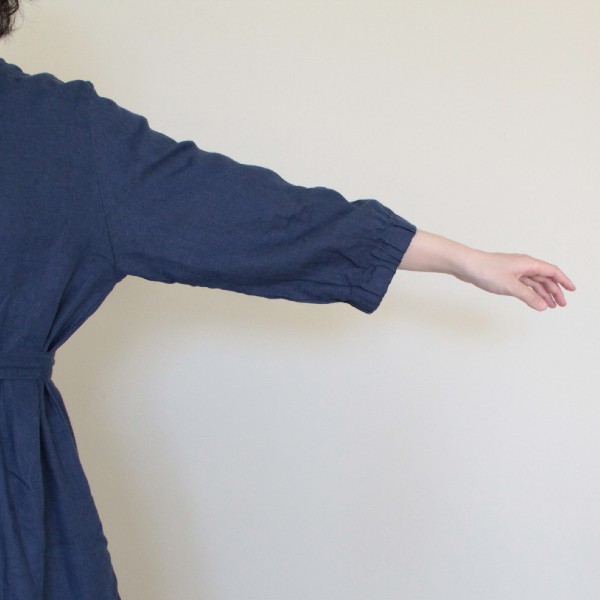
The cuffs are deliberately left a little loose rather than cinched tight, so that the shape doesn't get distorted when worn over voluminous sleeves—like sweatshirts, shirts with puffy sleeves, or winter sweaters. If the sleeves of whatever you're wearing underneath slip down while you're cleaning, for example, we recommend folding the cuffs up once. There are also pockets on both sides, but we kept them understated so the kappogi feel wouldn't be too strong.
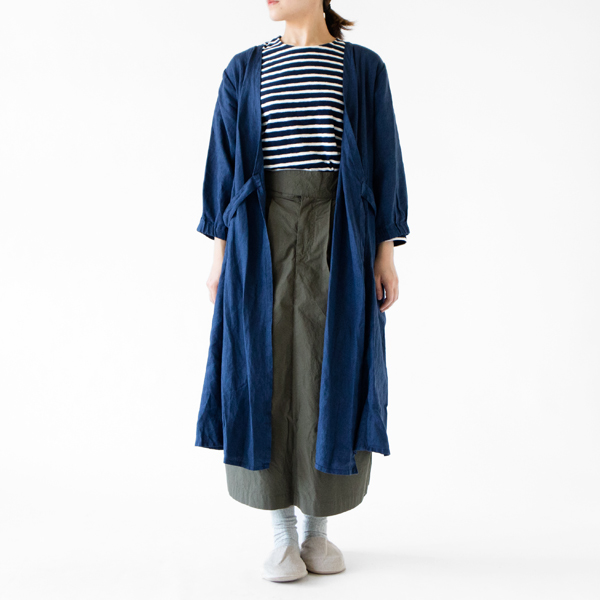
Although it's made of linen, as I mentioned, the fabric has enough substance that it feels natural to wear even in winter, so we'd love for people to use it all year round. We think it can play many roles—as one-mile wear for quick errands, as relaxed weekend style, for the day you try a new recipe, or as something to throw on in an air-conditioned room.
How does a devoted user wear it?
The linen home dress was designed with both ease of housework and a sense of style in mind. Next, we asked another staff member who actually wears it regularly how she styles it.
Staff member U (devoted user): I originally liked loose-fitting dresses that are easy to sit and work in, so I often wear the linen home dress as a dress itself, but I also turn it into a kappogi when I'm cooking or cleaning.
Staff U: First of all, it's very easy to layer. Since it's designed to double as a kappogi, layering is built into the concept from the start, so this makes sense—but the body width and sleeve length are quite roomy, so even wearing a turtleneck or a thick sweater underneath doesn't feel uncomfortable. I also think it looks stylish paired with a blouse or a striped cut-and-sewn top. And even though it's roomy, cinching the waist keeps it from turning into a shapeless silhouette, which I really like. Layering it over a skirt so the hem peeks out just a little is also cute, and one of my favorite ways to wear it.
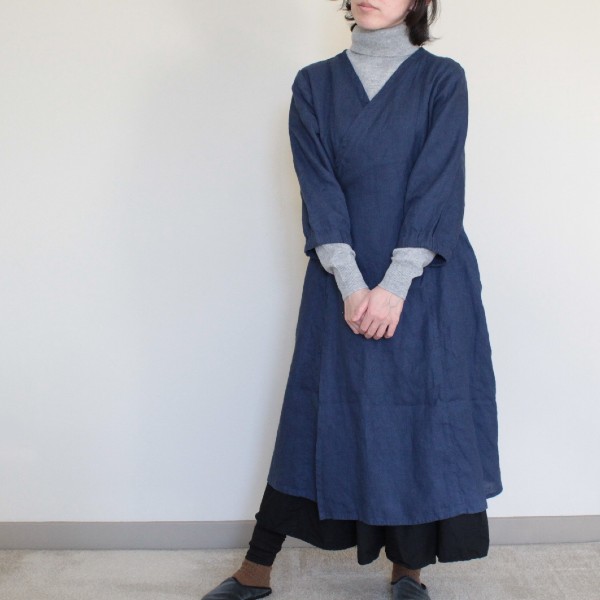
A style I often wear. The waist tie goes to the back, paired with a long skirt. Staff height: 157cm
It's also nice that you can easily change the impression simply by changing where you tie the waist tie. When wearing it as a one-piece dress, I change the position—front, side, or back—depending on my mood. When wearing it as a gown, tying it snugly at the back is a good point too, since the body of the dress doesn't get in the way of movement.
Staff U: The planning team told me that fog linen work's linen petti pants would also look great with it. Since both are linen, static cling isn't much of an issue, and since the material and relaxed feel are similar, the overall look comes together nicely.
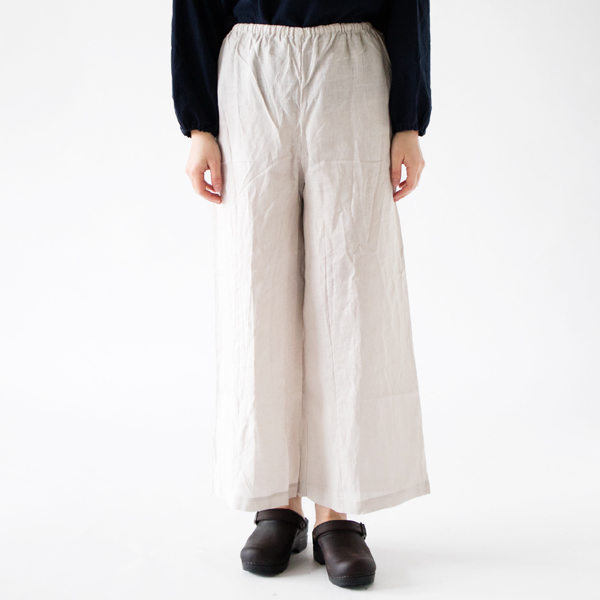
Linen Petti Pants / fog linen work
Staff U: What I liked was the sleeve length. The sleeves are about three-quarter to seven-eighths length, leaving the wrists exposed, and thanks to this length, the sleeves don't get in the way while cooking. At the same time, it protects the sleeves of the clothes I'm wearing underneath, which is great. When doing things like washing dishes that involve water, I fold back the cuffs to use it.
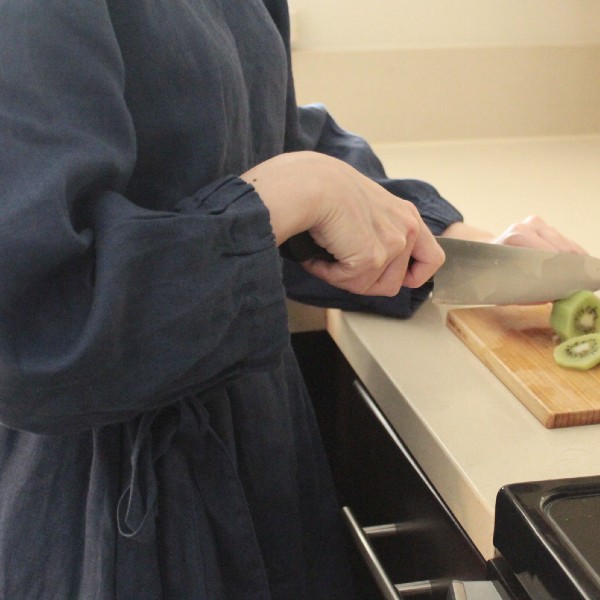
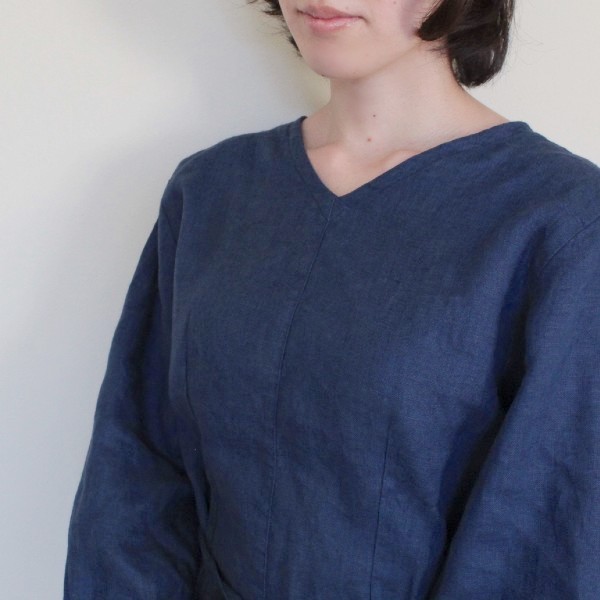
Also, the fact that the neckline isn't opened up too wide is especially handy for cooking that involves oil splatter, like fried foods or Chinese stir-fries. With aprons, surprisingly many designs leave the chest area open from the neck straps, so I'd sometimes end up with oil or seasoning splashing on me without realizing it. With the home dress, there's no need to worry about that.
Staff U: The other day, I wore it while cleaning the house. When cleaning, I usually change into clothes I don't mind getting dirty, but with the home dress, I can just put it on over what I'm already wearing, which is convenient.
I moved around a lot, vacuuming and wiping things down, but I never felt like the home dress was restrictive. Cleaning involves a lot of arm movement, and it was nice being able to move freely without worrying about the sleeves of the clothes underneath.
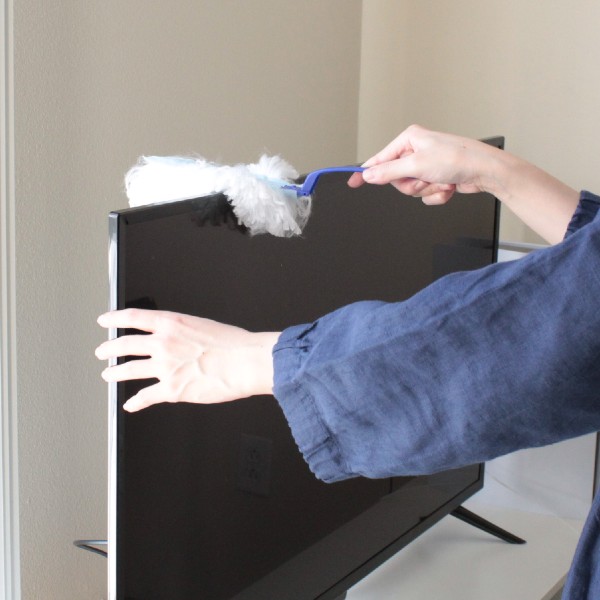
If I had to mention something to be aware of, it's that wearing the home dress means adding another layer over your one-piece dress, so if you clean energetically, you'll gradually start feeling warm (laughs). It's linen, so it breathes well, but for times when you'll be moving around a lot, it's probably best to wear it over lighter clothing.
Staff U: Since the home dress comes in vivid colors, I wash it separately just to be safe. After a few washes, that probably won't be necessary anymore.
After washing, I was surprised that shrinkage wasn't much of a concern. Since it originally has a voluminous shape, that may have something to do with it. At first, the fabric had a somewhat moist, smooth texture, but after washing, it developed the crisp, refreshing texture typical of linen.
ーーーーー
ZUTTO's linen home dress can be worn multiple ways—as a one-piece dress, a gown, or a kappogi. This stylish piece, with little of that "loungewear" feel, lets you enjoy wearing it in ways that suit your own lifestyle. We hope you'll enjoy the many different ways of wearing it throughout the year.
▽Find the ZUTTO original linen home dress here
GUIDE »
CATEGORIES »
- + Gifts by recipient
- + Gifts by scene
- + Clothing
- + Bags / Backpacks
- + Wallets / Card cases
- + Jewelry
- + Shoes
- + Rainy day outfits
- + Kitchen
- + Home
- + Babies / Kids
- + Japanese products
Earn Miles


Payment & Security