.webp)


.webp)


.webp)


.webp)


Welcome to ZUTTO
Free shipping for newsletter subscribers (some areas excluded)
My page
Information
- トップページ/
- ZUTTO Journal/
- 選び方・使い方/
- Cozy, warm feet—r...

Room shoes to keep your feet cozy—perfect for the whole family
On a day when you've been invited to a friend's house,
have you ever noticed the lovely slippers worn by the head of the household?
Separate from guest slippers, having "this one's mine, that one's yours"
—each family member with their own favorite pair of slippers—is such a wonderful thing.
Mohair material that feels comfortable even on bare feet, or wool material that firmly covers your feet.
This time, we're featuring cozy room shoes that
the whole family will want to use.
Room shoes that each family member will want to claim as their own
should of course have great material and comfort, but design matters just as much.
We'll introduce two brands, each with its own unique charm.
【Did you know the roots of the slipper?】
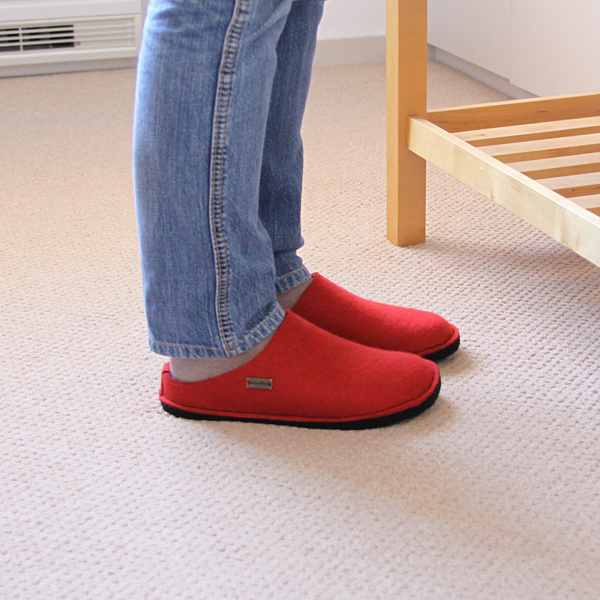
Generally speaking, "room shoes" refers—just as the name suggests—to
shoes worn inside the house, and there are many types: the so-called slipper style,
shoe-shaped ones that fully cover the heel,
and boot types that keep you warm up to the ankle.
For us Japanese, the most familiar room shoe year-round is
the "slipper," but the roots of how slippers developed in Japan
were actually deeply influenced by the cultural differences between life overseas and life in Japan.
Japan has a tatami culture, where outdoor shoes are removed inside the house.
Even now, when flooring has generally replaced tatami,
the lifestyle habit of taking off shoes at the entrance hasn't changed, has it?
Going back to the late Edo period, as colorful Western culture was introduced to Japan,
people from overseas began traveling to Japan as well.
At that time, Japanese footwear consisted of geta and zori.
Surely, to the people of that era, imported "shoes" must have appeared both beautiful and mysterious.
As people from overseas began coming to Japan along with their culture,
there were also occasions to invite them into Japanese homes,
but Westerners would try to step up into the rooms without removing their shoes at the entrance.
At such times, since it wasn't possible to have them wear Japanese geta or zori,
simple indoor footwear made for wearing inside the house began to be created.
This is said to be the prototype of the "slipper" in Japan.
Slippers, so familiar in our daily lives today,
turn out—when we trace back through time—to be items reflecting a cultural background rooted in differences in lifestyle, which is
quite fascinating, isn't it?
【Tips for choosing room shoes】
When choosing room shoes especially for winter, one thing you'll want to check carefully is the material.
Among other things, checking the following two areas will help prevent any mismatch between expectation and reality once you actually wear them.

The first is the inner material that touches your foot directly.
No matter how warm-looking the material used for room shoes may be,
what matters most is the inner part that touches your foot.
Even if fluffy fur is attached on the outside,
you won't know how warm they'll actually feel unless you check the inner material.
For room shoes used at home, especially in places like the bedroom
where you might wear them barefoot, be sure to check the inner material and cushioning as well.

The second point is a surprising blind spot: the sole material.
In particular, check whether or not it has a non-slip feature.
This isn't a matter of whether having (or not having) a non-slip sole is universally good or bad—
it really comes down to personal preference.
Some people like the grip that a non-slip sole provides,
enjoying the slight resistance as they walk across flooring,
while others prefer being able to walk smoothly and quickly without any non-slip feature.
Even if the fit feels just right while sitting down wearing them,
you might find it different from what you expected once you actually walk around the room—
so to avoid that, be sure to check the sole material and whether or not it has a non-slip feature.
【For those who love a well-structured fit: Haflinger from Germany】

Haflinger is a room shoe brand born in Germany.
At the time of its founding, the company handled knit products and stockings,
and it was born from a manufacturer with such high trust and solid technical skill
that it was responsible for producing 30% of all room shoes made in Germany.
Haflinger is also the name of a small chestnut-colored horse breed originating in southern Germany, known for
its graceful beauty, strength, and durability.
In the German region of Goslar,
horses are very familiar animals, beloved by the local people,
and it's said the brand was named this way with the hope that
its warm, durable, and comfortable room shoes would be loved by many people, just like the horse.
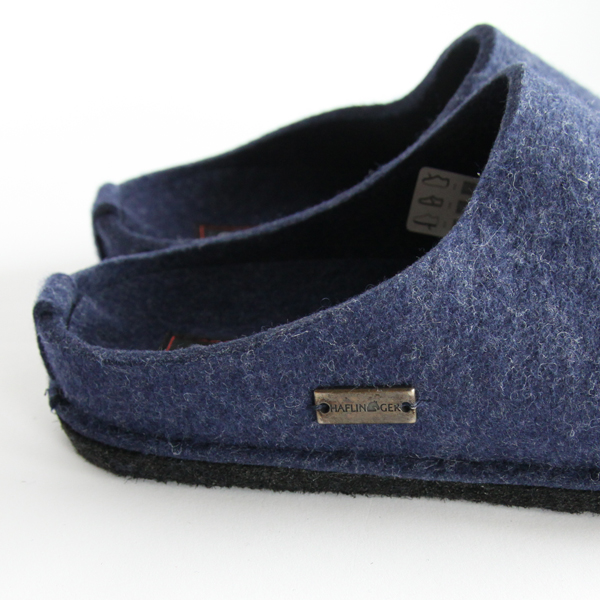
Haflinger offers
◇A shoe-like, sturdy shape made using the same process as shoes crafted from wooden lasts.
◇A comfortable fit thanks to the cushioning of corktex inside the sole.
◇A heel structure that absorbs impact upon landing.
◇Can be hand-washed at home
—room shoes with many devoted fans.
Made based on ergonomic principles, they firmly support the arch of the foot,
making them a great choice for homemakers who spend long hours standing while doing housework.
Although they're the so-called slipper style that doesn't cover the heel,
they're thoughtfully designed to absorb impact upon landing and fit snugly with your foot, so
you can walk with the same feeling as wearing actual shoes.
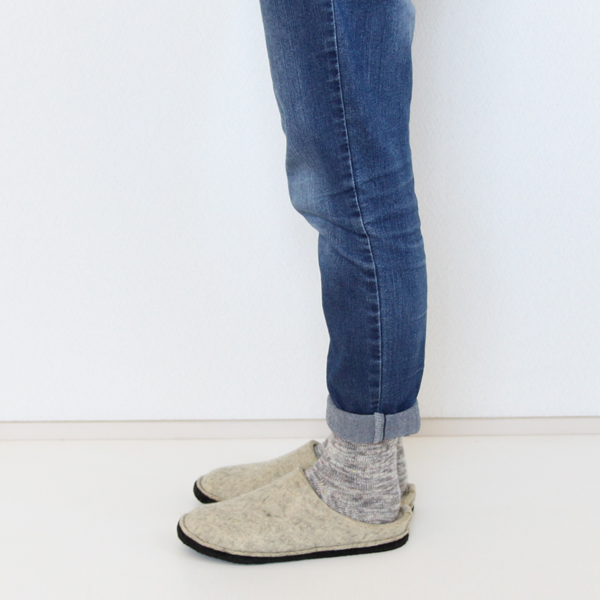
They're also made with a tightly woven felt fabric,
These slippers have a crisp, structured form, so they're perfect not only for use at home, but also
for temporarily switching into during desk work at the office.
Many women in particular find themselves bothered by the cold at the office, don't they?
When you keep wearing snugly-fitted heeled pumps all day long,
blood circulation in your feet worsens, which directly leads to feeling cold.
At times like these, let your feet relax with heel-less felt room shoes.
One pair for home, one pair for the office.
These are felt slippers that are kind to your feet, and we'd love for you to use them daily with that kind of image in mind.
【The ultimate warmth for women who suffer from cold feet. Rondonaud.】

In 17th-century France, people wore charentaises made of felt inside wooden clogs
to ease the strain on their feet,
and since pages could wear them to walk silently through their master's chambers,
they were said to be called "quiet footwear."
RONDONAUD (Rondinaud) is a brand that has been making charentaises
for over 100 years since 1907, building on its roots as a family shoe-repair business.
In the late 17th century, in the Charente region of France,
sturdy felt was used to produce naval pea coats,
and the leftover felt fabric from this became the prototype for the charentaise.
Building on the tradition of shoe-repair craftsmanship, the brand was born in 1907 in the Charente region of France as a luxury indoor footwear label.
From there, James Rondinaud began exporting the shoes in the early 1950s,
and the craftsmanship came to be recognized by luxury brands as well, making them shoes beloved around the world.
RONDONAUD features:
◇A soft, brushed lining on the inside, ideal for autumn and winter.
◇A stylish design and sturdy construction that could pass for outdoor footwear.
◇Charming colors and patterns that double as a piece of interior decor.
◇A stylish touch with a printed message on the underside of the sole.
These features make them perfect for anyone who wants to spend their time comfortably warm, even barefoot.
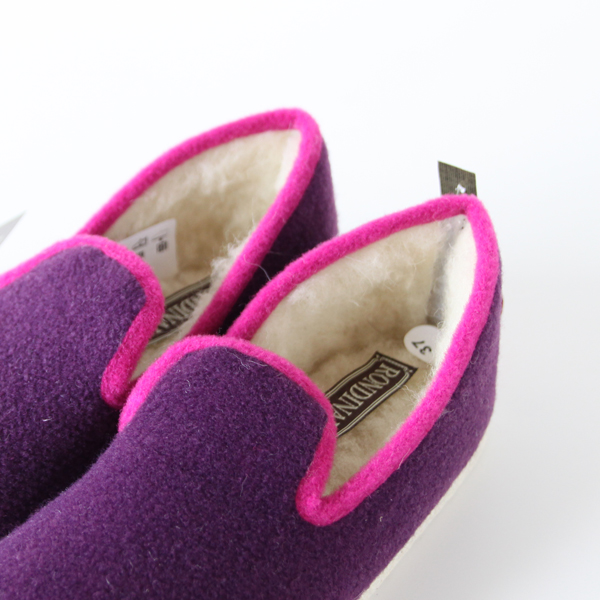
With their carefully stitched piping, these room shoes have a silhouette that looks just like outdoor footwear,
and their design wraps deeply around the heel, making them a great recommendation for women who worry about cold feet.
The 100% wool insole feels as soft and cozy against the skin as a fluffy blanket.
They're also recommended for preventing chills after a bath, or for anyone who dislikes
stepping barefoot onto a cold flooring first thing in the morning after getting out of bed.
【Caring for Your Slippers】
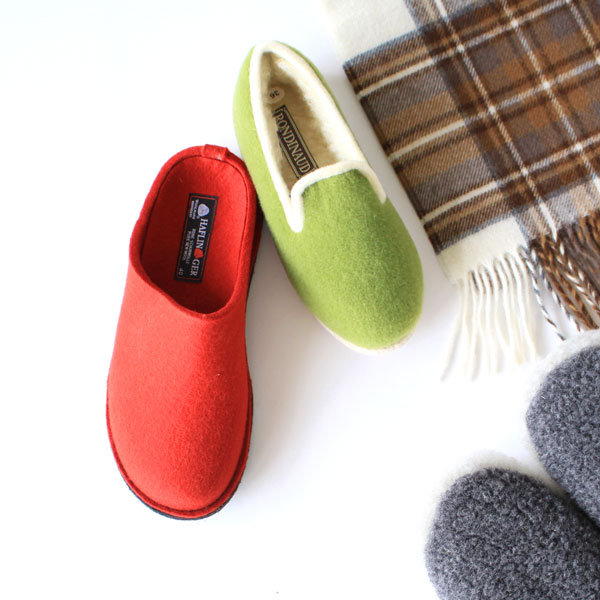
Since slippers are often worn barefoot,
even in the winter months, sweat and dust can leave them feeling less than fresh.
It's reassuring to know you can care for them at home.
Both brands featured here can be hand-washed with water at home.
For wool room shoes that can be washed with water,
1. Soak the slippers in lukewarm water with a small amount of neutral detergent and hand-wash gently.
(Keep the water temperature at or below 30°C. Warmer water may damage the fabric.)
2. After gently washing by pressing the fabric, rinse thoroughly.
3. Spin briefly in a washing machine, or wrap in a towel to remove excess moisture.
4. Reshape the slippers and dry them in the shade.
This is the general process. Please use it as a reference, and follow the care instructions specific to your product
when caring for your slippers.
When you hear "made of wool," you might worry whether it's really okay to wash them.
Normally, when knitted products get wet, the fibers shrink and tighten up firmly.
This phenomenon is called felting, and to prevent this from happening,
some knit products cannot be washed with water.
However, products that have already been felted,
or products blended with wool and other materials,
tend not to stiffen or shrink much even when washed with water,
which is why they can be cared for at home.
Once you find your favorite pair of room shoes that your whole family loves,
we hope you'll enjoy caring for them yourself at home and using them for years to come.

GUIDE »
CATEGORIES »
- + Gifts by recipient
- + Gifts by scene
- + Clothing
- + Bags / Backpacks
- + Wallets / Card cases
- + Jewelry
- + Shoes
- + Rainy day outfits
- + Kitchen
- + Home
- + Babies / Kids
- + Japanese products
Earn Miles


Payment & Security