.webp)


.webp)


.webp)


.webp)


Welcome to ZUTTO
Free shipping for newsletter subscribers (some areas excluded)
- トップページ/
- ZUTTO Journal/
- 選び方・使い方/
- Brass, copper, ti...

Brass, copper, tin. Interiors that show off small spaces through material

Spring is the season for redecorating. It's a time of many life changes—starting school, entering a new job, transfers, moving house.
You may not have any such plans yourself, but still feel like giving your home's décor a little refresh.
Or perhaps you'd like to bring in some new interior pieces just for a change of mood.
But there's no room for large furniture. This is a common frustration when it comes to redecorating.
This time, we're introducing interior pieces made from metals such as brass, copper, and tin.
When you focus on the three defining qualities of metal—workability, stability, and the way it changes over time—
you'll find it's actually perfect for making the most of a small space and enjoying a room refresh.
When you hear the word "metal," you probably picture something cold and hard.
Many people love the warm, gentle feel of natural materials, and without quite realizing it,
may have found their furniture and home goods gradually becoming all wood.
It's true that if large furniture like tables, chairs, and shelving (racks) is made of metal,
it takes up a large visual area in the room, giving the whole space a cool impression.
But with small interior items—vases (flower vases), storage trays, door chimes—
using metal pieces can effectively sharpen the overall feel of a space.
Why not enjoy a space-saving redecoration in your entryway, bedroom, or that dead space by the window?

The word "metal" alone covers a huge range of materials—iron, copper, aluminum, stainless steel, and more.
This time, we've picked out three types that age beautifully over time and also pair well
with wood, cotton, leather, and other naturally derived interior fabrics and furniture.
For those who want to raise it from the start: brass, whose beautiful transformation over time is a joy to watch
Brass, or shinchū, is also the material used in the 5-yen coin.
It's an alloy of copper and zinc—a new 5-yen coin has a strong yellow tint and shines brightly,
but one that has passed through many hands and oxidized just the right amount
takes on a deeper color, with dark, almost black patches appearing here and there.
Brass resists corrosion, yet the more you use it, the more distinctive character it develops.
In Japan, it has long been cherished as a material for art crafts and Buddhist altar fittings.

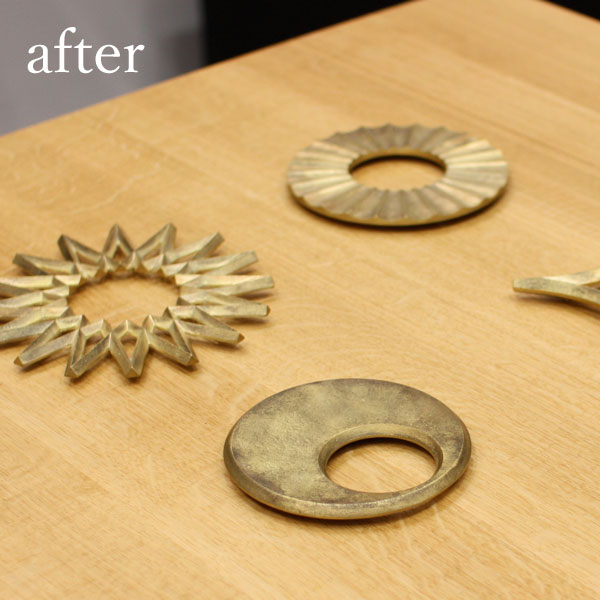
Pictured here is a brass trivet. Simply leaving it out on display
gives it the presence of a small sculptural object.
When new, it has a strong yellow shine, but
over years of use the luster softens and it shifts into calmer black-to-brown tones,
easing away the hard, cold impression typical of metal, so it settles in comfortably alongside
leather sofas, wool or cotton blankets, and other pieces in a naturally styled room.

This is a brass tray one of our staff members has been using for about two years.
Thick-walled desk trays and paperweights have a satisfying heft and a strong sense of stability,
which is why brass is often used for desk items that make the most of that weight.
It's kept in a spot that's always exposed to open air, yet the aging process still seems to have a long way to go.
In that sense, brass is a perfect material for anyone who wants to enjoy "raising" the look and feel
of a metal piece over the course of five, ten, even twenty years.
Copper, whose distinctive color and texture create a subtle nuance
Brass is an alloy of copper and zinc, but plain copper on its own is also a material that produces a distinctive character.
Because of the strong association with 10-yen coins, people tend to picture copper as reddish-brown,
but in fact, copper's real appeal lies in how many different finishes it can take on depending on the surface treatment.
For instance, since ancient times, natural solutions derived from sake, vinegar, or rice bran have been applied to copper's surface,
and by combining various techniques—such as heating and cooling the copper to induce temperature changes—
it can be transformed into all sorts of colors, from copper's own vivid red to a deep, bluish metallic hue.
The colors produced this way have names like seidō-iro (bronze), niiro (boiled color), sentoku-iro, nabecho-iro, shudō-iro (vermilion copper), and yaki-seidō-iro (fired bronze),
showing a diversity far beyond anything you'd imagine from the color of a 10-yen coin.

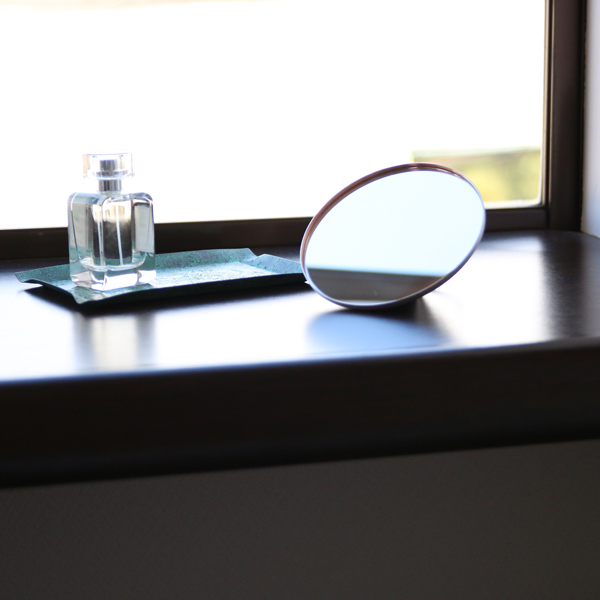
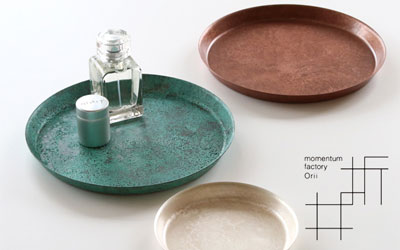
These mirrors are all made of copper.
Besides the reddish-brown you'd expect from copper, there are silvery tones that cast a soft light,
as well as green tones with a distinctive texture.
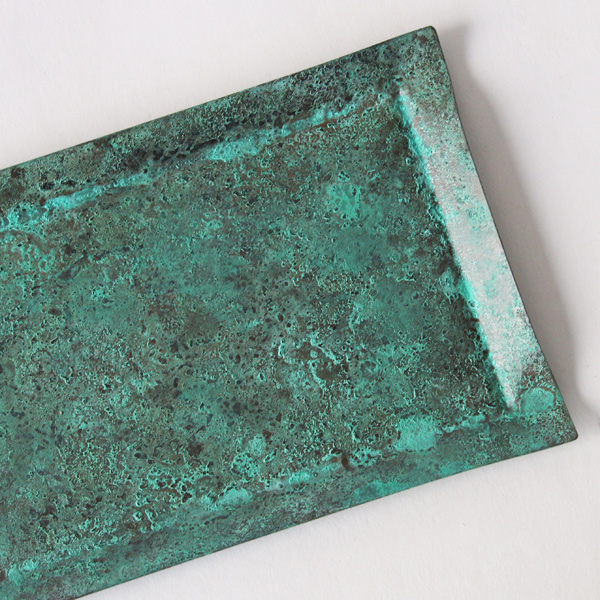
The bronze color in particular catches the eye—more vivid than the other muted, tasteful shades, with a certain elegant mood.
The cold impression of shiny metal is nowhere to be found here.
This graceful green is achieved through artisan techniques like the solvents and temperature changes mentioned earlier, combined with polishing,
which artificially brings out the natural corrosion and patina colors of the copper.
Copper pieces finished this way convey a sense of accumulated time and craftsmanship
the moment you open the box.
In that sense, it's an ideal material if you want your room to have a warm, welcoming feel
right from the start, blending in from day one.
And of course, the more you use it, the more character it takes on,
so it's a material worth breaking in and enjoying over time, much like a good pair of jeans.
Tin, which casts a cool, refreshing light and is easy to shape
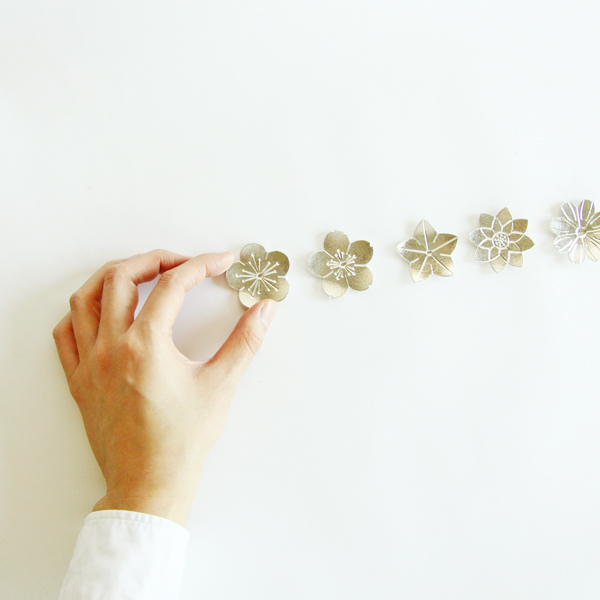

Brass and copper are known for their distinctive colors, while the next material we'll introduce, tin (suzu),
True to its name, it gives a very cool, refreshing impression.
Compared to iron or copper, it has a lower melting point and is relatively easy to melt and shape, so
casting techniques have been passed down for it since ancient times.

Tin like this is known for being resistant to oxidation, meaning it changes relatively little due to rust,
making it a stable material.
Metals that rust easily gradually change in surface texture and color,
but tin, if cared for properly, keeps its beauty and luster without losing its shine,
and it resists changing even when exposed to air, which is why, besides interior items, it is also used
for tableware and sake vessels that come into direct contact with the mouth.
Another characteristic feature of tin is its "softness."
Metal tends to give an impression of hardness,
but in the case of tin, thin pieces can easily be bent by hand,
so the surface scratches easily and can dent if dropped.
At first glance this might seem like a weakness,
but it blends into a space without making you feel the coldness or hardness of metal,
and one could say it's actually an advantage that the small scratches it accumulates with use only add to its elegance over time.

【Give Small Items a Home with a Stool & Tray】


In spots like beside the sofa in the living room or next to the bed in the bedroom,
where cotton or linen textiles and wooden furnishings tend to gather,
simply placing a single piece of metal decor can tighten up the whole space.
In the photos, a wooden stool is used as a mini table in both cases, with a copper tray placed on top.
It's perfect for putting reading glasses or earrings that always seem to end up misplaced somewhere in the house,
giving them a proper place to belong.
【Bring Flowers to Dead Space by Windows or Walls】
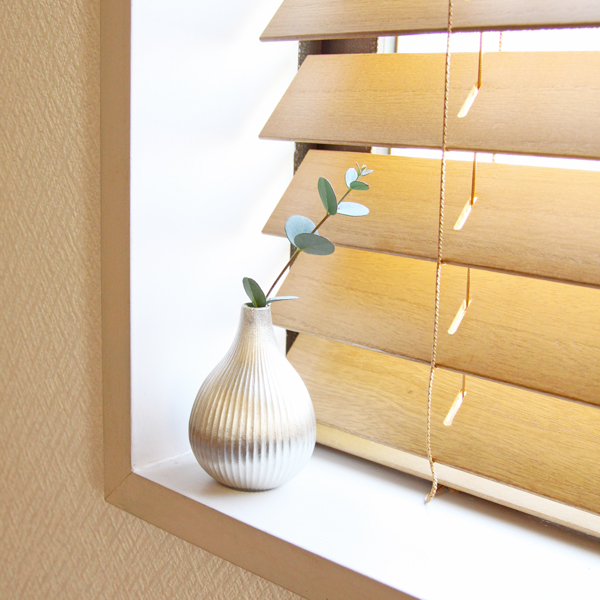
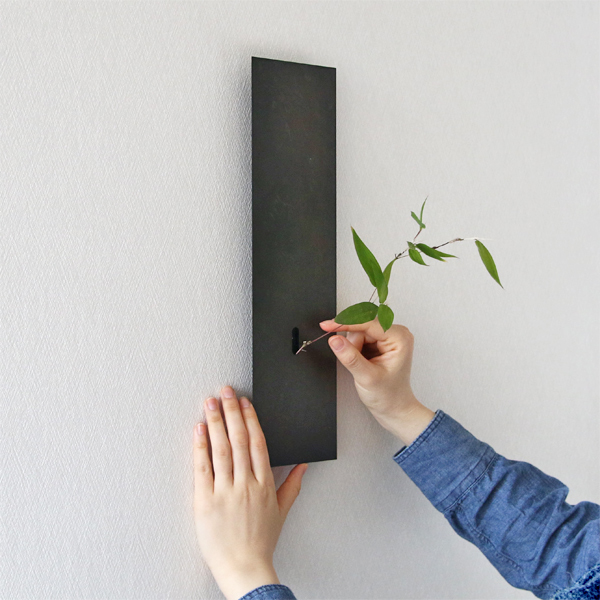
A spot feels a little bare and you'd like to decorate it with flowers or greenery, but there's just not enough space…
That's exactly when metal interior items come in handy.
For example, a tin flower vase, even a small one, has good stability thanks to the weight of the metal,
so you can place it in a narrow spot by a window without worry.
Also, a slim wall-mounted flower vase that takes advantage of metal's workability
lets you display a single stem of flowers by attaching it directly to the wall, with no stand needed.
【Let Your Entryway Play a Welcoming Sound】

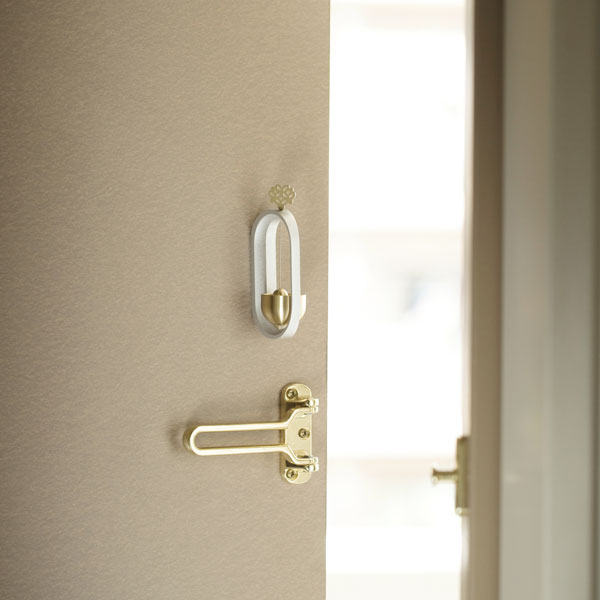
This is a door bell that attaches neatly to an iron door.
With the cute name "Dorin," this bell has a modern two-tone look,
with an aluminum frame and a brass "orin" (bell) section.
If your door is made of iron, you can attach it directly with a magnet,
and even if it isn't, as long as the material allows you to screw on the included magnet plate wherever you'd like,
or to stick it on with double-sided tape, you can enjoy it fully even in a rental home.
Besides the entryway, it's also lovely to try attaching it to a room door, a window, or the refrigerator door.


・Understanding the True Nature of Rust
When we introduced tin earlier, we mentioned its resistance to "rust,"
but most common metals rust quite easily.
Metal that has been refined through human processing is, in other words, in a very unstable state.
It tries to reach a more stable state by bonding with oxygen (that is, by oxidizing).
This is the mechanism by which metal rusts.
It's the same reason a disposable hand warmer used in winter starts oxidizing the moment its wrapper is opened.
(Hand warmers make use of the heat generated by this very oxidation.)
So metal's tendency to rust is actually a completely natural phenomenon.
・Everyday Care
Rust on metal occurs where the metal's surface meets the air.
Also, when there is moisture on the metal surface, the chemical reaction progresses more easily.
This is why bicycles and road signs placed near the moisture-rich seaside rust so quickly.
If you want to prevent rust, wipe away any moisture as soon as you notice it.
That said, it's also true that a piece looks quite handsome once oxidation has progressed a bit and it's taken on a deeper color.
It would be wonderful if you could think of small scratches and changes in color not as "deterioration" but as "character,"
and let the piece grow more beautiful over many years of use.
▼The Presence of Brass, Pure Beauty — FUTAGAMI

▼The Gentle Sound an Orin Plays — Yurin

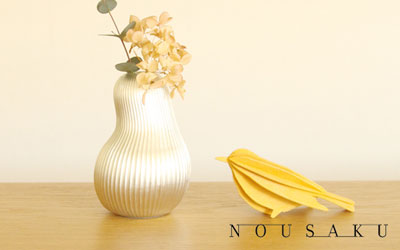
▼Interior Pieces Freely Shaped from Tin (Suzu) — Nousaku
▼Copper, Passed Down Since Ancient Times, Made Modern — tone
GUIDE »
CATEGORIES »
- + Gifts by recipient
- + Gifts by scene
- + Clothing
- + Bags / Backpacks
- + Wallets / Card cases
- + Jewelry
- + Shoes
- + Rainy day outfits
- + Kitchen
- + Home
- + Babies / Kids
- + Japanese products
Earn Miles


Payment & Security