.webp)


.webp)


.webp)


.webp)


Welcome to ZUTTO
Free shipping for newsletter subscribers (some areas excluded)
- トップページ/
- ZUTTO Journal/
- 選び方・使い方/
- Starting the seas...

For the season of new beginnings: white porcelain tableware to add to your collection
Hakuji (white porcelain) refers to porcelain made from a white clay base coated with a glaze.
Hakuji tableware, which lets light pass through it beautifully, is also a versatile vessel that pairs well with any dish.
Let's start by briefly covering the basic characteristics of ceramics.

What is porcelain?
Its raw material is stone. Rock is mixed with clay to create the base material,
and it refers to ceramics fired at temperatures of over 1300 degrees.
The surface has a smooth texture that resists absorbing water,
and it makes a hard, clinking sound when tapped.
・What is a glaze?
A liquid that, when applied over ceramics, changes their luster and color.
It also has a coating effect, making the surface more resistant to stains and water.
When a white base is coated with a transparent glaze and
fired at high temperatures, the resulting hakuji takes on a translucent, glossy appearance.
Furthermore, through a process called reduction firing, in which oxygen is drawn out during firing,
the resulting vessel takes on a more bluish tint.
Depending on the firing method and the amount of glaze used, each individual piece
takes on a different character—this is the appeal of hakuji tableware.
The term hakuji is sometimes used to refer only to plain white porcelain with no pattern at all,
but this time, we'll also introduce pieces decorated with techniques such as sometsuke (underglaze blue painting).
A character shaped by the production method
Glaze plays an important role in the transparency and color of a vessel.
Depending on the proportion of components in the glaze, such as iron oxide or copper oxide,
the fired appearance can vary widely.


Hakusan Toki, based in Nagasaki Prefecture, has continued to make vessels that could be called the epitome of simplicity.
The ceramics of this region, also known as "Hasami-yaki,"
originally started out as pottery, but in 1602, high-quality porcelain raw materials were
discovered, leading to a thriving porcelain production industry.
The region is also known for developing, in addition to hakuji, sometsuke ware with patterned decoration and seiji (celadon) ware with its bluish tint.
Hakusan Toki's 6-sun shallow ramen bowl is a piece of hakuji that clearly shows off its white base,
with gradual carved patterns that create shadow and depth depending on the light,
giving the piece a texture that makes the white even more striking.


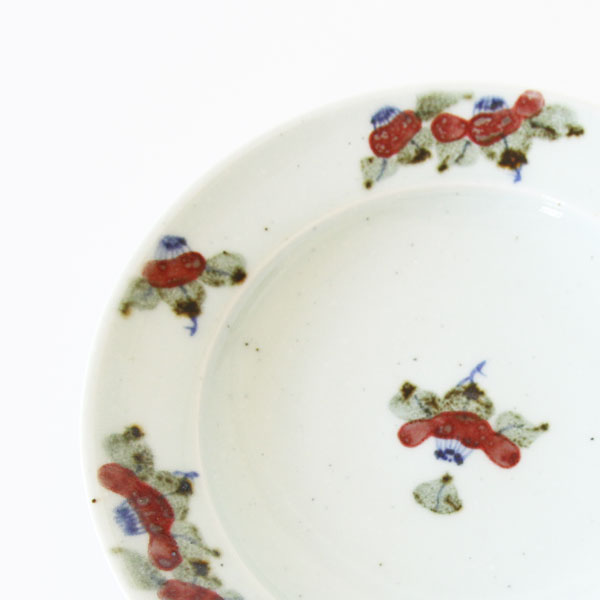
This is Hakusan Toki's Asa no Ito (Hemp Thread) plate.
A simple hakuji plate decorated with a hemp-leaf motif drawn in a ring.
The indigo color is achieved using a pigment called gosu,
producing a beautiful indigo blue, while the sepia tone uses a glaze called sabiyu (rust glaze)
to express a modern hue.
The Asa no Ito series represents Hakusan Toki's approach to making Hasami-yaki—a tradition with 400 years of history—modern and practical for everyday use.
It's hakuji that seems to symbolize Hakusan Toki's approach to vessel-making, which relentlessly pursues usability and pieces that fit naturally into daily life.

"Hakuji" doesn't always mean purely white vessels.
Tobe-yaki made by Nakata Kiln in Tobe-cho, Iyo District, Ehime Prefecture
is hakuji fired from a white base material,
but you can see small black specks scattered across the surface.

These black spots are iron particles that appear in the glaze from oxidation during firing, sometimes as gray specks.
At Nakata Kiln, these iron particles are deliberately left in place,
giving the piece an even more distinctive character within the world of Tobe-yaki.
Pure white hakuji creates a refined impression,
while hakuji with the iron particles left in gives a rustic, textured impression.
The way a maker's dedication shows through as a distinctive quality is also part of the appeal of hakuji.
Choosing between Japanese-style and Western-style hakuji
In modern times, when we enjoy all sorts of different cuisines,
we often unconsciously choose different plates to match the dish,
but Japanese and Western tableware each have functions that developed according to their own uses and cultural backgrounds.
・Japanese-style vessels
In Japan, where it's customary to hold a vessel in one's hand while eating with chopsticks,
tableware is expected to be a size that's easy to hold and lightweight.
Since the mouth also comes into direct contact with the vessel, they have also been made with careful attention to how they feel to the touch.


The Inban Hana Chawan by Azumaya, made in Hasami City, Nagasaki.
The firmly fired hakuji is decorated with sometsuke using inban, a traditional technique dating back to the Edo period.
Inban uses a copper plate or similar tool to soak gosu, a type of pigment,
into transfer paper, and the pattern is then transferred onto the base material by hand.
Because it's such a labor-intensive method, inban has become less commonly used,
but it's precisely because it's done by hand that the resulting variations in color depth and slight misalignments in the pattern
give the piece its rich character.

The Inban Hana Chawan comes as a set of large and small bowls.
The carefully considered height of the foot and the shape of the bowl make them a comfortable size to hold in one hand,
and the smooth texture feels wonderful to the touch,
while their surprising depth also makes them convenient for serving rice.


Vessels from Miyamoto Taizando, a Kutani-yaki maker in Ishikawa Prefecture, featuring beautiful painted designs on hakuji.
The tradition of making small plates suited to a variety of different side dishes is
a distinctive feature of Japanese food culture, and mamezara (bean-sized small plates) are one example of this.
Miyamoto Taizando's set of 5 Hakkaku Kamon Kozara (small octagonal flower-patterned plates) is compact enough to fit in the palm of your hand,
and with enough depth for small side dishes,
they can also be used for pickles or as soy sauce dishes.
Since hakuji doesn't easily absorb moisture, it's easy to care for even when holding liquids.
・Western-style vessels
In Western culture, meals are eaten holding a knife and fork in both hands, so
plates are meant to be eaten from while resting on the table, so
flat plates with a low foot ring have traditionally been made as the standard.
And so that hard cutlery striking the plate would not easily damage it,
hard porcelain has historically been used.

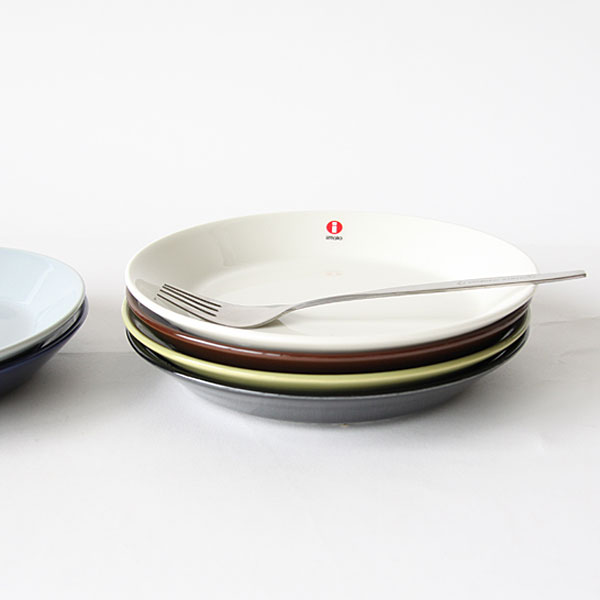
The iittala Teema plate comes in three sizes: 17cm, 21cm, and 26cm.
For Western tableware, it's convenient to have a plate that can hold a single serving of a main dish.
The iittala Teema plate, 26cm, is
a dinner plate perfectly sized for main dishes like meat or fish.
It's a plate that suits any meal, so it's worth having enough for the whole family and any guests.
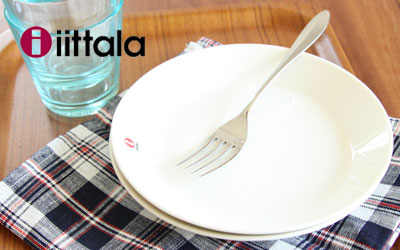
iittala was founded in Finland in 1881.
At the time of its founding, its high-quality glassware was praised as "glass with a special brilliance,"
and it has since become known as a tableware brand beloved around the world.
Teema is one of the signature series representing iittala,
and its lack of pattern is precisely what allows the character of hard porcelain to come through in the design as it is.
It serves as an excellent supporting player that brings out the best in your food.


1616/arita japan can be used as both Japanese and Western tableware.
1616/arita japan started as a brand that transformed Arita ware—once treated as a luxury item or work of art—
into something easy to incorporate into daily life, expanding the possibilities of Arita ware.
By eliminating the foot ring and ornate decoration commonly seen in Arita ware, its form has come closer to that of Western tableware.
The square plate, with its four corners folded in, is designed to bring out the best in the food it holds.
It is white porcelain that suits both Western dishes eaten with a knife and fork and Japanese dishes eaten with chopsticks.
Caring for white porcelain
■Notes on use
As mentioned earlier, since dense porcelain doesn't readily absorb moisture,
you can start using it right away without needing to soak it in water beforehand.
On the other hand, because it is hard, it is vulnerable to impact from hard objects striking it,
so please be careful not to let it collide strongly with cutlery or other tableware.
■Care
We recommend washing the piece immediately after use.
Porcelain doesn't easily pick up stains from food or seasonings, but
if the surface does become stained, it can be difficult to remove, and it may also cause odors to set in.
Apply dish soap to a soft sponge and wash thoroughly.
■Storage
When stacking dishes for storage, we recommend placing a soft cloth or paper between them.
This helps prevent scratches on the surfaces of the dishes.



GUIDE »
CATEGORIES »
- + Gifts by recipient
- + Gifts by scene
- + Clothing
- + Bags / Backpacks
- + Wallets / Card cases
- + Jewelry
- + Shoes
- + Rainy day outfits
- + Kitchen
- + Home
- + Babies / Kids
- + Japanese products
Earn Miles


Payment & Security