.webp)


.webp)


.webp)


.webp)


Welcome to ZUTTO
Free shipping for newsletter subscribers (some areas excluded)
My page
Information
- トップページ/
- ZUTTO Journal/
- 選び方・使い方/
- Lightweight and w...

Lightness and warmth, all in one piece. Choosing winter quilted wear
When it comes to winter clothing, many people choose materials known for their warmth, such as wool or cashmere, but creating warmth through the structure of a garment is another approach entirely. Quilting is a technique born from the pursuit of insulation.

Quilting refers to a technique in which multiple layers of fabric are sewn together with padding (nakawata) stuffed inside, creating a fabric that is soft and springy. You may be familiar with the design in which the fabric is stitched into a diamond pattern with padding tucked into each shape. This quilting technique was originally devised in the cold regions of Europe. By stuffing padding between two layers of fabric, it was created to increase insulation and retain body heat.
The same structure can be found not only in clothing but also in duvets, for example. Duvets achieve that fluffy, springy texture and their heat-retaining, cold-blocking function by filling the inside with down, wool, or synthetic fibers. As mentioned above, quilting involves stitching the fabric into shapes such as diamonds, which results in a cleaner silhouette while preventing the padding from shifting and making the garment easier to move in.

In addition to warmth, another appeal of quilted wear is its lightness. Depending on the material, modern quilted garments often use synthetic fibers such as polyester or nylon for both the outer fabric and the padding, and because they can provide insulation even with a thin construction, the overall weight is remarkably light. Wool coats, by contrast, tend to use densely woven, thick fabric to block out the cold, which inevitably adds weight. Quilted wear, on the other hand, can be said to have overcome the hurdle of weight while still maintaining warmth.
Quilting, originally created for the purpose of insulation, gradually expanded over time to embrace decorative elements through the use of colors and patterns. Amish quilts, which form geometric patterns, and Japanese sashiko are extensions of this same tradition. Beyond the practicality born from its simple structure, quilting spread throughout the world because its design could be freely arranged and adapted.

Now, let's take a look at some actual quilted garments. First to introduce is BEAVER OF BOLTON, founded in England in 1969. This is a quilting coat featuring a beautiful diamond-patterned quilt with well-balanced trim.

England, the birthplace of the brand, has a long-standing hunting culture, and quilted wear worn by hunters braving the cold winter skies spread widely from there. The reason for this spread lies, once again, in the lightness, warmth, and durability that quilted garments offer.
BEAVER OF BOLTON, founded in Lancashire, England, produces not only quilted wear like this but also country wear such as tweed and waxed jackets, all known for their reliable quality thanks to sewing carried out at the company's own factory and carefully selected materials.


The BEAVER OF BOLTON quilting coat uses 100% polyester padding, making for a very lightweight garment. It's a length that fully covers down to the hips. The collar is made of cotton corduroy fabric. Corduroy also happens to have excellent insulating properties. When you slip your arms through the sleeves, you'll notice a pleasing detail: the body of the coat doesn't feel overly bulky or make you look padded out. Once buttoned up, it creates a neat, elongated silhouette.


It comes in three basic colors: black, navy, and beige. Each has a glossy fabric that lends a mature, sophisticated feel. Another subtle detail is that the outer and lining colors differ from each other in each version. Pair it with thick pants and boots for a solid, warm winter outfit, or combine it with a classic quilted skirt or leather shoes for a cleaner, more polished look.

From BARBOUR, also born in England, comes a quilting jacket with a shorter length. It falls just about to the hips, and like the BEAVER OF BOLTON piece, it features a corduroy collar.


BARBOUR's origins trace back to the production of oiled cotton raincoats, known as oiled jackets, made for fishermen and other laborers working in harsh weather. Later, like BEAVER OF BOLTON, it became widely known as a maker of English hunting jackets, and is now recognized as a representative British jacket brand, holding a Royal Warrant from the British royal family.

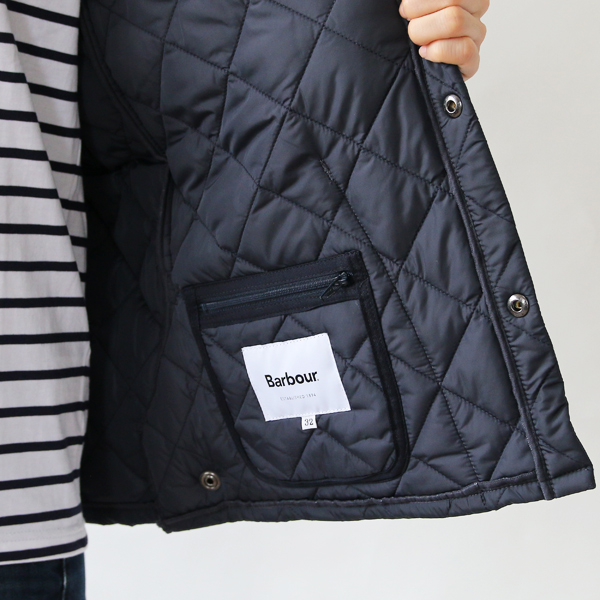
The BARBOUR quilting jacket isn't just shorter in length — the placement of its pockets is another distinctive feature. The pockets, angled diagonally outward, not only make the silhouette look better when worn but also make it easy to slip your hands in. There's also a zippered pocket on the inside of the left side of the body, offering the convenience of quickly stashing away valuables.

There are slits on the sides of the hem, and snap buttons allow you to adjust the body width. Even when layering a sweater underneath the jacket, you can wear it without feeling constricted. Though quilted garments may look similar to one another, details like these can actually change the entire impression a garment gives when worn.

Quilted wear isn't limited to jackets — it also works wonderfully as an inner layer. NANGA's down series is one such example.

NANGA(ナンガ)is the successor to Yokota Sewing, a company that had been manufacturing kotatsu futons and floor futons since 1941. From the 1960s, the company changed its name to NANGA, and became known not only in Japan but among mountaineers around the world as a sleeping bag and down manufacturer using high-grade down. The name NANGA refers to Nanga Parbat, the world's ninth-highest peak in the Himalayas at 8,125 meters. Known for being extremely difficult to summit and for claiming many lives among those who have attempted it, the brand adopted the mountain's name to express a strong resolve to keep taking on challenges in order to overcome even the most difficult circumstances.

The down series made by NANGA(ナンガ)are what are known as down coats, with down and feathers stuffed inside the fabric. Both the outer shell and lining are made of nylon, giving them outstanding warmth even though they're thin. Using 50g of European duck down (with certificate of origin) treated with an ultra-water-repellent finish, the down has excellent loft and resilience that greatly exceeds standard down quality measurement criteria. In other words, even with a small amount of down, the coats offer high warmth while remaining lightweight.

Thanks to its compact, lightweight design, it's also easy to wear as an inner layer. Whether the north wind cuts through even a thick outer coat, or you feel a chill while driving, or you just want to pop out for a quick walk, this piece is easy to throw on, and even when worn under an outer coat, it won't add bulk. *Women's sizes are sold out. Thank you for your understanding.

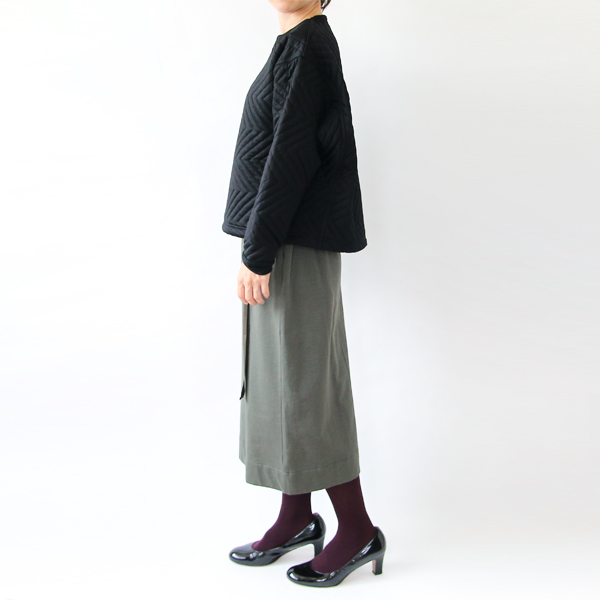
Quilted wear is used not only for outerwear but also for everyday tops. This quilted top from HAVERSACK(ハバーサック)is a standout piece thanks to its distinctive quilting design. Both the outer fabric and lining are made of wool, with polyester used for the batting, making this quilted top a reliable way to stay warm even on cold winter days.

The diagonally lined quilting design represents a large herringbone pattern, and the paneling keeps the volume restrained, resulting in a look that isn't overly puffy while still being warm. Although it's primarily made of wool, washable wool is used, which means it can be washed at home—one of its appealing features. It's a convenient quilted top that fully serves its role as a winter top in place of a sweater.

HAVERSACK(ハバーサック)is a Japanese fashion brand that launched in 2001. Centered around military, marine, work, uniform, and tailored styles, it achieves both design and functionality through carefully devised cutting and sewing techniques. Since its founding, the brand has worked alongside many craftspeople, and through the time spent walking this path together, each garment—one that could become a vintage piece—is carefully finished. From the selection of the yarn, to the structure of the weave or knit, the finishing methods, pattern adjustments down to the millimeter, and even the sewing techniques, the quality that comes from continuing to make things over a long time with so many people is what results in products that can be worn for a long time and remain in one's memory—products that are truly "zutto" (forever).
▼List of outerwear

▼List of tops and cut-and-sew items

▼If you're putting together your winter wardrobe, start here

GUIDE »
CATEGORIES »
- + Gifts by recipient
- + Gifts by scene
- + Clothing
- + Bags / Backpacks
- + Wallets / Card cases
- + Jewelry
- + Shoes
- + Rainy day outfits
- + Kitchen
- + Home
- + Babies / Kids
- + Japanese products
Earn Miles


Payment & Security