.webp)


.webp)


.webp)


.webp)


Welcome to ZUTTO
Free shipping for newsletter subscribers (some areas excluded)
- トップページ/
- ZUTTO Journal/
- 選び方・使い方/
- A Survey of Favor...

A survey of our favorite coffee makers: from drip to espresso. A beginner's guide to enjoying delicious coffee at home.
Thinking about how we relate to coffee.
The rise of convenience store coffee over the past few years has been remarkable. Overturning the old notions that "you can't really get good coffee at a convenience store" and "cheap coffee tastes bad," convenience store coffee has made it easy to enjoy freshly brewed, aromatic coffee both at work and at home. At the same time, while it's undeniably convenient when you're out and about, paying 100 to 200 yen for a uniform-tasting 180ml cup has started to feel like a surprisingly poor value. Coffee lovers, meanwhile, seem to enjoy visiting various coffee shops, bringing home the beans they tried there, and experimenting with different grinds and brewing methods until they find the flavor that suits them best. There's something wonderful about that kind of pleasure.
Whether you didn't have much time for it last year, or you're hoping to cultivate a new hobby this year, why not imagine a year spent enjoying coffee?
Choosing coffee equipment that suits you
What kind of coffee equipment actually suits you?
What matters most when choosing coffee equipment is understanding what kind of coffee you like. When you drink coffee at a coffee shop, do you prefer drip coffee, or espresso drinks? Which is better for you?
We brewed coffee using three different methods and asked our staff for their impressions, and here's what we found.

*These are the personal opinions of our staff.
If you usually order the coffee of the day or an Americano at a coffee shop, a paper drip coffee maker, with its clean, refreshing taste, is for you.
If you tend to order milk-rich café lattes, cappuccinos, or espresso, try a stovetop espresso maker.
If you enjoy the rich drip coffee you might find at an old-fashioned kissaten, or love pairing your coffee with an afternoon sweet, a nel drip (flannel drip) brew, robust enough to stand up to dessert, is the way to go.
Paper drip style: KONO's Meimon Dripper Set
A standard, no-frills brewing experience. Paper filter.
Bialetti's Moka Pot: an Italian espresso maker that lets you easily enjoy authentic espresso at home.
Ono Glass's nel dripper: unlike a paper filter, flannel conveys the coffee's flavor directly, making it best suited to intermediate to advanced coffee drinkers who already have a brewing habit and want to enjoy even more delicious coffee. Many people say coffee brewed with a nel dripper tastes the best of all, but compared to paper drip, it takes more effort and is somewhat more difficult to master.
Actually brewing coffee: KONO's Meimon Dripper Set
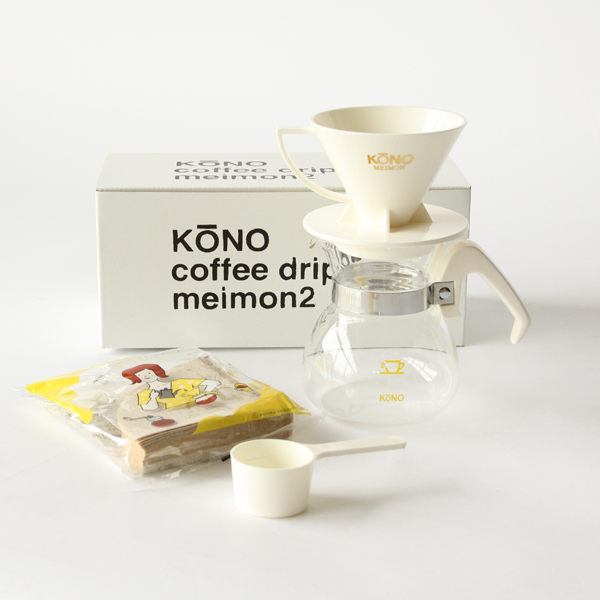
The KONO Meimon Dripper Set is chosen by beginners and coffee lovers alike. Introducing it for us today is Staff Member A, who recently started brewing drip coffee at home.
Introduced by: Staff Member S (using it for about 2 weeks)
Normally I drink mostly instant coffee. What turned me into a drip coffee person was a tasting I did at a coffee shop exactly a month ago. I'd always thought I was the type who couldn't tell coffee flavors apart, but a really friendly guy there let me try several different coffees side by side, and I was amazed by how different they tasted. After that, I couldn't go back to instant coffee—but since I'm a bit lazy, I wondered if I could actually keep it up. That's when he recommended the KONO Meimon Dripper Set. Since there are two of us at home, I went ahead and bought the smaller two-cup size and have been using it ever since.
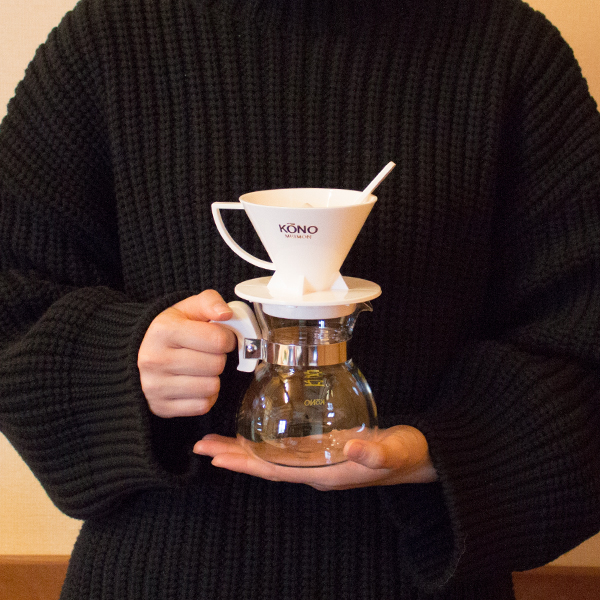
In use for 2 weeks now. Still looking clean.
I didn't know much about coffee drip brewing, so I didn't even know names like KONO or Meimon Dripper. It was only after I bought it and started using it that I learned this paper drip method was originally designed as professional equipment for baristas. Even though it uses a paper filter, it's said to incorporate the strengths of nel drip, making it easy to use while still producing a deep, rich flavor.
Here's what's included.
・Conical dripper
・Heat-resistant glass pot
・Coffee bean measuring cup
・Disposable paper filters
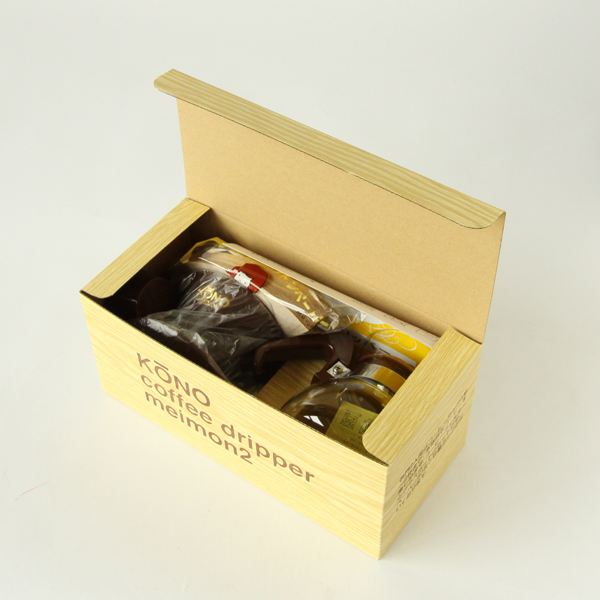
KONO is a long-established Japanese coffee maker, and this conical dripper is one of its signature products. It seems the secret behind the saying "coffee brewed with KONO tastes better" lies in this dripper. There's just one large hole at the bottom.
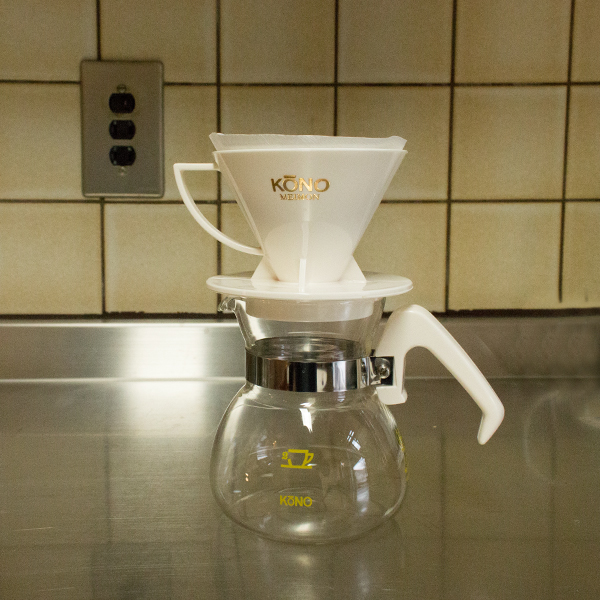
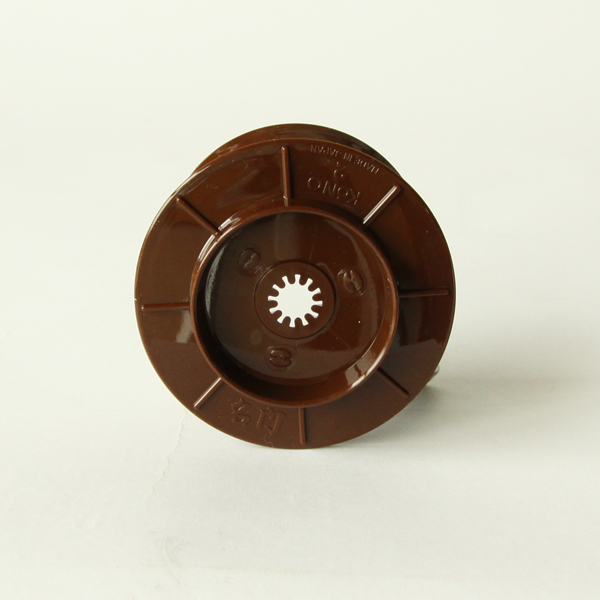
The dripper's hole is larger than those of other drippers. A larger hole means the hot water flows through faster, which apparently means the flavor can vary quite a bit depending on how you pour the water.
*(Research notes)Drip coffee extraction methods can be broadly divided into two categories: "transmission" (tōka) and "immersion" (shinshi). Transmission-style brewing is best imagined like the "filtration" experiments you may remember from science class—hot water passes through the coffee grounds, extracting the coffee's components as it flows through. Immersion-style brewing, on the other hand, involves soaking the coffee grounds in hot water to extract the components, then either drinking the liquid that rises to the top or separating the grounds from the water using a coarse filter.
Some sources classify all paper filter methods as "transmission-style," but this isn't necessarily accurate across the board. When the holes are small and it takes longer for the water to pass through, you can experience a direct, bold flavor similar to what's found in immersion-style brewing. However, because this KONO conical dripper allows for a quick transmission time, it produces a flavor closer to that of nel drip (flannel drip) coffee, even compared to drippers with smaller holes.
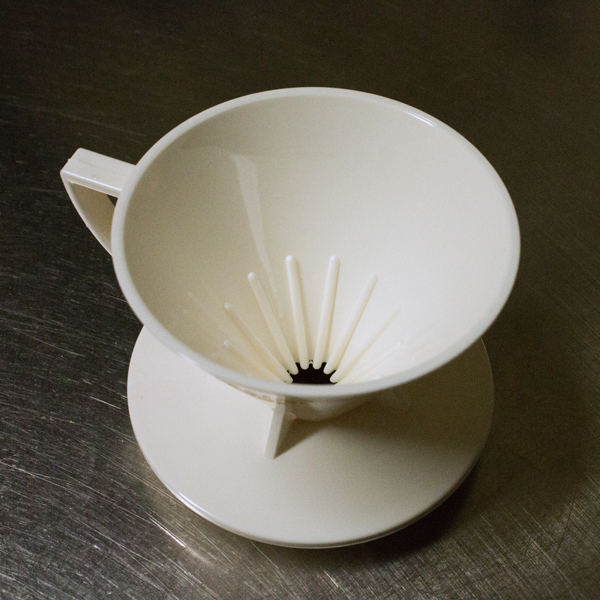
By the way, there's a secret behind the ridges on the inside of the filter. These grooves create a space between the paper and the dripper, allowing the hot water to flow smoothly. Some drippers have ridges running the entire length, but the KONO dripper's grooves cover only about a third of the surface. According to the maker, this design prevents the bitter, foamy residue that collects near the top from mixing into the coffee.
Since the speed at which you pour the hot water has a direct effect on the taste of the coffee, pouring it all at once—the way you might with instant coffee—won't give you the same flavor you'd get at a café. It seems best to pour gradually, adjusting the flow as you go.
Boil water in advance. Prepare a slightly larger amount than what you'll need for the coffee extraction plus enough to warm the cup and glass pot, and bring it to a boil. Once boiled, pour water into the cup and glass pot until about half full and let them warm for 2–3 minutes. This step prevents the liquid from cooling too quickly once poured into the cup. Since sudden temperature changes can diminish the aroma and flavor, it's said to be especially important to follow this step carefully in the cold winter months.
Place the dripper on top of the pot and set the paper filter in place. Fold along the seams of the paper filter before setting it. This time, we have a pot with a narrow spout, so let's try brewing with that.

The brewing method recommended by the shop staff is to start by pouring just a little water, as if to "wake up" the coffee grounds, and then wait patiently. After waiting about 30 seconds, slowly pour the hot water in a circular motion.
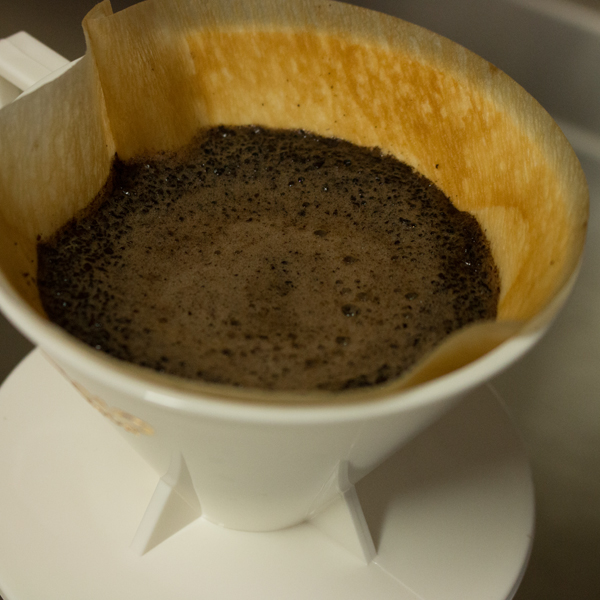
Watching someone skilled at this, the coffee grounds swelled up beautifully and the bubbles moved actively. I still have a way to go, it seems.
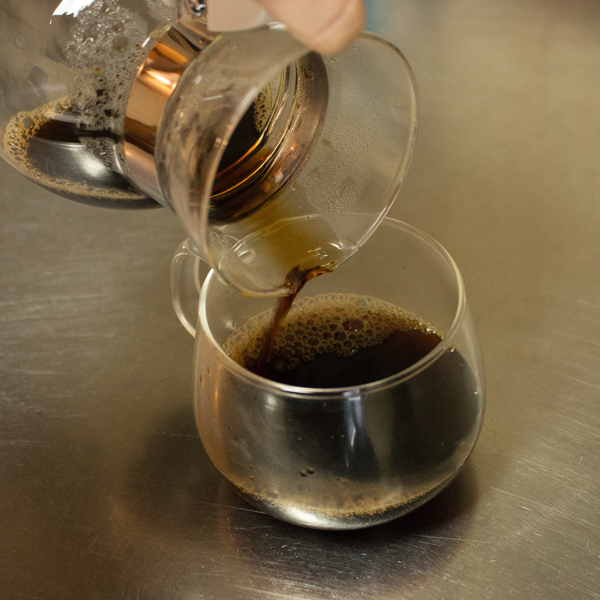
Once it's finished, pour the coffee into the cup you warmed beforehand, and it's ready! The aroma is wonderful, and I feel completely satisfied.
The pot comes with a lid too, so sometimes I use it to brew tea for a change of pace. This compact, rounded pot comes in handy for occasions beyond just coffee.
Ease of use ★★★
Compactness ★★☆
Coffee satisfaction ★★★
Actually Brewing Coffee: Minowa 2-chome Nel Dripper

When you hear "nel drip" (flannel drip), you might picture a café master carefully brewing coffee with painstaking attention. Even with the same coffee beans, brewing with a nel dripper produces a distinctly aromatic, velvety cup of coffee. Unlike the smooth mouthfeel you get with paper, this comes from the oils that would normally be absorbed by paper in a paper drip method instead coming through directly into the coffee. Nel does require a bit more care to maintain than paper, but coffee lovers praise it as the ultimate extraction method. This Minowa 2-chome nel dripper is made by Koizumi Glass Studio (Koizumi Garasu Seisakusho), and is characterized by its form, reminiscent of the flasks and beakers made by handmade glass craftsmen.
Introduced by: Staff Member M (has been using it for about a year)
I've always loved coffee and often brewed it both at home and at work. It's only been the past few years that I've become interested in "nel drip," which is said to be the destination coffee lovers eventually reach. I hesitated for a while because people told me nel drip is a hassle to maintain, but since I drink coffee every single day, I decided to splurge a little and give it a try—I got mine a year ago. The result: absolutely worth it. Coffee brewed with nel is genuinely delicious. Maintenance is easier than I expected, and it's fun to chat with shop staff when I mention I'm looking for coffee beans specifically for nel brewing.
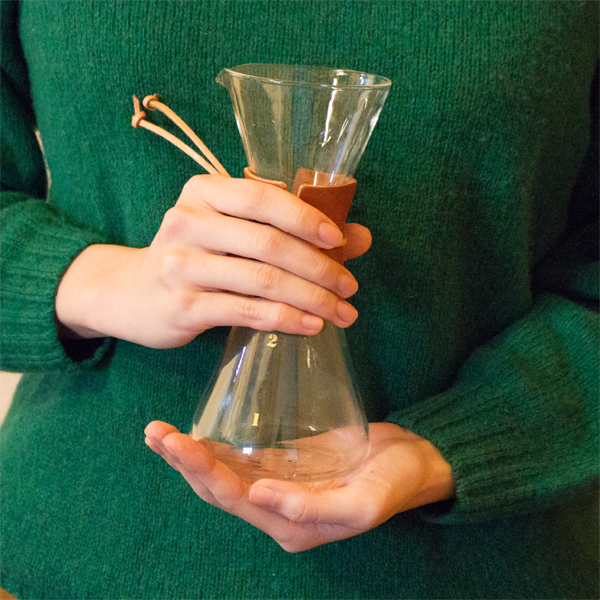
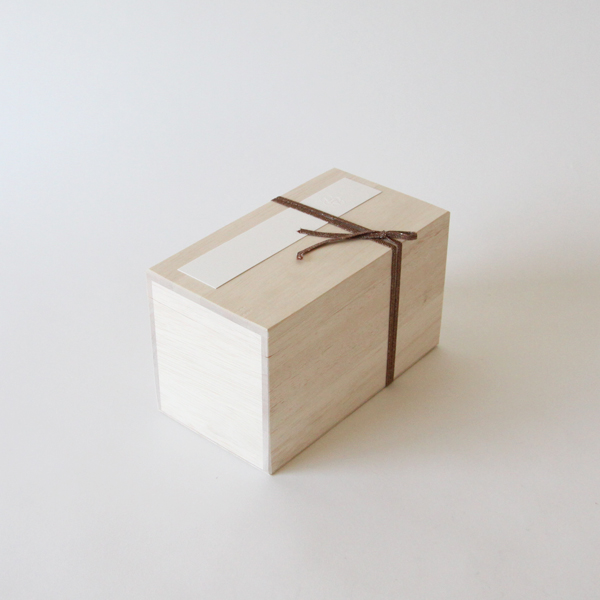
Since this was my first time trying nel, I remember being especially pleased that the product came in a kiri wood box.
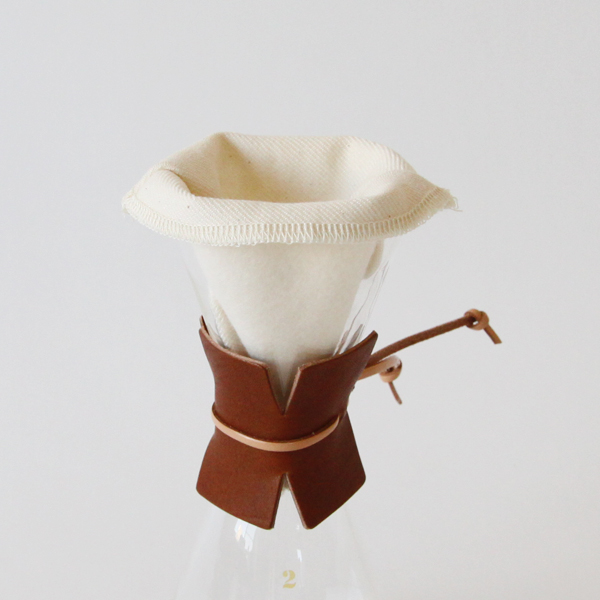
Included in the set are the dripper, two pieces of nel flannel, and a leather handle for holding the glass, which gets hot after dripping.
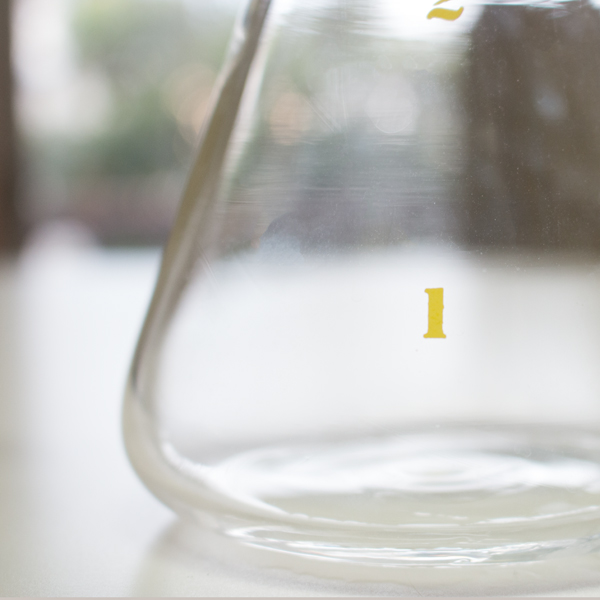
I set up the nel, which I've used about 20 times now. It's stained with coffee color and doesn't look especially pretty, but I think nel at this stage brews the most delicious coffee.
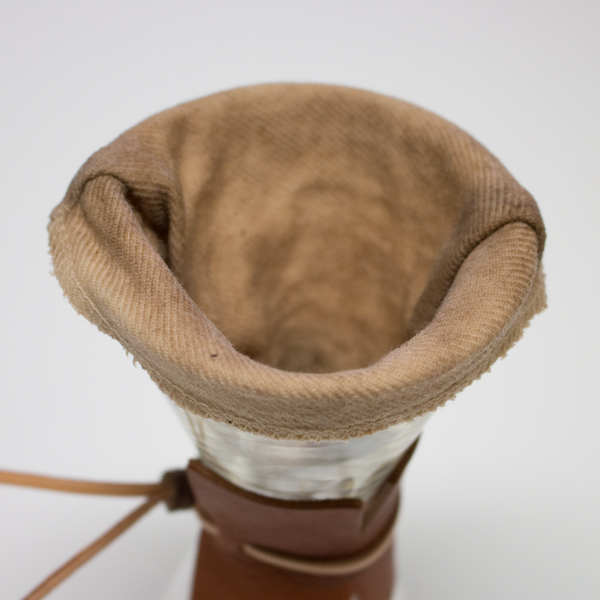
The flannel storage method is said to be troublesome, but first I boil the flannel to remove the starch coating. After each extraction, I thoroughly rinse off the coffee grounds and store the flannel submerged in water in a container like a Tupperware. There seem to be various methods, such as boiling it every time you use it, or storing it soaked in coffee liquid, but since I'm brewing for myself, I wanted something that doesn't take too much time, so the only thing I pay attention to is washing it and keeping it soaked in water in a container. It's really not that difficult.
Now let's get started with the extraction. When I first started, I asked several shop staff who were knowledgeable about coffee, and for beginners, they said, "For now, just try extracting it like a paper drip." At first, filtering through the cloth takes time, and the coffee can come out quite bitter, but continuing to experiment to find "the taste you like" is apparently the key to enjoying coffee. Since I'm impatient by nature, I actually tend to pour the hot water all at once. It seems my preference is for coffee that has the smooth, velvety mouthfeel of nel drip but is still refreshing enough to drink easily.

From my experience, it takes longer than paper drip. Waiting patiently clears my head, so I brew it as a break between work tasks.
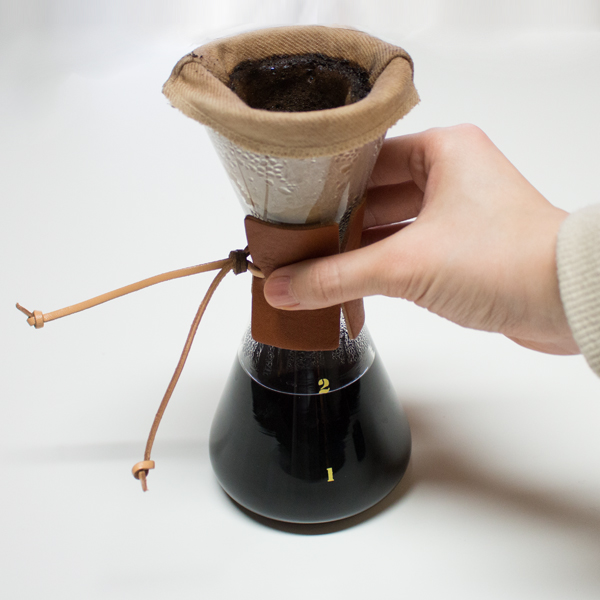
Once it's ready, I hold the leather part and pour it into my own cup. The leather part can be easily removed, so I take it off when washing. At the office, I use a Stanley thermos cup that keeps things warm.

With just a little bit of effort, you can enjoy delicious coffee. For me, coffee time between work tasks is a blissful moment, and this nel dripper has become indispensable. The glass, handcrafted by Japanese artisans, is wonderful too. I'd recommend this to anyone who enjoys taking their time to make coffee.
Enjoyment of coffee time ★★★
Maintenance ★☆☆
Slimness of appearance ★★★
Actually Brewing Coffee: The Bialetti Macchinetta
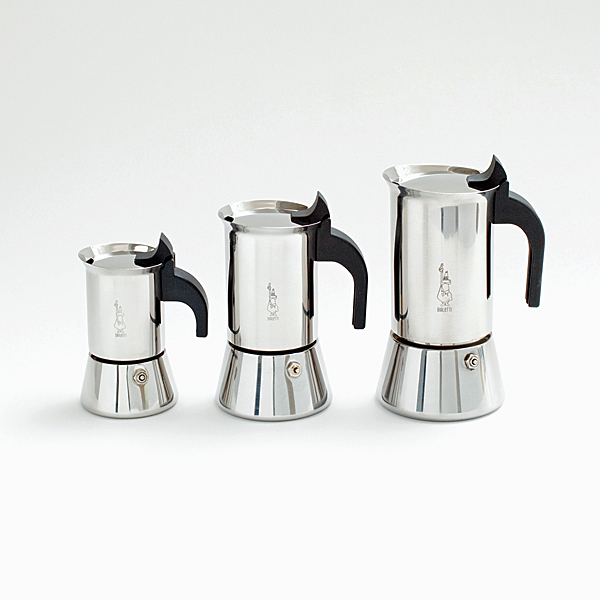
The Bialetti macchinetta is the most famous stovetop espresso maker. Its compact, easy-to-use design appeals to women, while its classic tool-like feel makes it popular with men as well. This time, the person brewing the coffee is a staff member who has been using it for about a year and a half.
Introduced by: Staff member S (used for about 1.5 years)
I like coffee. I'm not particularly particular about the beans, but I prefer café lattes and cappuccinos over black drip coffee. I wanted something that could easily make an espresso strong enough to hold its flavor even with milk added. Espresso machines are nice too, but since they take up space, I chose a compact stovetop type instead. The Bialetti macchinetta is a truly iconic item said to be found in every household in Italy. It's technically an espresso maker, but I mostly use it to make rich mocha coffee and enjoy it with milk.
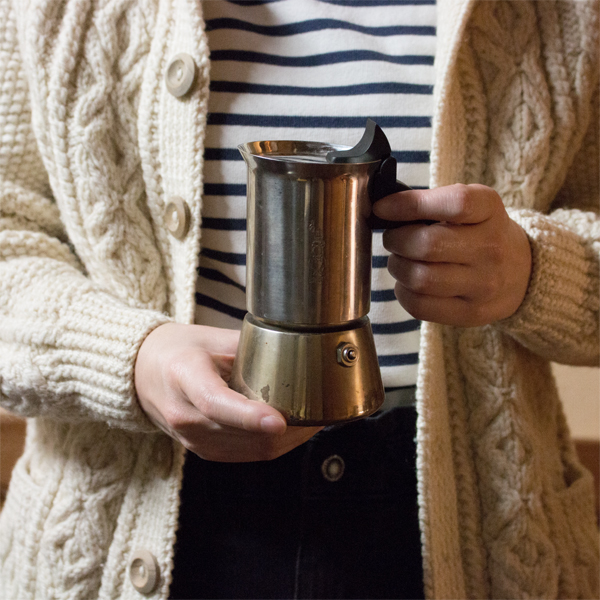
I've been using it for a year and a half now, so it's developed quite a bit of character.
The Bialetti macchinetta actually comes in many different types, but the one introduced on ZUTTO is the stainless steel model called Venus. Unlike aluminum moka pots, it can be kept relatively clean-looking with continued use, though since it's used directly over a flame, it does develop a bit of a scorched look here and there—which, from a longtime user's perspective, is actually rather charming.
First, prepare the coffee. One thing to pay attention to is how the beans are ground—please have them ground fine. If you're using store-bought coffee, anything labeled "for espresso" will work fine.
The internal structure looks like this, with a basket for the coffee beans attached to the lower tank.
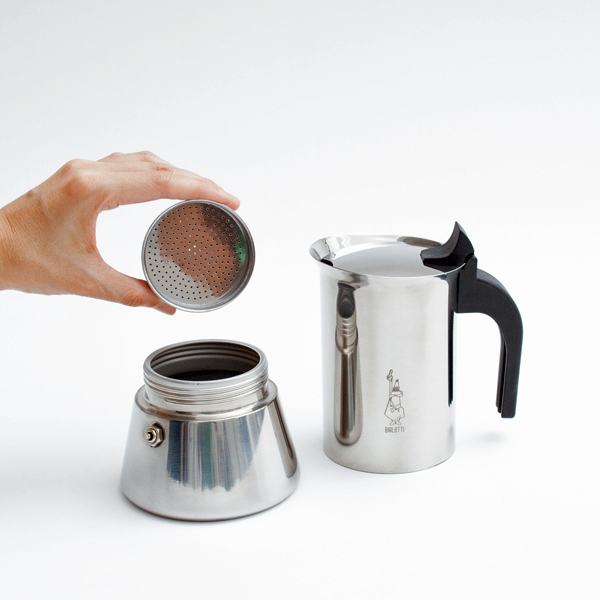
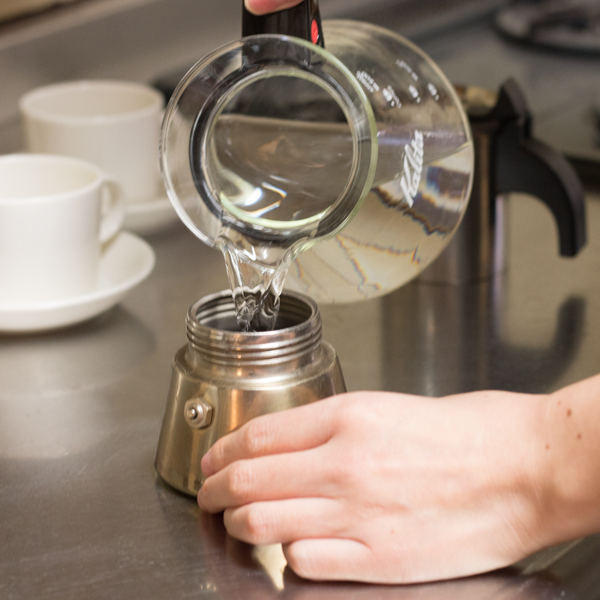
First, with the basket removed, add water. Since it's used directly over a flame, it's only natural, but not having to prepare hot water separately is quite convenient. There's a line marked inside, so fill the water up to that point.
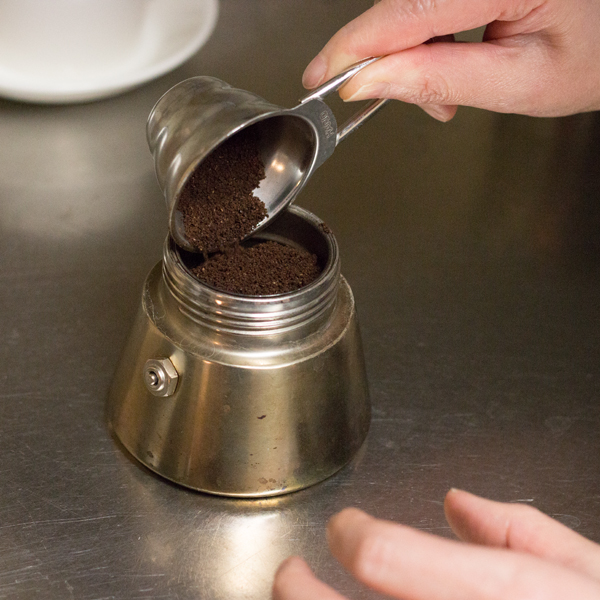
Once you've finished adding the water, attach the basket and add the coffee beans. After adding them, smooth them out flat with your finger.
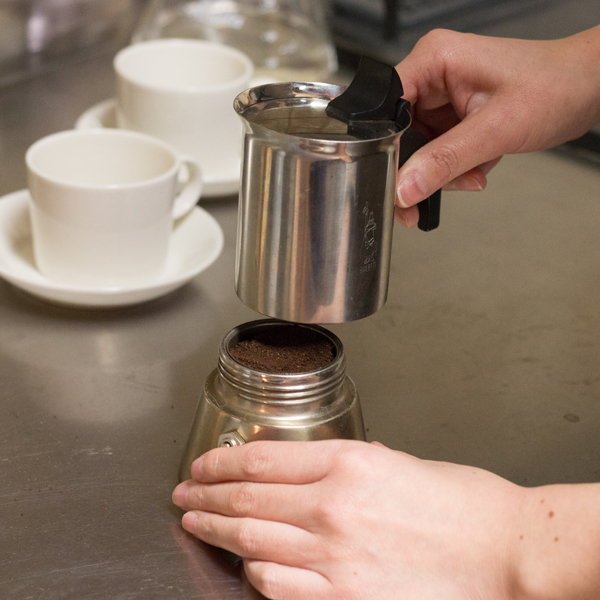
Attach the pot section, and you're ready to go.
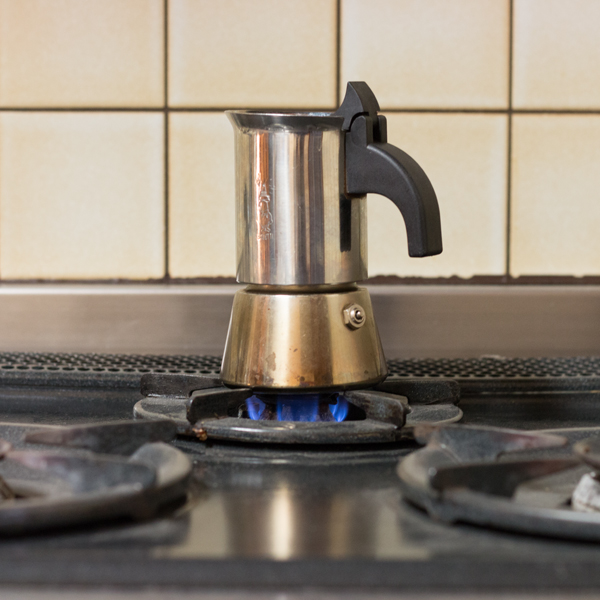
After a few minutes on the stove, you'll hear a bubbling sound, and the lid will start rattling. If you carefully open the lid so as not to burn yourself, you can see the hot water rising up from below.
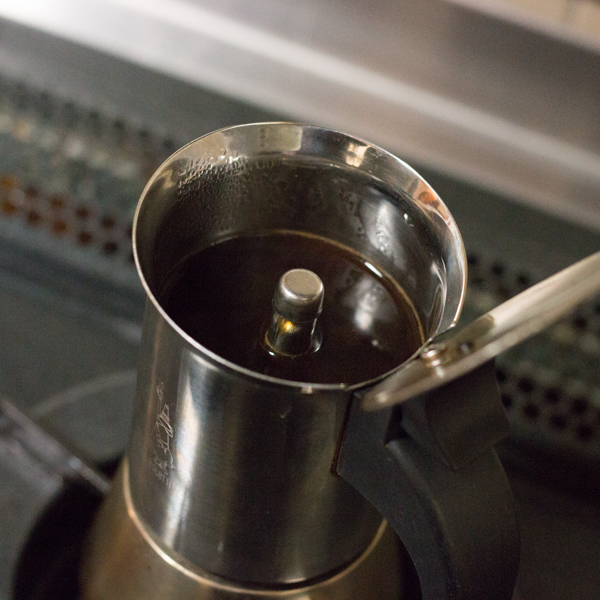
Once it has fully risen, turn off the heat, and it's done.
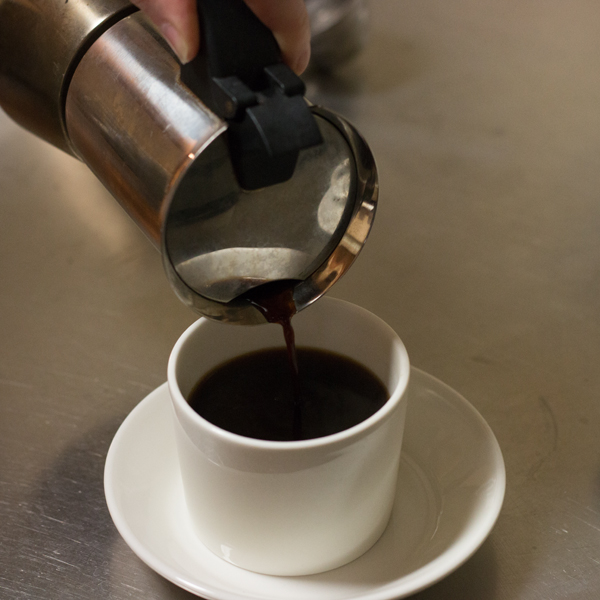
It's ready. With the 2-cup size, you get about one small coffee cup's worth. Even with plenty of milk added, the coffee flavor comes through strongly, and it's really delicious. Best of all, you can just put it on the stove and leave it be. No special skill is required, the flavor comes out consistently every time, and it fits compactly even in a small kitchen—all things I really appreciate for living alone.
The one I used this time is the 2-cup size, but if you're drinking it as mocha coffee, that's about enough for one person. Depending on your stovetop, the 2-cup size may not sit stably, so personally, I'd recommend the 4-cup or larger size for those brewing for family.
Hands-off level ★★☆
Flavor consistency ★★★
Compactness ★★★
Editor's note: On cost performance, and the time that money can't buy
Convenience store coffee is convenient. It's there the moment you want it, you drink it down, and it costs somewhere between 100 and 200 yen. But when you brew coffee at home or at the office, the cost of the coffee beans comes to just tens to a few hundred yen per cup. If you can enjoy coffee made just the way you like it for the same price as convenience store coffee, or maybe even less, it makes you want to give it a try, doesn't it?
When we asked our staff to introduce their favorite coffee makers this time, one thing kept coming up: "the time spent brewing coffee is more precious than anything else." One staff member told us, "Watching the coffee drip slowly, drop by drop, somehow empties my mind in the middle of a busy day, and ideas I'd been stuck on suddenly pop into my head." Perhaps coffee, like a form of meditation, becomes a tool that gives us these rich moments within our daily lives.
Featured items
GUIDE »
CATEGORIES »
- + Gifts by recipient
- + Gifts by scene
- + Clothing
- + Bags / Backpacks
- + Wallets / Card cases
- + Jewelry
- + Shoes
- + Rainy day outfits
- + Kitchen
- + Home
- + Babies / Kids
- + Japanese products
Earn Miles


Payment & Security