
.jpg)














.jpg)

.jpg)
.jpg)






- トップページ/
- ZUTTO Journal/
- お手入れ・エイジング/
- Classic cut-and-s...

The Everyday Cut and Sewn Top: How to Wash and Dry It So It Stays Beautiful
Lovely worn on its own, and just as good layered with other pieces -
the cut and sewn top is a wardrobe staple.
A favourite one is something you want to wear again and again,
but the more you wear it, the more the fading and the loss of shape start to bother you.
Here we'd like to share how to wash and dry your favourite cut and sewn tops
so they stay beautiful for as long as possible.
Dark colours are prone to bleeding in the wash,
and cotton pieces tend to shrink with repeated laundering -
but once you know the points to watch, you can care for them well at home and enjoy them for years.

Top: Basque Shirt PEB PERLE/BLANC / Le minor
Bottoms: Linen Ramie Tapered Trousers / ZUTTO
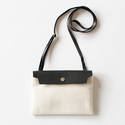
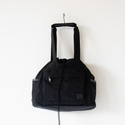
Bag: Drawstring Shoulder Bag / CI-VA
Shoes: SHELLCAP SLIP-ON / PRAS
Do you know what a cut and sewn top really is?
The cut and sewn top is a coordination staple,
an all-year piece that pairs with almost anything,
and yet, although we all feel we know what one is,
its precise meaning is surprisingly little known.

"Cut and sewn" is a term coined in Japan from English,
and it means, quite literally, a garment that has been cut and sewn together.
To begin with, the fabrics we wear fall broadly into
woven cloth, knitted cloth, and everything else.
A collared cotton shirt is of course also cut and sewn together,
but what defines a cut and sewn top, roughly speaking,
is that the fabric itself is knitted.

Top: Basque Shirt 115 MARINE/BLANC / Le minor
The cut and sewn top, enjoyed in every form
In other words, the garments we call "cut and sewn" share two characteristics:
1. the cloth is knitted (linked loops, with stretch)
2. the cloth shows seams where the pieces were sewn together
Seen that way, sweatshirts and T-shirts belong to the same family.
They are no longer limited to inner or outer layers either -
these days you'll find everything from dresses to bottoms made the same way.

Top: Basque Shirt 008 BLANC/ROY / Le minor
Bottoms: Linen Ramie Tapered Trousers / ZUTTO
Bag: FUKURO 2-Way Circle Shoulder Bag M / REN
Part of the fun of a classic cut and sewn top is pairing it with bottoms and accessories.
With a striped one like the piece in the photograph,
tapered trousers emphasise the vertical line through the lower half
and make the whole silhouette look long and lean;
with wide trousers, tucking the hem in
lengthens the leg line.
The silhouette changes with the way you wear it.
And if it's a piece you love, all the more reason
to keep it in good shape and guard against fading.
Tips for washing a cut and sewn top
For this article we've used a Basque shirt by Le minor -
with that lovely slightly rough cotton hand - as our example.
Bearing in mind that a cut and sewn top is made from knitted cloth
and has seams where the panels are joined,
caring for it in a way that suits how it was made will make it last far longer.
First, what to watch for when washing.
The basics are to check the care label
and follow a washing method suited to the colour, the pattern and the cloth.
Imported garments made in Europe in particular
often carry no Japanese care label (JIS) and are marked to the overseas standard (ISO) instead.
The symbols are read a little differently, so it's worth learning them properly.
▼ Overseas care symbols worth watching for

1. Do not wash in water
2. Do not bleach
3. Do not dry clean professionally
4. May be dry cleaned professionally
5. Do not tumble dry
6. Do not iron
You can probably guess that a symbol with a cross through it
means "do not do this",
but some very similar-looking marks mean something entirely different, so take care.
"3. Do not dry clean professionally" and "5. Do not tumble dry" in particular
look alike and are easily confused.

The Le minor shirt shown here is 100% cotton,
and can of course be washed in water at home.
According to the label on the shirt:
· may be washed in water up to 30 degrees
· may be ironed (low temperature)
· do not tumble dry
Basque shirts like this one
often shrink with repeated washing, because of the fibre and the knit structure.
Avoid the tumble dryer above all.

For black or navy pieces, or navy-based stripes,
a detergent made for dark colours is a good choice.
If you use a laundry net, put just one
cut and sewn top in each net.
Packing a net full of garments
causes colour transfer and abrasion, and ends up damaging the clothes instead of protecting them.
Used properly, a laundry net also keeps colour from bleeding onto your other clothes.
How you dry it decides how long it lasts
The single most important point in making a cut and sewn top last is how you dry it after washing.
Drying flat is ideal,
though space and the sheer number of items make that hard to do every time.
A hanger is the usual choice, but without care you can easily end up with:
· a stretched neckline
· odd marks at the shoulders where the hanger doesn't fit the garment
If the shoulders keep slipping off the hanger,
wrap a rubber band or a towel around the point where it slips
to make a simple stopper before you hang it up.

And for a piece you especially treasure, there's an advanced trick: use two hangers.
Straight out of the spin cycle, the weight of the body and sleeves pulls the garment downward.
Pass the body over a second hanger and drape the sleeves over the shoulders of the hanger,
and the weight is spread out so the shape holds.

One of our staff washed a brand-new Basque shirt and noted how it felt to wear (photograph, left).
▼ Brand new
· That slightly rough texture typical of a Basque shirt, fairly firm against the skin.
· It arrived with sharp fold creases and a crisp hand.
· There was a faint smell, rather like a garment fresh from the dry cleaner.
▼ After the first wash
· It keeps the crispness of a new shirt, but the cloth feels softer.
I'm looking forward to seeing how the character develops from here.
· The smell I noticed at first has gone completely.
· Sleeve length and body length were almost unchanged, but the width shrank by roughly 5mm to 1cm.
That said, it isn't enough to make any real difference to the fit.
▼ About a year of wear
· Repeated washing and drying has shrunk it little by little.
· I bought a size up when it was new,
and now, with the shrinkage, it fits just right.
· After drying it seems to stretch lengthwise, which made the shoulders feel tight;
so after the spin cycle I put my arm inside the body and gently pulled it sideways
to smooth out the creases, and the silhouette came back.
New, newly worn in, a year and more down the line -
clothes change gradually as you wear and wash them.
How much a garment shrinks in the wash may well vary with how it is washed and dried.
There's something lovely in the way a piece takes on its own character
according to how each person wears and cares for it.
Loved by seafarers

Finally, a few words about Le minor, the maker featured here.
Le minor is a marine-wear manufacturer founded in 1928
by Madame Gramatiko in Brittany, in the north-west of France.
While other companies have shifted production abroad to cut costs,
Le minor still makes everything at its own French factory, starting from weaving the cloth itself,
and that unwavering approach has earned it trust around the world.
Soft cotton cloth and the quality of French manufacture
have made it a wardrobe staple for a great many people,
and its Basque shirts are still worn as the official approved uniform of the French Navy -
a permanent classic of the form.
The Basque shirt dates back to the 16th century. Fishermen of the Basque region,
close to the Spanish border, wore blue and white striped shirts as workwear
so that a sailor who fell overboard would stand out against the sea.
The French Navy took note and adopted it as uniform in 1853.
As it evolved into military wear it gained sturdier cloth,
a sleeve length designed for warmth and function, and a boat neck that is easy to pull on and off.
Then in the 1920s, the American painter Gerald Murphy,
who kept a studio at Cap d'Antibes in France,
found one in a chandler's shop selling clothing for sailors, and the shirt began to be worn
at resorts and around town. Picasso wore one too.
In Japan, it is said to have become known
through a book by Hemingway.
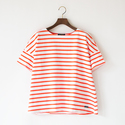
▼ Le minor, the authentic Basque shirt

GUIDE »
CATEGORIES »
- + Gifts by recipient
- + Gifts by scene
- + Clothing
- + Bags / Backpacks
- + Wallets / Card cases
- + Jewelry
- + Shoes
- + Rainy day outfits
- + Kitchen
- + Home
- + Babies / Kids
- + Japanese products
Earn Miles


Payment & Security