.webp)


.webp)


.webp)


.webp)


Welcome to ZUTTO
Free shipping for newsletter subscribers (some areas excluded)
- トップページ/
- ZUTTO Journal/
- お手入れ・エイジング/
- Comparing How Two...

Comparing How Two People Wear Them: The "Asahi Deck Shoes" Edition
This is our "Comparing How Two People Wear Them" series, where we introduce how two different people experience wearing the same item. This time, it's the Asahi deck shoes, perfect for the summer season.
In an age overflowing with countless products, what you wear and what you own is entirely up to you—but there must be a reason behind choosing the very same item as someone else. Here, we explore the appeal of the sneakers made by Asahi, a long-established shoe brand based in Fukuoka, through the experiences of two people who wear them.
Two Different People, Each with Their Own Reason for Choosing the Same Shoes
This time, our two wearers are as follows.

Left: S, Product Manager
Has been a fan for 1 year and 3 months. In her work searching for brands and items that fit ZUTTO's concept, she spends a lot of time out and about, so she's a sneaker person when it comes to footwear. Casual outfits mixed with vintage clothing suit her well, though she occasionally pulls off a nostalgic-style dress with effortless ease.
Right: M, Planning Manager
Has been a fan for 3 months. Prefers a style that's neither too casual nor too conservative. She owns several pairs of sneakers, but doesn't want her outfits to look overtly sporty.
S: I liked the slim silhouette and the restrained use of color—it has such a classic feel. Compared to canvas sneakers from well-known brands, where each part somehow feels like it's competing for attention, Asahi's deck shoes made a good impression because everything comes together so simply.
M: This is a very "ZUTTO thing," but when something I've had my eye on turns out to be worn by another staff member, and they passionately explain how great it is to wear, that ends up being the push that makes up my mind. That's exactly what happened with these deck shoes—I saw S wearing them and thought they looked great. Even though they're sneakers, they aren't overly sporty; the slim, sleek silhouette without any bulkiness felt beautiful to me.
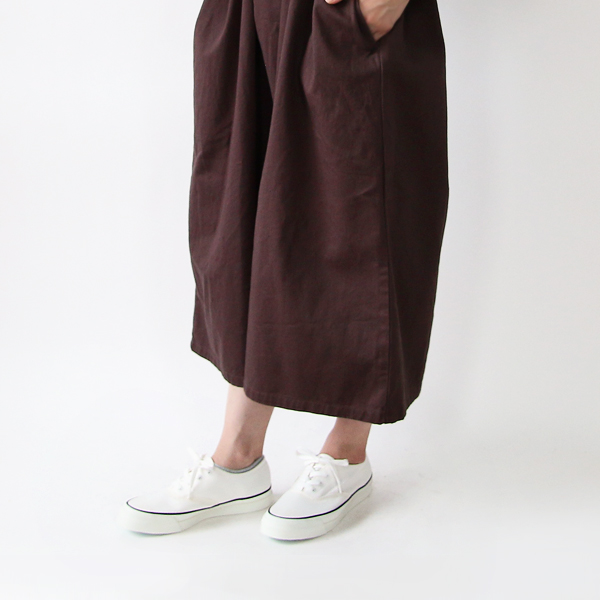
S: Since this was my first time wearing Asahi shoes, I thought I'd start with a basic design for my first pair, so I chose the low-cut, lace-up style in white, the L011/M014 WHITE.
M: I bought mine in spring, so my main reason was simply that white felt like the fresh, right choice for spring and summer wear. I was a bit worried about it getting dirty easily, but since I already had black and navy shoes, I decided to try white as a way to change up the impression of my usual shoe choices.
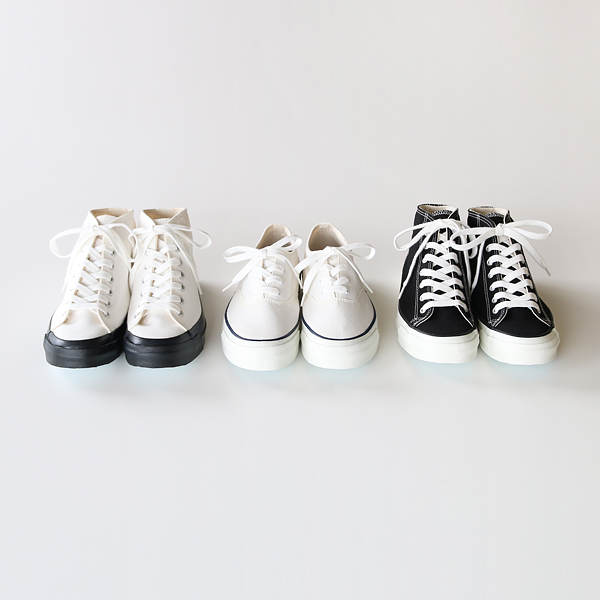
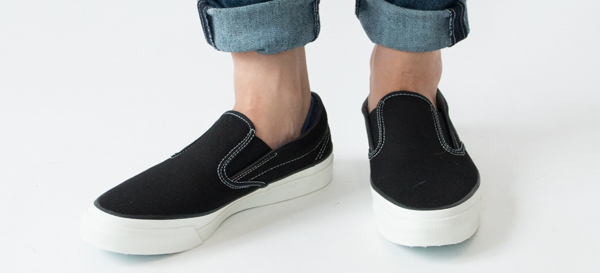
△ Low-cut and high-cut styles. Despite the simple design, there are three color combinations available, plus a slip-on type.
M: About once or twice a week. Since I mostly work indoors, sandals or ballet flats that don't require much thought about ease of walking are fine for me, so I tend to wear a pretty wide variety of shoe types. But I almost never wear heels! I like "shoes that are comfortable but still look stylish," and these deck shoes are lightweight and easy to wear.
S: As long as it's not raining, I'd say I wear mine 3 or 4 days a week. They're white, so dirt shows easily, and I didn't originally expect to wear them this often when I bought them—but the outsole is soft and easy to move in, and they go with just about any outfit, so I end up reaching for them all the time.
M: I usually wear 24cm, but I chose 24.5cm for the Asahi deck shoes. I love how sleek and slim the design is, but that same slimness means my pinky toe rubs against the 24cm size, since my feet are on the wider side—so I sized up to 24.5cm.
S: I usually wear 22.5cm to 23cm, but I chose 23.5cm for the Asahi deck shoes. My feet aren't especially wide, but I picked a slightly larger size with the idea that I might wear thick socks in winter. They're a bit roomy when worn with thin pumps-style socks, but that's easily adjusted with the laces, so it's not a problem.
*ZUTTO carries sizes from 23.0 to 28.0cm. The design is unisex, so of course we recommend them for men as well.
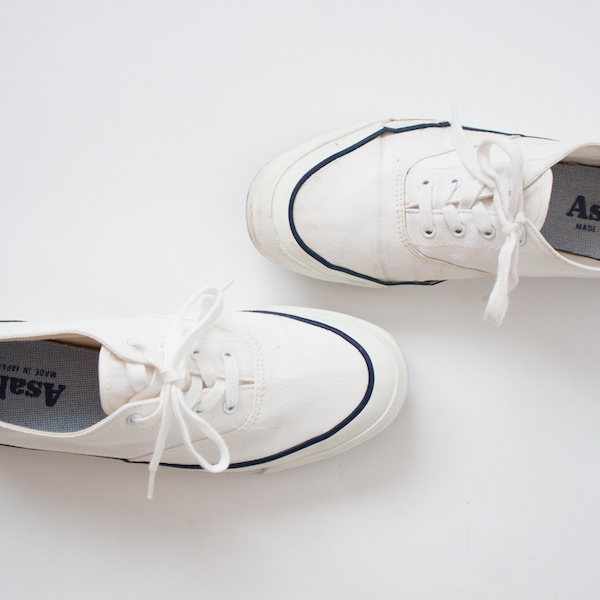
A Look at Their Coordinated Outfits: How the Two Differ
The beauty of white deck shoes lies in how versatile they are with any outfit. Even though these two have quite different styles, the shoes blend naturally into each of their looks, quietly holding their own.
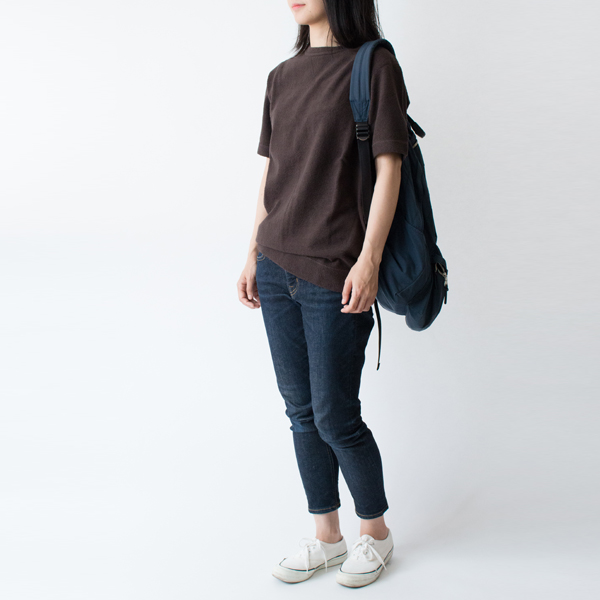
S: A classic combination—Healthknit's "brushed jersey sweat-type short-sleeve T-shirt," which has a brushed finish for a vintage feel, paired with denim. Since my job often means carrying a laptop and product materials around, I use a backpack.
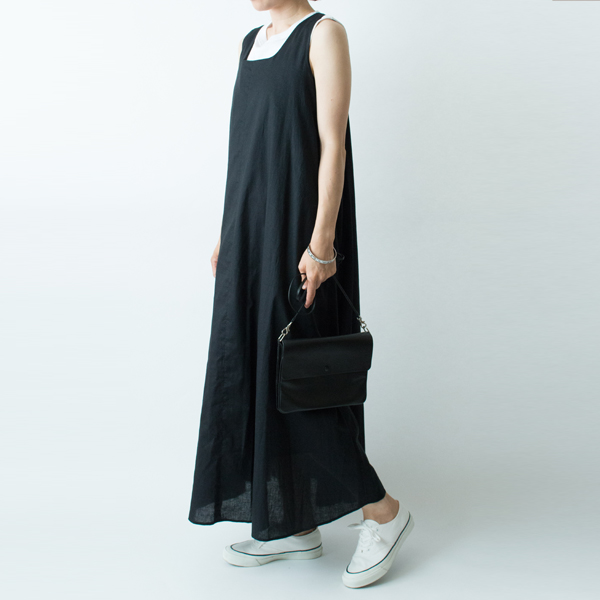
M: My unofficial rule is that I try not to pair denim with sneakers whenever possible. I actually love denim itself, but somehow the casual look of denim with sneakers doesn't suit me, and I find myself wanting to pair sneakers with more feminine pieces, like a dress or a small bag.
What time reveals about an object: comparing the aging
The two of them have worn their shoes for quite different lengths of time. What kind of differences show up between deck shoes worn for "3 months" and those worn for "1 year and 3 months"?
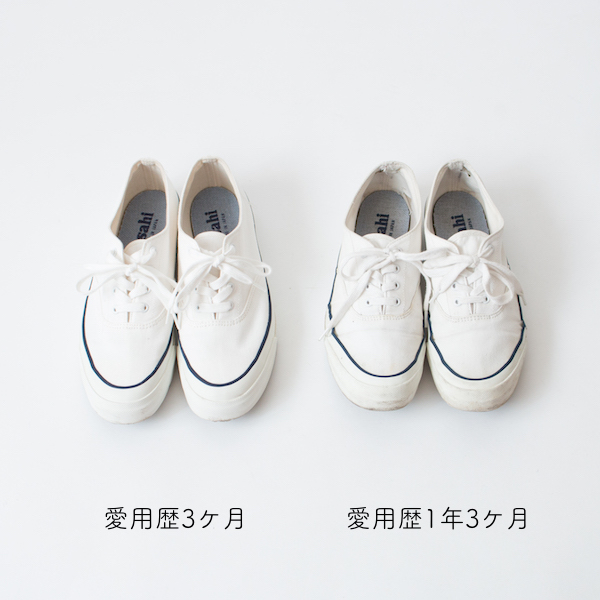
M: Mine still has that new look to it, and I can't deny it looks a bit flat and smooth. Maybe I've been a little too careful with them. Is there anything that catches your eye, S-san?
S: What I've noticed is that the rubber at the base of the big toe and little toe has cracked. Since it's pressed together using the vulcanized manufacturing method, it's more resistant to cracking than other canvas sneakers, but I suppose wearing them so often has led to this result...
That said, I actually love how the fabric has softened and the creases from walking have formed, since I think of them as expressions of character—they're one of my favorite things about these shoes.

M: S-san, hasn't the shape of your shoes changed just a little bit? It looks like they're turning slightly inward, as if molding to the shape of your feet.
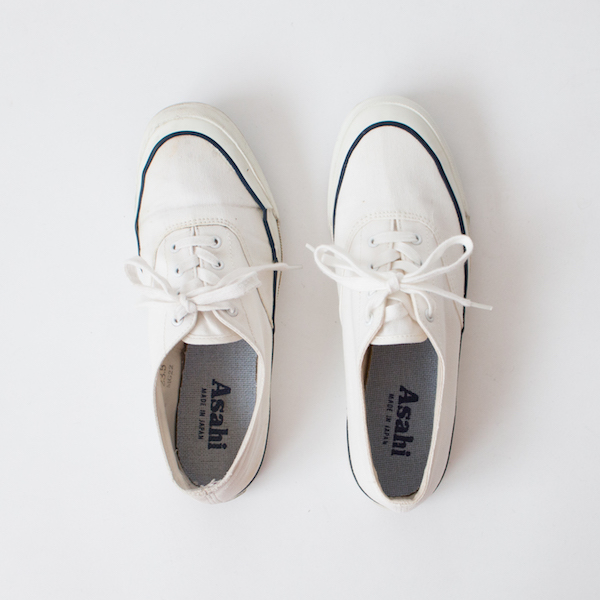
S: You're right. I hadn't noticed, but placing them next to a pair I've worn for a shorter time really shows the difference. Since I really do wear them so much, they've probably changed a bit to fit the shape of my feet. No wonder they're so comfortable to wear (laughs).
Things fellow fans of these shoes want to secretly ask each other: "How about this?"
① Do the stains on white canvas deck shoes bother you?
S: Since I wear mine three or four times a week and I'm out all day, part of me has resigned myself to the fact that they're going to get dirty. I do try to avoid wearing them on rainy days at least, but there was one time I got caught in sudden rain, and they ended up a bit dirty from mud splashes...
M: It's been 3 months since I started wearing mine, but maybe because I only wear them on sunny days, I haven't been bothered by dirt yet. The only thing I've done is rub an eraser on a small stain that got on the rubber side.
Unlike S-san, I mostly work indoors, and I take my shoes off as soon as I get to the office, so I think I just have far fewer chances to get them dirty. That said, I'm not trying to keep them spotless—I want them to develop some character, so while I'm careful about major stains, I'd like to let them age a bit more naturally.

② S-san, have you ever washed these deck shoes?
S: I've washed them quite a lot, actually. I think I've washed them at least four times since I bought them. I probably should be using detergent made specifically for canvas sneakers, but I just scrub them with regular bar soap. Since I don't want the white canvas fabric to turn yellow, I make sure to rinse thoroughly and dry them in the shade.
M: Being washable is actually a big point when it comes to owning white canvas sneakers. You tend to hesitate to buy them because you worry about stains, so it's reassuring to know you can wash them even after they've developed some signs of wear.
S: Someone from a different shoe manufacturer once told me that washing canvas sneakers actually tightens the weave of the fabric and makes it more durable. So apparently, washing them is recommended not just for removing dirt, but also for keeping them sturdy so you can enjoy wearing them for a long time.
ーーーーーーーーーーーーーー
These are the deck shoes by Asahi that both of them picked up for being easy to wear in daily life and washable, all while being white canvas shoes. The way they pair effortlessly with skirts, dresses, and pants of every style really shows their talent as a quiet supporting player. They don't make a big statement, but their beautifully clean silhouette catches the eye—these are deck shoes with a little something extra.
▶ The item featured this time: Deck Shoes L011/M014 WHITE

From a long-established maker that has supported Japan's shoemaking culture
Asahi is a brand developed by Asahi Shoes, a shoe manufacturer that has supported Japan's shoemaking culture for over 120 years since its founding in Kurume, Fukuoka Prefecture, in 1892.
These shoes use a last with the beautiful shape created in the 1980s, based on American-made deck shoes from the 1970s. Manufacturing is carried out from start to finish by skilled craftsmen within Japan, maintaining a high level of quality. The canvas upper is joined to the rubber sole using the vulcanized manufacturing method, in which heat of nearly 120 degrees and pressure trigger a chemical reaction.
This vulcanized manufacturing method can dramatically increase the strength and elasticity of both the upper and sole of a shoe, but because it requires the hands of skilled craftsmen, it's a rare method that only a limited number of factories in Japan are able to handle.
In addition to the low-cut lace-up type featured here, high-cut and slip-on types are also available. There's also a variety of color combinations for the upper and sole.
▼Click here for the Asahi brand page
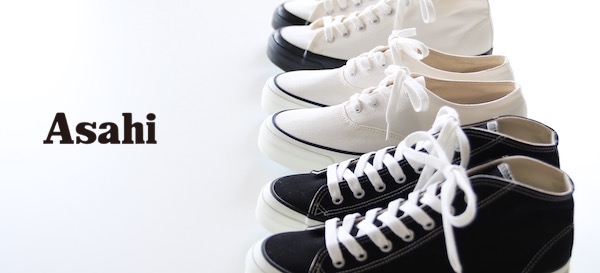
▼Not sure which size to choose? "Three staff members tried on and compared Asahi shoes."
GUIDE »
CONTENTS »
CATEGORIES »
- + Gifts by recipient
- + Gifts by scene
- + Clothing
- + Bags / Backpacks
- + Wallets / Card cases
- + Jewelry
- + Shoes
- + Rainy day outfits
- + Kitchen
- + Home
- + Babies / Kids
- + Japanese products
Earn Miles


Payment & Security