.webp)


.webp)


.webp)


.webp)


- トップページ/
- Home/
- Home decor/
- Made to Order Echizen Washi Panel PATA
 Yamatsugiseishisyo
Made to Order Echizen Washi Panel PATA
Flap flap flap
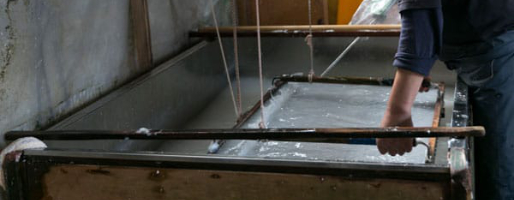
Echizen City in Fukui Prefecture is one of Japan's oldest washi (Japanese paper) production areas, with a history spanning approximately 1500 years. Its name is mentioned in ancient documents of the Shosoin, and it has long been a place where paper was made for offerings to the imperial court and as official paper for the Edo shogunate. Since its founding in the first year of the Meiji era, Yamaji Paper Mill has continued to produce handmade washi.
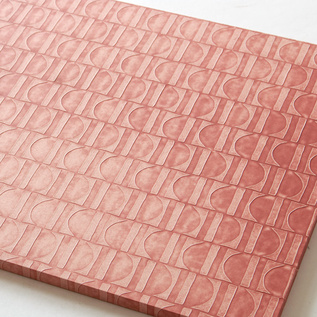
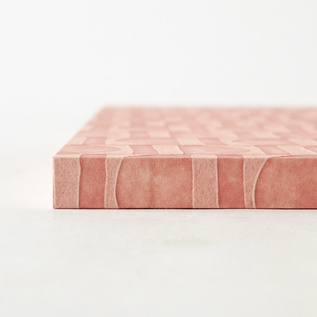
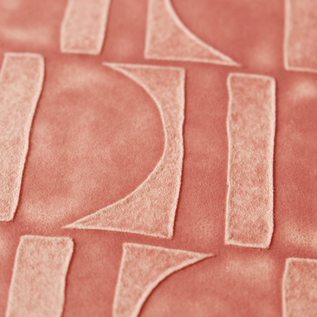
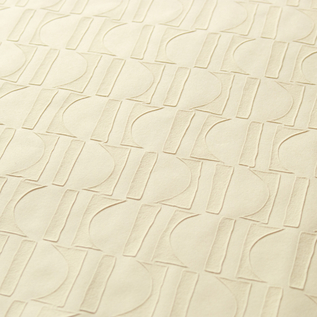
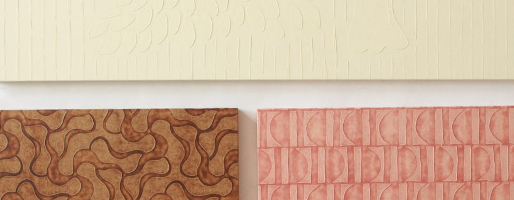
The "Uki-gami" crafted by Yamaji Paper Mill is based on traditional hand-making techniques, featuring textures designed from digital data that are embossed onto the paper's surface. The pattern's appearance changes with the angle of light, and you can feel the distinct relief with your fingertips. The contours appear more three-dimensional than typical embossing due to a unique technique developed by the mill. The colors are dyed using pigments that resist fading, typically used for dyeing kimono, allowing you to enjoy vibrant hues for a long time. This is a new form of washi born from the intersection of traditional craftsmanship rooted in a 1500-year-old production area and the precision of digital technology.
Everyday Scenes as Patterns
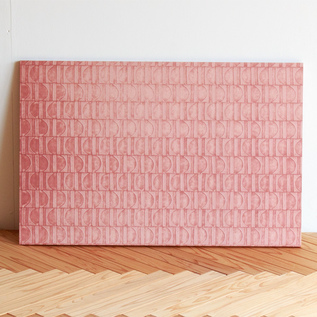
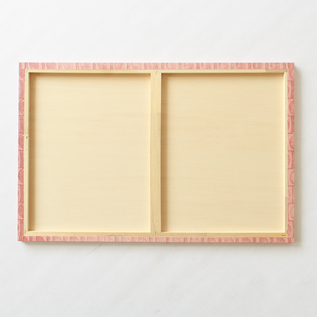
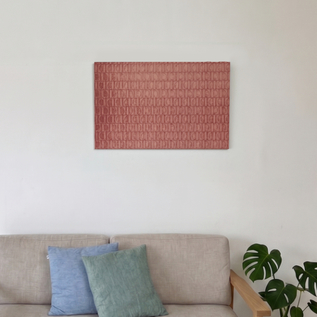
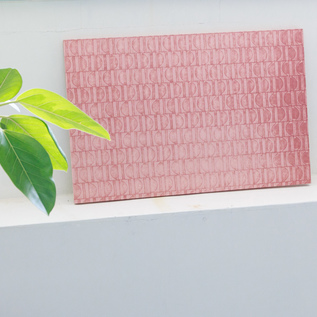
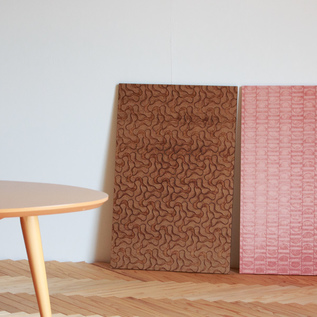
The Uki-gami panels combine the hand-making techniques of Echizen washi with the embossed textures designed from digital data, framed in a wooden structure. The size is 80×52 cm, maximizing the dimensions of handmade washi. Unlike smaller products like tea canisters, the overall pattern and the relief feel like a single piece of art. The texture of the washi and the three-dimensional pattern add a tactile element to your interior space.
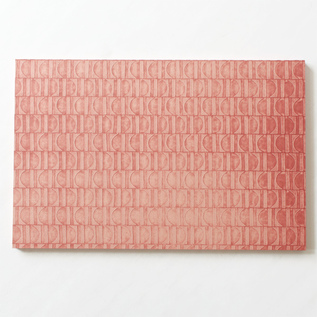
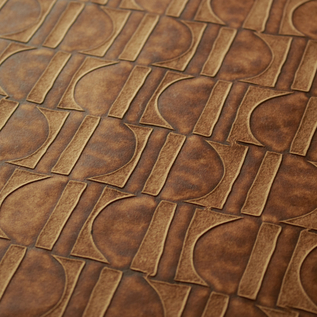
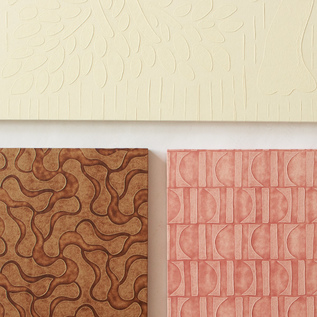
The design is by Mr. Taniguchi of Yamaji Paper Mill, who is both a designer and a washi craftsman. The pattern "PATA" features hand-drawn semicircles and rectangles that repeat in a rhythmic manner. When you look closely, the shapes begin to resemble the letters "P" and "T." It was noted that when one realizes the sequence of letters, the name naturally came to be. Although designed with a repeating pattern in mind, when viewed as a whole panel, slight distortions from the hand-making process become apparent. It appears orderly yet not perfectly aligned. This intentional imperfection adds to the charm of the design, blending the traditional image of washi with the symbolic image of the alphabet, creating a folk art-like atmosphere.
The production and finishing of the wooden frames are also carried out locally. The frames are crafted by a workshop that has been making tools for washi production in Echizen, while the framing is handled by a specialist who also works on hanging scrolls for local shrines and temples. The three elements that make up this panel—paper, wooden frame, and mounting—are all produced within the region, showcasing the enduring skills and craftsmanship that remain in this area.
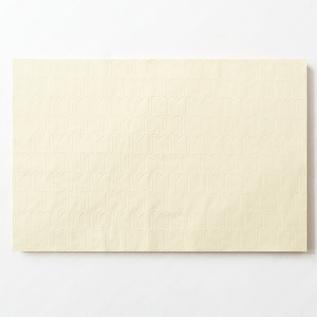
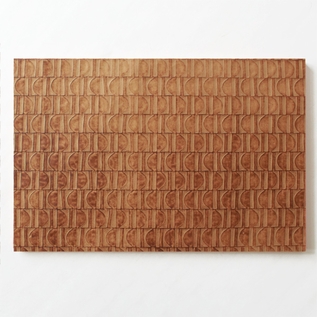
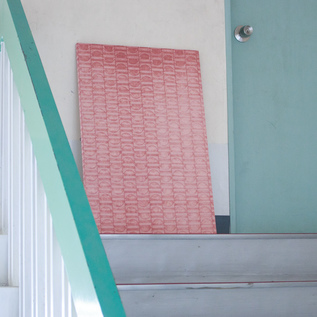
You can choose from three colors: Natural, Gray Sakura, and Rikyuu Tea. The Natural color is unbleached (with a transparent coating to reduce dirt and fluff), showcasing the original texture of the Uki-gami. From a distance, the pattern is subtle, becoming apparent as you approach, making it a color that doesn't overpower. The addition of Gray Sakura brings a vibrant expression, while the grayish-brown of Rikyuu Tea blends seamlessly into any space, whether traditional or modern. Combine your favorite colors and patterns to create your own unique piece.
Bringing Washi into Modern Life
Founded in the first year of the Meiji era, Yamaji Paper Mill is a manufacturer of handmade artistic washi based in Echizen City, Fukui Prefecture. Initially, it produced plain papers such as Housho, and around 1950, it began manufacturing patterned washi with techniques like "Hikkake," "Suki-awase," and "Nagashikomi." Amid the transition from washi to Western paper in Japanese life, the brand was established with the desire to discover new uses and possibilities for washi while preserving the 1500-year-old hand-making techniques of Echizen. To ensure that the inherited skills are passed on to the next generation, the mill continues to create products that blend traditional hand-making techniques with modern digital technology, aligning with contemporary lifestyles.

.jpg "パネルは節や傷がある場合があります。")
| Size | 80 cm in width × 52 cm in height × 2 cm in depth. |
| Weight | 1210g |
| Material | Washi, wood |
| Country of origin | Japan |
| Gift box | This product would be packaged in a gift box. |
Feature of product
-
This is a made-to-order panel using Echizen washi floating paper.
You can choose from three patterns, each available in three colors.
About Orders
-
This item is made to order. Please allow approximately 2 months for delivery.
This item cannot be combined with other items. We kindly ask that you place a separate order.
Cash on delivery is not accepted for this purchase. Please be aware that, due to payment processing, payment confirmation may occur before shipping.
This product is non-returnable and non-exchangeable, except for defective items.
Precautions
-
Each item is handcrafted, so the patterns and colors may vary from product to product. Additionally, there may be color irregularities, but please understand this as part of the charm of handmade work.
The color and texture of the product may vary slightly due to the shooting conditions and display settings.
Since the surface is treated with pigments, there is a possibility of color transfer to other items if rubbed.
Please avoid using it in places exposed to direct sunlight for long periods.
Be cautious of water exposure, as it may cause the washi paper to peel off.
Washi paper is made from natural materials, so you may see plant skins, fibers, or oils. This does not affect its usability.
Notice
- At Yamaji Paper Mill, we also accept custom panel production in original colors, patterns, and sizes. If you are interested, please contact ZUTTO Customer Support.
よみもの|伝統工芸をインテリアに。浮き紙のアートパネル。
よみもの|越前和紙と浮き紙のこと。
ブランド紹介

Yamatsugiseishisyo
山次製紙所は、明治元年創業、越前和紙の手漉き美術小間紙の製作所です。創業時は奉書等無地物を製造し、1500年の歴史の「越前和紙」の技法を守りながら、1950年頃より「引っ掛け」「漉き合わせ」「流し込み」等の模様小間紙の製造を開始しました。
そうした山次製紙所が、日本の生活に馴染んでいた和紙が洋紙に置き換わる中で、1000年以上の歴史をもつ伝統製法で一枚ずつ手作業で作られる「手漉き和紙」に「多様な用途」を持たせ、和紙の可能性を模索していきたいとブランドを立ち上げました。
革新的な技術で現代に合うものづくりで、日本文化を世界に発信し続け、未来へ繋げるブランドと言えます。

| 商品 | 価格(税込) | 在庫 | 個数 | |
|---|---|---|---|---|

|
¥46,200(税込) |
◯
|
||

|
¥46,200(税込) |
◯
|
||

|
¥46,200(税込) |
◯
|
 ペーパー
ペーパー
ラッピング リネン
リネン
ラッピング 熨斗
熨斗 メッセージ
メッセージ
カード 海外発送
海外発送 ZUTTO-
eギフト
お気に入りに追加されました
Added to cart

【受注生産※約2ヶ月でお届け】越前和紙 浮き紙のアートパネル PATAには、他にもこんな仲間がいます


【受注生産※約2ヶ月でお届け】越前和紙 浮き紙のアートパネル PATAを見た人はこんなアイテムも見ています
-
YAMAICHI
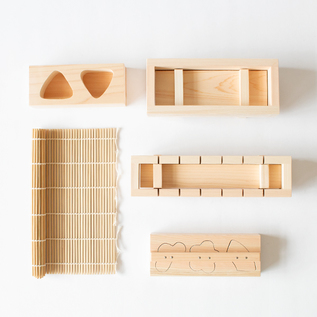
SUSHI RICE BALL MOLD¥1,760〜(税込)
-
SIWA|紙和(シワ)
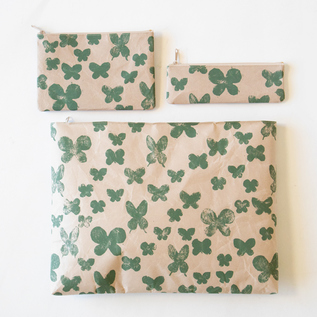
SIWA mina perhonen PEN CASE AND PC CASE¥15,840(税込)
-
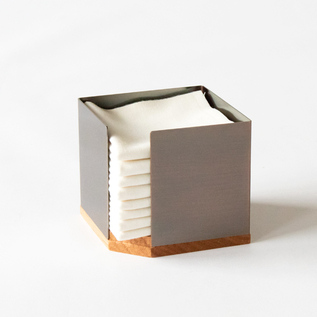
Sasasa
WASARASHI SQUARE¥7,700(税込)
-
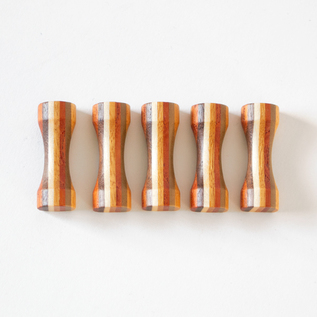
露木木工所(ツユキモッコウショ)
YOSEGI MARQUETRY CHOPSTICK REST¥6,710(税込)
-
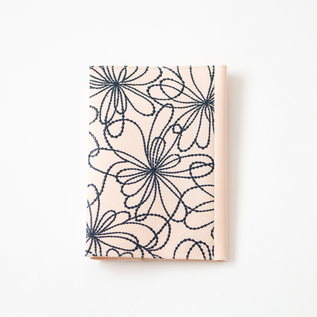
SIWA|紙和(シワ)
SIWA URUSHI BOOK COVER FLOWER¥8,800(税込)
-
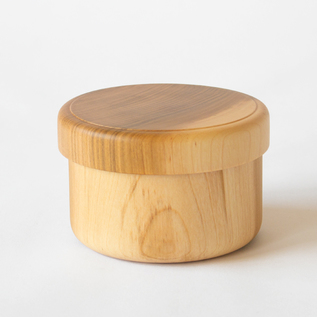
SHIRASAGI
PERSONAL OHITSU¥9,130(税込)
-
露木木工所(ツユキモッコウショ)
YOSEGI MARQUETRY ACCESSORY BOX¥9,350(税込)
-
YAMAICHI
WOODEN BOWL FOR SUSHI RICE¥4,400〜(税込)
-
Tone
COPPER TRAY SQUARE¥5,500〜(税込)
-
Fores(フォレス)
Lamp Oval¥6,050(税込)
-
FUTAGAMI
JAPAN DELIVERY ONLY Stationery tray black¥6,270〜(税込)
-
KUTANI CHOEMON
CHOEMON SEATED CAT¥14,300〜(税込)
-
marumasu
ZABUTON CUSHION RECTANGLE¥6,050(税込)
-
Sargadelos(サルガデロス)
BIRD ORNAMENT¥6,050(税込)


GUIDE »
CATEGORIES »
- + Gifts by recipient
- + Gifts by scene
- + Clothing
- + Bags / Backpacks
- + Wallets / Card cases
- + Jewelry
- + Shoes
- + Rainy day outfits
- + Kitchen
- + Home
- + Babies / Kids
- + Japanese products
Earn Miles


Payment & Security