
.jpg)





.jpg)

.jpg)
.jpg)




- トップページ/
- ZUTTO Journal/
- ブランドストーリー/
- # The Appeal of J...

The Appeal of JOHN SMEDLEY Fine Gauge Knits, Pursuing Comfort and Warmth
Sweaters are a winter wardrobe staple. Among the many types of sweaters, there is a category known as fine gauge knits. Made by finely knitting thin wool yarn, fine gauge knits offer both comfort and warmth. This time, we'll take a look at the fine gauge knits crafted by JOHN SMEDLEY, a long-established knitwear maker born in England, and explore what sets fine gauge knits apart from other types, along with their appeal.
(Article updated: October 31, 2019)
What Exactly Is a Fine Gauge Knit?
Do you know exactly what kind of knit a fine gauge knit is?
"Gauge," as in "fine gauge," is a unit that expresses the density of needles on a knitting machine, indicating how many needles are found within one inch (2.54 cm). As the gauge number increases, more stitches can be created within the same length of fabric—meaning the fabric has finer, more detailed stitching.
Knits made loosely with thick yarn are called low gauge (5 gauge or below), while 7, 8, and 10 gauge are considered middle gauge, and 12 gauge or above is called high gauge. The finer the yarn used, the higher the gauge becomes, but achieving such delicate knitting requires that much more skilled craftsmanship.
JOHN SMEDLEY, which we're introducing here, possesses the technology to knit at an even finer 30 gauge, and is known as a pioneer of fine gauge knitwear.

We've learned that, simply put, a fine gauge knit is one with "fine stitching." Because of this fine stitching,
・It fits closely to the body, blocking wind and providing excellent insulation
・It displays a soft, beautiful sheen and luster
・The texture against the skin is smooth and pleasant
・Being lightweight, it's less likely to cause shoulder stiffness when worn
These are the benefits that arise.
When you think of wool knits, you might picture long fibers that feel prickly, or a rough texture against the skin—but by choosing a high gauge knit, you can experience a smooth, silky feel even with the same wool.
In that sense, it's no exaggeration to say that high gauge knits have dispelled the concerns traditionally associated with wool knitwear.
JOHN SMEDLEY, Born from an English Spinning Mill

Let's now introduce JOHN SMEDLEY, a long-established English brand.
JOHN SMEDLEY was founded in 1784, in the early days of the Industrial Revolution, in the village of Lea Bridge in Derbyshire, England. In its early years, the company focused on spinning cotton and weaving muslin, a type of textile, but from the end of the 18th century, it began producing stockings and woolen goods.
In 1819, John II, who succeeded his predecessor, established a policy of selecting only the highest quality materials and handling every process—from spinning and knitting to sewing—in-house. This policy became the driving force behind JOHN SMEDLEY's growth from a small spinning mill into a widely recognized knitwear maker.

The company subsequently introduced the most advanced spinning and knitting machines of the time, achieving more efficient production while also manufacturing extremely fine-stitched fine gauge knits. JOHN SMEDLEY's fine gauge knits—thin yet warm, soft and beautiful—have become synonymous with the brand, and continue to be made in-house to this day.

JOHN SMEDLEY enters into direct contracts with carefully selected farms, exclusively sourcing high-quality New Zealand merino wool for use as raw material in its products. At these farms, each sheep is given a name and carefully managed and raised. The long-fibered merino wool raised this way has a natural waviness called crimp, which provides elasticity and stretch, while the snow-white yarn produces products with an elegant, beautiful sheen and supple texture.
Among this top-grade merino wool, JOHN SMEDLEY uses only the longest-fibered raw wool, which is spun and dyed before being made into products. By dyeing the raw wool in-house, the company is able to maintain superior quality that ensures the luxurious texture lasts.
How a Single Fine Gauge Knit Is Made
As mentioned earlier, JOHN SMEDLEY has proactively introduced the latest spinning and knitting machines since its founding, which is how it has continued to produce fine gauge knits that remain highly regarded to this day.

JOHN SMEDLEY uses different knitting machines for different parts of a garment. In 1877, the company introduced a then-cutting-edge knitting machine called the Cotton's Patent machine, which could evenly knit parts such as the body and sleeves without cutting the fibers. Later, the company adopted a fully fashioned knitting machine called the Bentley for knitting the front and back body panels—a machine that, although production of it has already ended, is said to still be in use, maintained carefully, for over 70 years.
In addition, various knitting machines have been introduced to match the shape of each knit, including a whole garment knitting machine capable of knitting an entire piece in one go. The way the brand maintains such long relationships with its machines—sometimes spanning decades—in order to preserve the finish and quality of its products reflects a spirit found in British craftsmanship: a deep respect for taking good care of a single thing over time.

After each part is knitted, the pieces are sewn together by hand. Rather than using a sewing machine, hand-sewing allows for stretch, giving the garment a better fit on the body. The pieces are then washed, dried, and pressed, after which skilled artisans carry out all 35 processes, including cutting the neckline and attaching buttons and labels. A final pressing then completes one piece of fine gauge knitwear.
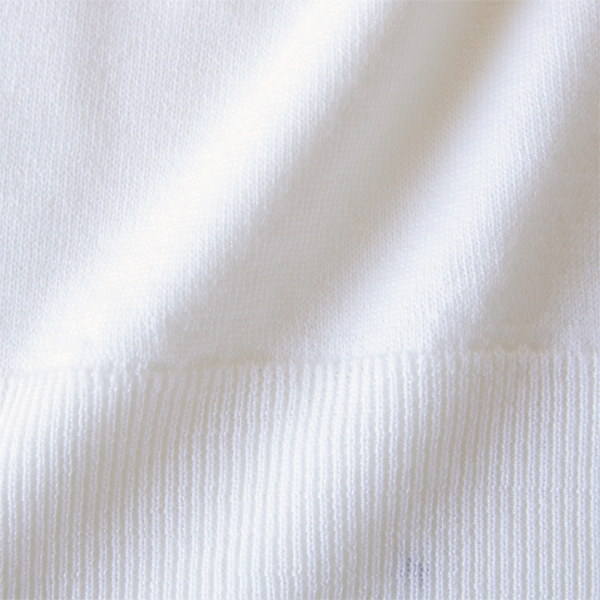
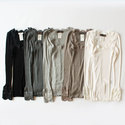
Carefully knitted, fine gauge knitwear has a beautiful sheen
Fine Gauge Knitwear from JOHN SMEDLEY
From sweaters to stoles, JOHN SMEDLEY offers a full lineup of fine gauge knitwear items that can be worn by both women and men.
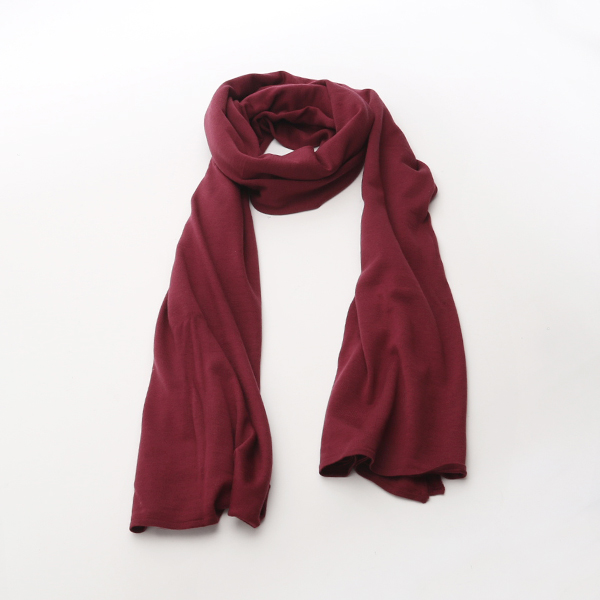

A merino wool fine gauge knit, the WINGS stole.
This large-sized stole lets you enjoy the smooth, "sarasara" texture unique to fine gauge knitwear. The fine stitching firmly blocks out cold air, and thanks to its stretch, it resists wrinkling and can be wrapped in a variety of ways. Naturally, it can be wound around the neck, but it can also be draped over the shoulders like a cardigan, or used as a lap blanket—all recommended ways to enjoy it.
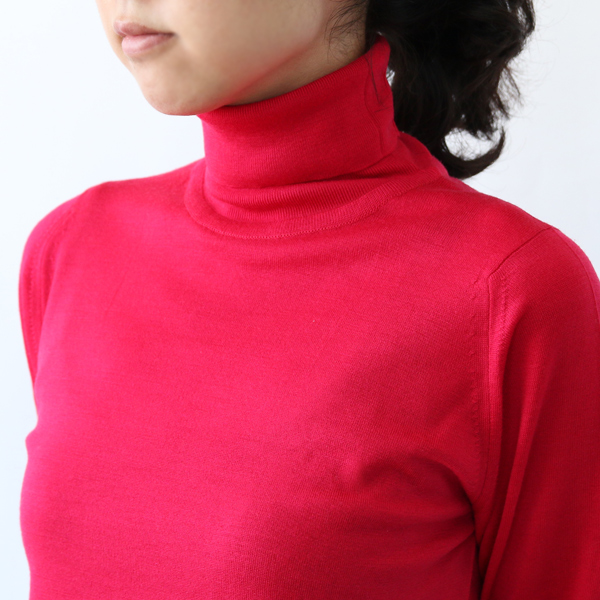
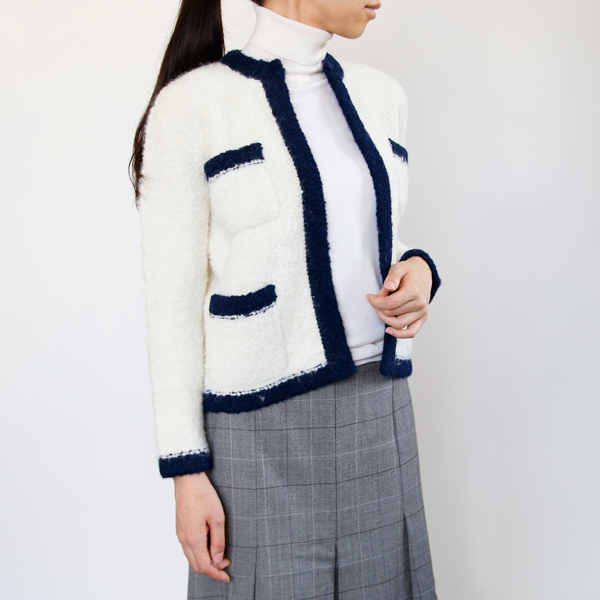
A simple turtleneck for women, the 30G Long Sleeve Turtleneck.
As the name suggests, this is knitted from 30-gauge merino wool, offering a gentle wearing experience with no scratchy feeling against the skin. Although there are seams, such as where the body meets the sleeves, the construction is so soft that you hardly notice them—a testament to the careful knitting process. It's a reliable staple for winter, perfect for layering under outerwear or cardigans.
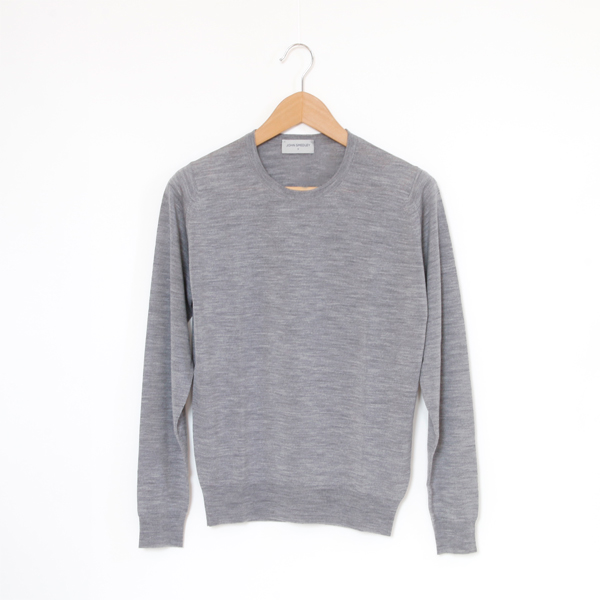
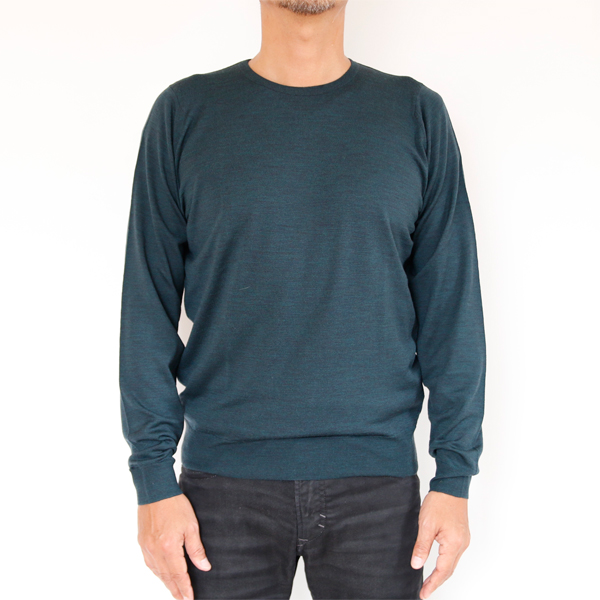
A crew neck style fine gauge knit for men, the Men's A3835 Long Sleeve Crew Neck Pullover.
This standard fine gauge knit shape represents the brand well, and its versatile design makes it easy for anyone to style. Another appeal is the elegant sheen unique to fine gauge knitwear, which lends a refined impression even when worn alone. Since it's a crew neck style, it also looks stylish layered over a shirt or cut-and-sew top.
How to Care for Fine Gauge Knitwear
For JOHN SMEDLEY fine gauge knitwear, the basic care method is seasonal dry cleaning.
If storing for a long period, we recommend using mothballs. Be sure to open your closet or dresser from time to time to let air circulate.
▽Click here for the JOHN SMEDLEY brand page

GUIDE »
CATEGORIES »
- + Gifts by recipient
- + Gifts by scene
- + Clothing
- + Bags / Backpacks
- + Wallets / Card cases
- + Jewelry
- + Shoes
- + Rainy day outfits
- + Kitchen
- + Home
- + Babies / Kids
- + Japanese products
Earn Miles


Payment & Security