


.webp)


.webp)


.webp)


.webp)


Welcome to ZUTTO
Free shipping for newsletter subscribers (some areas excluded)
- トップページ/
- ZUTTO Journal/
- ブランドストーリー/
- Handwoven hats fr...

A handwoven hat from Ecuador. Let the light and durable panama hat take center stage in your look
Carefully woven from natural plant fibers, the panama hat has become a beloved fashion item here in Japan, standing out among the many hats available. Tracing its roots, however, leads us to a country on the opposite side of the globe from Japan: Ecuador. This time, we introduce Ecua-Andino, a brand that has been crafting traditional panama hats in Ecuador.
The Panama Hat: Its Roots Trace Back to Ecuador

Panama hats are born in Ecuador, a country situated directly on the equator on the western side of South America.
The Republic of Ecuador is a South American nation located almost directly opposite Japan on the globe. Known as the country the equator passes through, it experiences intense sunlight during the day on clear days. The panama hat was devised to protect against such sunlight and UV rays, and it is made by weaving toquilla straw (panama straw).
There are several theories regarding the origin of the striking name "panama." One popular account holds that during the construction of the Panama Canal in the Republic of Panama, many laborers wore hats made in Ecuador, and thus the hats came to be called "panama hats."

Toquilla straw (panama straw), the raw material for panama hats, is a plant with long stalks and large leaves, native to Ecuador and Peru. These large leaves are split into thin strips, which are then woven by hand.
Compared to other hats, the panama hat has a distinctive feature: its traditional shape has remained unchanged for many years. The reason for this lies in the fact that production methods, including the weaving techniques, were traditionally passed down only within families, with the most skilled weavers handing down their knowledge to future generations without teaching outsiders. Because weavers have inherited traditional production methods generation after generation, a culture naturally emerged that produces consistently high-quality products.
As a result, even today, we can still get our hands on panama hats with supple, beautifully shaped silhouettes created through fine, meticulous weaving.
Ecua-Andino's Panama Hats: Giving Back to the Villages of Ecuador
Ecua-Andino, the brand we introduce here on ZUTTO, is a panama hat brand founded in 1985 by Alejandro Recalde and Edgar Sánchez. The two had previously dealt in other Ecuadorian crafts, such as clothing and musical instruments, but after encountering a musician wearing a panama hat, they were struck anew by the charm of the panama hat and resolved to spread Ecuador's proud traditional craftsmanship to the world.
Since its founding, Ecua-Andino has produced countless panama hats. What sets the brand apart most is not just the panama hats themselves, but its approach to making them.
The two founders built a system in which the panama hat, one of Ecuador's specialty products, is made together with the people of local villages, allowing local residents to work while maintaining their own way of life. Specifically, rather than carrying out every step—cultivating the toquilla straw, weaving, and finishing—in a single location, they established a production system in which the work is divided among multiple villages. By creating a system to move products between different regions, the brand's hats are now made by more than 3,500 people, including 800 weavers, spanning eight different regions.

The harvested toquilla straw is trimmed to a uniform length and checked for quality—an essential step for weaving.

No gas is used at all when boiling the straw; firewood is used instead. Adjusting the heat and timing is where the skill of experienced craftspeople truly shows.

The bleached, softened toquilla straw is dried indoors so it isn't over-dried by the intense sunlight.
The toquilla straw used by Ecua-Andino grows largely in jungle areas that cars cannot access, so it is harvested with the help of donkeys and horses. After harvesting, the straw is sorted by quality and trimmed to a uniform length. Straw that does not meet the quality standard at this stage is said to be used for other purposes, such as roofing material for houses.
The selected toquilla straw is boiled thoroughly to bleach it and give it softness, then dried. Although this process may look simple, the amount of firewood and the length of time required vary depending on the growing season and weather conditions of the raw material, and finding the optimal timing is said to rely on the "intuition" of the craftspeople carrying out the work.

After drying, the straw moves on to the weaving process. Many weavers grow out their nails so they can weave each fine strand of toquilla straw without error.

Depending on the weaving technique, some work must be done standing rather than sitting. To ease the strain on their backs, weavers lean against a special stand as they quietly continue their weaving. It is said that weaving a single hat can take as long as 8 months.

Once the weaving is complete, the hat's shape is adjusted, and finishing touches such as dyeing and attaching a band are applied to complete the product.
The dried toquilla straw is sorted strand by strand to a uniform thickness and then transported to the weavers' regions. The straw is prepared to different thicknesses depending on the type of weave, and the weavers craft each hat using techniques passed down through tradition. Once woven, the hats are finished with dyeing, bands, or other decorative touches depending on the product, finally becoming the finished item.
It's said that even in the shortest cases, a single product takes more than half a year from cultivation to finishing. The process by which one hat comes into being, passing through the hands of many artisans along the way—this too is part of what defines Ecua-Andino, and it may well be the true value at the heart of this careful craftsmanship.
How to Wear a Panama Hat
At ZUTTO, we carry four styles of Ecua-Andino hats in total. From classic shapes to more playful designs, please take your time to find the one that suits you best.
The one to choose first. A classic shape: Ecuador Hat Boater

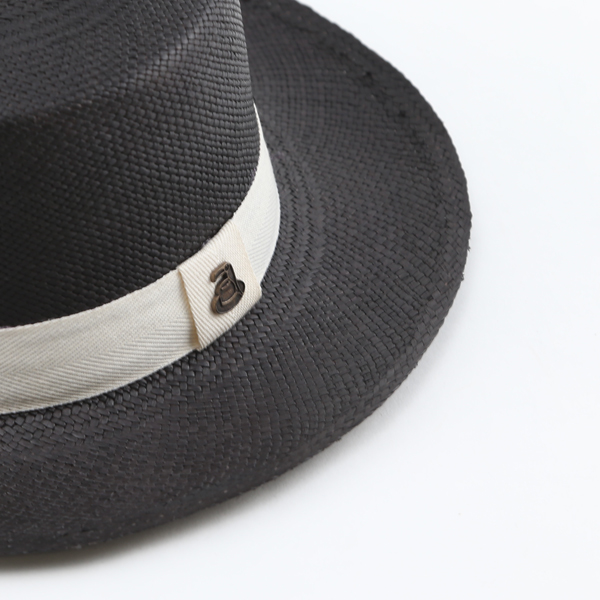
The Ecuador Hat Boater is a standard panama hat design with a wide decorative band. Because the ornamentation is kept minimal, the fine weave becomes all the more striking, resulting in a panama hat that feels both refined and fashionable. It's a shape we'd recommend to anyone trying a panama hat for the first time. Since the brim isn't excessively long, it pairs well with a wide range of outfits.

Ecuador Hat Boater (BeigeB36White)
When worn, it gives a fresh impression, making it easy to pair with both casual and simple outfits. The Ecuador Hat Boater looks well-balanced even when worn casually with a T-shirt. Styled in pale colors, it creates a cool, refreshing look even on the hottest summer days.
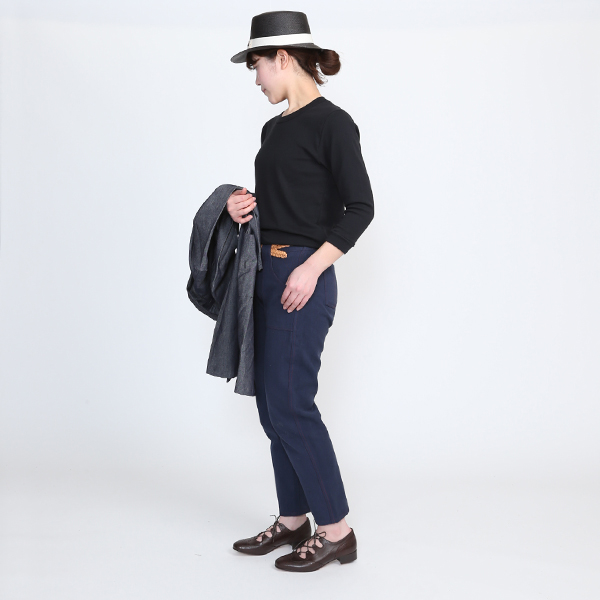
Ecuador Hat Boater (BlackB04Natural)
If you want to put together a chic look, Black is a recommended color as well. This color exudes a sense of coolness, framing the face beautifully. Those with long hair can gather it up and drape it over one shoulder for a neat look that avoids feeling too heavy.
A Playful Color: Ecuador Hat Hippie

The Ecuador Hat Hippie comes dyed in three vivid colors. At first glance, these striking, eye-catching hues might seem difficult to style, yet the shape itself is entirely basic. With a narrower brim than the Ecuador Hat Boater, it's a hat that pairs even more easily with casual outfits.

Ecuador Hat Hippie (Fusia)
The key to styling vivid colors is to let the hat serve as an accent for the whole outfit. Pull your look together in white or pale beige tones and finish with the hat, or pair it with a fresh, solid-colored dress—either way, you'll achieve an instantly polished, stylish look.
Defined by Its Curve and Brim Length: Ecuador Hat Lady Queen C

The Ecuador Hat Lady Queen C features a design with different brim lengths in front and back, along with trim fabric along the brim's edge, enhancing its elegant impression. Panama hats made from supple toquilla straw are naturally resistant to sagging and hold their shape well, but by varying the brim length to create a pronounced curve, this hat achieves a silhouette with feminine softness.

Despite its distinctive shape, the appeal of the Ecuador Hat Lady Queen C is that it's surprisingly easy to wear once you try it on. Simply pairing it with your usual outfit will add a touch of refinement. This is a hat we'd recommend to anyone who finds the standard panama hat shape a bit lacking.
A Panama Hat "Cap": Ecuador Hat Black Snow C

The last hat we'd like to introduce is the Ecuador Hat Black Snow C, which stands out for its unique shape. Like a cap, its brim is attached only at the front, and it makes a strong impression with the woven dyed toquilla straw and black trim along the back.

The Ecuador Hat Black Snow C is striking for its contrast of black and white. Looking closely, you can appreciate the fine, tightly woven craftsmanship. Because it's cap-shaped, it fits closer to the head than a typical hat, and thoughtfully, an inner lining has been added where the fabric meets the forehead.

With its contrasting weave that resembles mesh at first glance, the Ecuador Hat Black Snow C also creates a sporty impression. It suits relatively active occasions such as weekend outings or outdoor activities, so pair it with a casual outfit and enjoy a new take on panama hat style.
▽Browse the full Ecua-Andino product lineup here
GUIDE »
CONTENTS »
CATEGORIES »
- + Gifts by recipient
- + Gifts by scene
- + Clothing
- + Bags / Backpacks
- + Wallets / Card cases
- + Jewelry
- + Shoes
- + Rainy day outfits
- + Kitchen
- + Home
- + Babies / Kids
- + Japanese products
Earn Miles


Payment & Security




