.webp)


.webp)


.webp)


.webp)


- トップページ/
- ZUTTO Journal/
- 選び方・使い方/
- A Story About STA...

The story behind STANDARD SUPPLY's 64 cloth
64 cloth is a fabric made from a blend of 60% cotton and 40% nylon.
Since the ratio is 60:40, it's called "roku-yon" (six-four) cloth.
This time, we're taking a closer look at this material by focusing on a bag from
"STANDARD SUPPLY."
Do you have a favorite fabric?
Do you have a favorite fabric?
I love cotton. I love linen.
I imagine many people feel this way. On the other hand, you don't often hear people say they love nylon or polyester. Why is that?
Fabrics made from 100% natural fibers—like the comfort and reassurance of cotton, or the crispness and distinctive texture of linen—tend to carry an image of dependability and good quality. Synthetic materials, on the other hand, are often thought of as mass-produced substitutes for natural fibers.
It's true that many materials generally classified as synthetic fibers prioritize affordability and functionality over durability or the ability to age gracefully over time. But there are also plenty of makers who skillfully use synthetic fibers in their craftsmanship, choosing them according to the intended use of the product.
Rather than trying to determine which material is superior, it's important to choose materials suited to their purpose—and to recognize the value of doing so.
That, too, is a key point when talking about the things we use.
Choosing to take the best of both worlds
Let's return to the topic of 64 cloth.
64 cloth is a fabric made from a blend of 60% cotton and 40% nylon.
In the 1960s, an American outdoor brand released a mountain parka using this 64 cloth, which became a hit, and it later became widely recognized in Japan as well. This material has more sheen than cotton, yet isn't as rustling as pure nylon. Since it has long been used for outdoor wear and gear, many people may have owned or used it without knowing it was called "64 cloth."
So why use two different materials—cotton and nylon—together? The answer, simply put, is to achieve "the best of both cotton and nylon." A typical 64 cloth has a structure in which cotton and nylon fibers are blended in perpendicular directions. When the fabric gets wet, for example, the cotton absorbs the moisture and swells, which increases the density of the fabric overall and makes it more resistant to water and wind. As the moisture dries, gaps form between the fibers, improving breathability. This kind of functionality turned out to be perfect for outdoor gear.
What's more, the strengths of cotton and nylon are also well combined in terms of texture and durability.
"100% cotton": a naturally derived fiber that develops character over time, but wrinkles easily.
"100% nylon": lightweight and resilient. Resistant to wrinkling.
64 cloth takes the best qualities of each material, combining "durability," "a supple texture," and "lightness" all in one.
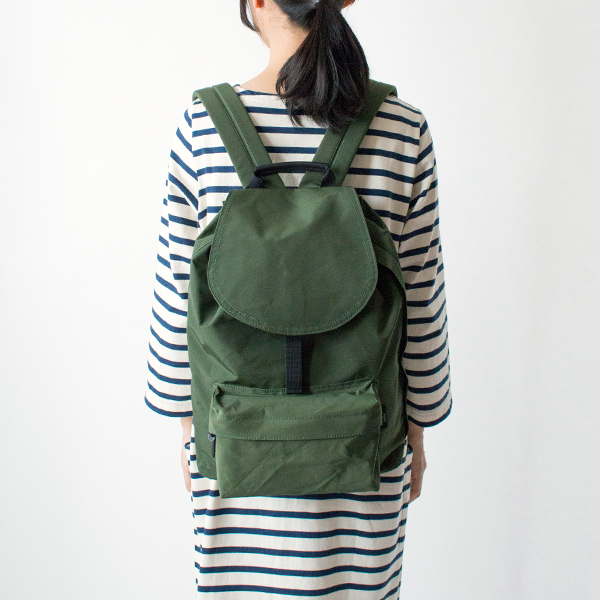
What if a bag like the one in the photo were made of 100% cotton, or 100% nylon instead?
Of course, there are plenty of products out there made with such fabrics, and depending on the intended use, a bag made entirely of cotton or entirely of nylon might well be the better choice.
But if what you're after is "something lightweight and supple, resistant to wrinkles yet capable of aging gracefully over time, without sacrificing durability or stain resistance—in short, a well-balanced bag!"—then 64 cloth is sure to be the perfect fit.
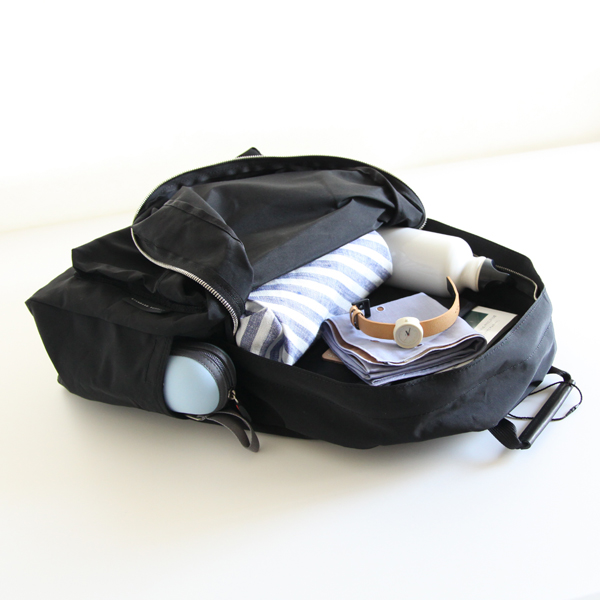
The appeal of STANDARD SUPPLY

"LEAN, LESS AND LEAVE."
That is the motto of STANDARD SUPPLY.
STANDARD SUPPLY is a brand born from the pursuit of what we truly need in our daily lives. Its items express more feeling through less design, requiring no unnecessary ornamentation, and even conveying a beauty found in empty space. The brand pursues simplicity that welcomes any user, while allowing that same user to nurture the product and make it their own over many years.
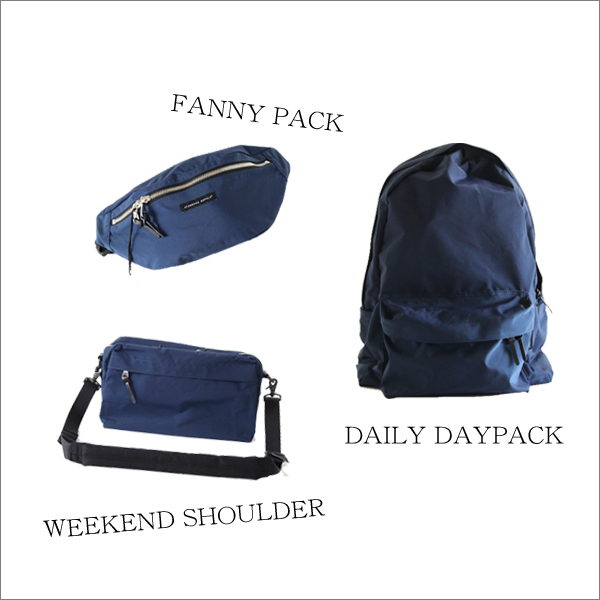
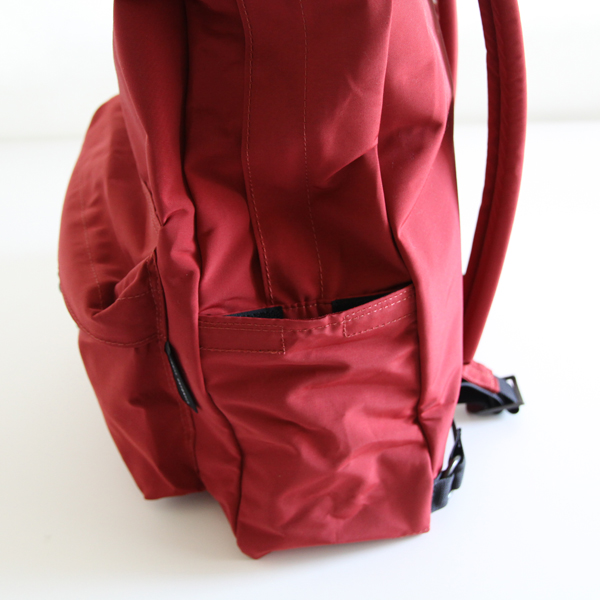
"DAILY DAYPACK"
Its appearance is simplicity itself, yet it's packed with pockets and highly functional.
On the front is an organizer pocket that holds keys or a phone, and inside there's a small pocket as well as a hook for attaching keys.
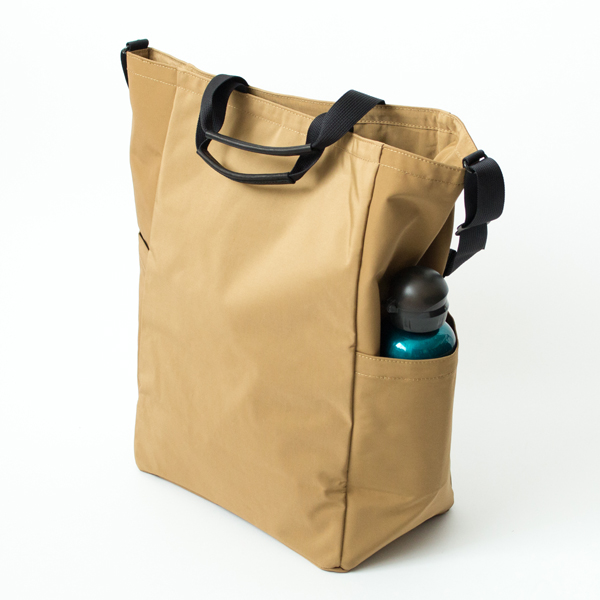
On one side is a pocket for a bottle, and on the other, a pocket that closes at the top with Velcro. There's also a pocket inside secured with a strap for small items, allowing you to keep your belongings—which tend to get jumbled together—neatly organized. This practicality, which you'd never guess from its appearance, is part of what makes the DAILY DAYPACK so appealing.
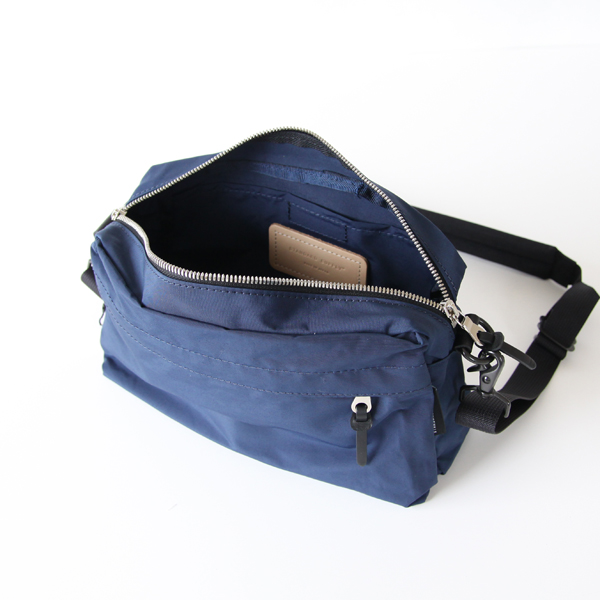
"FANNY PACK"
FANNYとは、臀部・腰回りのこと... "FANNY" refers to the hips and lower back area. In other words, a FANNY PACK means a "waist bag," but it also works wonderfully as a body bag, worn diagonally across the back. Lightweight and comfortable to wear for long periods, its half-moon shape fits snugly against the waist or back without getting in the way of movement. It's perfect for cycling, or for those times when you want to head out hands-free with just the essentials. Inside, there are two divided pockets and a hook for attaching keys, which helps keep small items from getting jumbled together in the bag, and prevents your smartphone screen from getting scratched by your keys.
"WEEKEND SHOULDER"
As the name suggests, this is a compact-sized shoulder bag perfect for weekend outings. It features a large zippered pocket on the front, two divided pockets inside, and one large Velcro-fastened pocket. It also comes equipped with a hook for attaching keys. To allow for carrying somewhat heavier items, urethane foam has been built into the base panel and shoulder pad, preventing the bag from losing its shape and reducing strain on the shoulders.
Using 64 Cloth for a simple bag design—competing on substance rather than appearance—
and incorporating functional pockets and hooks based on a user-first approach to design—
these are hallmarks of STANDARD SUPPLY,
but there's one more thing that shouldn't be overlooked: the use of "leather" in the finer details.
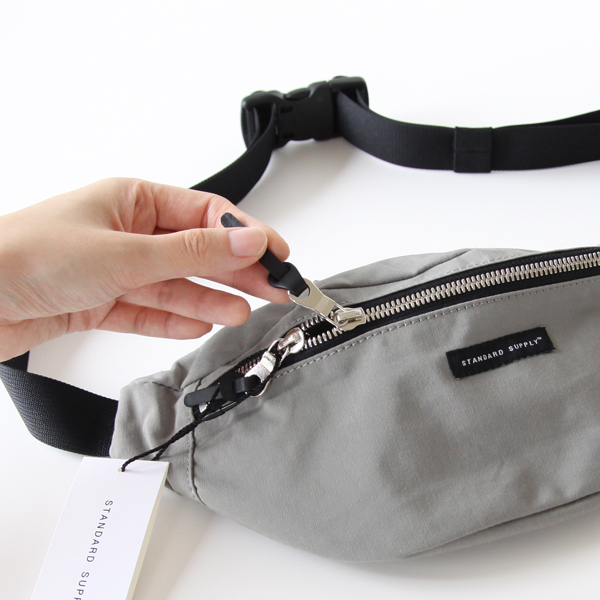
Backpacks and shoulder bags come with zippers, don't they?
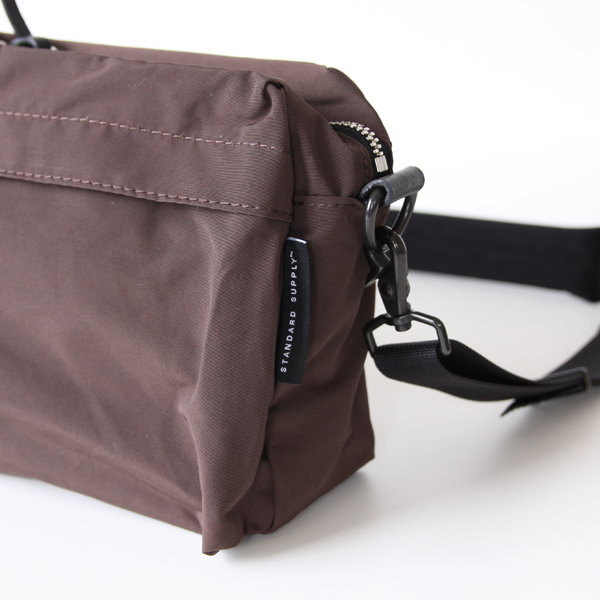
And those zippers have pull tabs. STANDARD SUPPLY uses glove leather for these small pull tabs. It's a very small detail, but precisely because it's a part that bears the stress of opening and closing the zipper, they use a more durable leather for it.
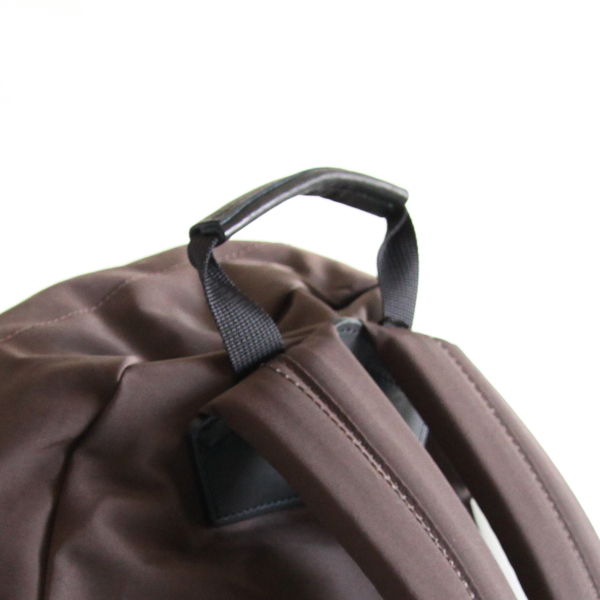
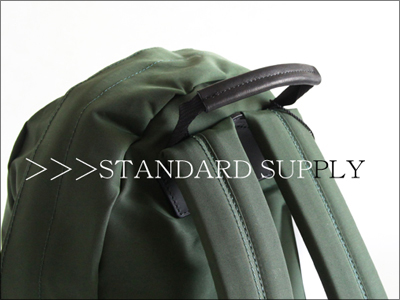
And for the DAILY DAYPACK, leather is also used on the carrying handle at the top of the bag. This is said to be a thoughtful touch to prevent the handle from digging painfully into your palm when carrying a backpack loaded with a lot of items. Improving durability and allowing you to enjoy how the material changes over time is of course one of its features, but it's precisely because they think about the user that this kind of attention to detail comes about.

STANDARD SUPPLY's
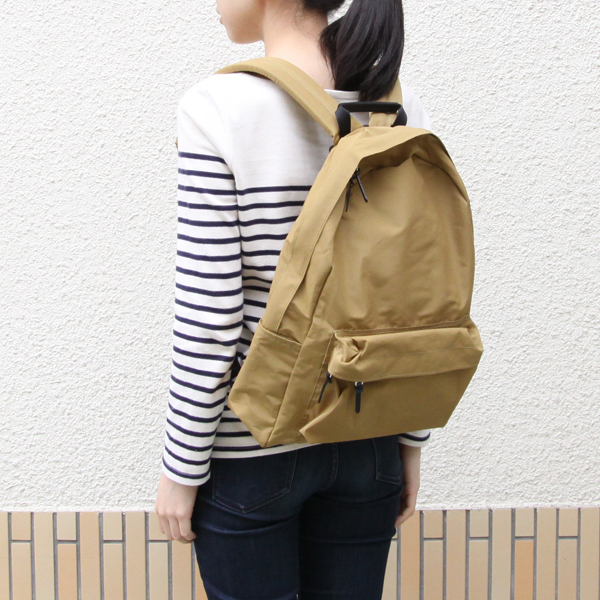
color lineup includes 6 colors in addition to black. It's a range of colors—vividly saturated reds and greens, glossy beiges and grays—that let you enjoy the distinctive texture unique to 64 Cloth.
Here are two points to keep in mind so you can use your STANDARD SUPPLY items with care for a long time.
◇The water-repellent finish on the surface will lose its effectiveness with repeated use. Applying a commercially available water-repellent spray for fabric will help maintain the water-repellent effect, which is useful for preventing not only moisture but also stains.
◇Friction may cause color transfer onto light-colored items (especially white), so be careful, particularly when the item is new, not to rub it vigorously against or press it closely to white clothing.
What's "good" changes depending on your purpose
This time, using "64 Cloth" as an example, we talked about materials suited to different purposes.
Even when we simply say "fabric," differences in material, blend ratio, weaving method, and so on give rise to a multitude of possibilities.
Even in a situation as simple as buying a single shirt, the ideal material will differ depending on the purpose—whether it's a shirt for a businessman striding through the concrete jungle in midsummer, or a heat-retaining base layer meant to protect the life of someone climbing a frigid, snow-covered mountain. Choosing the right material for the right purpose is also an important point when talking about the things we use.
Recommended back issues of "ZUTTO's Reading Corner"
>>> Learn more about gamaguchi (clasp purses)
>>> How to properly store away winter items
>>> Banshu blades in everyday life
>>> To the "Reading Corner" top page
Article updated: November 8, 2019
GUIDE »
CATEGORIES »
- + Gifts by recipient
- + Gifts by scene
- + Clothing
- + Bags / Backpacks
- + Wallets / Card cases
- + Jewelry
- + Shoes
- + Rainy day outfits
- + Kitchen
- + Home
- + Babies / Kids
- + Japanese products
Earn Miles


Payment & Security