

.jpg)









.jpg)

.jpg)
.jpg)



- トップページ/
- ZUTTO Journal/
- 選び方・使い方/
- New to Tin: How S...

New to tin? Here's how to use it
It isn't exactly flashy, but tin (suzu) gives off a quietly beautiful silver glow. Even though it's a metal, it has a gentle warmth to it rather than a cold, hard impression. Tin isn't as common as other metals, so many people may not have any tin items in their home. This time, we'll introduce the properties of tin and Nousaku (Nousaku), a Japanese brand that has been making tin products for generations.
What kind of metal is tin?

Tin is known as a stable metal that resists oxidation and rust. Because of this, its color changes very little, and it keeps its beautiful shine over long periods of time—qualities that have made it a favored material for decorative objects since ancient times.
Being resistant to rust also means that no harmful substances leach out of it, making it a safe and reliable material. Tin is also known to have antibacterial properties, and perhaps because of this, it has historically been used for offerings presented to the gods.

Tin is a rare metal, more valuable than any other metal apart from gold and silver. It also lacks the unpleasant odor typical of metals, which makes it well suited as a material for tableware. Tin is a type of metal, but in its 100% pure form it is extremely soft—soft enough to be bent by hand. When dropped, it may become deformed, but it rarely breaks, and any deformation can be corrected by hand—a real advantage.
Today, many products make the most of tin's excellent properties, making it a material that fits easily into everyday life.
Nousaku: keeping the tradition of Takaoka casting alive today


Nousaku is a metalworking maker based in Takaoka City, Toyama Prefecture. Using the casting (chuzo) techniques handed down in Takaoka, they make kitchenware, everyday items, and Buddhist altar fittings, each crafted to suit the particular properties of the metal used.
The tin Nousaku uses is 100% pure. Normally, other metals are added to increase hardness and improve machinability, but Nousaku's tin contains none of these additives. What makes this possible is the casting technique that Nousaku has carried forward from long ago to the present day.

Casting is a manufacturing method in which molten metal is poured into a mold and cooled to form the desired shape. Nousaku continues to expand the possibilities of cast metalwork by drawing on the various casting and processing techniques passed down over 400 years in Takaoka, in order to bring out the full potential of each material.
Nousaku's craftsmanship, built around tin
Does it mellow out the taste of sake? Tin tumblers and guinomi cups


In Japan, it's said that tin vessels were used for drinking sake in the imperial court during the Heian period, and the affinity between sake and tin has remained rooted in Japanese culture ever since.
It's said that pouring sake into a tin vessel removes unwanted harshness, giving the drink a mellower taste and smoother mouthfeel. Tin conducts heat well, so chilling a tin sake cup in the refrigerator for just a few minutes before use is enough to get it nicely cold. Cold sake becomes crisp and refreshing, while warmed sake becomes even more fragrant. And when beer is poured into a beer cup or tumbler, the tiny bumps on the inner surface produce fine, smooth foam.
Tin flower vases that make the most of its antibacterial properties


Tin has antibacterial properties, and research has even shown that this effect helps prevent bacteria from forming on the cut stems of flowers placed in tin vases. Much remains unknown about the relationship between tin and plants, but it has long been said that "flowers in a tin vase stay fresh longer" and that "dropping a piece of tin into a well keeps the water clean."
The contrast with tin makes the colors of flowers and the rich green of foliage stand out beautifully in Nousaku's vases.
Tin spoons that can be shaped to fit your mouth

These baby spoons make the most of tin's softness. They can be shaped to fit a baby's mouth, or bent so that they're easier for a mother to hold. Since few other metals can be reshaped like this, these spoons are also popular as gifts to celebrate a new baby.
Tin chopstick rests that bring color to the table

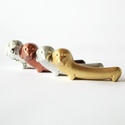
This chopstick rest, charmingly shaped as five different kinds of flowers, isn't just cute to look at—its petals can be gently bent, letting you adjust the angle so your chopsticks rest at just the right position.
Precautions for use and care instructions
The single most important thing to keep in mind when using tin products is: don't drop them. As mentioned above, tin is a soft material, so dropping it or knocking it hard against something will change its shape. Of course, it's fine to intentionally bend or dent a piece to fit the shape of your hand, but do be careful to avoid strong impacts.
For items that come into contact with water (cups, vases)
After use, wash with a soft cloth or sponge. These items are not dishwasher safe. Since tin is a soft material, scrubbing it with a scouring pad or abrasive cleanser will scratch the surface, so please be careful.
Never put tin items in the freezer. This can alter the molecular structure of the tin and cause damage to the product. Because tin has a low melting point, keep it away from open flames.
For small items that aren't washed often
Tin is a material that changes very little over time, but after long use, its surface may take on a grayish tint and lose some of its shine, giving it an antique-like look. That, too, is part of tin's character.
If you prefer the brand-new shine, wipe it regularly with a soft, dry cloth. If you notice the shine dulling, polish it using a commercial metal polish, toothpaste, or baking soda.
The appeal of tin products might best be described as their "resistance to change in appearance." While it's enjoyable to watch materials like leather or brass age relatively quickly over time, something like tin changes so slowly that you might not notice unless you observe it closely. Perhaps it's this quality—being an easy-to-use, excellent material that encourages a mindset of taking good care of one's belongings—that gives rise to the particular attachment people feel toward tin products.
Unlike pottery or glass, tin cannot be decorated with vivid colors and designs, but precisely because of this, it is the ideal material for purely enjoying the material itself.
▼Click here for a full list of Nousaku products

GUIDE »
CATEGORIES »
- + Gifts by recipient
- + Gifts by scene
- + Clothing
- + Bags / Backpacks
- + Wallets / Card cases
- + Jewelry
- + Shoes
- + Rainy day outfits
- + Kitchen
- + Home
- + Babies / Kids
- + Japanese products
Earn Miles


Payment & Security