


.webp)


.webp)


.webp)


.webp)


Welcome to ZUTTO
Free shipping for newsletter subscribers (some areas excluded)
- トップページ/
- ZUTTO Journal/
- 選び方・使い方/
- # My Own 10-Year ...

My own ten-year story. A one-line-a-day diary that records the everyday moments of ordinary life in Hijiki (Diary of Days).
At the start of a new year, or on some kind of anniversary, we often tell ourselves "this time will be different" and start a diary. But writing down the events of each day turns out to be more demanding than expected, and before long, the diary goes unopened.
When "writing in a diary" becomes the goal itself, it can start to feel like a chore. But if you allow yourself to write just one line—not every day, but only on the days when something happens that you don't want to forget—it feels like something you could keep up for a long, long time.
This time, we spoke with a staff member who has been using just such a diary, asking about her relationship with it, what she writes, and what makes it so appealing.

A ten-year story that belongs only to you
Marukawa Shoten's Hijiki is a diary of "one line a day, over ten years." Even the ordinary, unremarkable days that pass by without leaving a trace in memory become, once recorded across ten years, a story that belongs to no one else but you—a lovely concept.
The Kojiki is known as Japan's oldest history book, and there's something delightful about the name "Hijiki," which plays on that title as a kind of "personal version" of it. It's a bit grand to put it this way, but it really is a history book of one's very own.


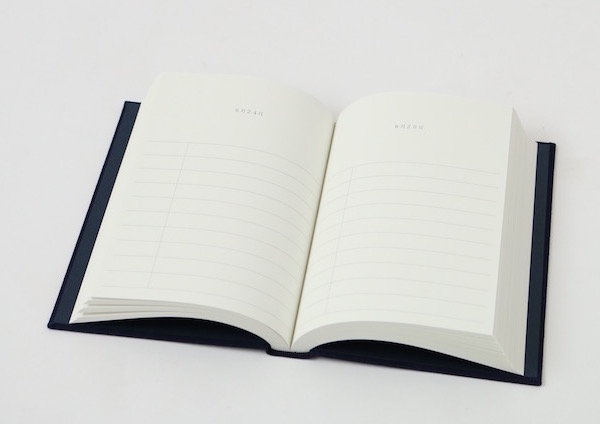
Hijiki devotes one page to each day, with only the month and date written on it. Below the date are ten ruled lines. All you do is write in the "year" and jot down one or two lines about what happened or what you felt that day. The ten lines cover ten years—so from the second year onward, every time you turn the page, you can see what you were doing on this same day last year, or two years ago. It's a place where, each time you write, you meet your past self.
A diary you don't have to write in every day
One of our staff members has been a devoted user of Marukawa Shoten's Hijiki. She started in 2014, so it's now been almost five years. Keeping a record of daily events for five whole years sounds impressive—but the answer she gave us was surprisingly deflating.
"I don't write in it every day, you know! (laughs)"
Oh, really? So when do you write in it?
Staff member M said it would be quicker to just show us, and flipped through the pages. If it's been almost five years, you'd expect the first five lines on each page to be filled in—but instead, there were conspicuous blanks.
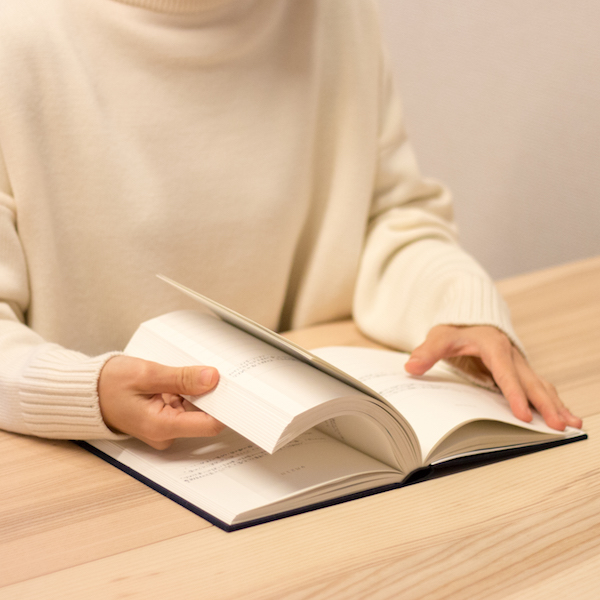
"To begin with, I'm just not the type who can keep something up every single day. Diaries, household account books, radio calisthenics—I always throw myself into it at first, but I'm the kind of person who gradually loses interest. Honestly, I often surprise even myself."
So why did someone like that decide to start keeping a diary? And on top of that, the idea of a ten-year diary seems like it would raise the bar even higher.
"It started when I had my child. Children grow and change so quickly—I'd be moved when they learned to do something new, but then I'd forget about it, which felt like such a waste. So I decided to start writing things down. I also liked the idea that it might be fun to read back on it ten years later. But if you look through it, you'll see that in the beginning I was really trying hard, writing all kinds of things—cramming three lines' worth into a single line of space. Then gradually the amount I wrote got shorter, and then I'd skip a day, then two days (laughs)."

△There are even pages where nothing at all was written for five years straight. "I wonder why I only wrote the date for 2015 (laughs)," said staff member M.
It really does show the ups and downs of motivation and the moments when things stall, doesn't it.
"At one point I thought, 'oh no, I'm not going to be able to keep this up again.' But then I realized—since it covers ten years, surely it's fine if there are days I don't write anything. Now I find it interesting in its own way: I can look at a stretch and think, 'I guess I just wasn't in the mood to write during this period,' or 'maybe I was busy then,' or 'I must have been feeling motivated around here.' It's almost like it reflects my state of mind at the time."
For me, who had always assumed that "keeping a diary" meant writing in it every single day, this flexible way of thinking was something entirely new. But perhaps it's precisely because it's a ten-year diary that you can approach it without pressure, writing only when you feel like it, with a relaxed and generous attitude.
So what kind of things do you write about?
"Since it's just one line a day, I don't go into much detail. I'll jot down something funny my child said, or something I felt at work. I started this diary after having my child, but I don't only write about parenting—I write about things that happen to me personally. Looking back over it, it's less a parenting diary and more a diary about myself, which makes me realize it really is my own ten-year story."
Even with days left blank, this is the first time she's kept a diary going for five years. Has anything changed since she started keeping Hijiki?
"Since the whole idea is to keep it up gently, without pressure, I'm not necessarily more attuned to the events of each day. But I do genuinely enjoy reading back through it. When I open the page for a given date, I can see what I was doing on this day one year ago, or two years ago, and it often becomes something my family and I talk about together. I'm already looking forward to reading it again once the ten years are up, and then again some years after that."
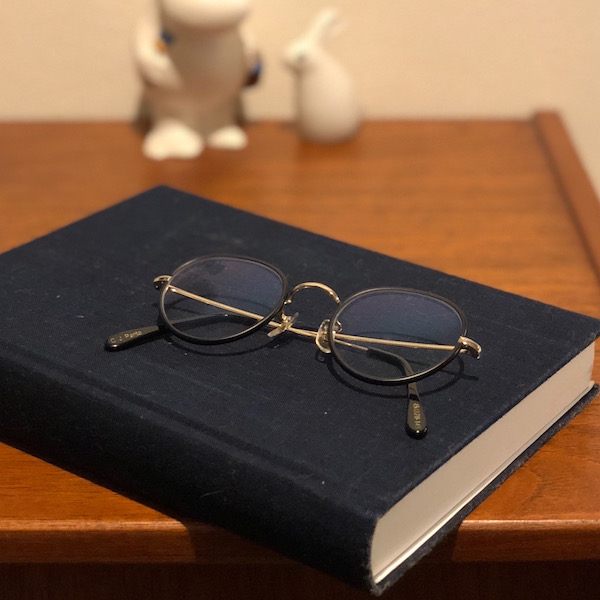
A binding built to last ten years, and a design made for easy writing
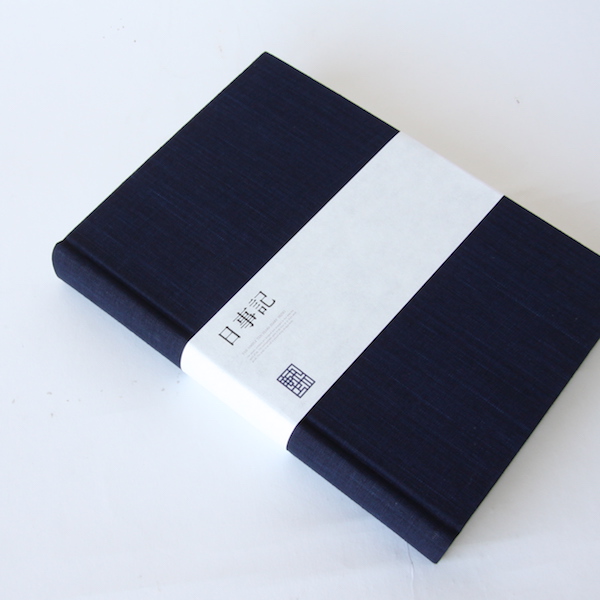
Having touched on the appeal of writing in Nichijiki's ten-year diary, let's now explore the thoughtful design details that make it possible to use for a full ten years. After all, if a "ten-year diary" fell apart before those ten years were up, it would defeat the whole purpose.
Matsusaka momen, a fabric you can enjoy watching age over time
Covering the surface of Nichijiki is a fabric called Matsusaka momen (cotton), a traditional folk craft from Matsusaka City in Mie Prefecture. While Matsusaka momen is typically known for its distinctive striped patterns, the version used for Nichijiki is not striped but a solid-colored aizome (indigo-dyed) fabric. This deep, richly nuanced indigo isn't a chemically formulated color—it's a natural hue born from soil and field. As the years pass, one and two years at a time, the shade gradually shifts, and it's exciting to imagine what expression it will take on after a full decade.
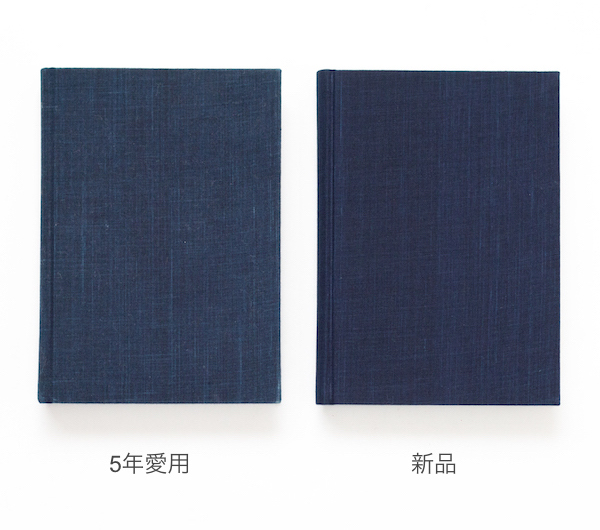
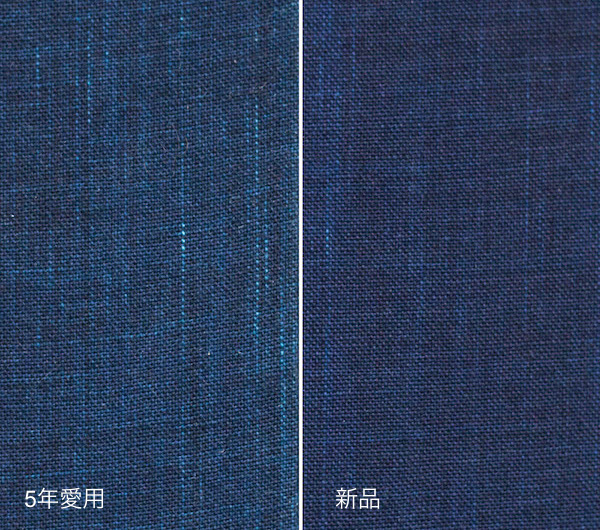
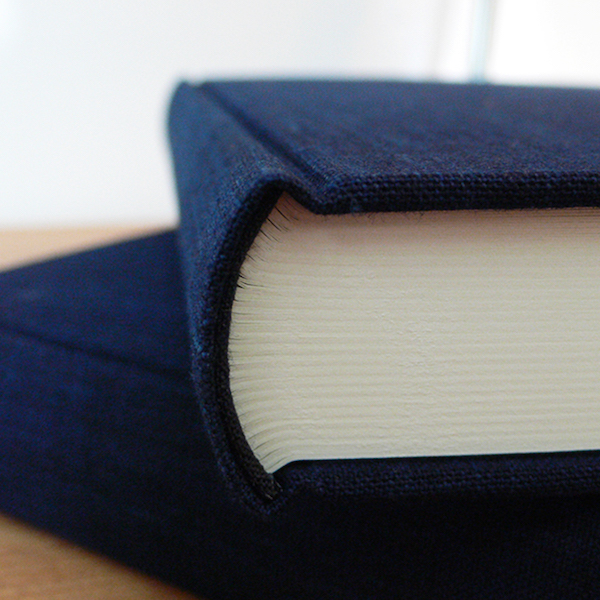
The image above shows a brand-new Nichijiki alongside one that's been used for five years. The once-deep indigo has faded somewhat overall, and in places where it's been rubbed, white streaks have appeared, forming what almost looks like a newly created stripe pattern. Aging gracefully and simply deteriorating are two very different things, but when it comes to this Matsusaka momen cover, what you're seeing is beautiful "aging"—a look shaped by five years of time, the kind that makes you grow even more attached to it.
Even after spending five years together, the corners of the cover haven't crushed, and the book as a whole hasn't loosened or wobbled. It gives the impression that it's more than ready to keep going strong for another five years.
A diary that seeks the presence of a proper book
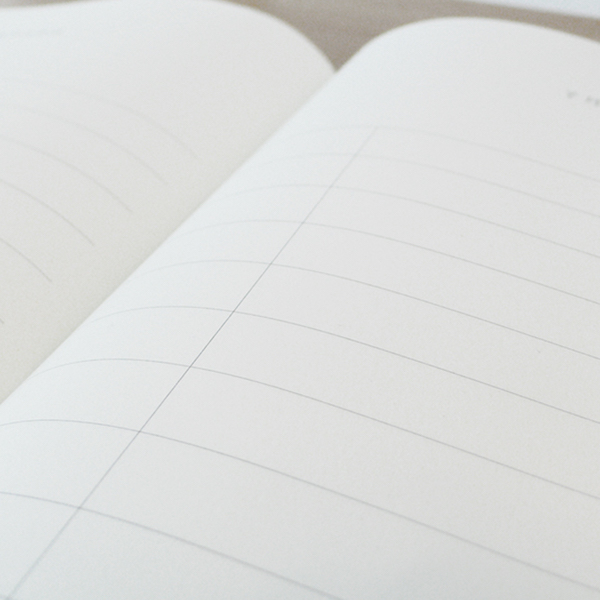
The paper chosen for Nichijiki is a book-printing paper called "Menuet White." When we asked about it, we learned that an extraordinary amount of care had gone into selecting this paper as well.
Diaries typically use notebook paper or ledger paper, but apparently neither of those could achieve the book-like presence that Marukawa Shoten was aiming for. So they tried a variety of papers used in actual books, and among them, they settled on "Menuet White."
Rather than pure white, it has a slight gray tint, which is easier on the eyes and improves readability. And whether you're writing with a pencil, ballpoint pen, or fountain pen, the nib doesn't slide too easily across the surface, and there's minimal bleed-through to the back of the page.
It has just the right thickness, so turning the pages feels reassuring, and the surface has a very slight texture, which means you're less likely to struggle turning pages when your fingertips are dry.
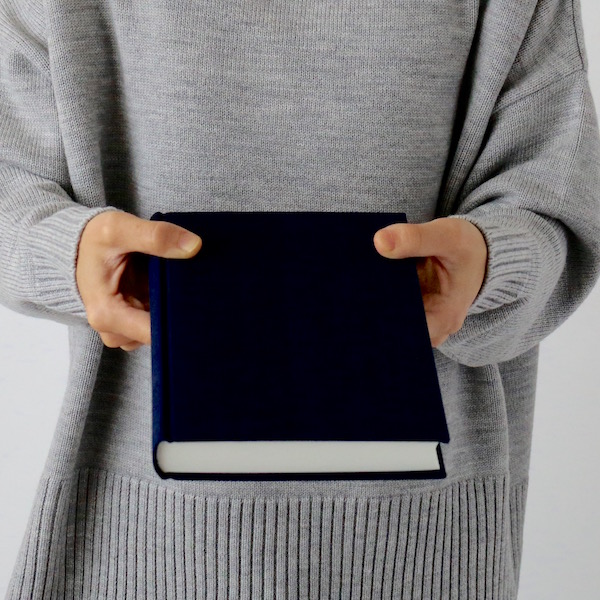
Nichijiki is a diary meant for writing your own entries, but it's also very often given as a gift. As with the ZUTTO staff member introduced here, milestones like marriage or the birth of a child often become the trigger for starting a diary, so giving one as a celebratory gift is a wonderful idea.
It's also sometimes given to a mother or father—precisely because you live apart, so that they can look back on family memories—as a New Year's or birthday gift. Why not give Nichijiki as a gift, with the hope that someday you too might get to read that special person's ten-year story?
▼Click here for the Nichijiki product page
GUIDE »
CONTENTS »
CATEGORIES »
- + Gifts by recipient
- + Gifts by scene
- + Clothing
- + Bags / Backpacks
- + Wallets / Card cases
- + Jewelry
- + Shoes
- + Rainy day outfits
- + Kitchen
- + Home
- + Babies / Kids
- + Japanese products
Earn Miles


Payment & Security




