.webp)


.webp)


.webp)


.webp)


Welcome to ZUTTO
Free shipping for newsletter subscribers (some areas excluded)
- トップページ/
- ZUTTO Journal/
- 選び方・使い方/
- Length changes th...

How length changes the impression: finding the necklace that suits you
The necklace has long been a leading piece among women's accessories. While it's fun to coordinate necklaces with your outfit and hairstyle, the impression they give can change dramatically depending on their length and size.
What's the difference between a necklace, a choker, and a pendant? What are the characteristics of different lengths, like princess, matinee, or rope? There's surprisingly a lot we don't know about necklace lengths and sizes. By keeping a few key points about sizing in mind, you can find the perfect piece that suits you. Here, we'll share some helpful tips for choosing a necklace.

The difference between necklaces, pendants, and chokers
A scene often seen in movies: a woman getting ready in front of her dresser. Once she's decided on her outfit for the day, she carefully brushes her hair, and finishes her makeup with an elegant touch of lipstick. Then comes the final step—putting on accessories. Among them, the necklace, which subtly accentuates a woman's neckline, is a magical piece that dramatically brightens the impression around the face.
While earrings require pierced ears, and rings come in subtle size variations that require careful selection, necklaces are wonderful in that you can choose them without worrying too much about size or fine specifications.
The origin of the necklace as an ornament dates back to ancient times, when people wore parts taken from their prey—such as shells, animal fangs, and horns—hanging from their necks. Even though the construction was very primitive, the basic structure of threading a pierced part, like a bead, onto some kind of cord and hanging it around the neck is exactly the same as it is today.
Similar necklaces have been excavated from ruins of various eras all over the world, but in ancient times, necklaces were worn for magical or supernatural purposes. It was believed that wearing a necklace could protect one from misfortune or cure illness. Over time, the purpose of the necklace shifted from such "charms" and "amulets" to a means of expressing wealth and power, and eventually it came to be counted as a fashion item for making oneself more beautiful.

Even though we might refer to it simply as a "necklace," there are actually many different names for it. For instance, "necklace," "pendant," and "choker." These are all considered types of neck ornaments, but they are actually more different than they might seem.
First, "necklace" is a general term referring to neck ornaments as a whole. Regardless of the chain or cord length, or whether or not there is a charm, any accessory that decorates the neckline is called a necklace. On the other hand, pendants and chokers are both types of necklaces. As the word "pendant" suggests—meaning "to hang"—strictly speaking, it refers to the charm part that is threaded onto the chain. This decorative piece is also called a "pendant top."
For this reason, a necklace with this kind of charm hanging from a chain is called a "pendant." Furthermore, a choker is a type of necklace characterized by the "length" of its chain or cord, regardless of whether or not it has a charm. While the most common pendant-type necklace is around 40cm long, a choker is shorter, around 35cm, and is distinctive for its tight design that fits snugly around the neck when worn.
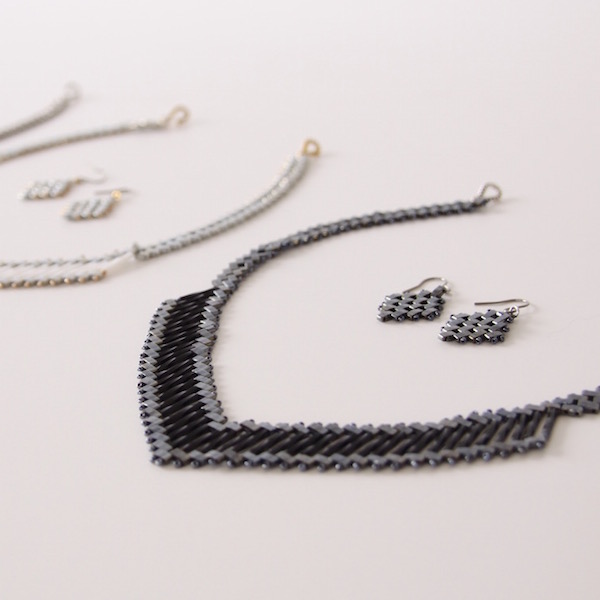
Curiously, the fact that each has its own name and is recognized as a distinct item is proof that they each have different characteristics. It's precisely because the impression changes so dramatically depending on the presence of a charm or the length of the chain that, even within the same family of necklaces, so many different names have come into being.
Various names that change with length
As we saw with the example of the choker, necklaces are also classified by the "length" of their chain or cord, and there are actually many other types beyond this. Even with the same material or charm, the impression given when worn changes dramatically depending on the length of the chain, so it's useful to know each of their names.
Princess
The most common necklace length (approximately 40cm–45cm)

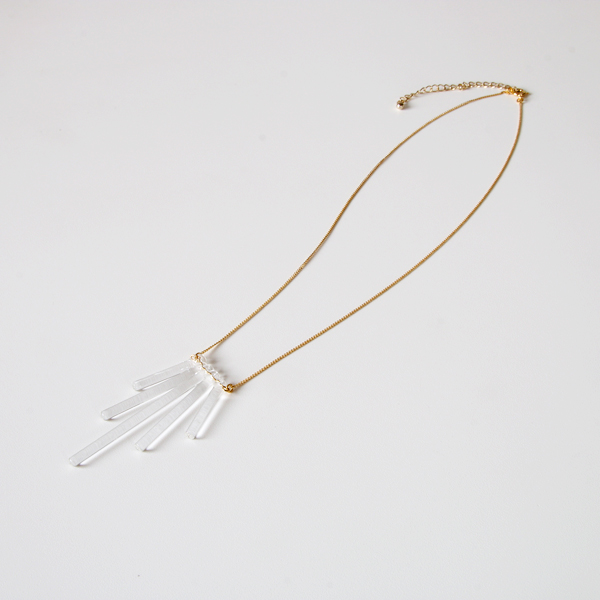
The "princess" is the most common necklace length, referring to those with a total length of around 40cm. When worn, its distinguishing feature is that the charm sits at a well-balanced height. It looks lovely when the pendant top peeks out from an open second button of a shirt.
Although this is a common length, please note that how it appears can vary subtly depending on the wearer's build. Since trying it on isn't always possible, it's reassuring to compare it with a necklace you already own, or hold a piece of string of the same length against your neck to check where the pendant top will fall.
Matinee
From below the collarbone to the chest area (around 50cm)


The "matinee" is about 10cm longer than the princess type. Since the center of gravity sits a bit lower, it creates a comfortably relaxed impression.
For designs with a larger charm, or those with large beads strung throughout, the princess length would draw too much attention to the neck area, so a length like this is recommended instead. It creates a gorgeous impression from the neck down to the chest, and pairs very well with tops that have minimal decoration, such as a solid-color knit or a simply cut shirt.
Rope
Below the chest (100cm or longer)
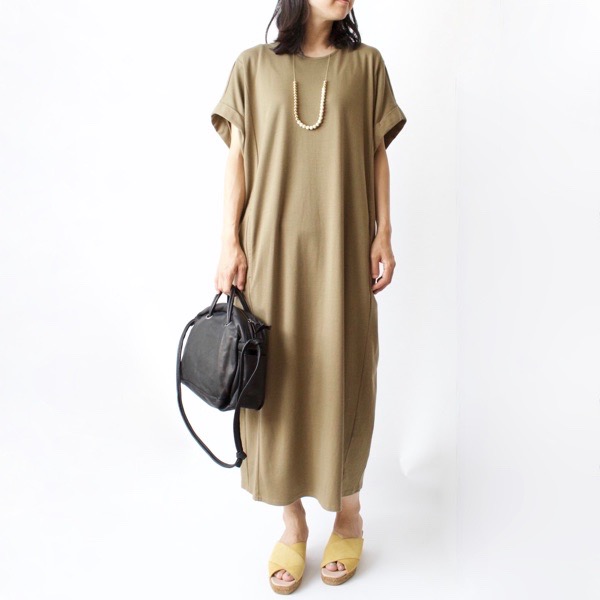
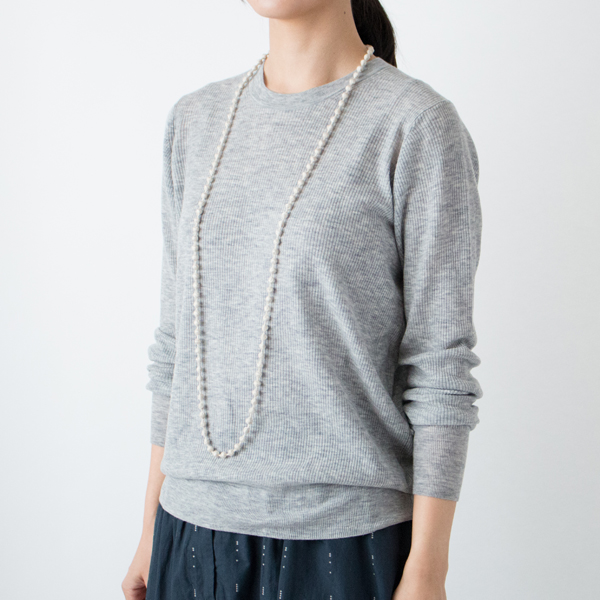
Rope length is even longer than the matinee, with the point of focus falling below the chest. The pendant type gives a natural impression, while designs with fine beads strung in multiple layers add volume and a sense of glamour.
It can create a more mature mood, and by emphasizing a vertical line, it also has the effect of making the whole body look slimmer. With this kind of length, there are also many designs that let you double the necklace into a loop and wear it as if it were a two-strand piece.
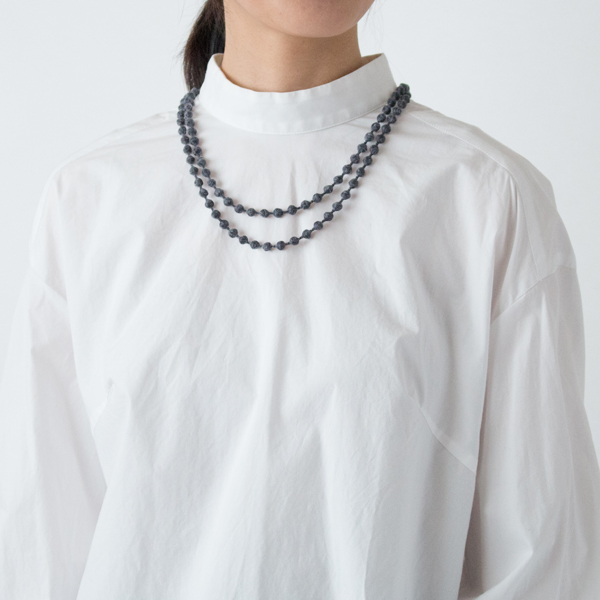
How to Choose a Necklace Wisely
We've seen that there are many different types of necklaces depending on length, from chokers that sit close to the neck to rope types that hang loosely down to the chest. It would be ideal if you could try one on in person, but when choosing a necklace at an online store, you have to rely on photos of models wearing it.
While necklaces show less variation in fit due to size compared to rings or bracelets, how they look does differ depending on the wearer's height and neck circumference. Once the piece actually arrives and you try it on,
it's entirely possible that a necklace you imagined would be around "princess" length turns out to be longer on you than expected, giving a fit closer to "matinee."
To avoid disappointment, refer to photos of models wearing the piece, check the size listed, and use a piece of thread or string to check how it will fit your own body before making your choice.
Tips for Long-Term Use
【Check the Type of Fastener】


This isn't limited to necklaces—it applies to accessories in general—but it's worth knowing about metal allergies as well.
Metal allergies occur when metal reacts with sweat and other substances. Metal has a property of dissolving, if only slightly, into moisture such as sweat, and when these components bind with proteins in the body, they become an allergen, causing symptoms like itching and rashes. Titanium accessories are said to be less likely to trigger metal allergies, but have you ever wondered why the likelihood of an allergic reaction differs even among metals?
There are several metals said to be "less likely to cause metal allergies," including titanium and platinum. Because these metals have a property of being resistant to dissolving, they are said to be less likely to trigger allergic reactions. Since which metals cause allergic reactions varies depending on individual constitution, caution is needed—but if you've ever experienced itching or a rash from a metal, be sure to check the material of the chain and clasp.
【Points to Watch When Putting On and Taking Off】

A necklace is a very delicate accessory. One thing to be especially careful of is damage to the chain (it breaking).
With relatively short necklaces like princess or matinee length, the chain often breaks when it catches on the collar of a top while changing clothes. To prevent damage when putting it on or taking it off, make it a habit to put the necklace on only after you've finished changing, doing your makeup, and styling your hair—and conversely, when taking it off, remove the necklace before you take off your clothes.
Also, even a necklace you want to wear constantly, like an amulet, is best removed and given a rest when bathing or sleeping. Be careful to prevent unexpected damage from it getting "caught" or "pulled."

It's also worth making a habit of regular care to keep the surface's shine looking beautiful. A necklace, which touches the skin directly, picks up dirt from sweat, sebum, and cosmetic ingredients more than you might expect. When getting ready, be careful not to get hair products or makeup on it, and when you take the necklace off, quickly wipe away any grime with a cleaning cloth.
If you keep up habits like these, you can maintain a beautiful shine indefinitely. When storing your necklace, simply place it gently in an accessory case or tray so the chain or cord doesn't get tangled, and you'll have peace of mind.

Last updated: March 5, 2020
GUIDE »
CONTENTS »
CATEGORIES »
- + Gifts by recipient
- + Gifts by scene
- + Clothing
- + Bags / Backpacks
- + Wallets / Card cases
- + Jewelry
- + Shoes
- + Rainy day outfits
- + Kitchen
- + Home
- + Babies / Kids
- + Japanese products
Earn Miles


Payment & Security