.webp)


.webp)


.webp)


.webp)


Welcome to ZUTTO
Free shipping for newsletter subscribers (some areas excluded)
My page
Information
- トップページ/
- ZUTTO Journal/
- 選び方・使い方/
- British clothing ...

British clothes and accessories, for everyday wear.
This time, our theme is "British clothes and accessories."
When we think of British style, patterns like tartan check and argyle come to mind
as spice-like items that instantly transform an outfit into something classic,
but the appeal of trad style isn't limited to patterns and colors alone.
When you take a closer look at classic items you picked up hoping to wear for years to come,
you'll often find that they were actually made in Britain.
British products, backed by a tradition of craftsmanship and skilled artisans,
actually tend to be simple and easy to coordinate with other clothes.
In this feature, we'll introduce the appeal and styling of items born in Britain.

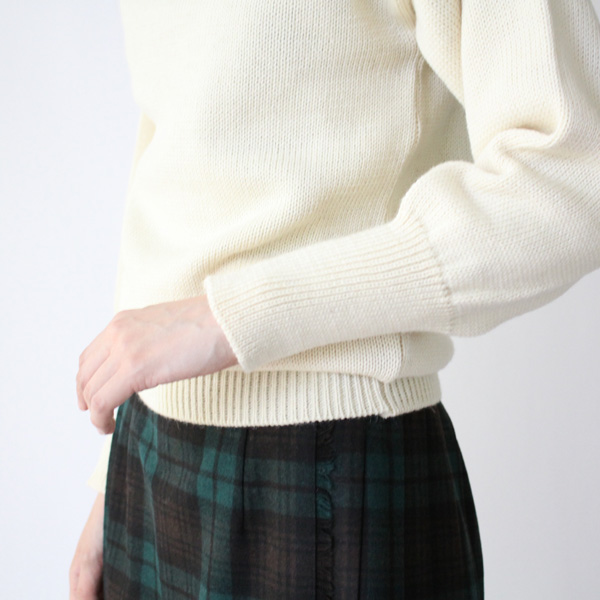
Top: CARRAIG DONN Crew Neck Cardigan
Skirt: EASY KILT (73cm) DRESS GORDON
【The spirit of craftsmanship handed down through factories and workshops since long ago】
The "Britain" we're discussing here refers to the so-called "United Kingdom (UK)."
This encompasses the entire region of Britain, including the main island (England) as well as Wales, Scotland, and Northern Ireland,
so it makes sense that there is truly a wide variety of craftsmanship found here.
Britain has always been a hub for fashion trends. From the golden age of the Victorian era onward,
modern fashion history—including movements like Mods and Punk—cannot be discussed without Britain.
While Britain has consistently been a trendsetter in the fashion world,
looking at its historical background, one perspective is that the Industrial Revolution,
which occurred from the late 18th to the 19th century, greatly developed fashion as an industry in Britain.
Since ancient times, this region had deeply rooted wool-based textile industries, which led to an accumulation of wealth through industry.
The Industrial Revolution arose when this capital combined with various factors, including new inventions and an abundant labor force.
New looms that dramatically improved the speed of textile processing,
along with the development of power and transportation through the steam engine, are the reasons Britain became known as "the workshop of the world."
Needless to say, it is the designers of each era who create fashion trends,
but it's fascinating to consider that the foundation for this was built upon the nation's capital, the skill of its artisans, and the power of invention—all of which supported the production sites.

Another characteristic of British craftsmanship is that there are many factory brands
that have continued making things over a long period of time.
Generally, many common fashion items—such as clothes, bags, and accessories—
are manufactured according to a design determined by a brand, either at the brand's own factory or by outsourcing production to another company's factory.
Sometimes a brand owns its own factory and can handle the entire production process
in-house,
while in other cases, even though the brand has its own factory, certain products requiring special materials or advanced techniques
are outsourced to factories with specialized expertise for manufacturing.
Since this "factory" is essentially the "manufacturer,"
a factory brand refers to craftsmanship directly originating from a factory or manufacturer
that has become a brand in its own right.
Manufacturers that typically take on the production of items planned by other brands,
conducting business with those brands as clients,
are professionals in terms of strong pipelines for raw material procurement, expertise in handling materials,
and high manufacturing quality, including sewing.
The fact that there are many factory brands—factories that have long supplied woven fabrics and knitting yarns (wool) to renowned brands—
now offering items they themselves have designed and manufactured,
speaks to just how much trust their craftsmanship commands.
【Coats and shoes, too—classic yet casual】
Here, let us introduce one styling example incorporating such British items.


Top: CARRAIG DONN Crew Neck Cardigan
Skirt: EASY KILT (73cm) DRESS GORDON
This outfit pairs a knit cardigan—the very embodiment of trad style—
with a classic pleated skirt.
The distinctly British tartan pleated skirt
combined with a satchel bag featuring a front buckle that gives it an old-fashioned look
creates a schoolgirl-inspired combination.
By adding an oversized work coat and sneakers,
the look is finished with a silhouette that suits grown women beautifully.
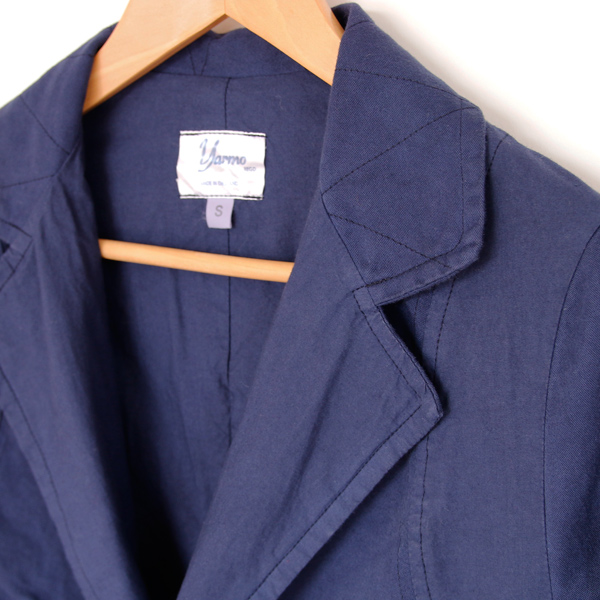
The piece that ties this coordination together is the Yarmo work coat.
Yarmo is a long-established factory brand founded in England in 1898, specializing mainly in workwear.
Originally, the company made smock-type aprons and jackets for herring fishermen,
and opened stores in many ports across England.
During World War II, demand from fishing workers temporarily declined, but
thanks to the high warmth and durability provided by the sturdy cotton twill fabric used,
快適に作業するための優れたパターンなど、働く人々のことを考えて作られたYarmoの製品は、
Made with working people in mind, Yarmo's products feature excellent patterns designed for comfortable work, andhave gained popularity among people in other trades as well. Today, the brand has even been commissioned to produce uniforms for renowned companies, including the UK Ministry of Defence.
It's a brand whose appeal lies in the simple, unpretentious atmosphere unique to workwear, and in the texture of its materials, which gain more character the longer you use them.
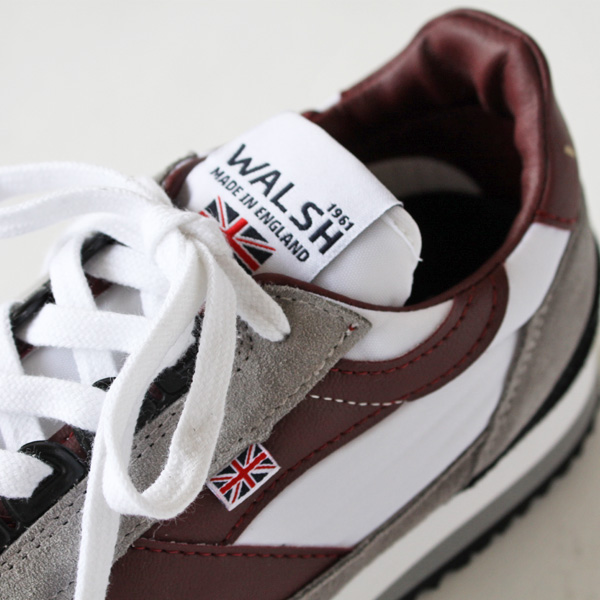
Sneakers, meanwhile, are perfect for giving an outfit a touch of casual ease.
The defining feature of WALSH sneakers, above all else, is that every pair is made entirely by hand.
From sewing to soling and packing, everything is done at the company's own factory in Bolton, England,
and craftspeople who have inherited the craftsmanship of the founder—who once met the demands of clients ranging from Olympic athletes to Everest mountaineering expeditions—
continue to carefully make each and every pair by hand.
These are sneakers with distinctly British craftsmanship and a refined look.
Owning just one pair can instantly give your outfit a well put-together air.
【Basic White Knits】
While there are quintessentially British icons like tartan and argyle patterns,
there are also plenty of British items that are simple and basic,
blending naturally into any outfit—chief among them, knitwear.
Britain has long had a thriving wool industry,
and there are numerous factories supplying knitting yarn and workshops producing knitwear for renowned high-end brands,
a tradition that has been carried on into the present day.
Among all of these, the simplest and most unforgiving of staple items is the white knit sweater.

First up is a long-established maker from Scotland.
Harley of Scotland's sweaters are knitted from soft yarn, making them light and warm.
It's a long-standing brand that continues to produce high-quality, traditional Shetland and Fair Isle knits known for their beautiful coloring.
For hundreds of years, sweaters made in the region stretching from Shetland to Fife
not only provided comfort and warmth, but each pattern also carried meaning,
used to identify people working in the ever-changing northern seas.
Inspired by these traditional and beautiful patterns and colors,
the brand's origin lies in proposing light, soft sweaters suitable for everyday wear.
Besides white knits, sweaters come in a variety of other colors too.
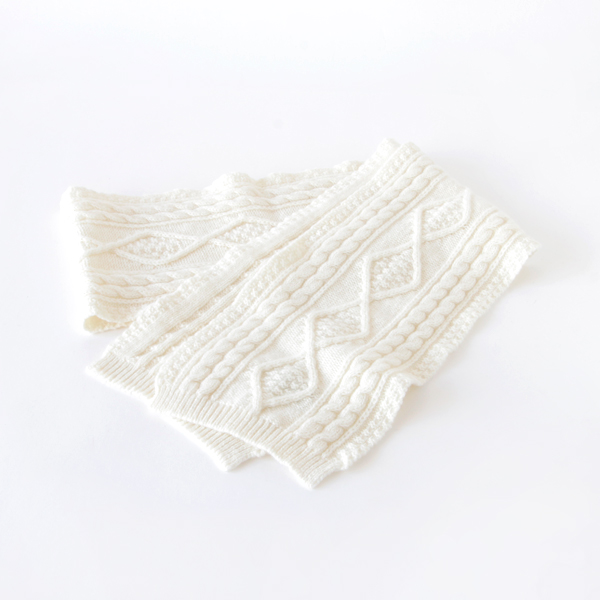
Also from Scotland, ROBERT MACKIE was founded in the town of Ayrshire in 1845.
The tradition of making Scotland's traditional hat, the bonnet, can be traced back 400 years.
It was once a traditional local industry, but nowadays
ROBERT MACKIE is said to be the only remaining bonnet maker.
Rather than a loose, chunky knit, the stitches are fairly tight and even,
so patterns show up beautifully, wind doesn't pass through easily, and the overall impression is warm.
Because the knit is flat, you can wrap it either neatly or with more volume depending on how you style it.
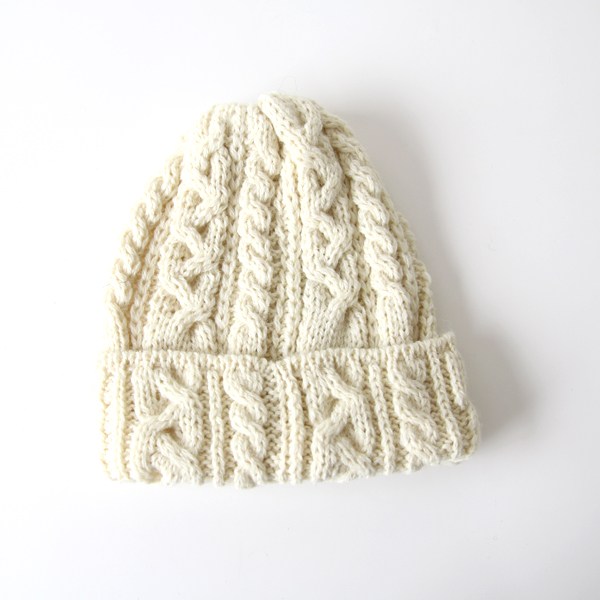
After sweaters and scarves, a hat is essential too.
Highland2000 is known for its authentic hand-frame technique (in which the knitting machine is operated by hand).
This method is said to have had a major influence on the British wool industry that followed,
and in an age when traditional techniques are increasingly being lost, this brand's superb skill and high quality are highly regarded around the world.
The wool of the Welsh Mountain sheep, a breed representative of Wales,
is raised in a region surrounded by sea with strong winds and rain, making it durable and exceptionally warm.
Highland2000 continues to inherit traditional British techniques
while producing high-quality knitwear that reflects a real commitment to natural materials.
【Where Footwear Makes the Difference】
Another category of British-made fashion item well worth incorporating into your wardrobe is shoes.
In Britain, where rain and poor weather are common, practical, tradition-respecting leather shoes have been beloved for many years.
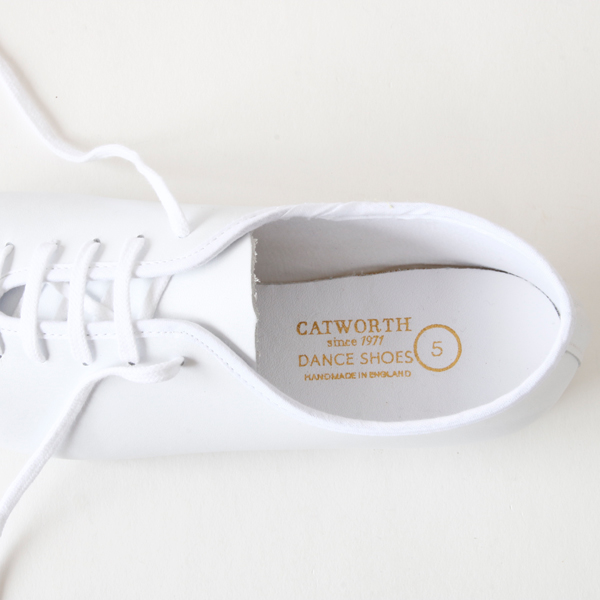
CATWORTH, founded in the 1970s, is a shoe brand born when its founder, a former saddler,
entered the dance market—a field with many competitive dancers in Britain—and started a new business.
It's a brand of such distinguished history that Queen Elizabeth herself has been listed among its patrons,
and since the brand's founding, all of its products have been manufactured at its own factory in Northampton, England.
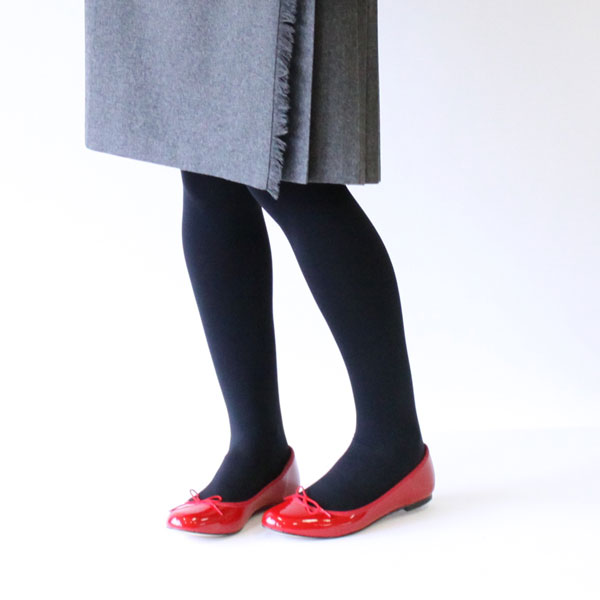
These are normally dance shoes meant to be worn indoors, but because they're built to withstand extensive stepping and tapping, they're highly durable,
making them perfectly suitable for everyday outdoor wear as well.
The soft texture of the leather molds to your foot more with every wear,
and the outsole gives your steps a light, easy feel while lending your feet a gentle look.
A vivid red pair of ballet shoes pairs beautifully with both denim and skirts,
lending an air of mature elegance without ever looking childish.
【Items That Pull an Outfit Together】
Up to this point, we've focused mainly on selecting British brands,
and one of the nice things about authentic items is that, of course, they're easy to coordinate with any kind of clothing.
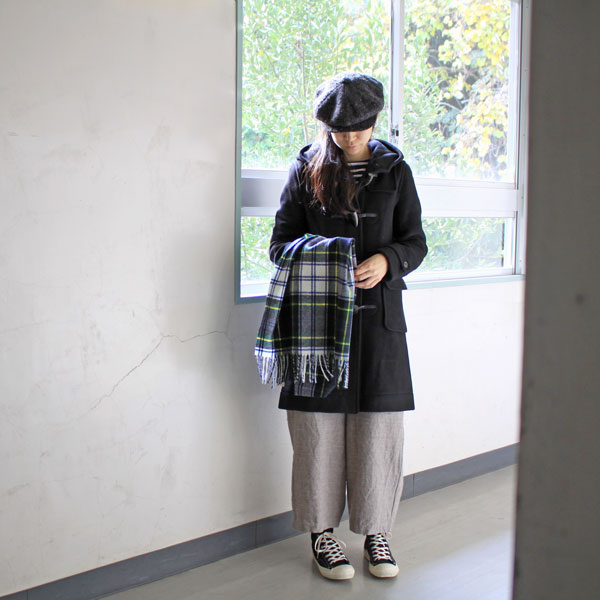
Top: Le minor Basque shirt, 115 MARINE/BLANC
Bottoms: Shetland Wool Linen Gaucho Pants
Coat: LONDON TRADITION Duffle Coat Black
This look pairs a clean-silhouette border top with relaxed bottoms as
the comfort-focused foundation, then pulls the whole outfit together with quintessentially British items—a tweed cap, tartan, and
a duffle coat.
On the feet, high-cut sneakers keep things casual, but
thanks to the outerwear and accessories, the look never tips too far into casual territory—it stays polished and refined.

So, what did you think of this traditional style built around British clothing and accessories?
When you dig a little deeper into clothing and accessories born in Britain,
you find not only iconic items like tartan and the duffle coat, but also
a surprising range of variations, right down to the basic white knit.
Of course, there's the pleasure of choosing based on design alone, but
learning about this kind of historical background behind the making of these pieces makes putting together an outfit even more enjoyable.
▼Harley of Scotland

▼Yarmo

▼WALSH

GUIDE »
CATEGORIES »
- + Gifts by recipient
- + Gifts by scene
- + Clothing
- + Bags / Backpacks
- + Wallets / Card cases
- + Jewelry
- + Shoes
- + Rainy day outfits
- + Kitchen
- + Home
- + Babies / Kids
- + Japanese products
Earn Miles


Payment & Security