.webp)


.webp)


.webp)


.webp)


Welcome to ZUTTO
Free shipping for newsletter subscribers (some areas excluded)
My page
Information
- トップページ/
- ZUTTO Journal/
- 選び方・使い方/
- Long wallets or b...

Whether you prefer a long wallet or a fold wallet, choose the shape that suits you best. How to choose and use your wallet
If you were to line up the essentials you carry when heading out, in order of "this is something I absolutely cannot do without,"
surely most people would name "smartphone, wallet, house keys" as the first three.
After that, for someone who loves music, it might be earphones or headphones,
or for someone with a long commute, a paperback book—personal preferences start to emerge little by little,
but the first three items are ones that nearly everyone would agree on, wouldn't they?
This time, we're focusing on one of those three: the wallet.
These days, as card payments and electronic money become more widespread,
it's true that a smartphone alone can handle almost everything.
And yet, somehow, we still find ourselves wanting to be particular about our wallets as an essential item—isn't that curious?

But with wallets like this, the tricky part is knowing when it's "time for a change."
The more thought and care you put into choosing one, the more courage it takes to replace it,
and the more carefully you use it, the less likely it is to break down to the point of being unusable.
It's not something you replace very often, but many people choose to buy a new wallet at a turning point—when they want to start something fresh,
such as entering school as a student, or changing jobs or moving as a working adult.
There's also a theory that, playing on the pun that a wallet "swells" (張る, haru) with money,
spring (春, haru) is the ideal season to buy a new one, if you're going to treat yourself to one anyway.
It seems that we Japanese have a habit of wanting to invoke good luck through wordplay like this whenever we can,
which might bring a smile to your face—but there is indeed something nice about
refreshing something you touch every day, like your wallet, right at the start of a new season.

Now, let's take a look at the key points to consider when actually choosing a wallet.
■Tip 1: Don't get too caught up in "the same construction as your previous wallet."
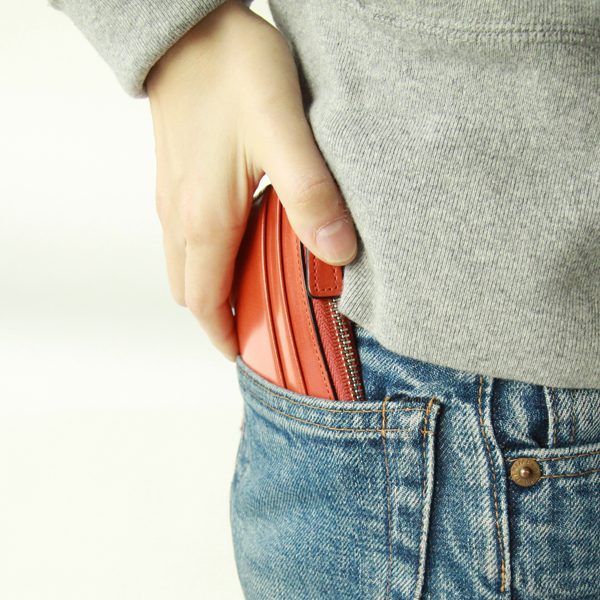
Here's a sudden question: right now, do you know exactly how much cash
you have in your wallet?
This is actually one barometer for gauging how well the construction
of the wallet you currently carry really fits you.
Of course, how people manage the contents of their wallet varies from person to person, so we can't generalize,
but if we define an easy-to-use wallet as "one that lets you take money in and out naturally, and manage its contents without stress,"
then being able to instantly tell how much cash you have, and immediately know
where a frequently used store card is tucked away, becomes a very important point.
If you only have a rough idea of how much money is in there…
or if you often find yourself struggling because a card has gone missing just when you wanted to use it…
then it might be time for a new wallet.
Here's the blind spot: whenever we buy a new functional item—not just a wallet—
we tend to look for "something similar to what we had before, something just as easy to use."
This tendency seems especially strong with wallets, since you take them out many times a day
and end up using the same one for a long time,
so people tend to focus not just on appearance but on the internal construction,
often choosing by comparing a new wallet to the one they're currently using.
The longer you've been attached to a particular wallet, the stronger this tendency may be.
Of course, there's nothing wrong with looking for something similar to what you're used to,
but there's also a good chance that, without realizing it, your spending habits have changed,
and along with them, your ideal wallet design may have changed too.
So when you have the chance to buy a new wallet,
it's worth clearing your mind of the urge to "find something like your old wallet,"
and instead rethinking from scratch what kind of design would really suit you.
■Tip 2: Take time to think carefully about whether you want a fold wallet or a long wallet
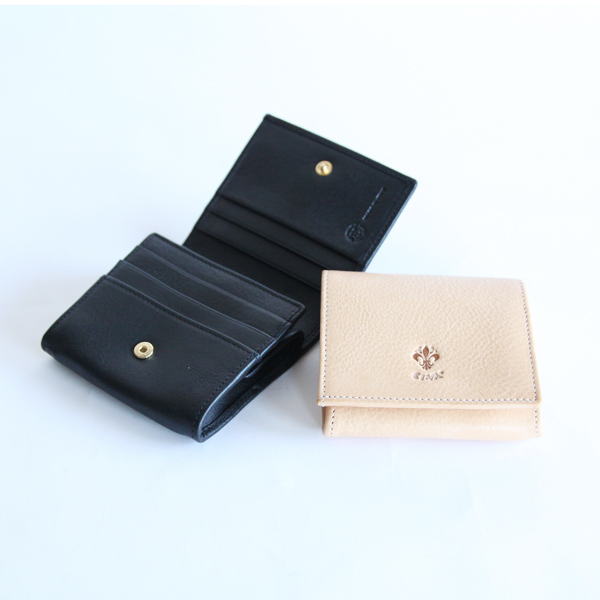
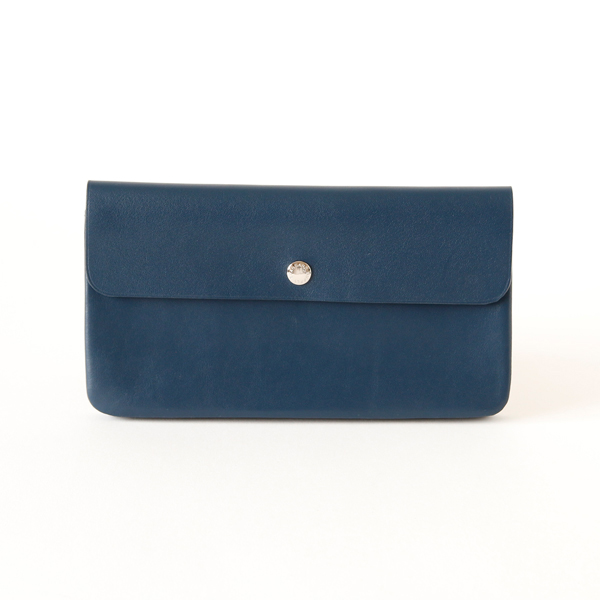
There are two main points worth considering here.
"Fold wallet or long wallet?" and "storage capacity or compactness?"
These two points are closely related,
■Fold wallet… Compact, since bills are folded in half. Doesn't take up much space in your bag.
With an external coin case type, paying at the register goes smoothly too.
■Long wallet… Bills go in flat, making them easy to organize.
Has many card pockets, offering excellent storage capacity.
These are the general characteristics of each.
If you'd rather prioritize storage capacity and keep your bills, coins, and cards
all together in one place, even if it means a bit more bulk, a long wallet is the way to go.
On the other hand, if you don't carry many cards and want to travel as light as possible,
a fold wallet is the basic choice to consider.
What makes this tricky is that even if you've tried both long wallets and fold wallets before,
once you've settled on an answer like "I'm definitely a long-wallet (or fold-wallet) person!"
it's hard to find the opportunity to reconsider.
You might be using a long wallet with excellent storage capacity because you like not having to fold your bills,
but in fact, you rarely use those card pockets.
Or you might have started using a compact fold wallet because you liked the design,
only to find you now need to carry a separate coin case and card case, which actually increased the amount you carry.
If you take a closer look at how you actually use your wallet, you're bound to notice some unexpected habits.
So before you start searching for a long wallet (or fold wallet) just like your last one,
■Are you making good use of your card pockets? (Are all the pockets full, and of those, how many cards do you actually use regularly?)
■Which do you use more often, cash or credit cards? (If you use credit cards more frequently than bills,
you can make your wallet more compact.)
■Do you have more coins than necessary accumulating? (If you end up using bills without realizing you already have enough change,
it might be a sign that you're not making full use of your wallet.)
Let's make a habit of checking these points.
Once you review these, you should naturally understand whether a long wallet or a bifold wallet suits you better,
and how many pockets you actually need.
■Tip 3: Check the opening and closing mechanism, a blind spot in usability.
Once you've grasped what an ideal wallet structure looks like, there's one more point you shouldn't forget to check.
That is the "opening and closing" mechanism.
It may seem obvious, but whenever you use a wallet,
you always go through the motion of opening it and then closing it at the end.
Even if the interior design is perfect for you,
if the opening and closing action isn't smooth when you're paying at a store,
you'll end up feeling a bit of stress every time you use your wallet.
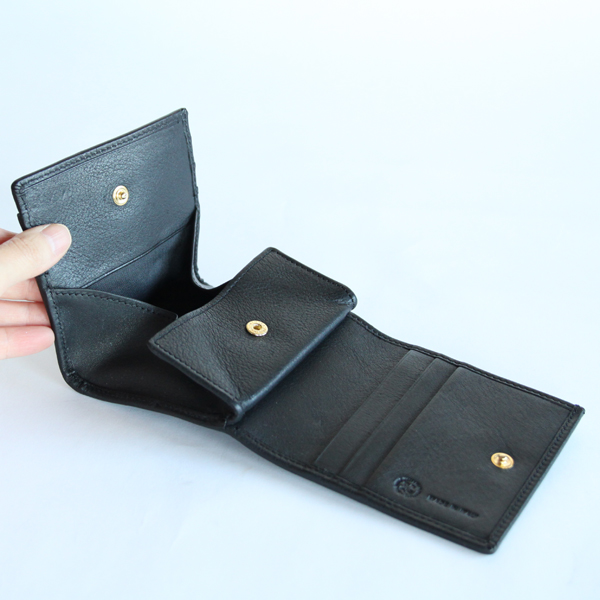
Generally, there are two main patterns for opening and closing wallets,
a "zipper" or a "snap button."
Since you can open and close the wallet with a single button motion,
snap buttons take less time to open and close than zippers.
Whether you're taking out money or leaving the store after paying,
the fact that a simple click of the button is all you need is a major appeal.
However, in the case of snap-button-type wallets,
the wallet itself is mostly built in a "flap-cover" style.
Especially with long wallets, many are designed so that the flap covers the main body,
and because of that extra flap, the amount of material used in the wallet increases,
which can sometimes make the main body feel heavier.
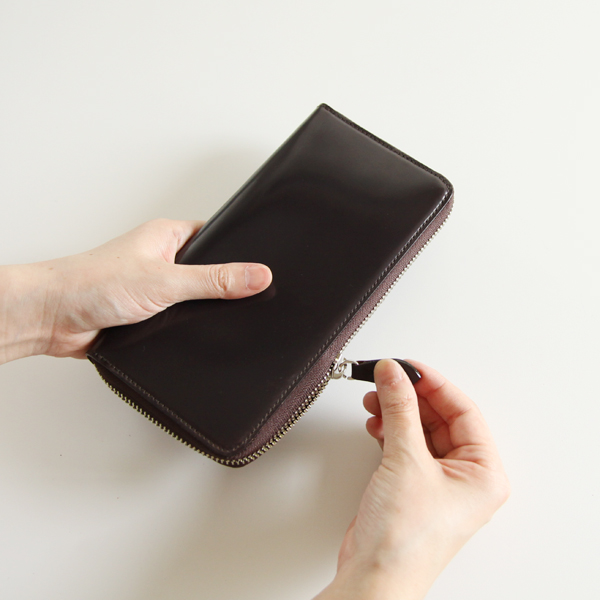
On the other hand, zipper types take a little more time to open and close, but
they have advantages that snap buttons don't, such as looking neat and tidy when closed,
and not flapping open when mixed with other items in your bag.
For long wallets as well, if you choose a simple design without a flap cover, one where
the zipper opens in a U-shape and spreads widely to the left and right,
you can avoid the extra weight and bulkiness of the fabric.
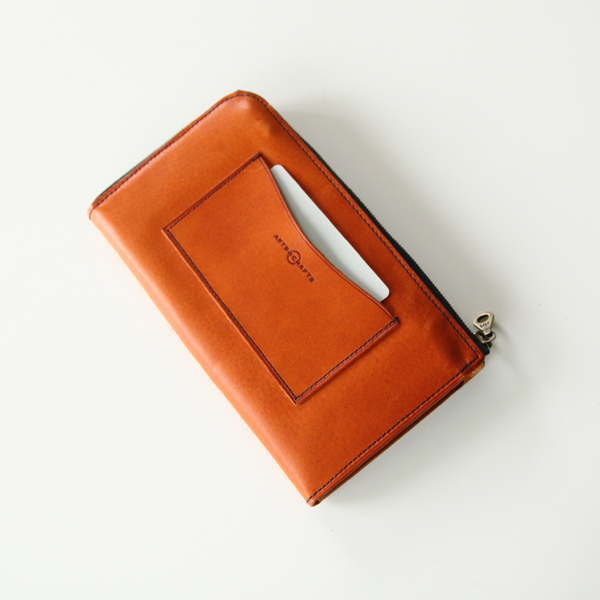
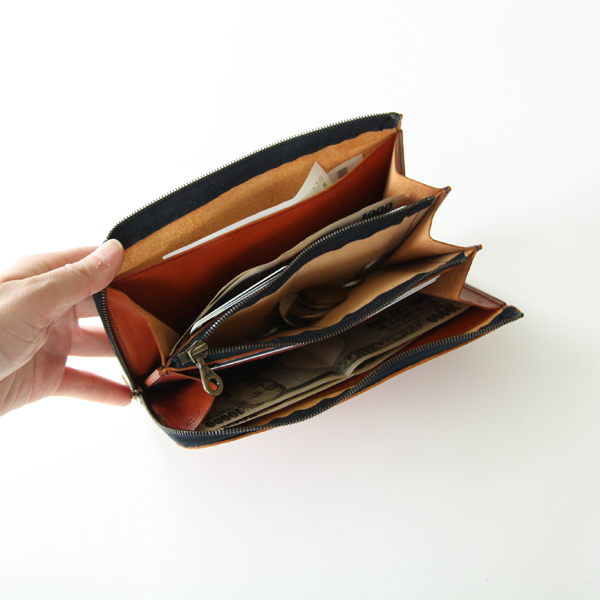
Also, besides the U-shape, an L-shaped zipper is another option well worth considering.
As the name suggests, an L-shaped zipper has zippers along two sides forming an L shape,
and compared to the U-shape, it opens and closes more smoothly.
When closed, the zipper pull sits at the top, giving it a stylish look as well.
If the gussets on the left and right are accordion-folded like the model in the photo,
you can spread the wallet wide open on both sides to take out the contents, making it exceptionally easy to use.
■Points for using your wallet for a long time

・Even with a wallet that has a large storage capacity, when you first start using it, rather than stuffing it full of coins and cards,
keep the volume at a level that won't stretch the fabric or leather, and gradually break it in.
・Especially with leather wallets, the leather stretches to some degree depending on the volume of the contents inside,
so if you keep a lot of cards and coins in it over a long period,
you may forget its original silhouette. During regular maintenance, it's a good idea to take everything out once.
・Wallets with outer pockets show differences in color change and aging between the inside and outside of the pockets.
When applying cream or oil, be sure to care for the inside of the pockets as well.
■A variety of designs, wallets you can use with love for a long time
▼bellroy
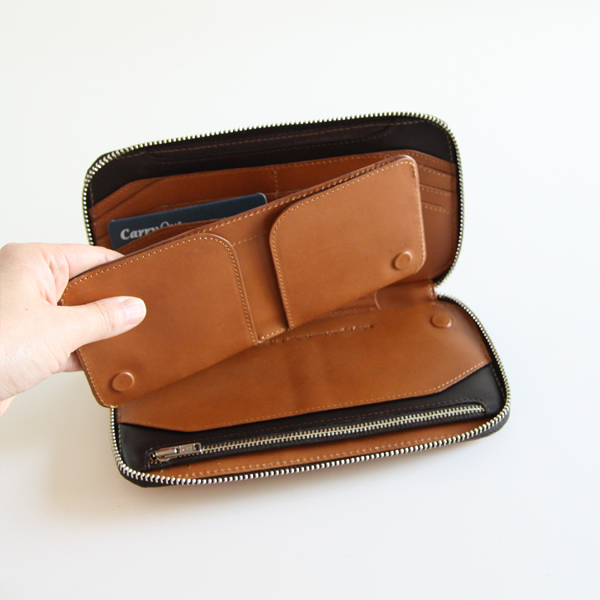
"Making wallets slimmer, that's our mission." So proclaims bellroy.
It's a truly unique brand that thoroughly considers design and material choices in order to make wallets slimmer.
Born in Melbourne, Australia, this brand specializes in genuine leather wallets,
and to eliminate unnecessary bulk, it adopts a structure that removes dividers and stores cards together in one place.
As shown in the photo, a large long wallet may even have a removable compact wallet built inside it,
and this kind of smart construction, seen throughout the design, is popular among minimalist men.
【This is perfect for those who】
・Mostly pay by card, keeping bills and coins to a minimum.
・Want to balance storage capacity and slimness as much as possible.
・Travel often.
▼ARTS&CRAFTS
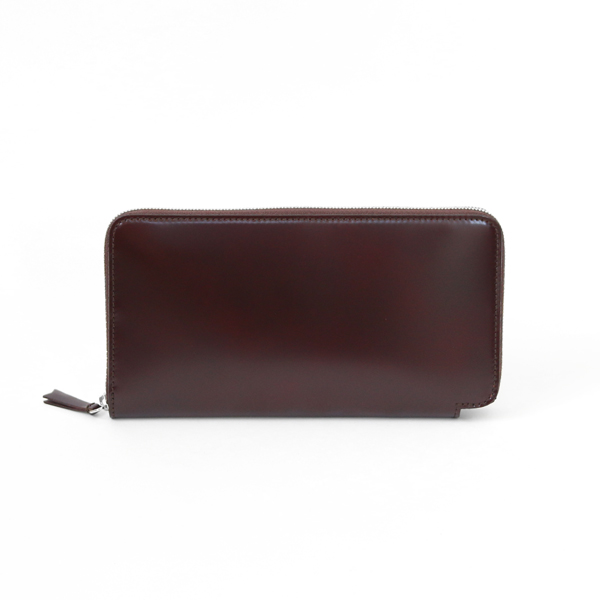
With the concept of "things and stories that last 100 years," ARTS&CRAFTS connects the thoughts of those who design, those who make, and those who use,
creating things that can be used for a very long time and continuing on with stories that get passed down through generations.
It's a Japanese maker that handles everything from bags to leather wallets.
The photo shows a long wallet made with high-quality cordovan.
At a time when cordovan leather is becoming difficult to obtain worldwide, this wallet uses delicate, elegant domestically produced mizuzome (water-dyed) cordovan.
Rather than covering the surface with pigment, it's dyed using an aniline finish called mizuzome,
Polished one by one while working wax into the leather, the surface has been finished to a beautiful sheen.
【This is perfect for you if...】
・You're drawn to a timeless design and functional beauty.
・You prefer something simple that anyone, regardless of gender, can use.
・You want to choose a leather wallet that develops more character the more you use and care for it with your own hands.
▼STANDARD SUPPLY
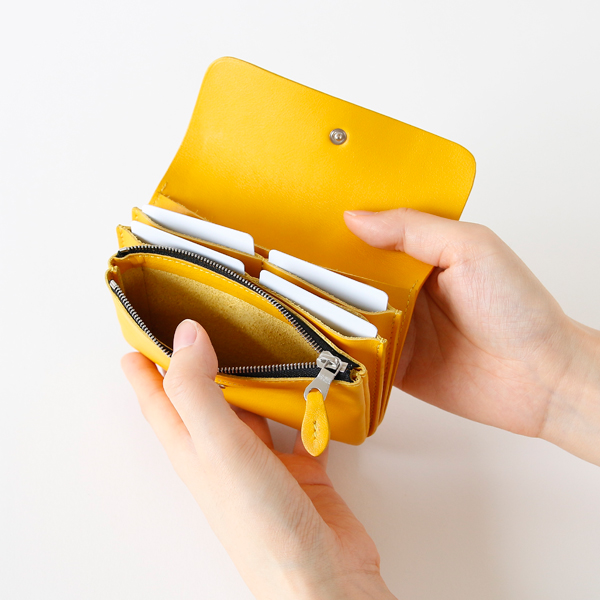
A brand with the motto "LEAN, LESS AND LEAVE."
They make things with the spirit of creating items that anyone can use, yet that grow and develop over the long term with whoever uses them.
STANDARD SUPPLY is well known for its backpacks and tote bags made from 64 cloth (a blended nylon and cotton material),
but they also offer a leather wallet series called "PAL," which is packed with the same design sensibility.
【This is perfect for you if...】
・You like a design with a playful touch.
・You want to choose your wallet as one of your fashion items too.
・You enjoy choosing from a wide variety of colors.
▶︎See more wallets in our full lineup

GUIDE »
CATEGORIES »
- + Gifts by recipient
- + Gifts by scene
- + Clothing
- + Bags / Backpacks
- + Wallets / Card cases
- + Jewelry
- + Shoes
- + Rainy day outfits
- + Kitchen
- + Home
- + Babies / Kids
- + Japanese products
Earn Miles


Payment & Security