.webp)


.webp)


.webp)


.webp)


Welcome to ZUTTO
Free shipping for newsletter subscribers (some areas excluded)
My page
Information
- トップページ/
- ZUTTO Journal/
- 選び方・使い方/
- Everything you wa...

From sneakers to wristwatches. Everything you want to know about the things you love and use every day
Your favorite canvas sneakers, or that cashmere stole you splurged on.
By now, the new items you picked up around the start of autumn have gradually settled onto your skin,
and this is probably around the time they start to truly feel like your own.
It's exactly at moments like these that you find yourself wanting to know the proper care methods for each material and item.
"This product is fine to wash with water, but why exactly can it be washed?"
"What should I do for care when dry cleaning isn't an option?"
"Is it really okay to keep using the same maintenance method for years to come?" and so on—
small questions you never would have thought of before purchasing tend to pop up one by one.
This time, from among the questions we've received from customers and the doubts our staff have had,
we've picked out three that we think will be helpful to many people.
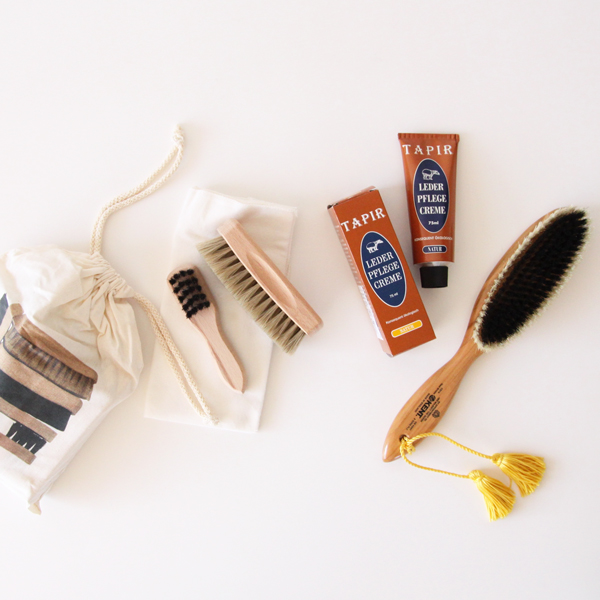

【Is it okay to wash vulcanized canvas sneakers with water?】
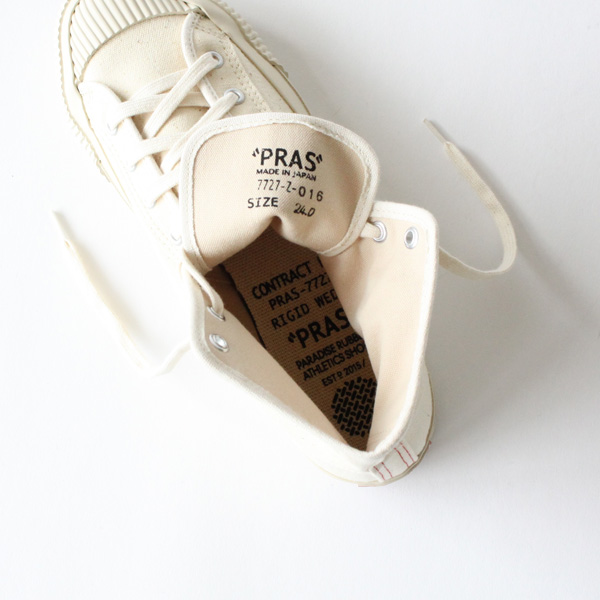
Canvas sneakers have become so widespread that you'd think almost everyone owns at least one pair.
Their appeal lies in their simple look, which goes with all kinds of outfits regardless of the season.
When you buy canvas sneakers at a shoe store,
you're often told, "Please don't wash them with water—use waterproof spray and brushing to prevent stains instead."
And yet, many sneakers made using the vulcanized construction method can in fact be washed with water.
Being able to wash them is wonderful, but what exactly makes the difference?
This is certainly something worth wondering about.
First, there are indeed many canvas sneakers out there that should not be washed with water.
This is because the adhesive used to join the parts of the shoe can dissolve,
and the canvas fabric itself is vulnerable to water, which can lead to deterioration.
The "vulcanized construction method," on the other hand,
involves sandwiching uncured rubber between the sneaker's upper and the sole,
then placing it in a special kiln where heat and pressure are applied along with vulcanizing agents such as sulfur to harden the rubber.
This process bonds the canvas and rubber sole—two very different materials—together with tremendous strength,
achieving a truly unified construction.
(Compared to adhesive bonding, this also results in a more flexible, supple structure that resists peeling.)
Among the shoes featured on ZUTTO,
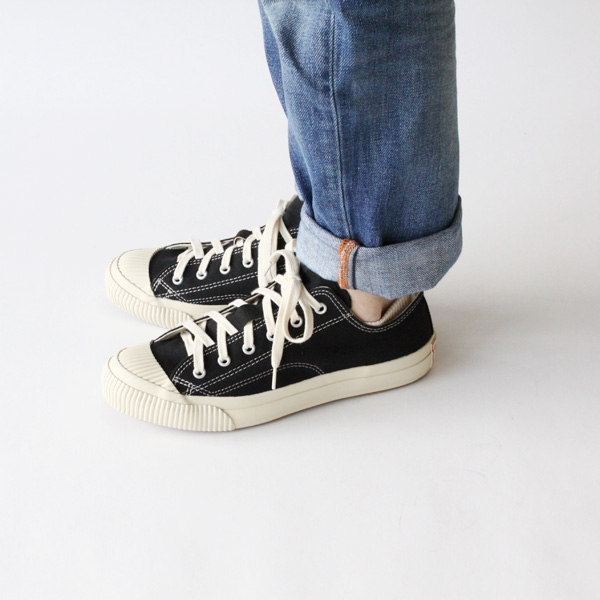
the canvas sneakers from "PRAS" are made using this vulcanized construction method.
According to PRAS's manufacturer, it's basically fine to wash them vigorously and often.
In fact, they say the real trick to making them last is to wash them.
Since the upper is made of canvas, washing it once it gets somewhat dirty tightens the weave of the fabric,
which actually makes the shoes last relatively longer than if you kept wearing them without washing.
Stylish people always seem to be wearing clean-looking sneakers, don't they?
Perhaps, even if they're not brand new, sneakers that are well cared for
develop even more character and take on an even better texture over time.
【What's the difference between Iron Water and Fabric Fresh?】

Wool coats, cashmere stoles—there are certain items whose day-to-day care can leave you unsure of what to do.
They're hard to send to the dry cleaner mid-season,
and frequent dry cleaning can actually damage the fabric,
so you naturally want to keep them in the best possible condition through everyday care.
For self-care of winter clothing, garment sprays that can be used even on delicate materials like wool and cashmere come in very handy.
Regarding care methods using such sprays, one customer asked us
whether The LAUNDRESS's Iron Water could be sprayed directly onto clothing
and used as a deodorizing spray.

The LAUNDRESS, a self-care brand from the United States, uses simple packaging with a unified look (meaning the products look very similar to one another),
and offers a truly extensive lineup organized by use.
It's true that Iron Water and Fabric Fresh (a garment deodorizing spray) do seem to serve similar purposes.
When we actually checked the ingredient labels printed on the packaging,
■ Iron Water: water, fragrance, antimicrobial agent
■ Fabric Fresh: water, ethanol, fragrance, antimicrobial agent
That's what we found. The ingredients are indeed very similar.
So we checked with the Japanese import distributor, and
"The ingredients are quite similar, but Iron Water is meant to be diluted with water
and is formulated slightly differently on the assumption that it will be ironed over afterward.
For clothing you won't be ironing, please use Fabric Fresh instead."
was the answer we received. As expected, the formulations are indeed carefully considered for their respective uses.
Also, the reason ethanol is included in Fabric Fresh
appears to be "to increase volatility and let the scent dissipate quickly."
Fabric Fresh does have a lovely scent, but unlike perfume,
its purpose isn't to add fragrance—it's meant purely to neutralize odors that have clung to clothing.
So that it can also be used comfortably by people such as those in customer-facing jobs who want to avoid strong scents,
We were told it's designed to let moisture evaporate quickly.

【Can a hand-wound watch really last forever if you just keep winding it?】

Next up is a question from someone who received a hand-wound wristwatch.
This question comes from someone who received a GS/TP (Ji-Esu Tii-Pii) watch as a gift.
They asked: "This is my first hand-wound watch. Is there anything I should be careful about in order to use it for a long time?"
Hand-wound wristwatches really are lovely, aren't they. These days, quartz watches, which need their batteries replaced periodically, are the norm, but
quartz watches only became widespread in the latter half of the 1900s. Before that, mechanical watches were the standard.

Mechanical watches are broadly divided into two types: "automatic" and "hand-wound."
Automatic watches run on the vibrations generated by the movement of your arm while you wear the watch.
Hand-wound watches, on the other hand, work by winding the crown, which winds up the mainspring inside,
and the hands are driven by the force of the mainspring as it unwinds (returns to its original state).
It takes a bit more effort, since you have to wind the crown yourself,
but that sense of nurturing it with your own hands is one of its true pleasures.
Hand-wound watches are actually quite delicate.
They're assembled from numerous gears, tiny screws, and springs, giving the impression of a small universe.
It's true that hand-wound watches spare you the trouble of battery replacement, but aside from daily winding,
if you use one over a long period, you'll need what's called an "overhaul"—a disassembly, cleaning, and adjustment.
The metal parts inside a watch rub against each other with every movement, day after day, and are fated to wear down, however slightly.
An overhaul involves disassembling the components that make up the movement,
cleaning them thoroughly, and reassembling them.
Lubricating oil is reapplied, and any worn parts are replaced.
This is a meticulous process that requires the knowledge of a watch specialty shop and the skill of a craftsman.
Compared to quartz watches, hand-wound watches do take a bit more care,
but if you treat them with care, they can be used for 10, 20... even 50 years.
Since overhauls require specialized knowledge,
please do consult a watch specialty shop or the watch's manufacturer about the timing and frequency of overhauls.

>>>Related content: "Getting to Know Hand-Wound Wristwatches"

Articles that answer the little "why?" and "how?" questions about the things you love and use every day
are also being published as a series in the official ZUTTO app.
Besides the topics introduced this time, we also write about fashion items whose self-care methods you may be curious about,
as well as questions our customers have sent us about everyday tools,
and points of curiosity that our staff have actually researched themselves.
The ZUTTO smartphone app brings together care tips for your favorite items along with seasonal reading.
You can also enjoy app-exclusive serial content and shop for new products.
The ZUTTO app can be downloaded for free from Google Play (Android)
and the App Store (iOS).
Wondering how best to care for a leather bag?
Or looking for a long-lasting gift perfect for this season?
Whenever those questions come up, be sure to open the ZUTTO app.


GUIDE »
CATEGORIES »
- + Gifts by recipient
- + Gifts by scene
- + Clothing
- + Bags / Backpacks
- + Wallets / Card cases
- + Jewelry
- + Shoes
- + Rainy day outfits
- + Kitchen
- + Home
- + Babies / Kids
- + Japanese products
Earn Miles


Payment & Security