.webp)


.webp)


.webp)


.webp)


Welcome to ZUTTO
Free shipping for newsletter subscribers (some areas excluded)
- トップページ/
- ZUTTO Journal/
- 選び方・使い方/
- Glasses that Brig...

Glasses to color your table—collect a variety and use them by occasion
The glass is the quintessential vessel for cold drinks and alcohol.
When you pour a drink into a glass made of glass,
the way it glitters and shines is beautiful just to look at,
and changing the glass depending on what you're drinking can even change the flavor.
This time, we'd like to introduce some glasses you'll want to have on your table.

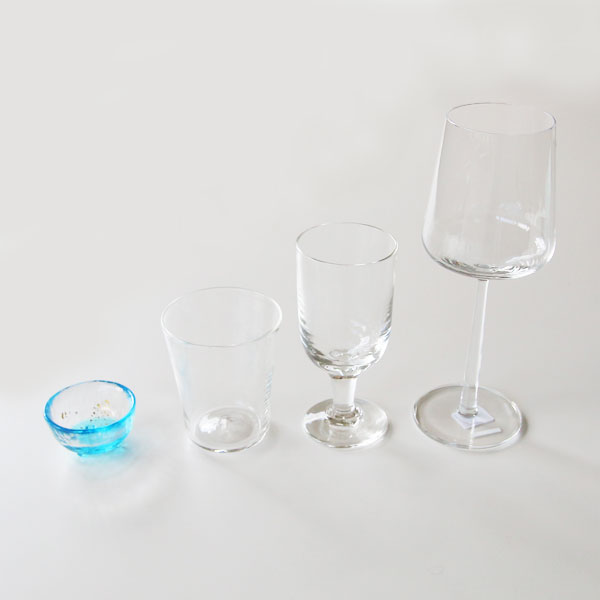
Glass tumblers and glasses come in a wide variety of types.
One of the charms of glassware is that it ranges from small pieces to large ones.
■The tumbler, an easygoing everyday glass
When it comes to standard glassware, the tumbler is the classic choice.
It suits everyday drinks like tea and soft drinks,
as well as alcoholic drinks such as beer.
The straight-sided shape of the tumbler means its greatest feature is its generous capacity.
Many tumblers are also made with a larger base,
giving them a stable, well-grounded feel.
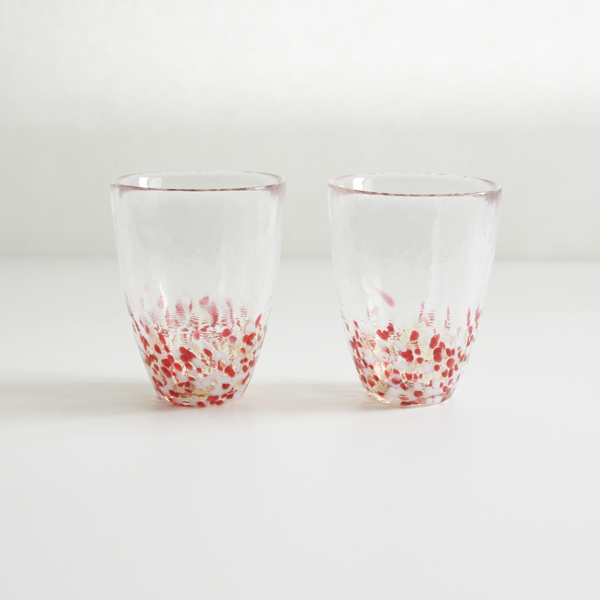

As its name suggests, the Tsugaru Vidro Apple Tumbler
features tumblers dotted with red glass reminiscent of apples.
Made with a solid, substantial thickness, the surface of the glass
has gentle undulations worked into it.
Each Apple Tumbler is handmade one by one by craftsmen,
so the resulting lack of uniformity actually gives each piece its own character.
The rim, too, is made of thick glass, giving it a pleasant feel against the lips.


This is the iittala Aino Aalto Tumbler Set of 5, Clear.
Designed so that the glass won't slip from your hand and fall,
the surface features multiple layered rings, and when a drink is poured in, it creates a beautiful play of reflected light.
Its 220ml capacity is also just the right size for everyday use,
perfect for quickly quenching your thirst with a bit of water,
and it also comes in handy as a glass for serving several guests at once.
And since the shape allows for stacking, tidying up is easy too.
■The wine glass, where aroma is just as important as taste
With its long stem and rounded bowl, the wine glass is one of the most distinctive types of glassware.
The shape typically associated with wine glasses came about precisely because wine
is a drink to be enjoyed not just for its taste, but for its aroma as well.
Pouring wine into the bowl is said to bring out the rich, mellow fragrance of the wine
while also improving the way it feels on the palate.


With its refined presence, iittala's
ESSENCE Red Wine Glass Pair Set.
The bowl, set atop a long stem, has a flat base,
and its beautiful form, standing upright with poise, catches the eye.
The flat base is designed so you can enjoy the aroma of the wine right to the very last drop,
calculated so that even as the wine dwindles, the surface area in contact with air remains generous.
While it's ideal to switch glasses depending on the type of wine,
the ESSENCE Red Wine Glass Pair Set is recommended for those looking for their very first wine glass.
Since it comes in a box, it's also an easy choice as a celebratory gift.
■The stem glass that keeps things cool, ideal for summer

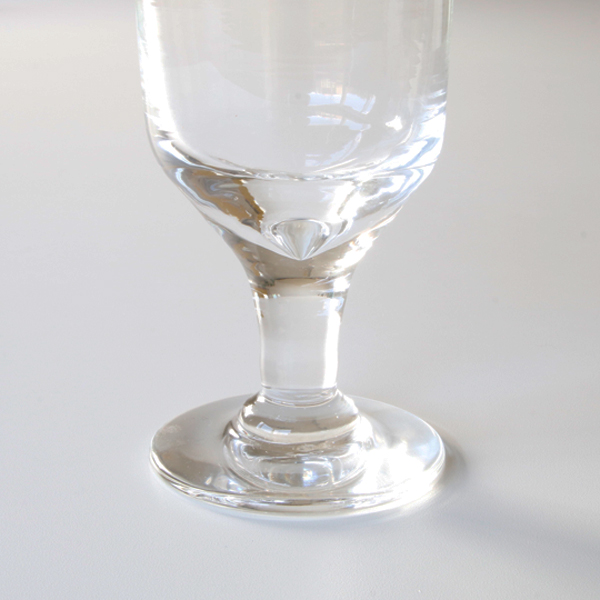
When it comes to wine glasses, they're specialized for wine specifically,
but there are other glasses with stems as well.
The Azumaya Stem is a glass whose charm lies in its thick handle and generous capacity.
The term "stem" originally refers to the handle portion of a glass,
and the Azumaya Stem is a design that emphasizes precisely that part.
With its stable form and a shorter stem than a wine glass, it's characteristically easy to hold.
Compared to a tumbler, it has a cleaner, more streamlined look,
making it a fitting shape not only for soft drinks but also for pouring wine or champagne.
The Azumaya Stem is handmade one by one by Japanese craftsmen.
■Sake vessels to pair with your drink of choice
Besides wine glasses, there are also many glasses suited to drinks like sake and whisky.
First, there's the ochoko. The word ochoko is said to derive from "chotto," meaning "a little,"
or from "choku" (直), meaning something plain and unadorned.
Reflecting these origins, the ochoko is made small, but
its visual beauty and the pleasant feel of the rim against the lips are what matter most.
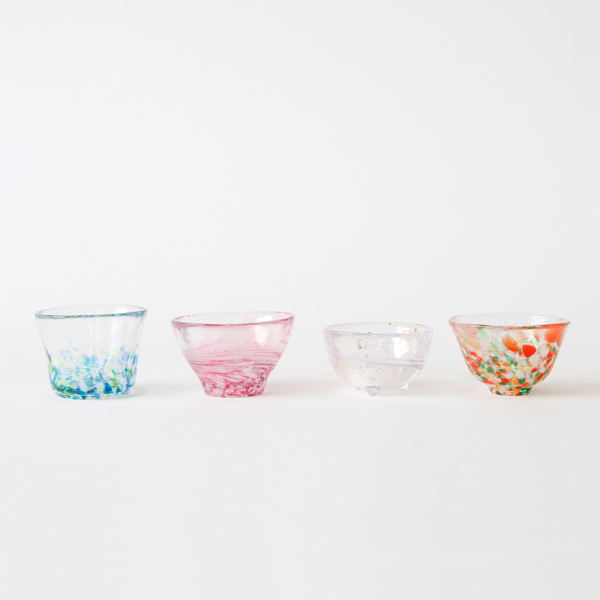
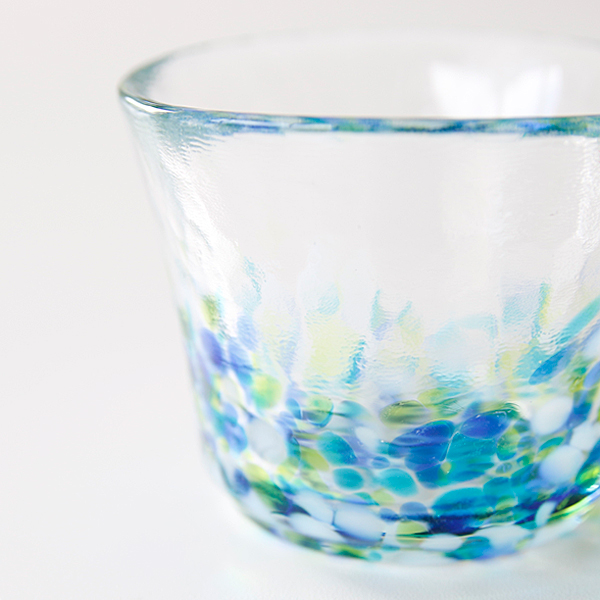
As its name suggests, the Tsugaru Vidro Shiki no Sakazuki
is an ochoko set notable for its beautiful colors evoking the four seasons and its characterful shapes.
Tsugaru Vidro, which got its start manufacturing glass floats for fishing nets,
relies on the skill of its craftsmen to create thick-walled glass,
resulting in pieces that, despite being glassware, are relatively durable.
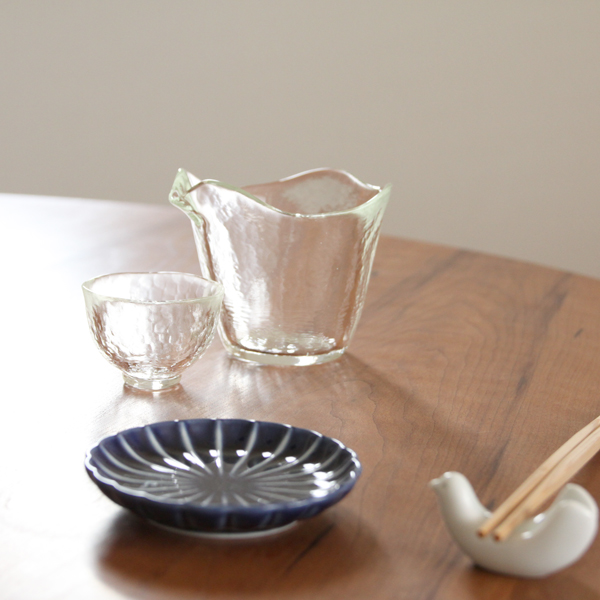

This next one is also from Tsugaru Vidro: a heat-resistant katakuchi sake set that pairs a katakuchi (spouted pouring vessel) with ochoko cups.
With its simple, colorless design, its substantial and sturdy feel to the touch,
and its exquisitely curved shape, it's a sake vessel unlike any other.
Glassware conveys a sense of coolness through its appearance alone,
so it's perfect for cold sake—and since it's also microwave-safe, it works for warm sake too, which is
its greatest appeal. The katakuchi and ochoko can also be nested together for storage, making this a handy set to have on hand.
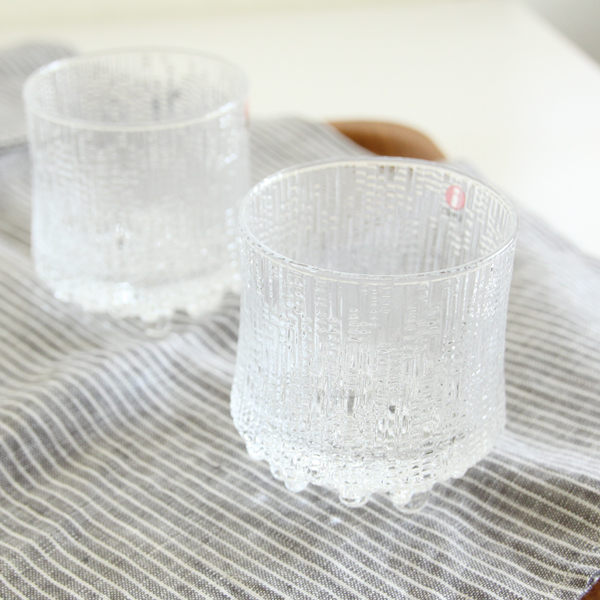
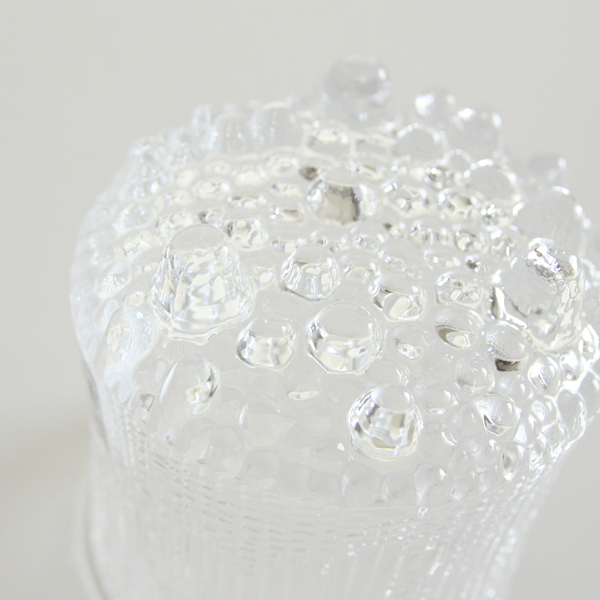
Turning to something different, here we have iittala's
Ultima Thule Old Fashioned Glass Pair Set.
Ultima Thule refers to the far northern island where the sun never sets,
a land locked in ice and snow,
and this glass is said to express the way the ice on that island gradually melts.
That's why it features a design that looks like droplets clinging beneath icicles,
with the base shaped with small bumpy protrusions.
With its wide mouth, close in shape to a tumbler, the Ultima Thule Old Fashioned Glass
is perfect for whiskey or shochu, drinks you enjoy with ice and savor for their aroma.
A glass with a wide rim mellows the flavor of the drink,
which also has the effect of letting you appreciate its rich taste more fully.

So, do you know how a glass is actually made?
One of the most commonly used methods is called "chubuki" (free-blowing).
Chubuki is a technique in which molten glass is gathered onto the end of a blowpipe,
and shaped by blowing air in from the other end.
The craftsman holds the blowpipe, turning it round and round while blowing air into it,
and this method, which relies on gravity, centrifugal force, and the force of the breath,
is said to have originated around the 1st century BC—which is quite remarkable.

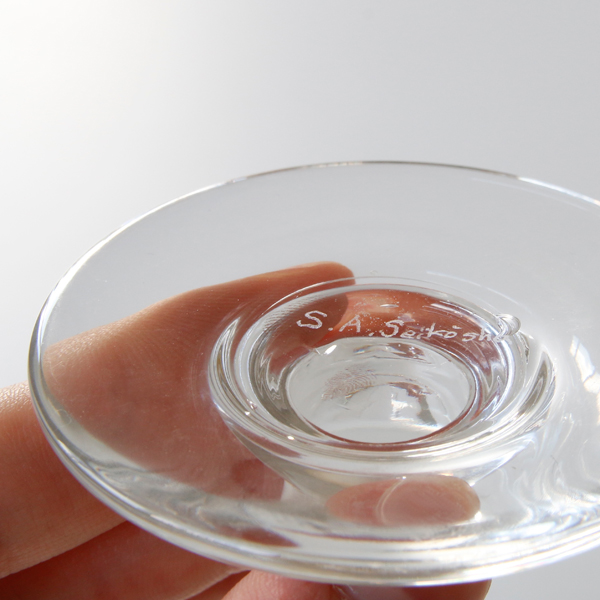
Chubuki involves not only shaping the glass by blowing air into it,
but also layering molten glass and adding lines to build up the form and create patterns.
When no mold is used, it's said that each craftsman's individual experience and sense come strongly into play,
with the strength of the breath, the skill applied during shaping, and the speed of the shaping process
all directly determining the final form of the glass.
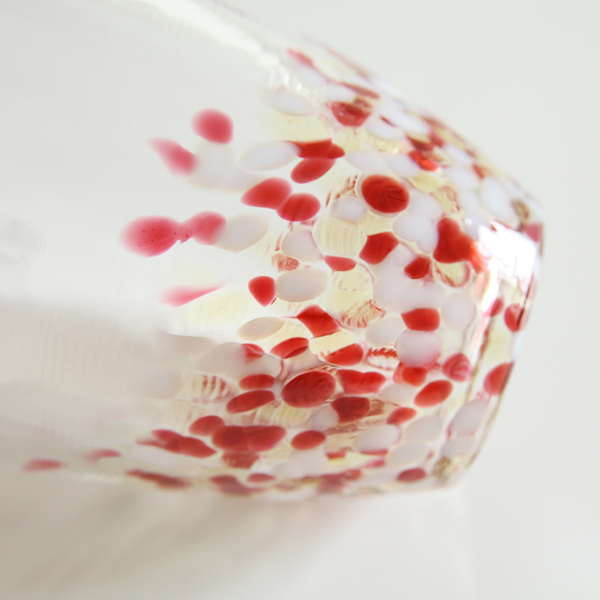
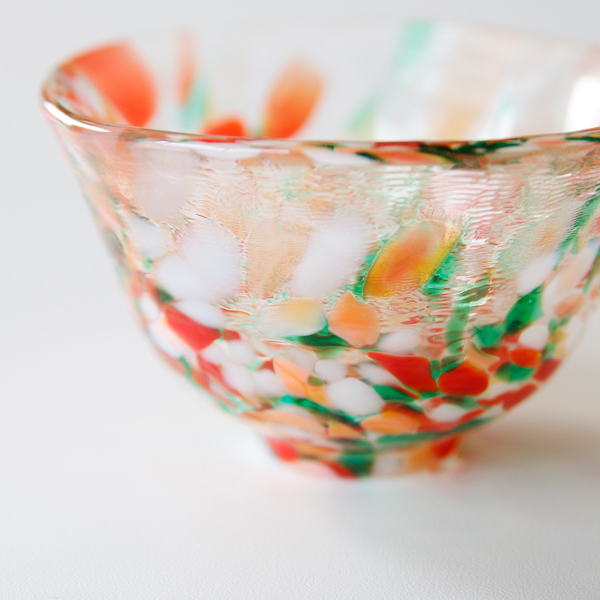
Also, glasses that use color, like Tsugaru vidro, are colored either
by using colored glass or by dusting on colored granules.
When colored glass is used, coloring agents such as manganese or cobalt are mixed into the glass raw material to create the colored glass,
which is then layered over clear glass and fired. It is then shaped, layered again with a different colored glass, fired, and shaped once more.
By repeating this process, glasses featuring many different colors are created.
Meanwhile, glasses colored with a speckled pattern are made using what are called "color grains"—
small grains of colored glass sprinkled onto clear glass and then re-fired, which creates that distinctive pattern.


Glassware is fragile. If handled roughly, it will of course break—it's a delicate material.
Wine glasses are sometimes clinked together with a ringing sound during a toast,
but considering that two hard objects are striking each other, depending on how it's done,
this can actually risk damaging the glass.
In the case of wine glasses, the largest part of the bowl is the sturdiest,
so that's the part you should gently touch together to make the sound.
The most important thing for the glass's sake is to never make the sound carelessly.
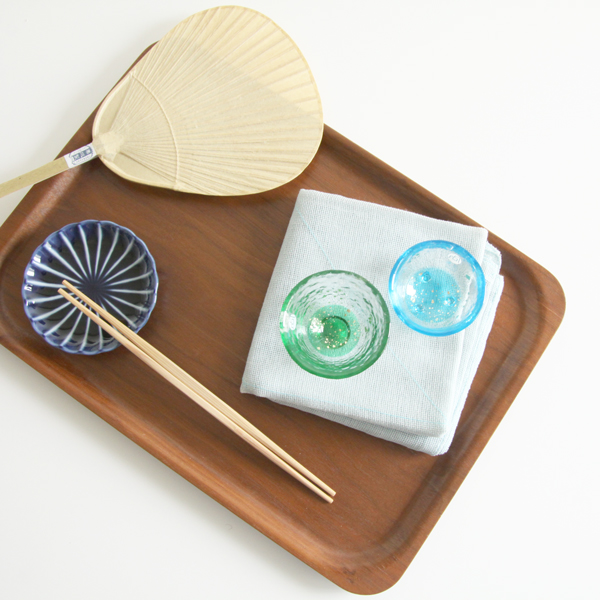
When caring for a glass, cloudiness is something that tends to bother people.
One possible cause of a glass becoming cloudy is residue
left behind from dish soap.
Wash the glass thoroughly, scrubbing well with dish soap,
and rinse it well with lukewarm water so that no soap remains inside the bowl or on the stem.
Once the water has drained off, wipe it dry with a soft cloth.
At that time, if you hold the glass with the cloth between your hand and the glass, no fingerprints will be left,
allowing you to polish it beautifully—which is why this method is recommended.


GUIDE »
CATEGORIES »
- + Gifts by recipient
- + Gifts by scene
- + Clothing
- + Bags / Backpacks
- + Wallets / Card cases
- + Jewelry
- + Shoes
- + Rainy day outfits
- + Kitchen
- + Home
- + Babies / Kids
- + Japanese products
Earn Miles


Payment & Security