.webp)


.webp)


.webp)


.webp)


Welcome to ZUTTO
Free shipping for newsletter subscribers (some areas excluded)
- トップページ/
- ZUTTO Journal/
- 選び方・使い方/
- Fabric-making tha...

Fabric-making that weaves together history, arriving from Okayama
Did you know that Okayama Prefecture is a major center of the textile industry, ranking just after Aichi and Osaka Prefectures? Fabric born in Okayama has been widely used not only in Japan but overseas as well, prized for its high quality. There are several reasons why the textile industry developed in Okayama Prefecture, and one of them is that the land was well suited to growing cotton, the raw material for textiles.
With long hours of sunshine throughout the year and a mild climate with few natural disasters, Okayama Prefecture offered an ideal environment for cotton cultivation. In the reclaimed land stretching from Kurashiki to Kojima, cotton varieties resistant to salt were also encouraged, which was another contributing factor. As artisans gathered in this favorable environment, techniques for dyeing, sewing, washing, and other processing steps accumulated together—this concentration of skill is also a defining feature of fabric-making in Okayama Prefecture.


Kurashiki hanpu (canvas) has its roots in Kurashiki City, Okayama Prefecture. Thanks to careful thread-twisting and weaving techniques, it is known as an extremely durable fabric that resists tearing even when pulled or subjected to strong force, and it also stands up well to dirt. Hanpu refers to a woven fabric made by twisting cotton threads together to a density of 8 ounces or more per square meter. It is thick, and so tough that it can feel almost stiff when first used. Originally, this type of canvas was used for ship sails back in ancient Egyptian times, and it is said to have spread to Japan from the late Edo period onward. Refined through research aimed at building faster ships, the canvas that resulted from this pursuit is said to be connected directly to the Kurashiki hanpu of today.

In the modern era, canvas came to be used in a wide variety of settings—as packing bags for carrying heavy loads, as covers for truck beds, and as tents. Beyond its remarkable toughness, another feature that sets canvas apart from other materials is that it is a natural fiber made from cotton.
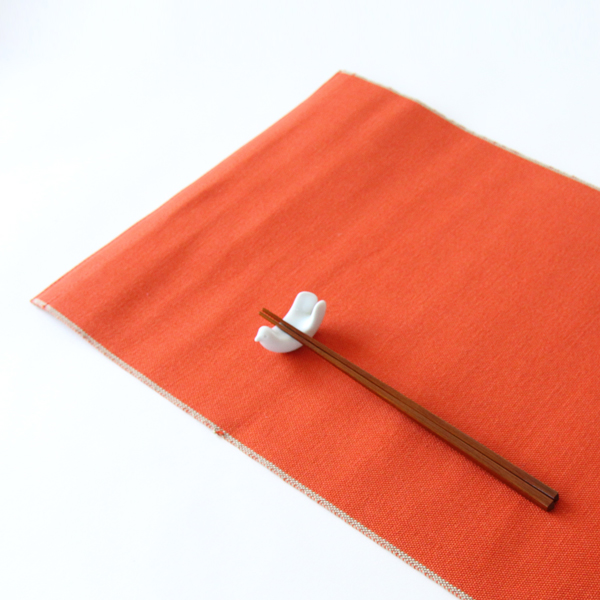
JoBu is a brand built on the idea of turning Kurashiki hanpu into tools that are easy to use in everyday life. Its lineup ranges widely, from placemats for the table to storage boxes and bags, all made of canvas. The thickness of the fabric speaks to the strength that only hanpu can offer.
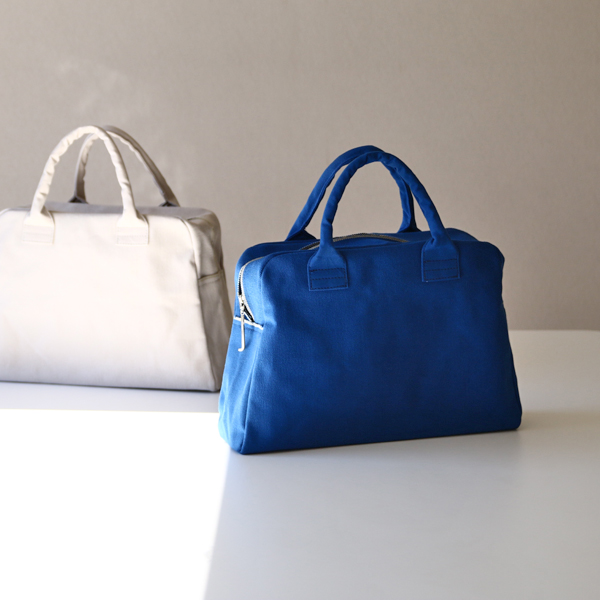
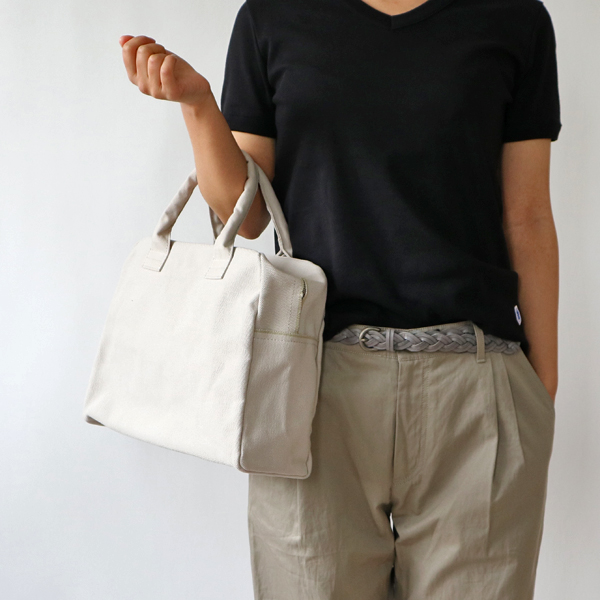
Designed with everyday use in mind, this is JoBu's briefcase. It fits A4-size files and has ample gusset depth. Even the handles are finished in canvas, a detail that reflects the brand's commitment to quality; look closely and you'll notice just how finely woven the fabric is. This briefcase shows off the strength of hanpu, holding up well even under heavy loads.


Also made of canvas but with a slightly different character is this Kurashiki hanpu selvedge tote. "Selvedge" refers to the edge portion created by the weaving width of the canvas (the circled area). Selvedge, sometimes called the "ear" of the fabric, is usually trimmed away during cutting, but here the weaving width has been left intact—a technique only possible thanks to a traditional weaving mill. The edge, which looks as though the fabric has been folded back, is finished with stitching in bright colors like white or red, giving the bag a charming touch.


These are Kurashiki hanpu slippers. The uneven texture unique to canvas gives them a shape that molds to the sole of the foot. The interior is cushioned, and these slippers embody both the sturdy durability of canvas and comfortable wear. Even with daily use, they resist fatigue and are hard to tear. What's more, the tightly woven fabric repels water and dirt, so they can be used with peace of mind near sinks and other water areas.


Since the Edo period, Okayama Prefecture has been known for cultivating salt-resistant cotton varieties. Kojima, located in the south of the prefecture, was one of the areas where cotton cultivation became the mainstay, and after the war, it became known as the birthplace of domestically produced jeans—the first place in Japan to sew jeans made from denim imported from America.

FOB FACTORY is a brand whose long-cultivated production line—where everything except spinning can be completed right there in Kojima—tells a story of history. Working alongside Kojima artisans, the brand produces denim that has been pursued down to the smallest detail, from thread to fabric, sewing, and even the buttons.

One of the distinguishing features of FOB FACTORY denim is its "selvedge" finishing—something it shares in common with Kurashiki hanpu. Selvedge denim, woven on old-style looms (shuttle looms), reveals an ear-like edge of fabric when the material is turned inside out. Selvedge serves the function of preventing the fabric from fraying at its edges, and as another characteristic unique to selvedge denim, the fading that develops along both sides with continued wear appears as vertical lines.

What makes denim so appealing is the way it gradually fades and develops "atari" (fading patterns) as time passes—a form of aging that becomes part of its character. At FOB FACTORY, an old American sewing machine called the Union Special has been modified to create unevenness in the hem area, a detail designed so that fading patterns naturally emerge at the hem the more the jeans are worn.
The sewing method known as chain stitching is also achieved using the Union Special. When you turn the hem inside out, you'll find a section where the upper and lower threads intertwine, forming what looks like a chain. Because this chain stitching gives the sewn area a degree of elasticity, the effect is that fading patterns become even more pronounced with repeated wear and washing. By skillfully continuing to use old machinery, FOB FACTORY holds an unwavering commitment to the qualities that make denim special—its beauty as it ages over time.

▼To learn more about FOB FACTORY


Fabric born in Okayama Prefecture is put to use not only within the prefecture but in various places across Japan. PRAS sneakers are one such example. PRAS makes shoes with the aim of expressing not just the outward appearance of a product, but the inner qualities of Japanese craftsmanship—such as "facing materials with sincerity" and "delicate yet devoted monozukuri (craftsmanship)." Using a vulcanized manufacturing process, PRAS produces highly resilient rubber soles, continuing to create sneakers with a comfortable fit.

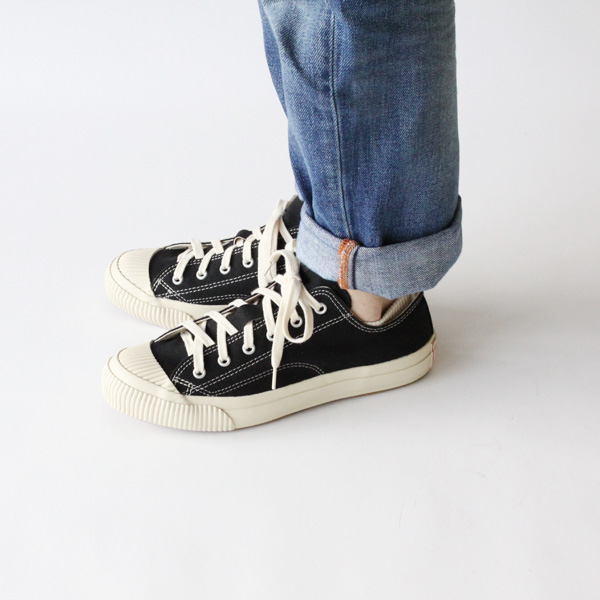
PRAS is manufactured in Kurume, Fukuoka Prefecture, an area well known for domestic shoe production, but the fabric used for the sneakers' uppers is Kojima hanpu (canvas), made in Kurashiki, Okayama. As mentioned earlier, the durability of hanpu has long proven useful for purposes like carrying and storage, but it also demonstrates its qualities admirably in parts subject to daily strain, such as a sneaker's upper.
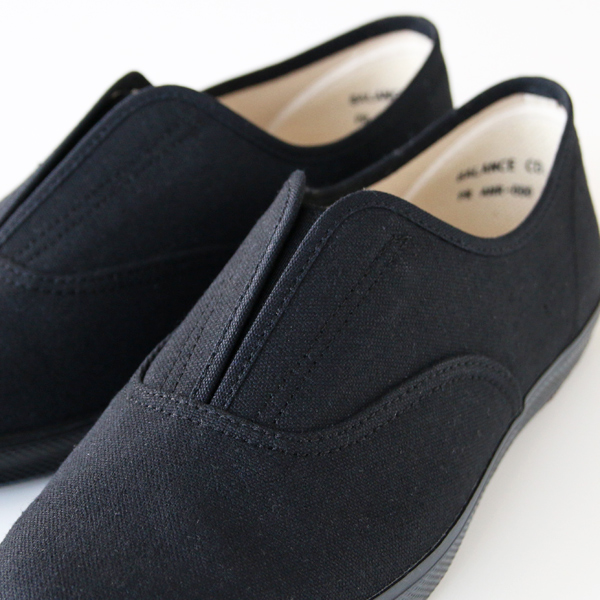
The hanpu used for the upper has a lower thread density than standard No. 10 hanpu (12.6 oz), calculated to achieve a fabric weight optimal for sewing. Since PRAS sneakers use different materials for each part—hanpu for the upper, raw rubber for the sole—each component is die-cut and then sewn together piece by piece by hand, by skilled craftspeople. Furthermore, the entire process of lasting the fabric over the shoe form, attaching the sole, and wrapping rubber tape around the perimeter is done entirely by hand. This process, in which the strength and adjustment of the craftsperson's hands is everything, is truly a display of artisanal skill, shaping the sneaker to gently fit the form of the Japanese foot.
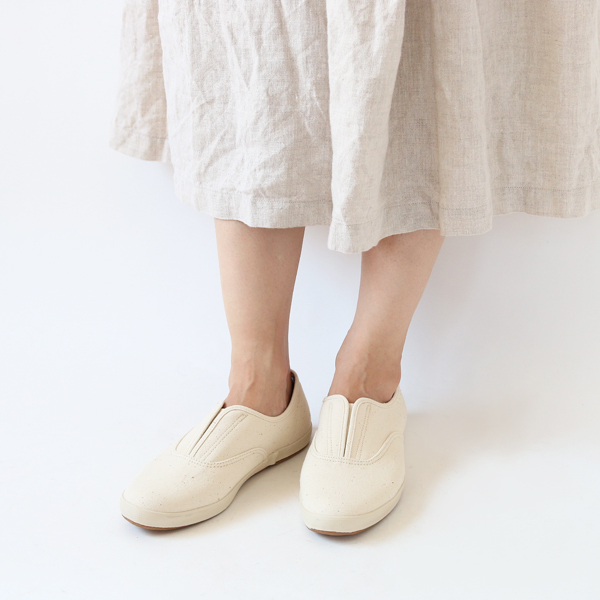
PRAS's new series, COMFY SLIPPON, is a slip-on shoe that incorporates Japanese-made flat rubber in addition to hanpu, designed to make movements like "pulling, stretching, contracting, and tightening" more comfortable. With a design at the front that resembles a wing, and a shape that narrows gently toward the toe, it has a feminine softness to its specifications.
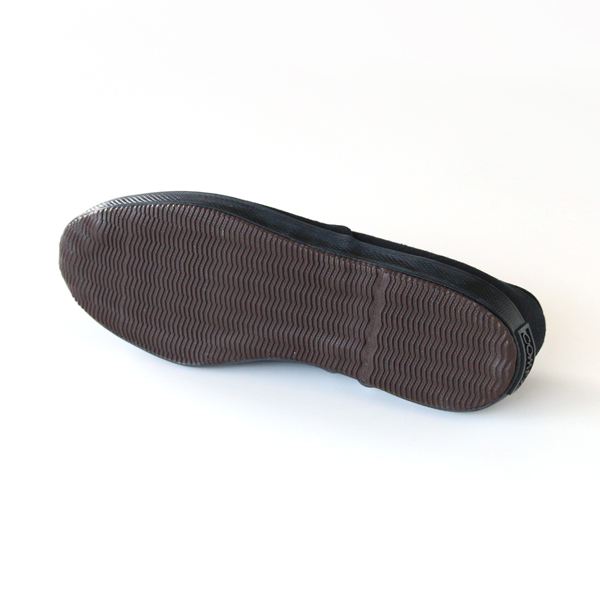
The COMFY SLIPPON series applies another of PRAS's defining features: the vulcanized manufacturing process. In this vulcanization method, unvulcanized rubber—not yet hardened—is sandwiched between the sneaker's body and sole, then placed in a special kiln where sulfur and vulcanizing agents are added under high-temperature pressure. Through this "vulcanization" process, the upper and sole are bonded together with great strength, resulting in fewer instances of the sole peeling away, while also offering the benefit of flexibility combined with resistance to losing its shape. The common worry that a sneaker's sole will come loose with wear is resolved through this manufacturing method.

Another benefit of using hanpu for the upper is good breathability. Despite its tight weave, hanpu offers good ventilation, allowing heat to escape appropriately from the inside of the shoe—even though sneakers often carry an image of being stuffy and hot. For this reason, it's a recommended pair for the hotter seasons as well. In both comfort and usability, it serves as a sneaker that can be worn year-round.
▼To learn more about PRAS
Durability and Suppleness Through the Vulcanized Process: PRAS's Hanpu Sneakers


GUIDE »
CATEGORIES »
- + Gifts by recipient
- + Gifts by scene
- + Clothing
- + Bags / Backpacks
- + Wallets / Card cases
- + Jewelry
- + Shoes
- + Rainy day outfits
- + Kitchen
- + Home
- + Babies / Kids
- + Japanese products
Earn Miles


Payment & Security