.webp)


.webp)


.webp)


.webp)


Welcome to ZUTTO
Free shipping for newsletter subscribers (some areas excluded)
My page
Information
- トップページ/
- ZUTTO Journal/
- 選び方・使い方/
- # Owning a Bowl T...

Bowl Habits That Enrich Everyday Life
The bowl is one of the tableware items that's indispensable at the daily table. Miso soup, clear soup, and sometimes Western-style soup as well. Strongly associated with holding liquid dishes, the bowl's form has developed alongside Japan's food culture over many years, resulting in a shape that's remarkably practical.
■The Bowl, Shaped Alongside Food Culture
A round, deep silhouette. That familiar bowl shape has been used in Japan for generations, alongside rice bowls, remaining essentially unchanged over the years. Looking around the world, few countries have a culture of holding tableware in hand or bringing it directly to the mouth while eating; in most countries, people eat from flat plates set on the table. In Japan, where chopsticks are the basic eating utensil and people traditionally ate while sitting in seiza, the custom developed of holding both chopsticks and tableware in hand. Within that food culture, the bowl was devised as a way to make eating liquid dishes easier.

Even though we call it "owan" in Japanese, the word can be written with several different characters — 椀, 碗, or 鋺 — reflecting the fact that it has been made from a variety of materials over the years. Rice bowls are often ceramic, but soup bowls tend to be made of wood. Why is wood so common? Because wood doesn't conduct heat easily, making it less likely to burn your hands even when filled with hot soup, and because it's light enough not to feel burdensome when held frequently. Another appeal of wooden bowls is the way they feel gently, softly familiar to the touch. Warm to the hand, wooden bowls are also easy to use for children who have just learned to eat on their own.

What's interesting is that the size of bowls made long ago is roughly the same as it is today. Bowls with a mouth diameter of about four sun — roughly 11 to 13 cm — are common. This is a size that sits comfortably in the hand and holds just the right amount of soup for one serving. It seems people in the past already knew what size was "just right."

The urushi (Japanese lacquer) finish was devised as a way to make wooden bowls last longer. Acting as a natural coating, urushi has long been valued for its ability to prevent staining and moisture absorption. For this reason, traditional bowls are often finished with urushi. Nowadays, bowls finished with more easily maintained urethane coatings are also common. Beyond that, a wide variety of bowls are made to suit different needs: some with thin rims for a smoother feel against the lips, others made thicker to further reduce heat conduction, and still others shaped without a footed base into a bowl form that suits Western-style tables as well. Finding a bowl that fits your own lifestyle will make it a welcome presence at your table every day.
■Lacquer Bowls from Gato Mikio Shoten, With Their Gloss and Grain

Yamanaka lacquerware has been passed down since the Azuchi-Momoyama period. The bowls crafted by Gato Mikio Shoten, founded in the Meiji era, carry forward the skilled rokuro (wood-turning lathe) technique and beautiful lacquer finishing that Yamanaka lacquerware is known for, resulting in items with a strikingly beautiful design.
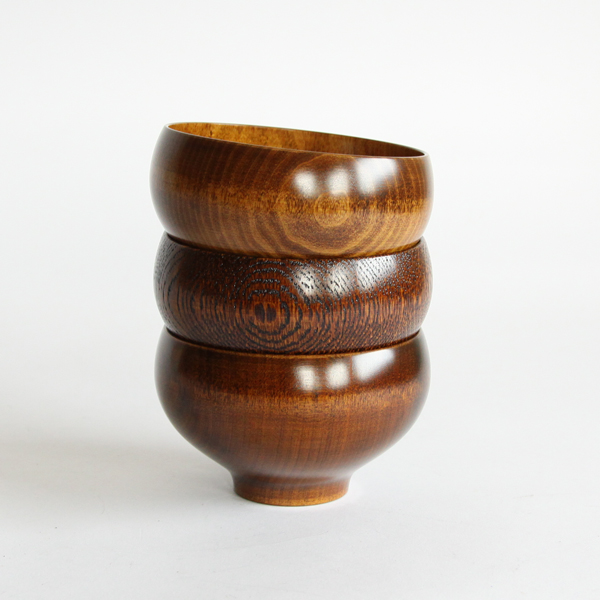
A seamlessly curved, beautifully waisted form, a glossy fuki-urushi (wiped lacquer) finish, and the natural grain of the wood itself. The MATEVARI series offers a glimpse of what refined, contemporary lacquerware can be. The curve at the base of the foot makes the bowl easy to hold with one hand, while the rim gently curves inward, helping to prevent spills when bringing the bowl to your lips.

The refined MATEVARI soup bowl is perfect not only for everyday miso soup but also for clear soup served on celebratory occasions. It's a convenient bowl to have on hand, one set for each member of the family.

This is the yotsu-wan, known in the world of tea ceremony as komaru-wan (small round bowl). Originally, it was made up of four bowls, each with a different role: a rice bowl, a soup bowl, a flat bowl, and a small covered bowl. Gato Mikio Shoten's yotsu-wan likewise comes as a set of four bowls, each with a different shape.
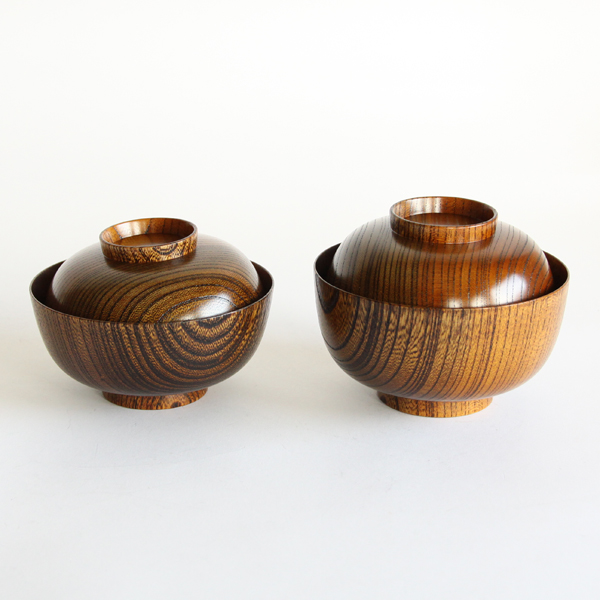
You can use each bowl according to its traditional role — for soup, for pickles, and so on — or use two of the four as lids for the others. With their pronounced wood grain, these bowls have the tasteful presence of the tableware you'd find at a traditional Japanese inn.
■Bowls from Kihachi Kobo, Where Even the Colors Are a Pleasure

When you think of wooden bowls, the brown color of the wood itself is probably what comes to mind, but urushi lacquer can bring a much richer range of colors. Kihachi Kobo, like Gato Mikio Shoten, produces Yamanaka lacquerware in Ishikawa Prefecture.

The Keyaki Long Life series, made from domestic zelkova wood, consists of bowls made without any undercoat, with colored urushi applied directly onto the bare wood in layers. The vermilion bowls have black lacquer applied beneath a layer of vermilion lacquer, while the black bowls have vermilion lacquer beneath a layer of black lacquer, so you can faintly glimpse the underlying color through the wood grain. Because the lacquer is applied in layers, the bowls can continue to be used even as the surface color gradually wears away with use — truly "long life" bowls.

Turn the bowl over, and you'll find the Kihachi Kobo mark painted in gold, adding a touch of brilliance to the bowl's vermilion or black base color. Their presence makes them well suited as gifts for celebratory occasions, including weddings.

This bowl, with its sharper, more refined form, is from the Keyaki Free Bowl series. Compared to the Long Life series, the lacquer here is applied with a more matte finish, resulting in a look where the grain of the zelkova wood is even more pronounced.

What's surprising is how light it is. Weighing only about 140g, this bowl achieves such lightness thanks to both being made of wood and being turned thin using rokuro techniques. When filled with soup, you can feel its warmth spreading gently through your hands.

When you hear the word urushi (Japanese lacquer), it may bring to mind something a bit old-fashioned, but a colored urushi bowl can add a touch of elegance to any table, whether Japanese or Western in style. For example, try serving yogurt in a vermillion bowl and watch how it instantly brightens up the table. Kihachi Kobo's bowls have a fuki-urushi finish (a wiped-lacquer technique), so to avoid scratching the surface of the lacquer, we recommend using soft cutlery such as wooden utensils.
■Easy for anyone to use: SONOBE's Meiboku Wan
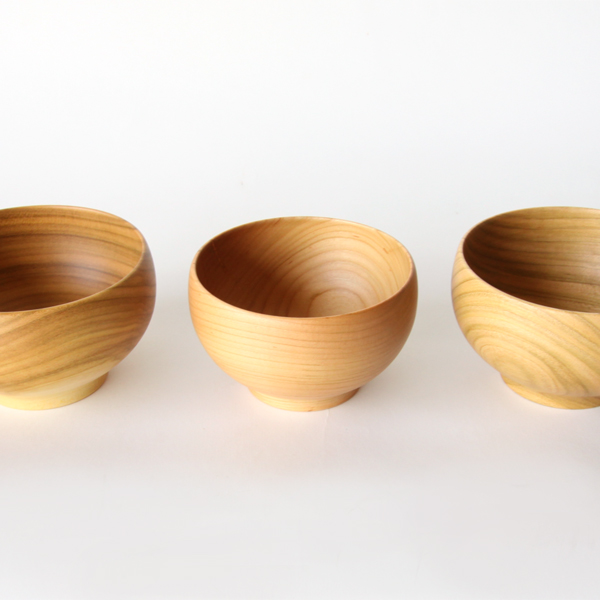
With their soft, gentle presence and smooth texture, SONOBE's bowls seem to overflow with warmth. Sonobe Sangyo, a woodworking company based in Odawara City, Kanagawa Prefecture, makes every one of its products in Japan. Using Japanese timber, the company handles everything in-house, from shaping the wood to the final finishing touches. While devoting effort to researching and developing new designs, they also craft items with pleasing texture that fit comfortably into everyday life, making use of thinned wood, curved timber, and offcuts.
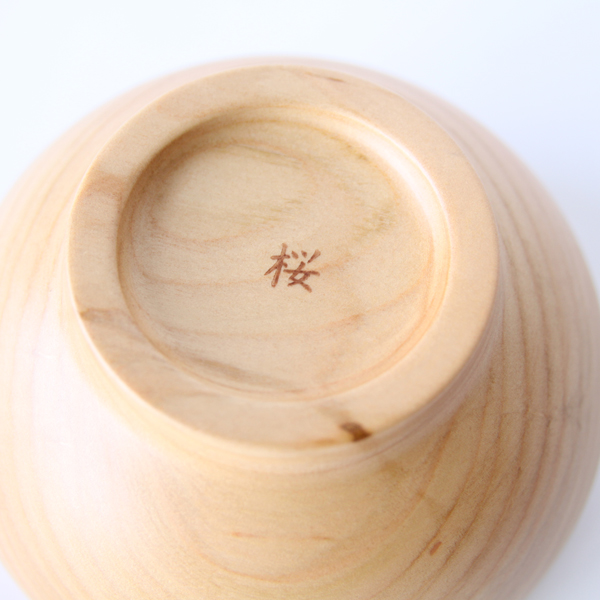
As the name "Meiboku Wan" suggests, the greatest appeal of SONOBE's bowls lies in their use of Japan's meiboku (fine, prized wood). Sakura (cherry), keyaki (zelkova), buna (beech)—these bowls let you experience firsthand some of the finest woods Japan has to offer.

SONOBE's Meiboku Wan, which has also been adopted for use in elementary schools, is characterized by its rounded shape with gentle curves. Made with relatively thick walls, the bowl keeps heat from transferring easily even when filled with hot soup, making it considerate enough for children to use safely. Finished with urethane coating, it resists stains from oily foods and dries quickly, making it a versatile bowl for everyday use.


The Meiboku series also includes a bowl-type piece without a footed base. Simply lacking the raised foot gives it a more Western feel. This makes it suitable not only for soups, but also for serving thick stews or salads. It brings a warm touch to Western-style tables where ceramic dishes tend to dominate.

GUIDE »
CATEGORIES »
- + Gifts by recipient
- + Gifts by scene
- + Clothing
- + Bags / Backpacks
- + Wallets / Card cases
- + Jewelry
- + Shoes
- + Rainy day outfits
- + Kitchen
- + Home
- + Babies / Kids
- + Japanese products
Earn Miles


Payment & Security