


.webp)


.webp)


.webp)


.webp)


Welcome to ZUTTO
Free shipping for newsletter subscribers (some areas excluded)
- トップページ/
- ZUTTO Journal/
- 選び方・使い方/
- Learn more about ...

Delicate Accessories, in More Detail
Just by wearing one,
an accessory can make a striking impression.
There's real pleasure in choosing materials and colors to match the season.
Even if you don't often have the chance to wear accessories,
why not add a special piece to your autumn outfit?

A crisp white shirt, a monotone knit, a chiffon dress….
A pendant or a pair of earrings that suits any neckline without being too loud,
yet still creates a subtle presence,
is the kind of piece that comes in handy to have on hand.
Since its founding in 1981, this urushi (Japanese lacquer) workshop has been creating
traditional maki-e (gold lacquer decoration) designs for tea ceremony utensils and other items.
Bisai, the accessory brand it has produced, was born from a desire
to create pieces suited to modern life.
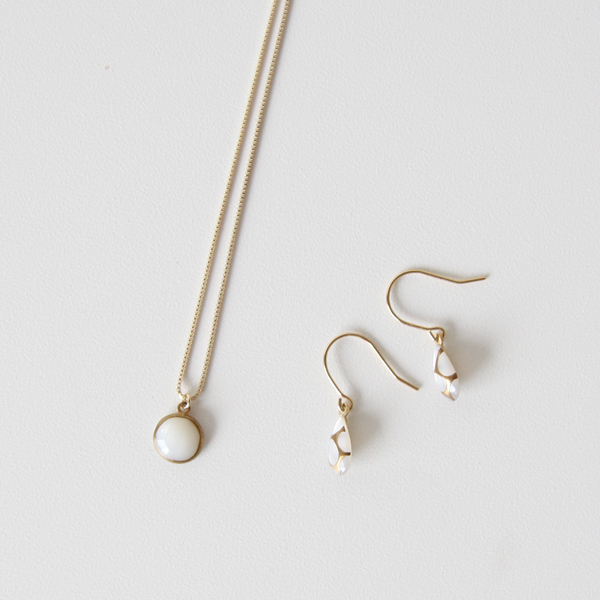
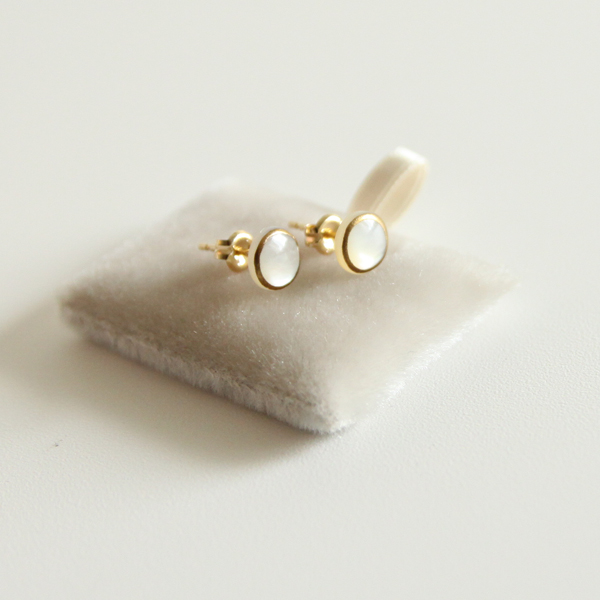
With a base of white mother-of-pearl (shirochogai), delicate patterns are drawn in urushi,
and the way it gently reflects light is truly beautiful.
◇For years of enjoyable use…
With everyday use it won't easily peel, but if strong force is applied to the maki-e areas it may come off,
so it's important to avoid dropping, scraping, or applying pressure to the piece.
Please also avoid chemical fibers and chemicals that could damage the lacquered surface,
and since it is sensitive to water, please don't soak it.

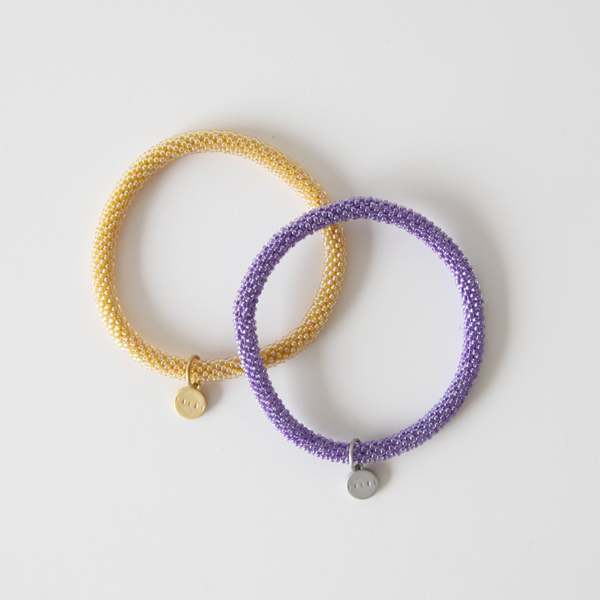
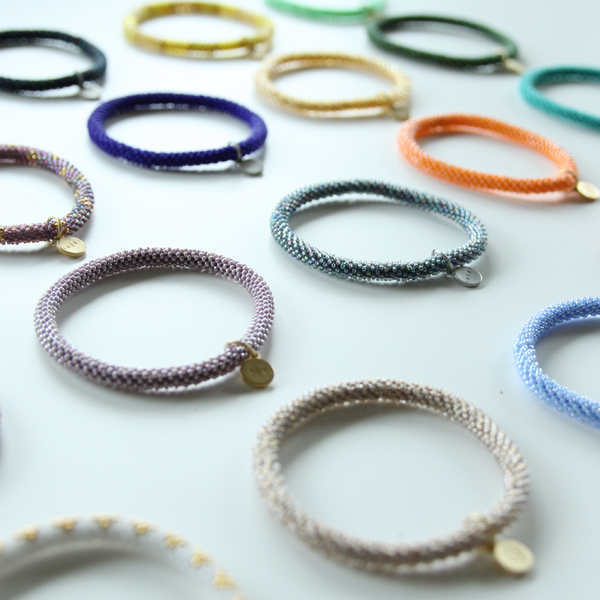
FALBE creates its pieces using small glass beads called "seed beads," 1.5mm in diameter,
that shine as light passes through them, resembling tiny seeds.
These "seed beads" are made by melting glass, blowing air into it to form a tube shape, then cutting it into small pieces,
before coloring and finishing it.
This is how a "seed bead" is made.
Come to think of it, as a child I remember freely stringing colorful beads onto thread
to make necklaces and bracelets….
Perhaps because of memories like these, beads tend to evoke
a somewhat nostalgic impression.
But once you put on a piece of FALBE jewelry,
you'll find yourself captivated by the delicate, elegant sparkle of each individual bead.
Beads are also produced in the Czech Republic, China, and India, but
Japanese-made beads have well-formed, uniform shapes,
and are said to be of the world's top quality in terms of their sparkle, brilliance, and craftsmanship,
so highly regarded that they are used by designers and brands around the world.
◇For years of enjoyable use…
Seed beads are made of glass.
A strong impact can crack the beads themselves,
and pulling too hard may break the thread,
so please put the piece on and take it off gently and slowly.
If it gets wet, promptly wipe it dry with a soft cloth.

Gemstones with elegant cuts that sparkle and reflect light are lovely,
but accessories with a soft glow like pearls
are, after all, every woman's eternal longing.
The next brand we'll introduce, ARATA, uses
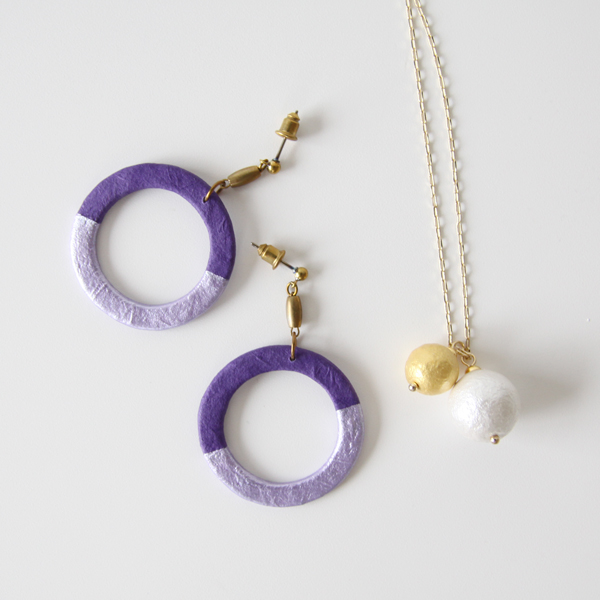
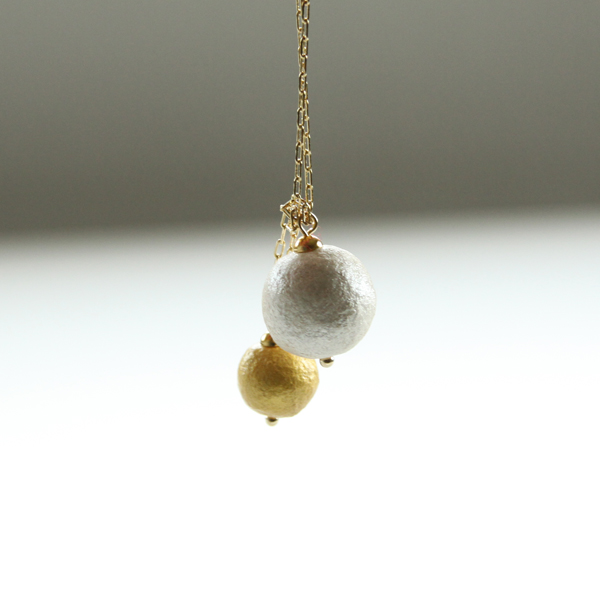
washi (Japanese handmade paper) as its material. You'll be surprised by how light it feels when worn.
This wonderfully light, swaying quality is something only washi can achieve.
Glass or stone materials inevitably feel heavy when worn.
But accessories made with lightweight washi seem to solve that problem.
Made from hand-crafted washi from Kyoto, these accessories
are not only light and easy to wear, but are also coated on the surface,
giving them the added feature of being water-resistant.
◇For years of enjoyable use…
Thanks to a special coating, it's fine even if it gets a little wet, but
to enjoy it for a long time, it's best to avoid wearing it while bathing or in situations
where it stays wet for extended periods. Also, since direct sunlight can cause the colors to fade,
store it away from direct light.
Over long use, the surface may develop a slight fuzziness,
but this texture is one of the charming characteristics unique to washi.
Try to enjoy it as a sign of the piece aging naturally over time.

If it's the uniqueness of materials as an identity you're after,
KISSO's accessories are wonderful too.
KISSO is produced in Sabae, Fukui Prefecture, a region
that manufactures the vast majority of Japan's eyeglasses.
When it comes to eyewear, it's said that Italy leads in design,
while Sabae is so renowned for its craftsmanship that it's considered a world-class production area.
KISSO was founded in 1995 in Sabae, Fukui Prefecture,
as a trading company for eyewear materials.
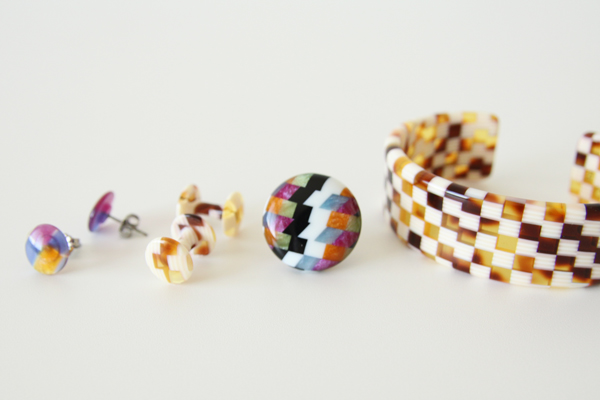
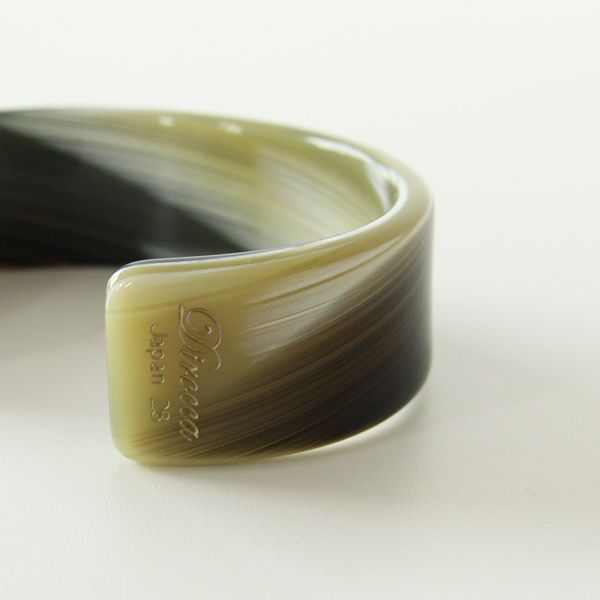
Its specialty is processing a material called cellulose acetate.
This is the material commonly used in what are known as "cell frame" eyeglasses.
They use cellulose acetate from Italy's Mazzucchelli,
and the depth of the colorful hues comes from their own unique lamination technique,
with skilled artisans finishing each piece carefully by hand.
◇For years of enjoyable use…
Heat and hot water can cause the material to deteriorate or break, so
please remove it when bathing (or using a sauna) or cooking.
When cooking in the kitchen, it's safer to remove bracelets and similar items
that might come near heat.
Please also note that hot springs, perm solution, hair styling products, cosmetics, and hair dye
can also cause deterioration.

A little bit about accessory clasps and fittings.
For example, even among necklaces,
the shape of the clasp varies widely, as do the ways of fastening
and adjusting the length.
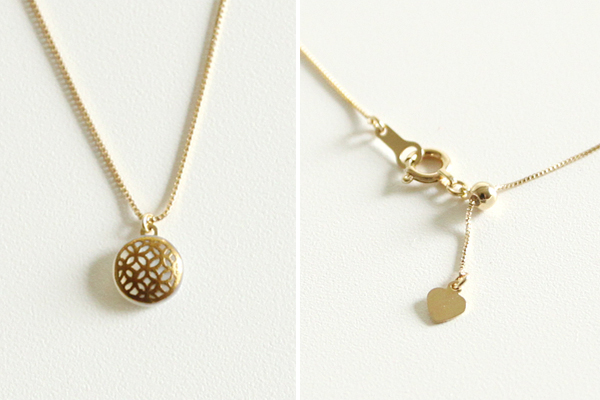
◇The basic spring ring type
This type uses a small round part with a tiny knob (called a "hikiwa," or spring ring)
that hooks into a plate with a hole to fasten the necklace.
This bisai necklace
comes with an adjuster separate from the clasp,
so you can fine-tune the length. When you want to make small adjustments,
simply move the ball on the right side in the photo to adjust the chain length.
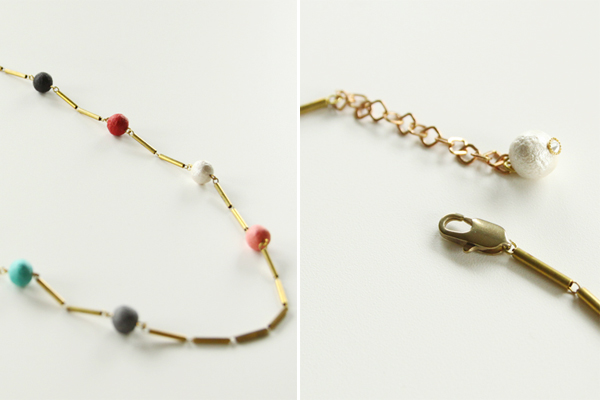
◇The easy-to-use lobster clasp type
Round spring rings have a small moving part,
which can often make putting on and taking off a necklace difficult.
With a part like the one shown in the photo, called a "kanikan" (lobster clasp),
you can fasten and unfasten it relatively easily.
This part really does look like a crab's claw, doesn't it?
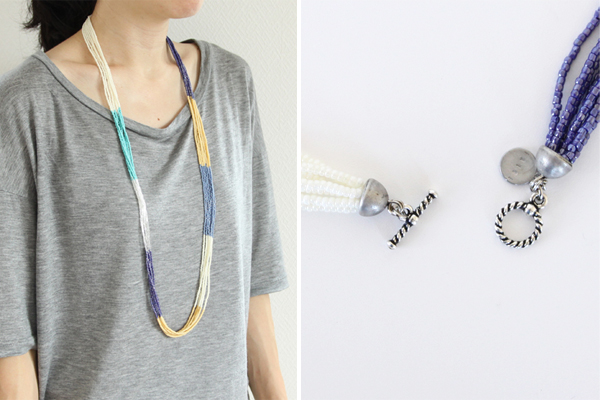
◇The stylish-looking mantel clasp
This type of fastener (called a "mantel") works by passing a rod-shaped part on one side
through a ring on the other side to secure it.
Because it allows for a bit of playfulness in the design,
it gives off a slightly more sophisticated impression.
It's also nice and easy to put on.
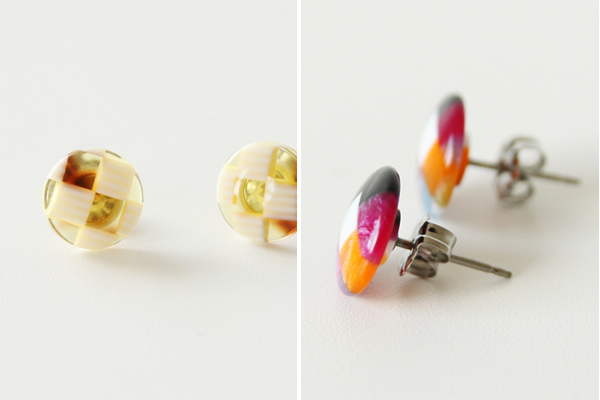
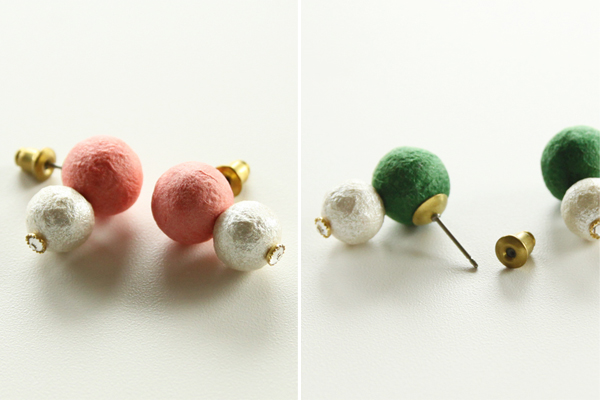
Beyond necklaces, the metal fittings used for earrings—whether pierced or clip-on—
also play a big role in shaping the overall impression of an accessory, not just in shape but in color and texture as well.
For example, the KISSO earrings shown at the top of the photo
use plain metal-colored earring backs,
resulting in a finish that doesn't compete with
the color or pattern of the earring motif itself.
By contrast, the ARATA earrings shown below
use fittings in an antique-style color,
which harmonizes with the washi (Japanese paper) texture to bring the overall tone together.
GUIDE »
CONTENTS »
CATEGORIES »
- + Gifts by recipient
- + Gifts by scene
- + Clothing
- + Bags / Backpacks
- + Wallets / Card cases
- + Jewelry
- + Shoes
- + Rainy day outfits
- + Kitchen
- + Home
- + Babies / Kids
- + Japanese products
Earn Miles


Payment & Security




