.webp)


.webp)


.webp)


.webp)


Welcome to ZUTTO
Free shipping for newsletter subscribers (some areas excluded)
- トップページ/
- ZUTTO Journal/
- 選び方・使い方/
- # Technical Exper...

Craftsmanship Experience Laboratory #2 REN: Bags Woven and Shaped from Leather, Mesh Leather That Holds Air
In our Craftsmanship Experience Laboratory series, ZUTTO staff members experience the process of making things firsthand, introducing readers to how products are born and the high level of skill involved. For our second installment, we visited REN, a leather bag brand that works with a diverse range of leathers to bring out their natural charm. At their atelier in Kuramae, Tokyo, they showed us the craftsmanship behind the beautiful woven patterns of their mesh bags.

A view of the REN Kuramae shop. This time, we spoke with Arai-san and Shirai-san.
Mesh Bags for the Warmer Season

At the leather bag brand REN, the designer personally handles everything from material selection and pattern-making to prototype production, shaping a wide variety of leathers into finished products. REN originally produced its goods in-house at its atelier, but now works with craftspeople both in Japan and abroad, each handling the areas they excel in—weaving in India, goat leather in Bali, and so on. The mesh bags we're introducing this time are made by skilled weaving artisans in India.
REN has shaped a variety of materials, including pigskin and cowhide, into diverse forms. While leather bags with their rich, elegant presence are beloved by many, they can feel a bit heavy for the warmer months. This is how the mesh bag was born—a leather bag with an airy, see-through quality created through weaving, designed to be easy to carry even in warm weather.

The mesh bag, with its interior faintly visible through the weave, evokes a sense of breathability, making it feel light even in the warmer months. There's another advantage as well: leather that is high in quality but has visible scratches or color irregularities often can't be used for products where appearance matters. But because mesh bags are made by cutting leather into thin strips and weaving them together, such surface imperfections become far less noticeable in the finished product. REN actively uses this kind of leather in its products, turning the mesh bag into an idea that makes use of materials without waste, while still creating something beautiful.
The Handcraft of "Weaving" by Indian Artisans
After developing the mesh bag concept, REN was connected through a chance encounter with a small tannery in Tamil Nadu, India, run by a team of about ten people. Tamil Nadu, in southern India, is known as a region where the leather industry thrives, with tanneries and many other people involved in leather work. In processes that require human hands, such as weaving the leather, local mothers pitch in to help as well—it's a region where the entire town is involved in the leather trade.

Goat leather, the raw material behind the mesh bag
REN's mesh bags are woven from goat leather sourced in India. Goat leather is relatively firm compared to other leathers, with a denser texture than cowhide. The raw hide is tanned using vegetable tannins, then cut directly into strips. Normally, a "loosening" process follows tanning, but REN deliberately skips this step in order to preserve the firmness of the goat leather, resulting in a product that resists losing its shape. After that, artisans hand-weave the leather strips—each cut to a length of 50 to 60 centimeters—one by one over a wooden mold.
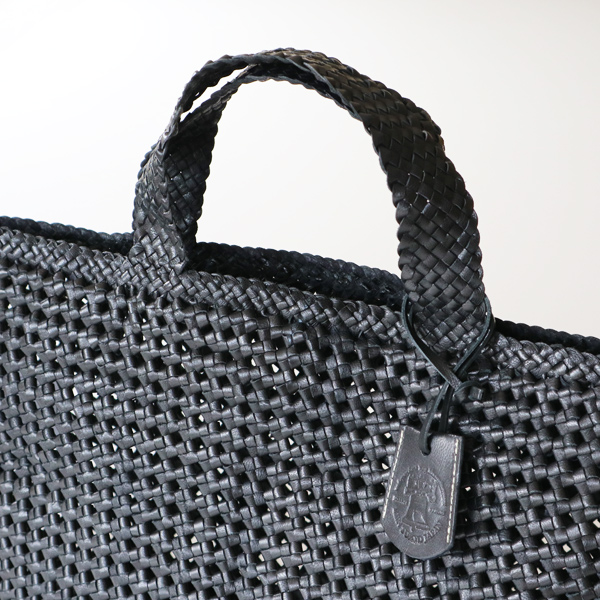
The weaving technique used for the body of the bag is known as "ishidatami weave" (cobblestone weave), a method that creates a pattern of connected square-shaped links. This technique requires roughly five times the amount of leather compared to the surface area it covers. While this raises concerns about weight given the large amount of leather used, the overall product is kept lightweight by carefully adjusting the thickness of the leather.
Even for a skilled artisan, weaving a single mesh bag takes four to five hours. Since the size of each woven link depends on the strength and touch of the artisan's hands, these products are, quite literally, born from handcraft.
Understanding the Ishidatami Weave Through Hands-On Practice
This time, ZUTTO staff tried their hand at the ishidatami weave, the defining feature of the mesh bag.
The challenge was to make a small coaster with 6 by 6 stitches. Using the same leather material as the mesh bags, but cut a bit wider, we gave it a try.

On the left in the image above is a sample coaster made with one extra stitch, at 7 by 7. On the right is a version with each strip color-coded for clarity. The ishidatami weave is structured so that the cut leather strips are woven together both vertically and horizontally. For example, in the very first row at the bottom, starting from the leftmost stitch, a black strip runs vertically and a light blue strip runs horizontally, interlacing to form square-shaped links. One strip forms a loop, and the other is threaded through it, creating each stitch by hand, one at a time.


Our staff member gave it a try right away. Cut into strips, the goat leather feels soft and pliable, but it's still on the firmer side compared to other leathers REN works with. This leather's moderate firmness has the advantage of holding its shape well once woven. Amid the faint scent of leather, we worked slowly at first, learning the weaving technique step by step.
The difficulty of the ishidatami weave lies in keeping the size and alignment of the stitches consistent. If the loops are made too large, the stitches end up too big, leaving gaps between them. On the other hand, pulling the strips too tightly in an attempt to make smaller stitches causes the leather to buckle, making it impossible to form neat, even links. This adjustment is tricky, and even forming a single stitch can take quite a bit of time.

Here is the first row, finally finished. Even while trying to keep an even amount of tension, gaps still appeared between the woven stitches. With the first row, since each strand of cord is still independent, adjustments are still possible. But once you move on to the second and third rows, pulling the cords no longer tightens the stitches as easily, making adjustments increasingly difficult.

When it comes to an actual bag, adjusting the firmness of the stitches is apparently the key. If the stitches are too loose, there's a concern that the bag will stretch out of shape once items are placed inside. On the other hand, pulling the stitches too tight prevents a clean finish. Each individual stitch must be made to an appropriate size and firmness, and then lined up one after another. Ishidatami-ami (stone-paving weave) demands both skill and patience.

And here is the coaster, completed after just under an hour of work. Since all the loose ends were tucked away on the reverse side of the weave, the coaster is made entirely of leather. As I wove, I gradually picked up the knack and my speed increased, but looking at the finished piece, the looseness of the stitches still stood out to me. In my effort to keep the leather from twisting, the stitches ended up larger overall than intended.
It would not be an exaggeration to say that everything about ishidatami-ami comes down to the amount of force applied. According to the people at REN, even a difference of just 1mm in the thickness of the leather cord makes the weaving considerably more difficult. I came away with a real appreciation for the depth of ishidatami-ami, which demands both dexterity and concentration.

The beauty created by "suage" finishing
At REN, in order to preserve as much of the leather's natural character as possible, some products are given a finish called suage (raw finish).
Generally, leather products undergo a final "makeup" process involving dyeing, color-fixing, and polishing for shine. But the CAMEL and BLACK colors of the mesh bags skip this makeup process, resulting in a finish that reveals the true quality of the leather itself. Looking closely, you'll notice that the color of each individual strand of leather varies subtly. Another key point is that these bags are especially prone to showing beautiful aging with use.

Among REN's mesh leather bags, CAMEL in particular shows the characteristics of suage finishing clearly. On the right side of the image above is a bag that has been used for about a year (this particular shape is not carried by ZUTTO). On the left is the brand-new coaster made for this feature. The bag has taken on a noticeably deeper color, and the difference is immediately obvious.


Beyond color, another characteristic of suage finishing is that a shine develops through use. Held up to the light, you can see a soft luster begin to appear, and the goat leather—already known for its supple feel—becomes noticeably softer over time. BLACK, whose color has been dyed all the way through the leather, also develops its own shine as time passes.
Three practical sizes
REN's mesh bags come in three sizes in total. Soft and elegant, these mesh bags suit any outfit.

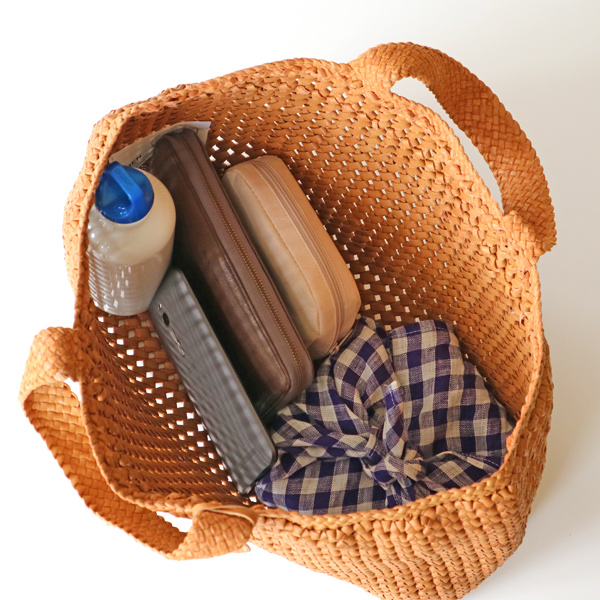
GOAT Mesh Bag S
The basic S size is easy to carry casually. Compact yet roomy enough to hold a lunch box and a water bottle, it makes a great weekend bag for those who prefer to travel light.
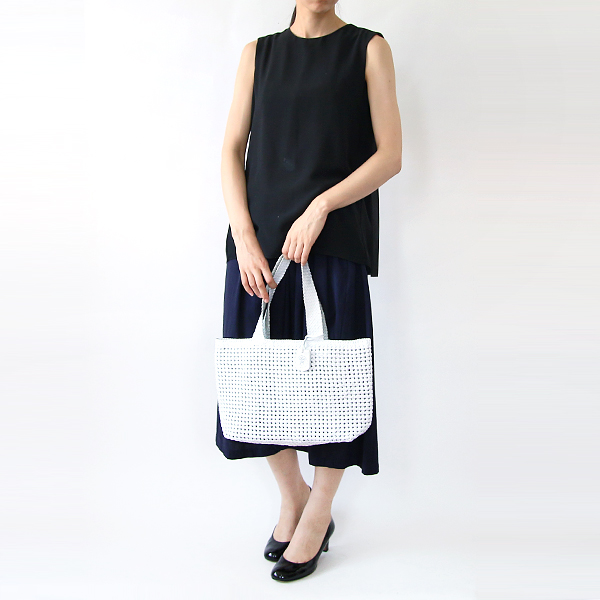
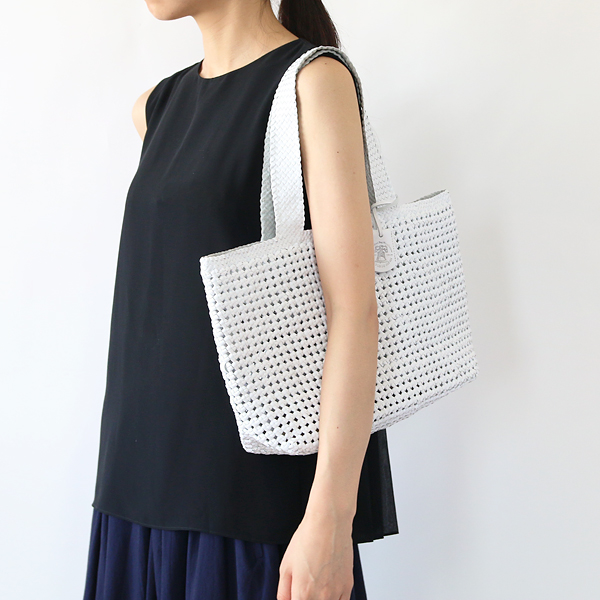
GOAT Mesh Bag L
The L size features longer handles. It's just the right size to carry over the shoulder, and roomy enough to fit tall books, making it a great choice as a commuting bag as well. The WHITE, made with pigment, offers a beautifully crisp white tone.


GOAT Mesh Bag WIDE
The WIDE has a broader width. Its main compartment can hold A4-sized files or magazines. Since items are easy to take out and put in, it's ideal for those who carry a lot of belongings.
Growing more beautiful with occasional care
According to Arai-san of REN, the best thing you can do for a leather bag is simply to use it without hesitation. If left unused, the leather can become stiff, and depending on the environment, this may even lead to mold. On the other hand, the more you use it, the softer it becomes to the touch, and the richer its color and shine grow. That's precisely why using the bag freely, without worry, is said to be best for the bag itself.
Replenishing oils with cream
For these mesh leather bags, use itself is the best form of care. If dryness becomes a concern, a small amount of emulsion-type cream is recommended. Since the mesh leather bags are given a suage (raw) finish, using a typical leather oil can introduce too much oil and risk staining. So please apply a small amount of emulsion cream to a soft cloth and test it on an inconspicuous area before use.
Waterproof spray and rainy days
Before you start using the bag, it's a good idea to lightly apply a waterproof spray. This helps keep moisture and dirt from settling in. Also, if the bag gets wet, such as on a rainy day, wipe away the moisture immediately with a soft cloth and let it dry.
▽Click here for the REN brand page

▽Craft Experience Laboratory #1 FALBE: Beaded crochet that shines in the light

GUIDE »
CATEGORIES »
- + Gifts by recipient
- + Gifts by scene
- + Clothing
- + Bags / Backpacks
- + Wallets / Card cases
- + Jewelry
- + Shoes
- + Rainy day outfits
- + Kitchen
- + Home
- + Babies / Kids
- + Japanese products
Earn Miles


Payment & Security