.webp)


.webp)


.webp)


.webp)


Welcome to ZUTTO
Free shipping for newsletter subscribers (some areas excluded)
- トップページ/
- ZUTTO Journal/
- 選び方・使い方/
- For sunny days an...
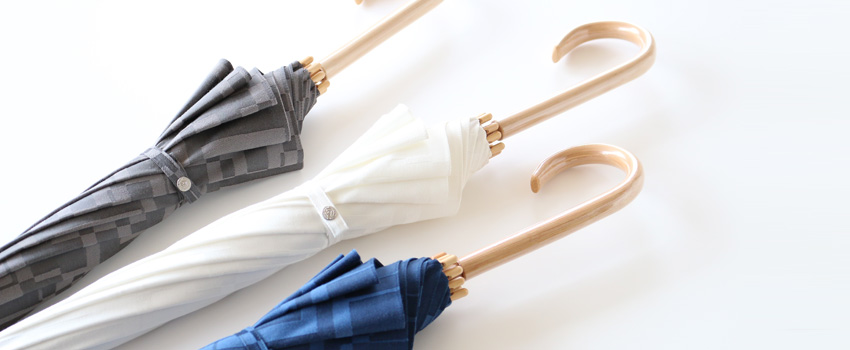
For sunny days and sudden rain, a "sun-and-rain umbrella." — The charm of color born from Makita Shoten's textured jacquard —
There's something elegant about the way people carry parasols. Perhaps it comes across because they've chosen an item with a clear purpose and are using it with care. But then there are days when the TV forecast announces, "Today will be sunny, with rain in some areas later." For days like that, having a single sun-and-rain umbrella on hand—one that shields you from sunlight but can also handle sudden rain—gives real peace of mind.
This time, ZUTTO asked Makita Shoten (まきたしょうてん), a long-established domestic Western-style umbrella maker, to create a custom sun-and-rain umbrella with an elegant, richly nuanced expression unlike anything else out there. The company's origins date back more than 150 years, and its history is deeply intertwined with the history Japan has walked through, as well as the changes in how Japanese people have dressed over time. While answering questions like "When exactly should I use a sun-and-rain umbrella?" and "Does washing it weaken the sun-blocking effect?", we'd like to introduce the [Square Jacquard Sun-and-Rain Long Umbrella].
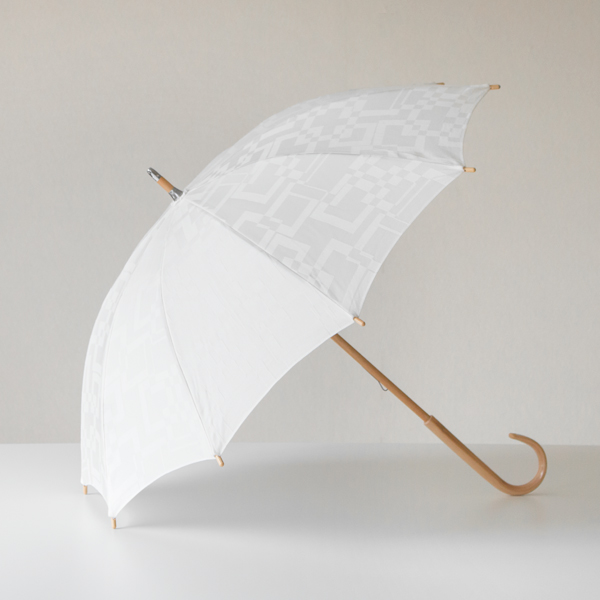

Jacquard weaving and a long-established umbrella shop
"Jacquard weaving" refers to a weaving method using a machine called a jacquard loom, characterized by its highly decorative quality achieved by weaving large patterns in relief. Gorgeous and richly substantial, its beauty reveals itself more and more the longer you look.

With the wish of creating a parasol that was both beautiful to look at and easy to use, we approached Makita Shoten, and this [Square Jacquard Sun-and-Rain Long Umbrella] became a reality. It is precisely because of Makita Shoten's "made-in-Japan jacquard weaving technique" combined with their "consistent handcrafted umbrella-making technique" that such a high-quality, beautiful umbrella could be born.
Yamanashi Prefecture, where Makita Shoten is based, has long had a thriving weaving industry. All the fabric used in the umbrellas is woven textile, made with thread that has been vividly dyed using melted snow water from Mt. Fuji. The company's founding, as the story goes, traces back to Edo-period merchants who chose flamboyant fabrics for the linings of their haori jackets as a way to enjoy everyday fashion.
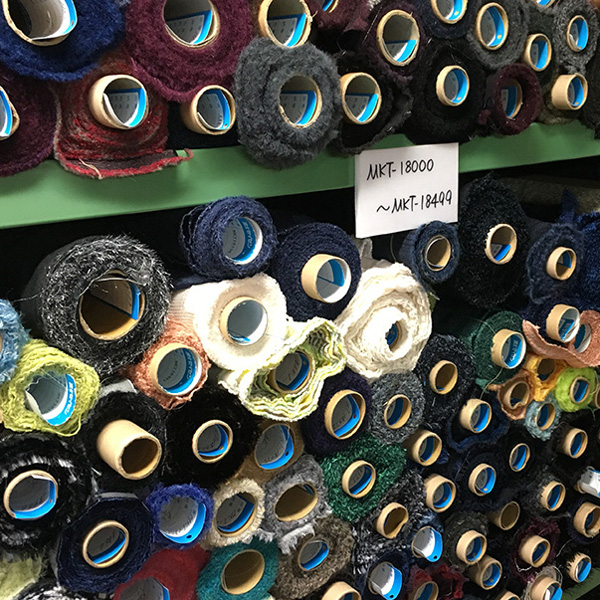
Fabrics dating back to the company's founding are kept and managed as an archive.
During the Edo period, merchants in Edo were forbidden by decree from indulging in extravagance. The everyday fashion they arrived at as a result was sewing vivid fabric into linings that were normally hidden from view. This lining-making is where Makita Shoten got its start.
The company weathered historic events such as the Great Kanto Earthquake and the Pacific War, even losing a branch to fire at one point. Through the events that shaped Japan up to the present day, careful craftsmanship continued unbroken. However, as time went on, traditional Japanese dress fell out of everyday use, and the fabric had fewer occasions to be seen. It was then that a predecessor of the current management, moved by the beauty of Western umbrellas being imported at the time, decided to use the fabric once reserved for haori linings on Western-style umbrellas instead. In Showa 29 (1954), the company's main business shifted to manufacturing Western-style umbrellas.
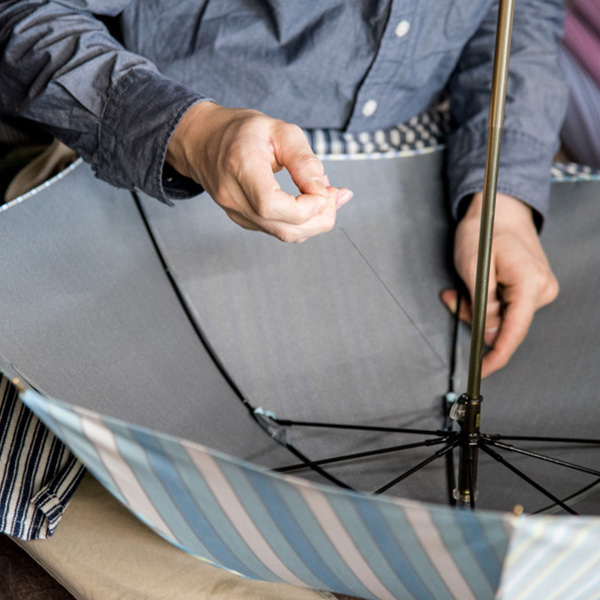
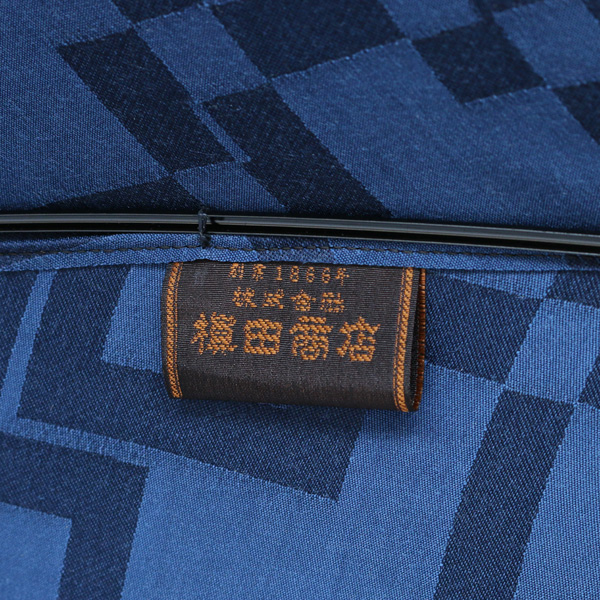
A tag noting the year of founding is even sewn inside the umbrella.
Although Makita Shoten is well known today for its jacquard weaving, this wasn't part of the company from the very start. As history progressed and technology developed, jacquard weaving gradually became the mainstay thanks to the depth and beauty of its fabric. By combining techniques cultivated in clothing-fabric making since the Edo period with umbrellas, they have continued to produce umbrellas full of dignity and grace. Even now, professionals oversee each step of the process, carefully cutting fabric to match wooden molds, sewing the fabric, and assembling the umbrellas. It seems that the Japanese sense of "style" has been passed down across the ages into the present day. Rather than starting with the design, they begin by carefully selecting the thread to be used, and then devise patterns that make the most of its characteristics.
One color, many expressions: the square jacquard weave
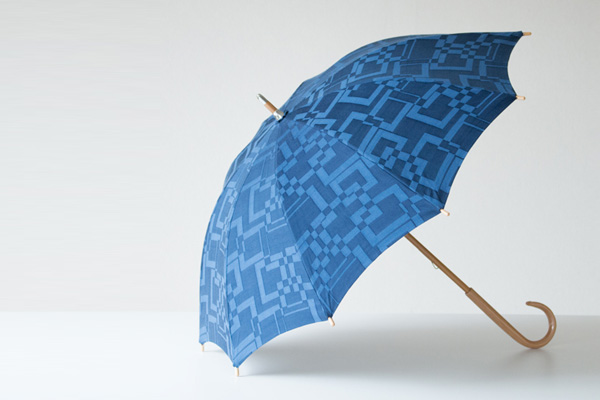
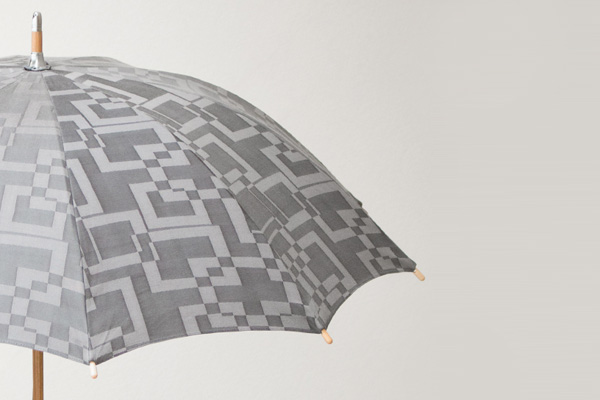
For this sun-and-rain long umbrella, we chose Makita Shoten's signature square jacquard pattern, a design with a distinctive three-dimensional, textured quality. The weaving technique is called "textured jacquard" (凹凸ジャカード), in which two different types of thread are woven alternately; the difference in elasticity between the two threads creates an uneven surface, causing the pattern to rise up in relief.
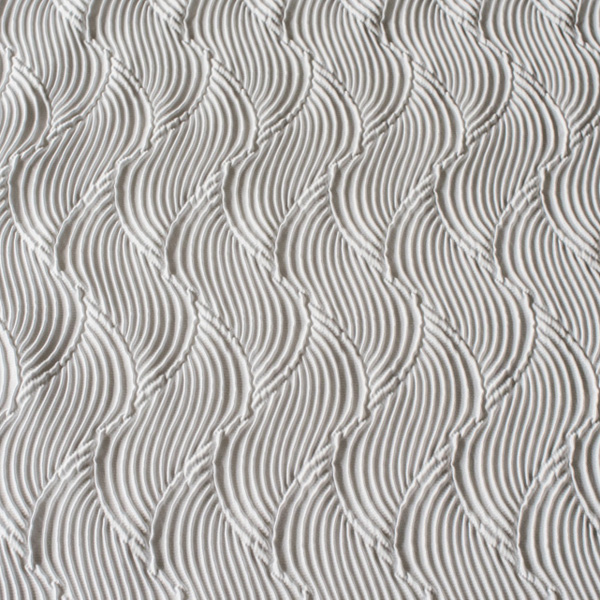
*This is a fabric sample of the "textured jacquard" (a different pattern).
The unique, randomly geometric pattern—formed by rows of textured squares, large and small, joined together—has a charm that evokes both a Japanese sensibility and Nordic textile design. Cotton is used for the weft thread, while the warp thread uses "cupra," a material often used for suit linings. Differences in the density of the warp and weft threads, as well as differences in the thickness (yarn count) of the materials, cause the dye to take differently, producing subtle variations in the fabric's color.
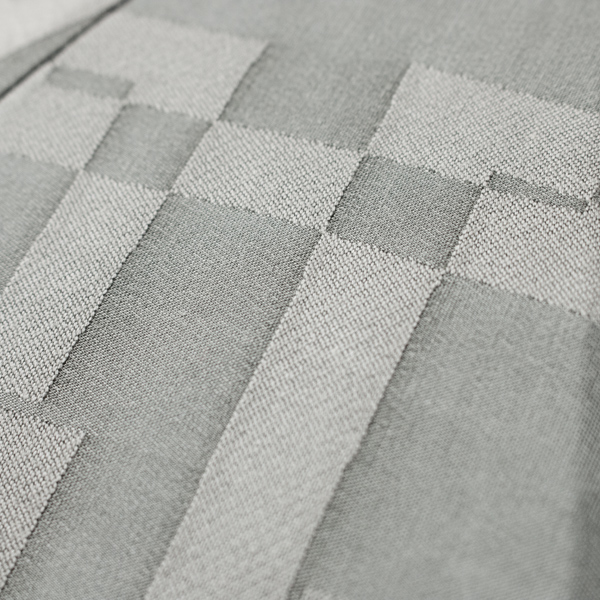
This custom-order [Sun-and-Rain Long Umbrella, Square Jacquard, Gray]. The cupra used as the warp thread is dyed a deep color.
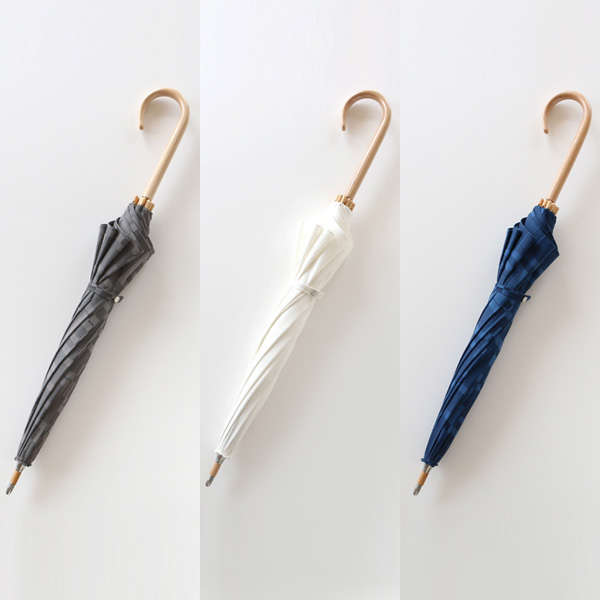
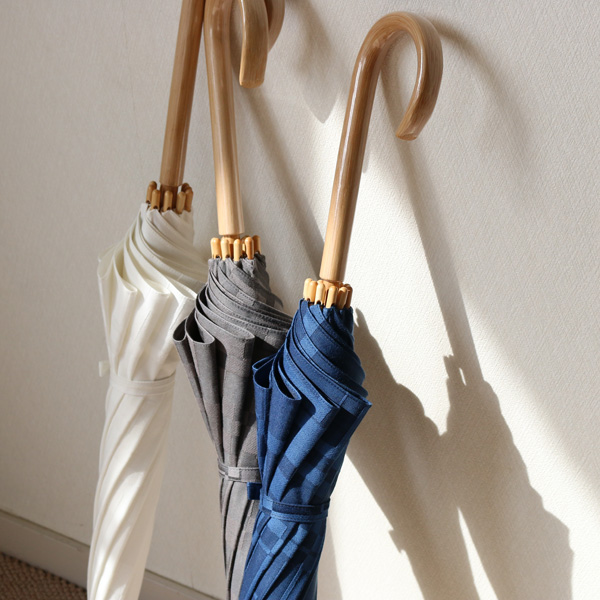
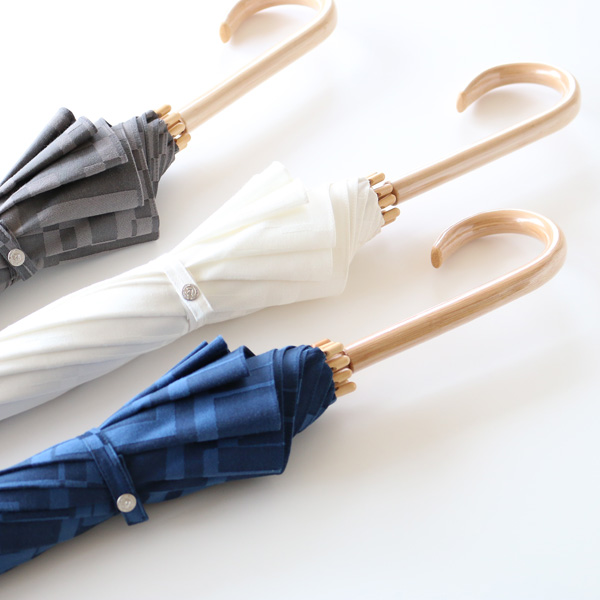
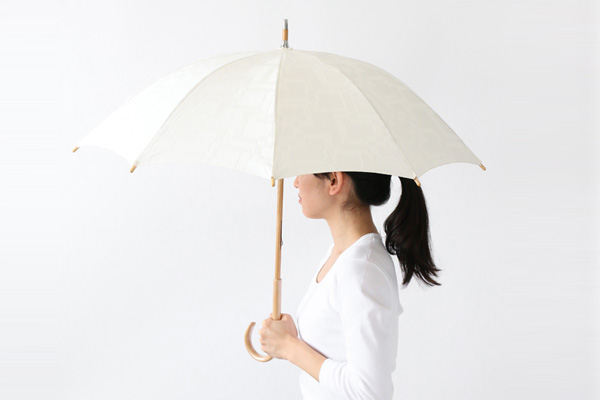
Both weaving methods are a type called satin. A satin weave that shows more of the warp thread, and a back-satin weave that shows more of the weft thread, are both used. It's this combination of materials and weave structure that produces the fabric's textured, uneven feel. Making the most of the fabric's characteristics and the distinctive texture created by the weave, the umbrella comes in three colors: a cool Japan blue navy, a gray with a subtle, smoky ibushi quality evocative of Japanese tradition, and a white that makes the most of the material's natural color.
Another distinctive feature of this fabric is that it is "dyed after weaving." While Makita Shoten's mainstream method is "dyeing before weaving," in which thread is dyed first and then woven into fabric, this time they chose post-weave dyeing—a decision that reflects the deep knowledge of thread held by this long-established Western-style umbrella maker. With post-weave dyeing, heat is applied to the already-woven fabric during the dyeing process, and this heat causes the fabric to shrink overall, giving the pattern its three-dimensional texture. Apparently, achieving the same effect with the same weave using pre-dyed thread would be difficult. To achieve a more three-dimensional weave, they deliberately chose to dye the fabric after weaving.
こうして織られた生地は落ち着いたトーンで、品格溢れる印象に。 The fabric woven this way has a calm tone, giving off an air of refinement. Looking at the balance with this fabric, we chose a lighter-colored rattan for the handle.
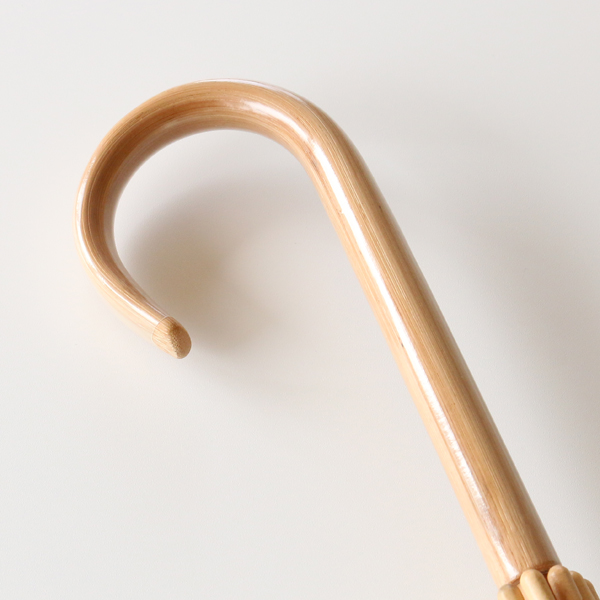
Another key point is the shape, designed to be easy to hold and to let you quickly hang the umbrella on your arm when reaching for something in your bag.
We also wanted to make the most of this thick, substantial fabric, so we used a wooden center pole and a 10-rib construction to help the umbrella hold its shape beautifully. The elegant arch it forms when opened lends the whole silhouette an even more refined presence.
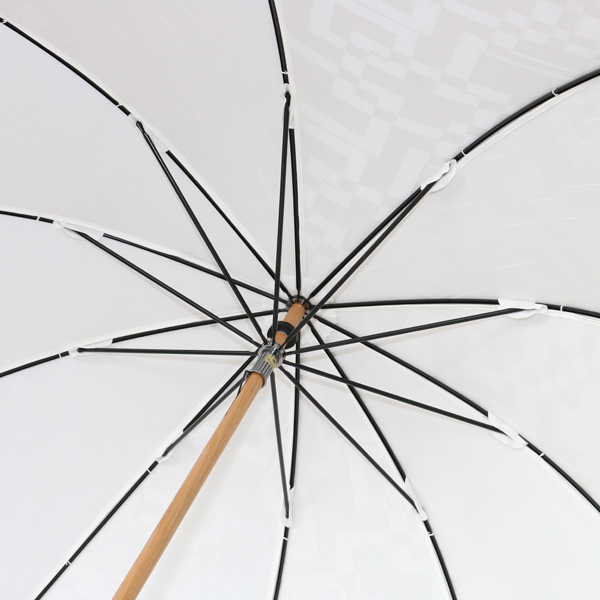
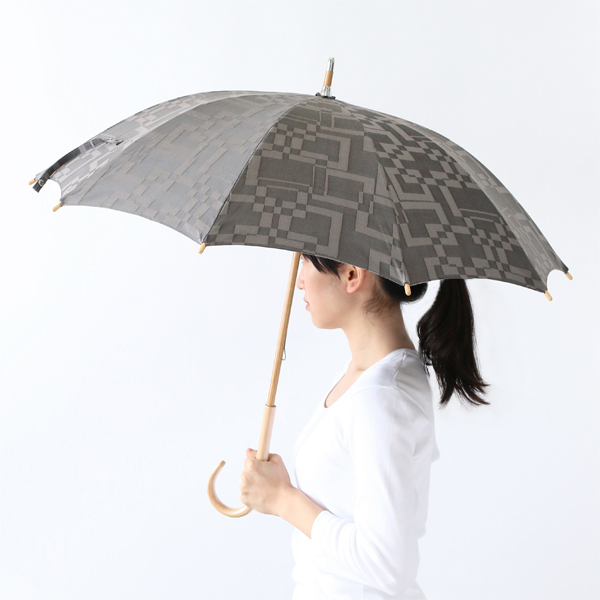
While achieving this high level of design, every color still offers a UV cut rate of 90% or higher. Generally speaking, darker shades tend to have a higher cut rate, and this umbrella is no exception—but even the lightest shade, white, blocks 96% of UV rays, a figure that performs perfectly well even under strong sunlight. Please choose your favorite color while imagining how it will pair with the clothes you already own.
Pairs beautifully with both Western and Japanese style
While conveying the beauty of Japanese modern style, the jacquard weave has a warmth reminiscent of Scandinavian design, making it easy to pair with everyday clothing.
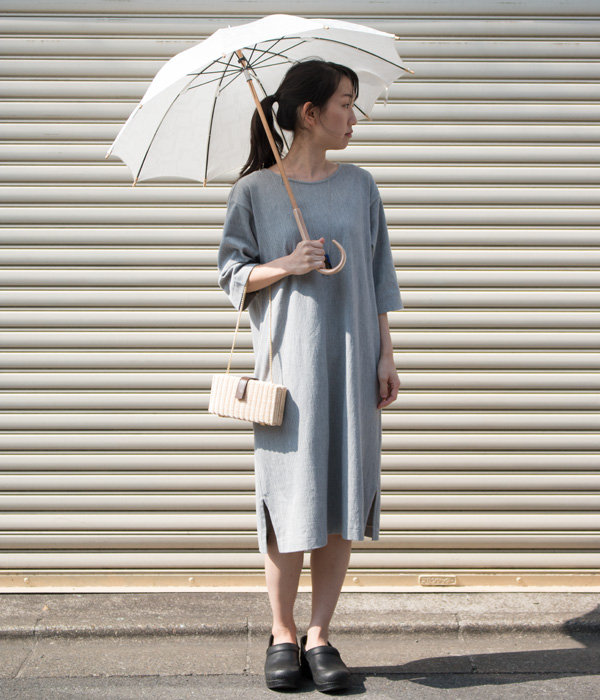
Dress: HERSCHEL dress, Bag: rattan handbag with shoulder strap, Shoes: Professional Black Oiled
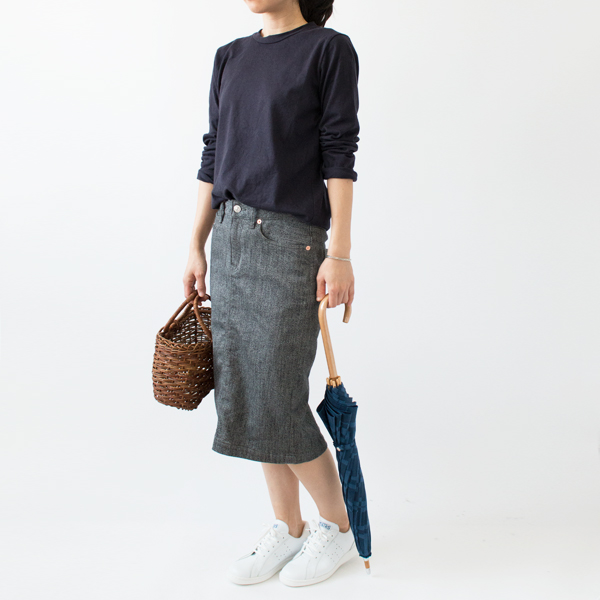
Cut-and-sew top: linen-cotton long-sleeve T-shirt, Sneakers: Tenis leather White, Bangle: STERLING SILVER BANGLE SB32, Basket bag: coming soon
This jacquard weave suits both feminine dresses, perfect for spring and summer, and casual cut-and-sew tops. Rather than relying on a printed pattern, the expression created by the way the threads are woven conveys a distinctly feminine elegance.
When it comes to traditional Japanese attire, the yukata comes to mind. This richly textured jacquard weave adds a touch of elegance even to the yukata, said to embody Japanese beauty.
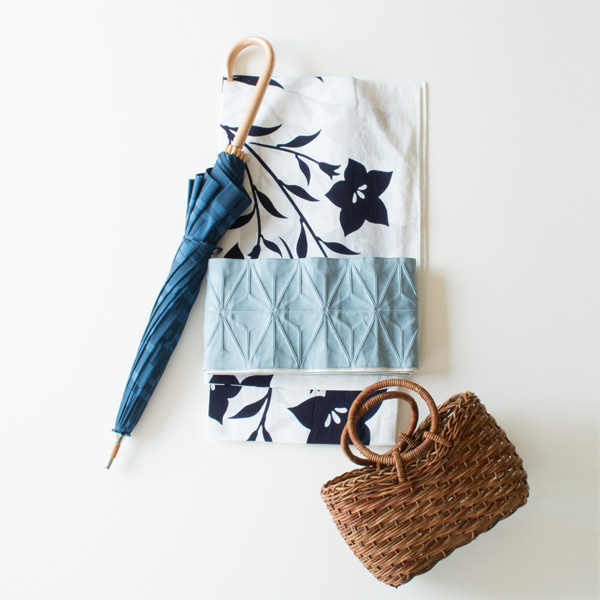
Basket bag: coming soon *Yukata and obi: staff's personal items
This refined jacquard weave, which seems to capture the distinctly Japanese sense of "cooling off," pairs wonderfully with basket bags, the very symbol of summer. Please use it widely, from everyday outings to trips in your yukata.
Thinking about umbrellas for both sun and rain
A sun-and-rain umbrella is a handy thing to have on hand. It protects you from beating sunlight and can also handle a sudden shower—a real all-rounder. But precisely because you'll want to use it all the time, certain questions naturally come up. Here, we've organized some key points for everyday use.
[Is it fine to use in any kind of rain?]
To begin with, the main purpose of a sun-and-rain umbrella is as a parasol. So please avoid using it primarily as a rain umbrella, and instead reach for it when you're caught in an unexpected shower while out and about. If rain has been falling since morning, please use your regular rain umbrella instead.
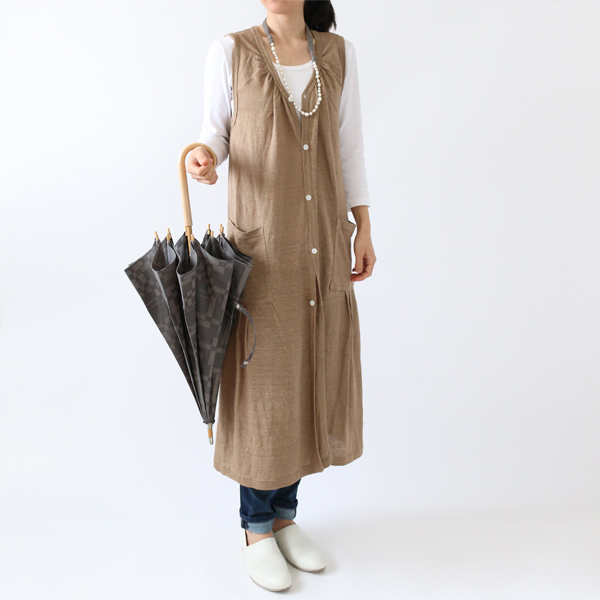
Dress: linen jersey long gilet, Necklace: knit/crystal necklace
[What should I do if it gets wet?]
If it gets caught in sudden rain, the important thing is to wipe away the moisture thoroughly. That said, it's not much trouble at all—just wipe the surface with a cloth to remove any moisture, then let it dry in the shade while open. Make sure it's completely dry so it's ready to use as a parasol again.
[I'm worried about fading from sun exposure... How can I keep it looking beautiful for a long time?]
A parasol takes on UV rays for us. In exchange for protecting us, the surface of the umbrella, which is constantly exposed to sunlight, inevitably fades over time. That said, this fading can be slowed with a little attention to how you use it day to day. There are just two points we'd like you to keep in mind.
1. Don't use it every day—rotate between several parasols.
If you use it every single day, the amount of UV exposure it accumulates day after day will inevitably speed up fading. To prevent this, rotating between multiple parasols spreads out the burden so no single umbrella takes all the strain, allowing each to last longer. Some people might wonder about spraying on a UV-cut spray to protect the umbrella, but please avoid this, as the ingredients in such sprays may damage the fabric.
2. When storing, keep it away from direct sunlight and even fluorescent light.
Since your parasol soaks up plenty of sunlight whenever you're out and about, it needs a rest when not in use. As mentioned above, direct sunlight is one culprit, but fluorescent light is also said to contribute to fading of the fabric. It's best to keep it somewhere near the entryway that doesn't get direct light.
[Does washing weaken the UV-blocking effect?]
When we say "wash the umbrella," many of you may wonder just how that's done. Some parasols can be washed and some can't, depending on the material, but since the Makita Shoten parasols are woven fabric made from thread, they can indeed be washed. If you're concerned about dirt, or at the end of the season, you can wash it using a neutral detergent, but for regular care during the season, rinsing with water alone is sufficient.
Also, with this fabric, the UV-cut agent is mixed into the coating resin on the reverse side of the fabric and applied there, so the UV-blocking effect lasts as long as this coating doesn't peel away. It won't wash off, so please rest assured.
Here is the washing process:
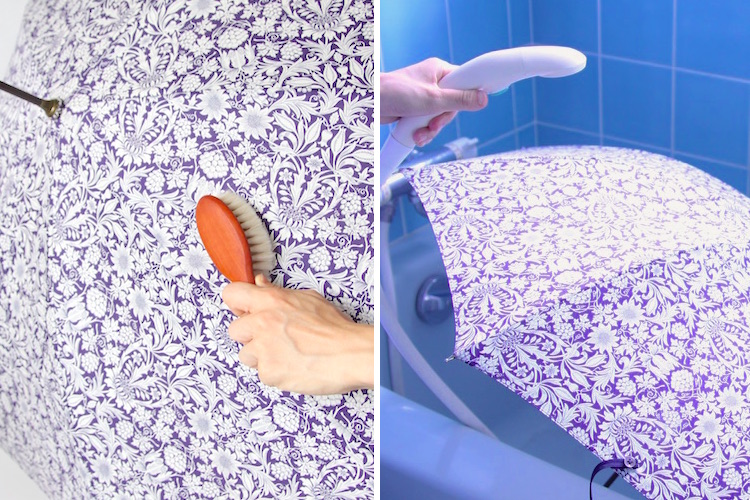
1. Open the umbrella and gently remove any dust from the surface using a brush or similar tool.
Working in small strokes from the ferrule toward the tips will make this go smoothly.
2. Open the umbrella, lightly wet the surface with a shower, then wash by gently stroking the surface of the umbrella with your hands.
When washing, please be careful not to get the handle wet, as it is made of wood.
※At the end of the season, lather up a neutral detergent and gently wipe the surface in the same way, then rinse thoroughly with a shower to remove all the detergent.
3. Wipe the surface firmly with a dry cloth and let it dry in the shade.
To avoid discoloration, keep it away from direct sunlight, just as you would when storing it.
Knowing how to clean it means you can respond calmly if it ever gets dirty. If you have any questions along the way, please feel free to contact ZUTTO Customer Support.
◇Online Store ZUTTO Customer Support
TEL: 03-5760-6647 (Phone hours: weekdays 10:00–16:00)
E-mail: support@zutto.co.jp
The parasols from Makita Shoten can be said to be filled with Japanese tradition and history. We believe this specially ordered square jacquard pattern lets you fully appreciate their appeal. We hope you'll pick one up as a companion for the sunny days that lie ahead.
▽A cool, beautifully contrasted navy
▽Pure and charming white
▽A calm, sophisticated gray with a Japanese feel
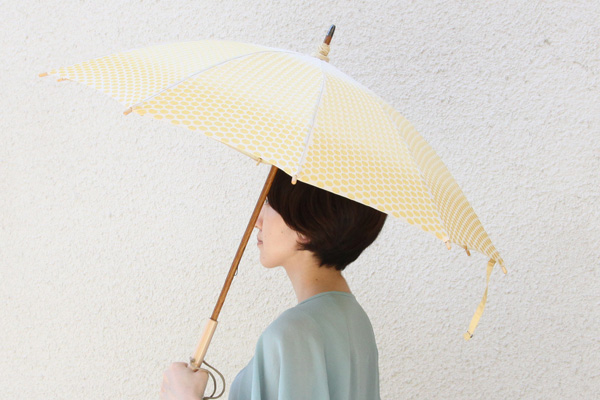
▽Click here for Makita Shoten's umbrellas, filled with Japanese beauty
GUIDE »
CATEGORIES »
- + Gifts by recipient
- + Gifts by scene
- + Clothing
- + Bags / Backpacks
- + Wallets / Card cases
- + Jewelry
- + Shoes
- + Rainy day outfits
- + Kitchen
- + Home
- + Babies / Kids
- + Japanese products
Earn Miles


Payment & Security