.webp)


.webp)


.webp)


.webp)


Welcome to ZUTTO
Free shipping for newsletter subscribers (some areas excluded)
- トップページ/
- ZUTTO Journal/
- 選び方・使い方/
- Its appeal goes b...

Its appeal goes beyond formal beauty alone. How to live alongside glass products in everyday life
When you hear the word "glass," what image comes to mind? Its appeal lies, above all, in its appearance. The way it lets light through and sparkles is a charm found nowhere else. At the same time, glass also carries a delicate quality—if you bump it or drop it, it shatters instantly. Glass has permeated our daily lives in the form of window panes, tableware, bottles, lenses, and more. Here, we'll look at why glass breaks, and offer some hints for living with breakable glass over the long term.
Glass Cannot Be Described in Just One Way
The history of glass dates back to 5000 BC. It's said that in Mesopotamia and Egypt, it was used as a raw material for ceramics. Later, with the spread of glassblowing—a technique of shaping glass by blowing air into it—glass products became common in everyday life in forms such as vases and cups.
So why is glass transparent in the first place? It's because glass itself does not absorb light, but instead lets it pass through. This transmission allows the color of the background to show through, and lets the glass sparkle when it catches the light. This transparency came to be recognized as "beautiful," leading glass tableware to be treated as treasures and prized as a material for ornaments.

A Tsugaru-biidoro single-flower vase made using the glassblowing technique, crafted from soda glass
If you look closely at the glass around you, you'll find there are actually many different types. The glass commonly used in windows and tableware is called "soda glass." It gets its name from the effervescent sodium carbonate used in its production, and is said to be the first type of glass ever made in ancient times. Because it is relatively hard, lightweight, and easy to shape, it has spread widely across a broad range of fields. There are other types as well: highly transparent crystal glass has a high refractive index and sparkles beautifully, making it a premium material among glass types, while lead-free glass, which does not use lead as a material, is known as an environmentally friendly type of glass.
Why Does Glass Break?
Have you ever broken glass by dropping it or bumping it into something? The fundamental reason glass breaks is said to be the countless tiny scratches that form on its surface.
Glass is made by mixing and melting raw materials such as silicon and lime, then shaping and hardening the mixture into the final product. During this hardening process, countless minuscule scratches form. When external force is applied to these scratches, the glass cannot withstand it and breaks. Materials like plastic and metal have the ability to deform, so for example, if dropped, they bend out of shape rather than shattering. Glass lacks this ability to deform, so it has the property of breaking instantly when it receives an impact. How to avoid increasing these scratches, or keep them from spreading further, is the key focus for living alongside glass over the long term.
How to Live with the Glass Around You
Now, let's take a closer look at actual glass products. Glass, with its property of letting light and color pass through or reflecting images, is used in items that convey information.
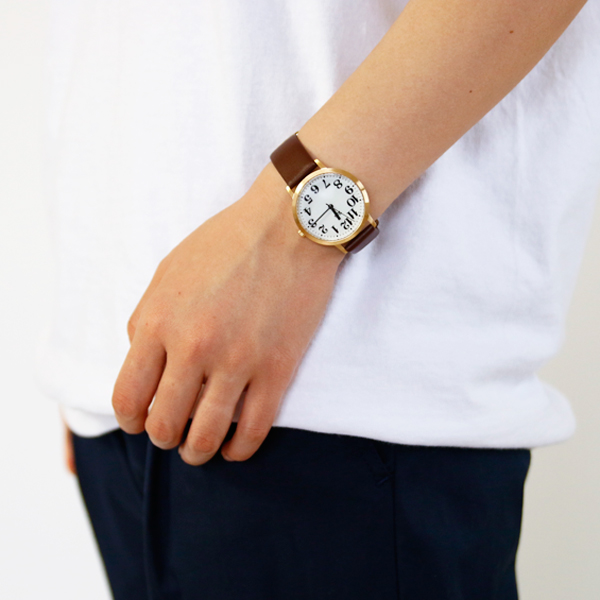
Take wristwatches, for example. A wristwatch, which conveys the information of time, uses glass for its crystal (fūbō), the part that protects the dial. The ALBA Riki Wristwatch AKPK404 Brown, designed by Riki Watanabe, features a gold stainless steel case paired with a calf leather strap. It's a striking watch, simple yet radiating a mature sensibility.

The crystal of the ALBA Riki Wristwatch AKPK404 Brown is made of inorganic glass. For a wristwatch, where visibility is essential, the most important thing is that the numbers and hands on the dial are clearly visible. The transparency of glass contributes directly to this readability. Nowadays, materials such as plastic and synthetic sapphire are sometimes used for watch crystals in addition to glass, but inorganic glass remains valued for how easy it is to work with.
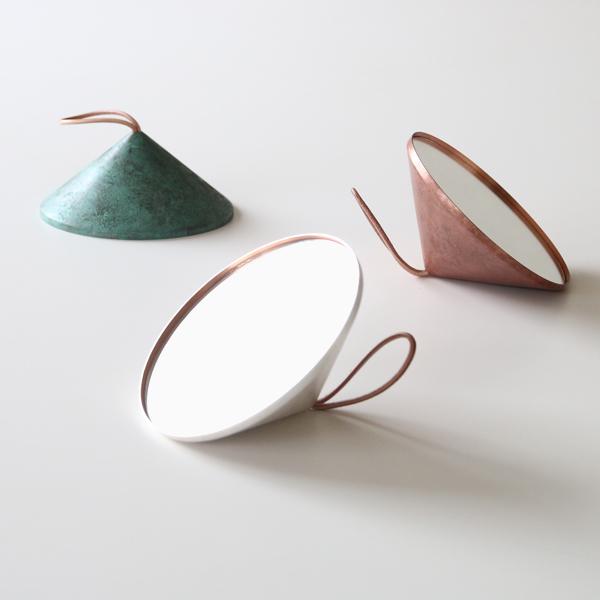
The mirrors we see around us also use glass. A mirror works by coating one side of a piece of glass with a metal film, such as silver or copper; light passing through the glass reflects an image off this film. Since the surface is glass, mirrors share the same characteristics as other glass products—they break when struck, and fingerprints show up on them. In the sense that it reflects an image, a mirror can also be said to serve the role of conveying information.
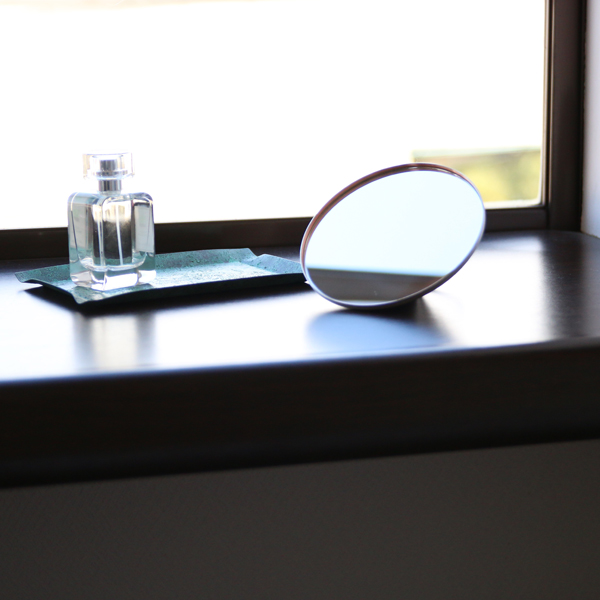
The mirror by tone is a handy mirror characterized by its distinctive cone shape. The back of the mirror is finished in various colors of copper, using the traditional coloring techniques of Takaoka dōki (Takaoka copperware). Because the cone shape naturally tilts upward simply by setting it down, it's a convenient design that can be used casually, wherever you place it.
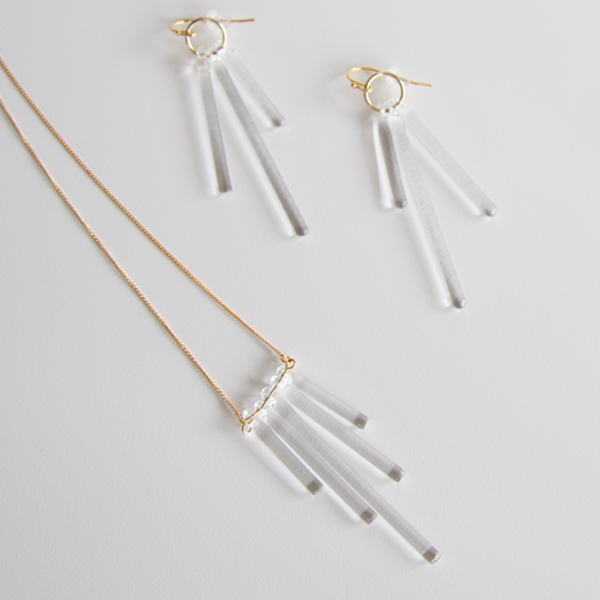
These accessories from HARIO Lampwork Factory are made from hard glass. Every piece is crafted entirely by hand, with artisans melting the glass over a burner and shaping it—truly a display of craftsmanship. Exposed to a flame reaching 2000 degrees Celsius, the glass transforms into various shapes, from tiny beads to slender, elongated silhouettes.

The accessories from HARIO Lampwork Factory, brimming with transparency, let the background color show through and sparkle when exposed to light. This beauty is only possible because of glass's transparent quality. These accessories can be said to bring out the full charm of glass, letting you experience it firsthand.
How to Live with Glass ① Removing the Causes of Breakage
Wristwatches, mirrors, accessories. These are all things we use casually in daily life, but they all share the fact that glass is used as a material. In other words, there's always a concern that a sudden impact could cause them to break. With this in mind, one thing worth keeping in mind is preventing an increase in surface scratches on glass, which are a cause of breakage.

The microfiber cleaning cloth from TOWNTALK can also be used on glass.
Besides impacts, scratches on the surface of glass can also be caused by dust. Regularly removing dust helps protect against scratches. The microfiber cleaning cloth has a fine weave that reliably catches even tiny particles of dust. In addition to dust, wristwatches and mirrors that are touched by hand tend to pick up fingerprints, so "wiping" them is the basic approach.
How to Care for Glass ② Protection Through "Concealed" Storage
And with glass products, protecting the item itself is also important. To prevent unexpected surface scratches, it's important to keep the glass parts "hidden" from view for protection.
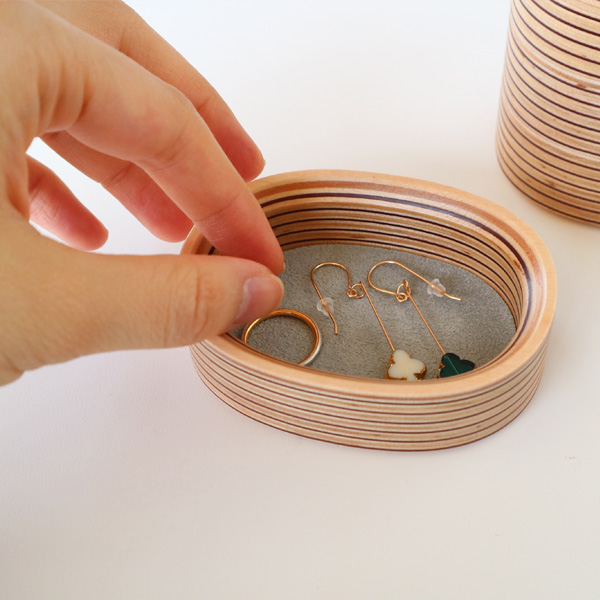
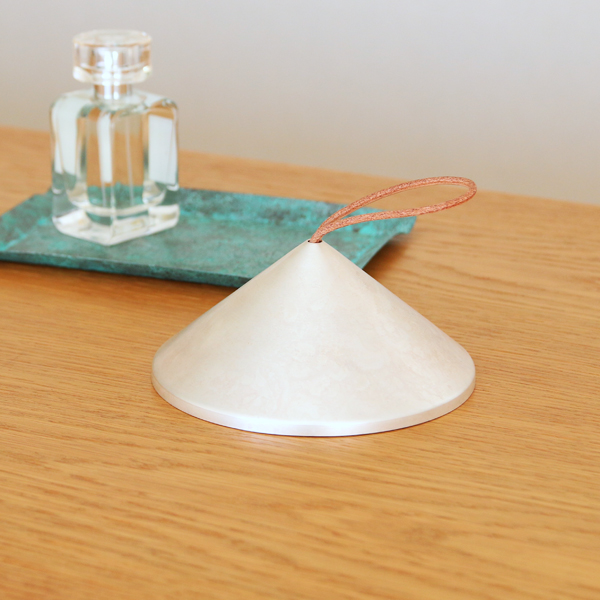
For accessories, store them in a dedicated case lined with fabric. The accessory tray from PLYWOOD laboratory, made from a combination of natural wood and recycled paper laminate, has fabric lining on the inside and a lid that fits snugly, protecting the contents from dust as well.
The mirror from tone has a conical shape, so you can lay the mirror face-down without worrying about it being scratched from the surroundings. Since the mirror has a copper trim along its edge, careful thought has gone into ensuring that even when the mirror is laid face-down, the glass itself never touches the desk or table surface directly.
How to Care for Glass Drinkware
When it comes to glass items used at the dining table, many people probably think of glasses first. Sparkling, transparent glasses pair well with liquids, and their beauty really stands out visually. Many people probably have a variety of glasses on hand, using different shapes depending on the drink being served.
Glass is used as the material for drinking glasses not only for its visual beauty, but also because, in the case of wine and similar drinks, subtle differences in the shape of the glass can actually bring out the flavor.

The Lempi glass pair set from iittala is a set of relatively low, stemmed glasses. iittala, founded in Finland as a glassware maker, uses lead-free glass as its raw material out of consideration for its impact on both the environment and the human body.
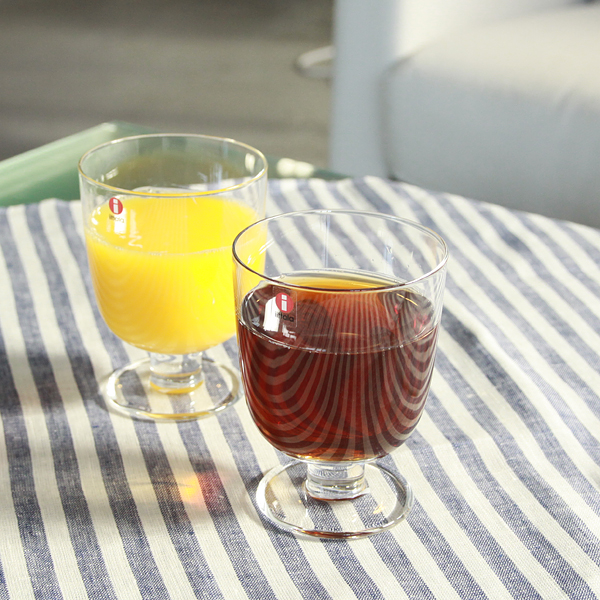
The cup itself widens toward the rim, and the sturdy, wide stem gives it a stable feel, with a soft, rounded shape reminiscent of a tumbler's presence. Whether pouring in a drink or serving yogurt, the transparency of the glass creates a refreshing effect.

Left: Edo Kiriko Cherry Blossom Pattern Tenkai Tumbler / Right: Edo Kiriko Kenbishi Nanako Pattern Tenkai Tumbler
Turning to something different, here we have Edo kiriko (Edo-period cut glass), one of the outstanding crafts of the Edo period. It's said to have originated when kiriko cutting techniques were first applied to glass in the late Edo period. Kiriko, also known as cut glass, has been passed down as a traditional technique not only in Japan but also in countries such as the Czech Republic and England. In Japan, Satsuma kiriko is also famous, but Edo kiriko is said to be a culture that was developed and refined into its modern form by ordinary craftspeople.

Kiriko involves carving patterns into originally transparent glass through the processes of hand-grinding and polishing. By evenly smoothing and polishing the carved areas, the glass, which initially resembles frosted glass, transforms into a beautiful, gleaming kiriko glass. While plain transparent glass has its own simple beauty as its defining charm, kiriko can be said to have a more profound appeal, as light passes through the carved sections, creating shadow and depth.
How to Care for Glass ③ Protect the Rim of the Glass
Glasses can break both during use and while being stored. Besides being dropped, they can also break from bumping into other tableware, or from being unable to withstand weight placed upon them.

Among all parts of a glass, the rim is the weakest against force. Some glasses are deliberately made thin at the rim to improve the feel against the lips, and applying extreme pressure to this area can cause it to break.

For this reason, the basic rule when storing glasses is to keep them upright with the rim facing up. If you turn a glass upside down with the rim facing downward, the weight is placed directly on the rim, which can cause scratches that lead to breakage. When storing glass drinkware, it's important to keep it upright.
How to Care for Glass ④ Understanding the Relationship Between Glass and Temperature Change
We've seen that surface scratches on glass can lead to breakage. In addition, glass also requires care with regard to sudden changes in temperature.
For example, pouring boiling water into a glass cup can sometimes cause it to shatter. This happens because a temperature difference arises between the surface that came into contact with the hot water and the inner layer of the glass—the part that heated up expands, while the inner part does not, and this discrepancy causes the glass to crack. The same principle applies to rapid cooling, so suddenly adding ice to glass that is still warm can also cause it to break.

Heat-resistant glass was developed to withstand these temperature changes. Because it has a low expansion rate, which is what causes damage when heat is applied, it can endure sudden temperature changes. The Tsugaru vidro durable katakuchi sake set is a sake vessel set designed to withstand temperatures of up to 120 degrees Celsius. Though made of simple, transparent glass, each piece is handmade, and the slight variations in size from piece to piece give it a warm, handcrafted feel.
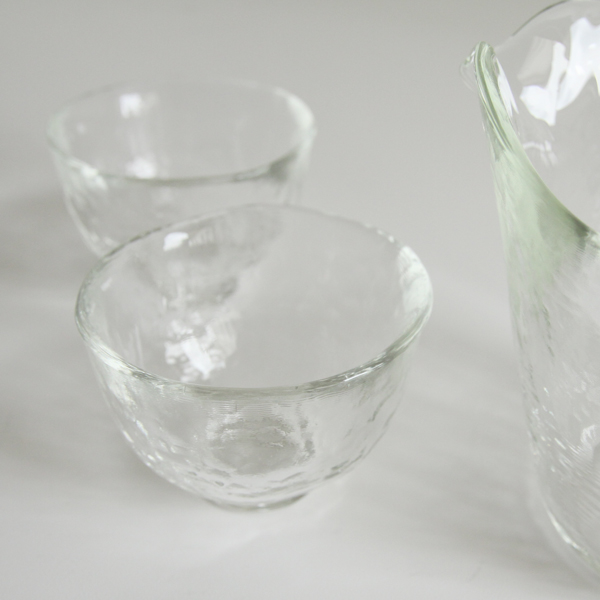
Because thick, low-expansion glass is used, these pieces are made to resist cracking even when exposed to sudden changes in temperature. It's surprising to learn that they can be used not only for pouring in boiling water but also in the microwave.

When you hold a piece filled with boiling water, the heat travels gently to your hand, so you'll never find it "impossible to hold." Heat-resistant glass also absorbs very little odor as well as resisting temperature change, so it's fine to use even with fragrant beverages.
Glass, being breakable, is something you naturally handle with care. Even so, its sparkling beauty is something no other material can replace. By understanding how breakage happens and taking precautions in advance, we hope you'll make the most of glass's beauty as part of your everyday life.
▽A glass workshop in Aomori. Tsugaru Vidro

▽Design that shines through simplicity. Riki Watanabe

▽Carrying kiriko (cut glass) into the present day. Glass Studio Saihou

▽When it comes to Finnish glass. iittala

▽Sparkling glass accessories made in Japan. HARIO Lampwork Factory
In June, we plan to publish a special feature on the HARIO Lampwork Factory glass accessory-making experience. Stay tuned.

▽Making the most of Takaoka doki (Takaoka bronzeware) craftsmanship. tone

GUIDE »
CATEGORIES »
- + Gifts by recipient
- + Gifts by scene
- + Clothing
- + Bags / Backpacks
- + Wallets / Card cases
- + Jewelry
- + Shoes
- + Rainy day outfits
- + Kitchen
- + Home
- + Babies / Kids
- + Japanese products
Earn Miles


Payment & Security