.webp)


.webp)


.webp)


.webp)


Welcome to ZUTTO
Free shipping for newsletter subscribers (some areas excluded)
- トップページ/
- ZUTTO Journal/
- 選び方・使い方/
- Feel the warmth o...

Feel the warmth of Japanese plates, crafted by artisans with tradition and pride
When you hear the words "wa-shokki" (Japanese tableware) or "wa-zara" (Japanese plates), you probably picture warm, comforting tableware—chunky ceramic plates, or perhaps wooden plates. What's curious about Japanese plates is that they suit everything you put on them, from Japanese dishes to side dishes like salad, to main courses like curry rice or pasta. In Japan, rough-textured pottery plates are far more common than smooth, glossy porcelain. This is partly due to individual variation that comes naturally with handmade items—differences in the clay used, the firing method, and the painted decoration. Encountering one of these warm, inviting plates is truly a once-in-a-lifetime meeting (ichi-go ichi-e). But how can you find a plate you'll love while shopping from home? And what kind of individual variation should you expect? Let's clear up these questions.
Choosing plates at an online shop
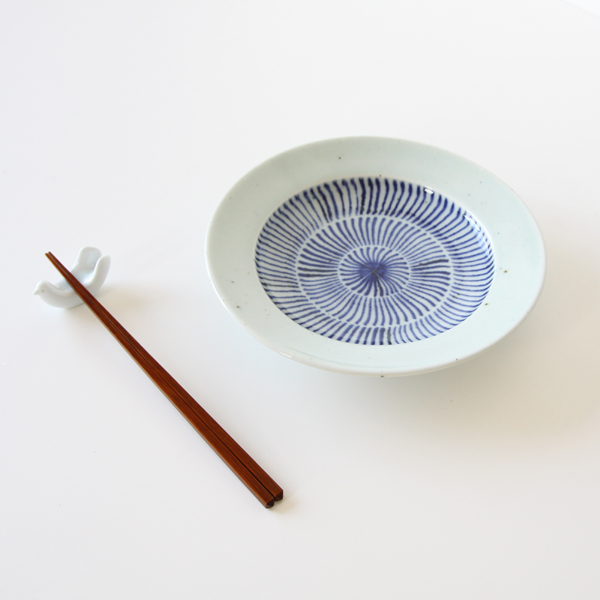
Uchi Hakeme 7-sun plate
When you think of one-of-a-kind plates made by artisans, you probably imagine the kind of plates found at pottery markets. But visiting such places again and again to search for your favorite piece can be quite a task. If you could get your hands on Japanese traditional crafts from the comfort of your own home, wouldn't that be wonderful? Yet alongside that convenience comes a certain worry—the fact that you can't actually pick up and examine the plate in person. Japanese tableware in particular goes through many steps in its creation, almost all done by hand, which results in characteristics not found in mass-produced items. The small differences you notice in these plates may be unfamiliar to you, but they carry the breath and presence of the maker. We recommend them to anyone who can enjoy these differences as part of a unique encounter.
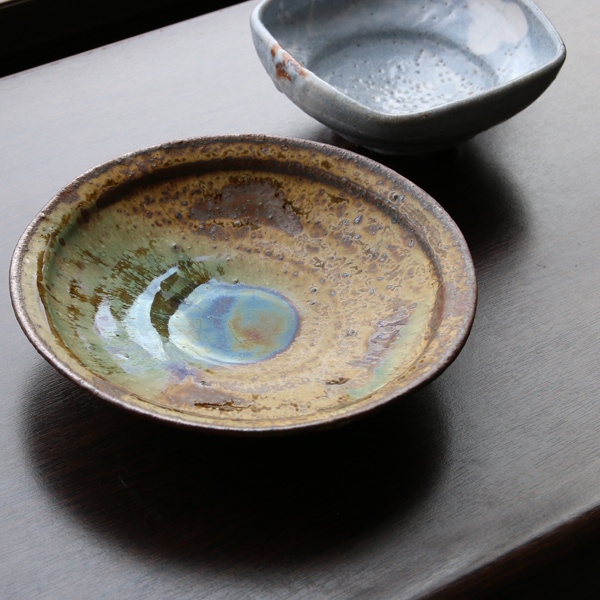
Minami-gama's Oukaiyu 6-sun plate ※Expected to arrive in July
Wa-shokki and yo-shokki: understanding the difference
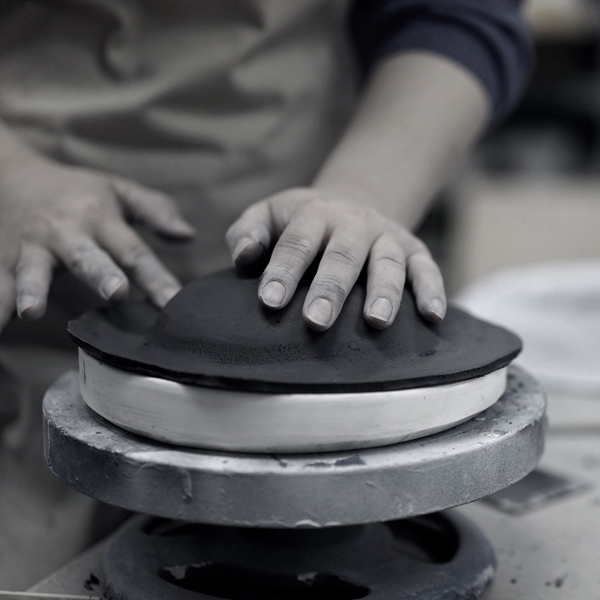
A key factor behind the differences between Japanese and Western tableware is a characteristic of Japanese cuisine rarely seen elsewhere in the world: it's considered proper manners to pick up your plate while eating. This is quite unusual by global standards. Naturally, plates suited to this style of dining developed in Japan to match that culture.
1. Material
Japanese tableware is often made of "toki" (ceramic/pottery), while Western tableware is often made of "jiki" (porcelain). Both are types of yakimono (fired ceramics), but rough, warm-feeling toki is made primarily from clay, while glossy jiki is made from a combination of clay and powdered stone called toseki. Japanese tableware is made of toki so that you can feel its warmth in your hand and enjoy its distinctive texture. Western tableware, on the other hand, is used with knives and forks, so jiki—which resists scratches—is the material of choice.
2. Weight
On average, Japanese tableware tends to be lighter than Western tableware. This is because it's designed to be held in the hand while eating, so it's made light to avoid fatigue. Japanese tableware is also often brought to the mouth while eating, so it's frequently designed with a pleasant feel against the lips in mind.
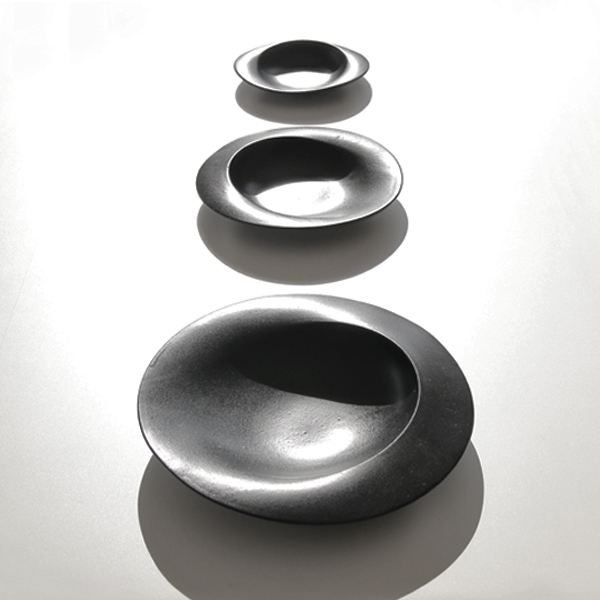
Plate, scoop series
What size plate should I choose?
When choosing plates at an online shop, the first thing you'll run into is the "plate size problem." Let's check what plate size suits your actual needs. Traditionally, tableware sizes are measured using the shakkanho system, where the diameter (koukei) is expressed in sun, with 1 sun equaling roughly 3.03 cm.

4 sun (12 cm): A small plate, a bit smaller than a typical serving plate. Perfect for holding tea sweets, or as a substitute for a mame-zara (tiny plate).
5 sun (14 cm): The classic serving plate size. Ideal for cake and similar items.
6 sun (18 cm): A bit larger than a serving plate. Good for salad, or a fillet of fish. Also a comfortable size for sautéed items or side dishes served alongside a main course.
7 sun (21 cm): The perfect size for a single serving of a main dish like curry rice, fried rice, or pasta. Since it gets used so often, you'll never regret having several of these.
8 to 9 sun (24 cm): Large enough to serve a main dish for the whole family. Can also hold a generous single serving.
The most versatile sizes are the so-called "medium plates," ranging from 4 to 8 sun, but terms like "serving plate" (torizara) and "presentation plate" (moriezara) naturally shift with changing lifestyles and eating habits. It can be fun to try a size a little different from your usual choice, or to mix and match various sizes together.

Even small plates play an important role in brightening the table. Hakkaku Kamon Kozara, set of 5
What kind of individual variation should I expect?
When choosing plates at an online shop, you might come across notes like "size, color, and shape may vary slightly, with some individual variation," and naturally wonder just what kind of differences to expect. Here, as a reference, we compared the actual differences between Miyamoto Taizando's "Aka Komon Torizara" and TOJIKITONYA's "Rim Plate."
Aka Komon Torizara
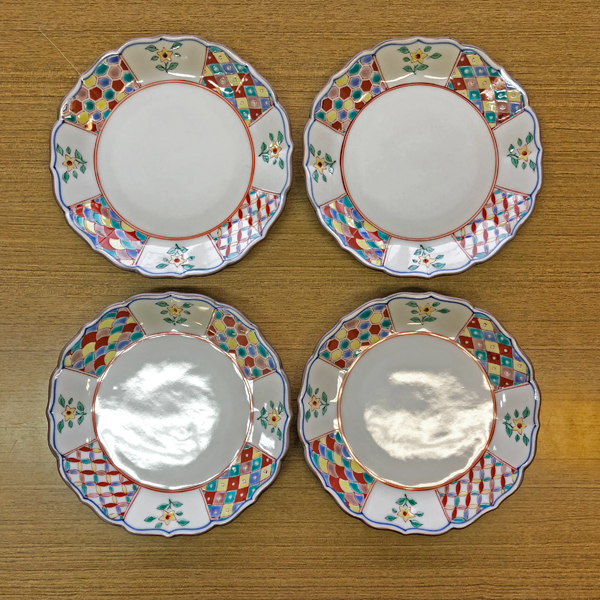
Compared to other pottery, Miyamoto Taizando's plates show relatively little variation in color.
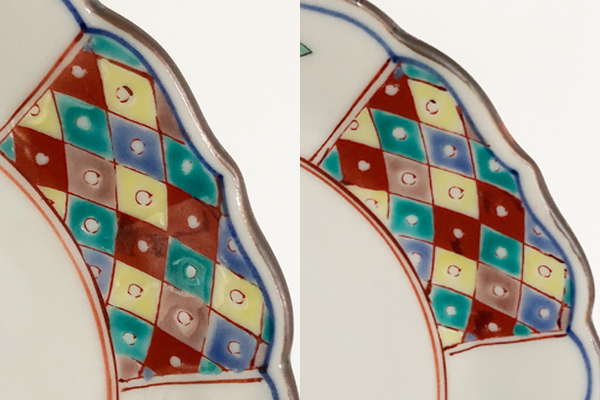
Because the painted decoration is done by hand, one piece at a time, even the same design may appear slightly different in size or color tone from piece to piece.
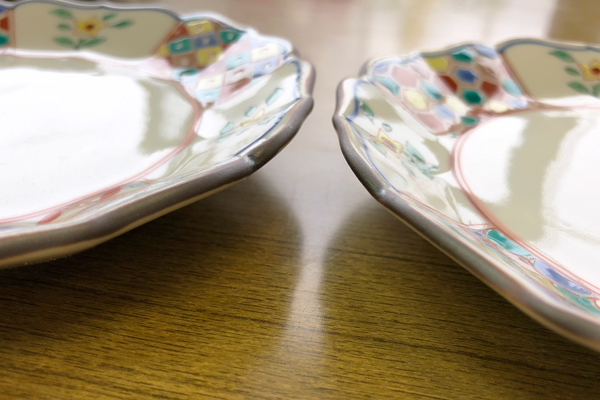
You may also notice that the height of the rim can look different when the plates are lined up side by side.
Rim Plate
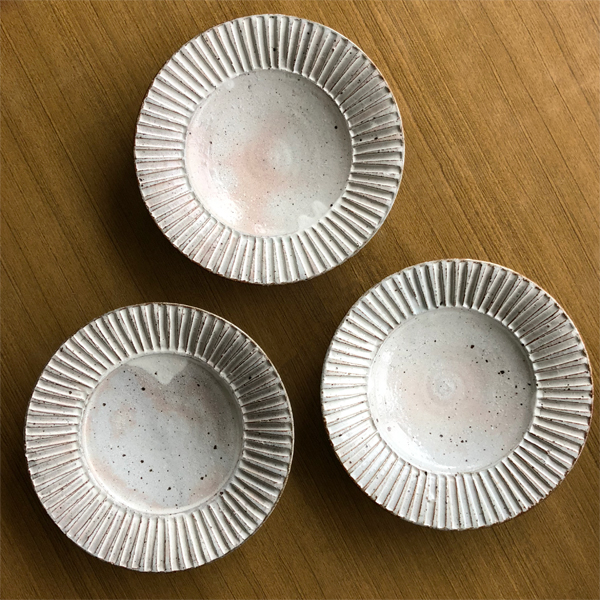
The rim plate's charm lies in the slightly rough texture along its edge. Called "kohiki" for its appearance of being dusted with powder, some pieces show pure white speckles, while others reveal reddish-brown speckles known as "gohon." This is a distinctive feature of kohiki plates—and comparing them side by side, you can really see how each piece has its own unique character.
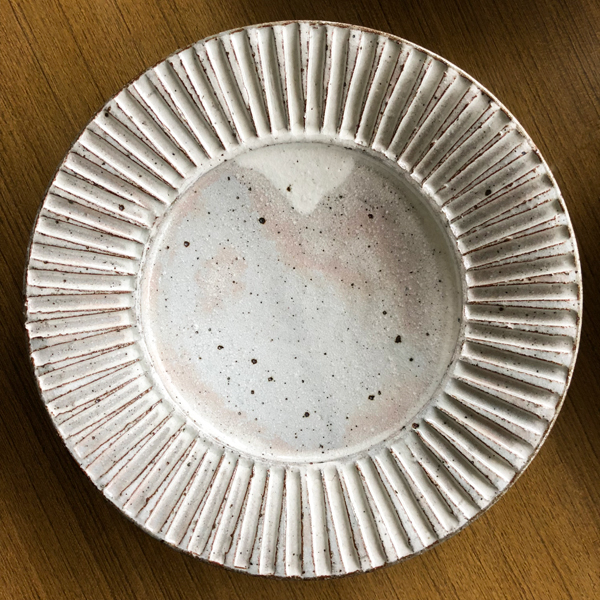
A plate is completed through a series of processes—starting with preparing the clay, shaping the plate, drying the unfired body, bisque firing, painting, glazing, and final firing. Unlike mass-produced items, it's only natural that the expressions born naturally through this process become a kind of individuality, and perhaps this is exactly what deepens their character and lets them settle comfortably into daily life. Even if a plate you got from an online shop shows this kind of variation, if you can picture the maker behind it, it becomes a plate you want to keep using with real affection, don't you think?
Our staff thought about how to use them and what to place on them.
Our staff, who regularly visit pottery fairs, thought about how they'd like to use these plates and what they'd like to place on them. Please use this as a reference when choosing your own plates.
Karakusa 7-sun
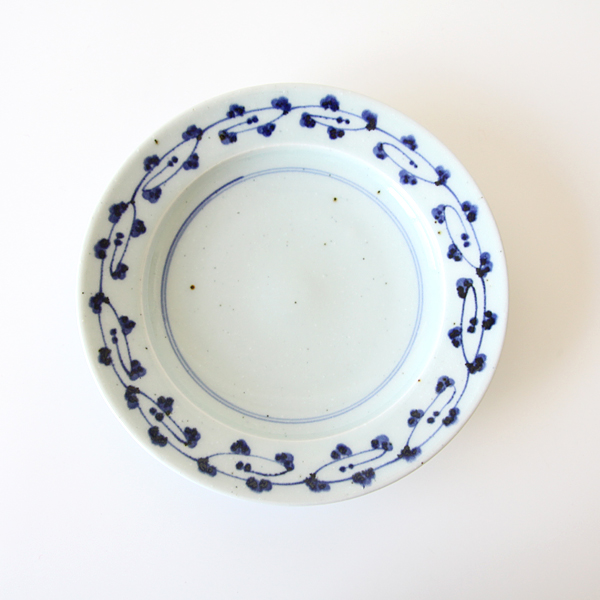
Among the plates we introduce at ZUTTO, the Karakusa 7-sun from Nakata-gama is one that I personally find has an especially warm feeling to it. It's Tobe-yaki from Ehime Prefecture, and while it may lack the flashiness of pottery from other regions of Japan, it's a white porcelain ware with a plump, generous thickness that has been loved since ancient times and still has devoted fans today.
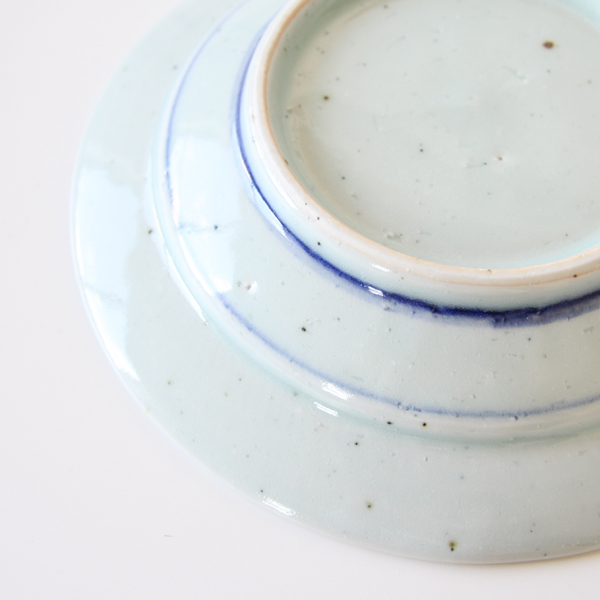
Above all, its understated design feels modern and stylish by today's standards. You'll notice small black speckles scattered across the plate—this is a characteristic feature of Nakata-gama. When making white porcelain plates, iron powder is normally removed, but here it's deliberately left in; during firing, the iron powder oxidizes, creating these speckles in the finished piece.
The scattered speckles on the plate are cute and endearing, like a girl's freckles. Simple, beautiful, and with a bit of height to it, the Karakusa 7-sun is a plate you'll want to give the starring role to main dishes like curry rice, fried rice, or hamburger steak.
【How I'd like to use it】
・For serving main dishes like curry, fried rice, or hamburger steak
・For plating a single portion of a side dish
Rim Plate 9-sun
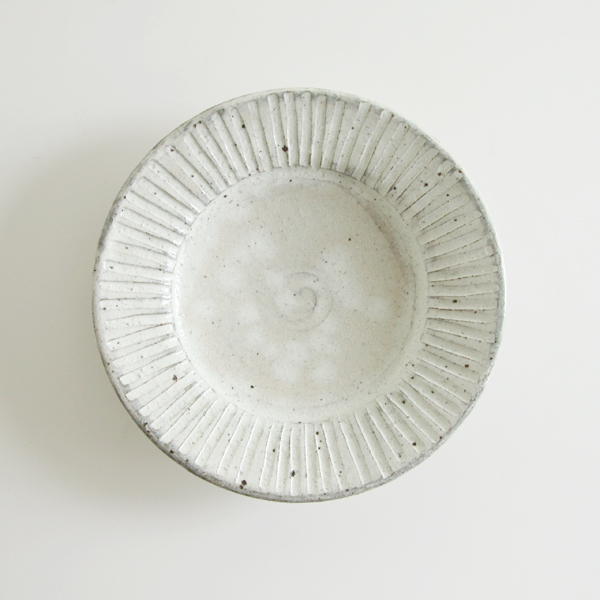
A plate of Mino-yaki, cherished since ancient times. Mino-yaki is the collective name for pottery fired in Tajimi, Toki, and Mizunami cities in Gifu Prefecture, and its characteristic feature—whether in teacups, tea utensils, or donburi bowls—is a simple, unassuming quality that fits easily into daily life.
The "rim" in this rim plate refers to a flat plate with a raised, band-like edge around its border. Depending on the size and shape of the rim, there can be practical benefits too, such as making it harder for food to spill over. A 9-sun plate would normally be classified as a large plate, but thanks to the rim, even a single main dish placed on it doesn't look sparse. Piled high with green salad, it takes on a café-like feel; and since it has a bit of depth, it also works well for dishes with some liquid, like ratatouille. It pairs wonderfully with Italian and other Western dishes, and of course it also looks fitting used as a serving plate for Japanese food.
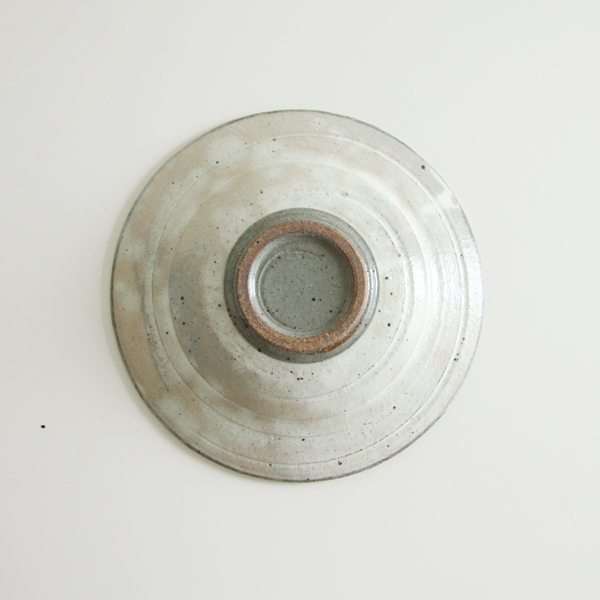
On the base, which has a wonderful atmosphere
【How I'd like to use it】
・As a single-portion one-plate meal
・As a large serving plate, piled generously with salad and the like
Giyaman-tou 4.5-sun Plate
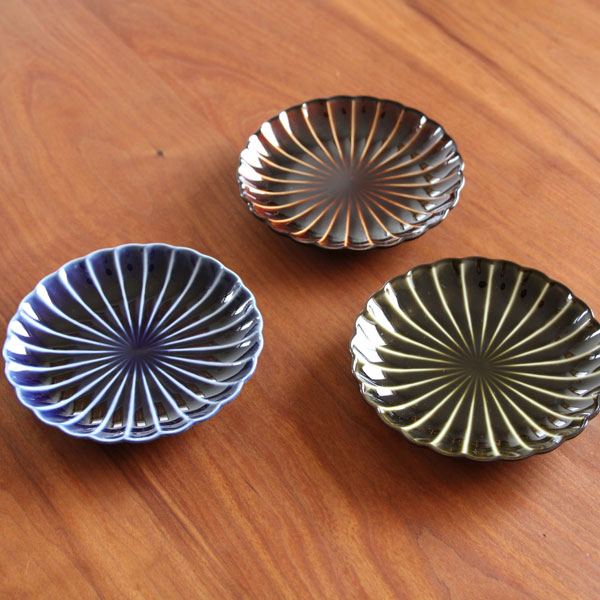
This is the Giyaman-tou 4.5-sun Plate from Kaneko Kohyo Seitousho. At 4.5-sun, it's a size that works well as either a small plate or a serving plate for individual portions. Its instantly striking appearance is inspired by the "chrysanthemum," a flower that represents Japan. The edge is slightly raised, so it can hold dishes with plenty of liquid without worry. Giyaman-tou is a type of Mino-yaki, characterized by a glass-like transparency and a rich depth reminiscent of urushi (Japanese lacquer) ware, and it's often called a masterpiece born from the pursuit of beauty. It's highly popular both in Japan and abroad, having even been used at a party held at the Palace of Versailles, and is renowned as a beautiful vessel that makes food look its best.
It's perfect for simmered dishes with plenty of liquid, like nikujaga (meat and potato stew) or mackerel simmered in miso, and it also works beautifully as a dish for cake. It suits Japanese sweets like Mont Blanc, mizu yokan, manju, or monaka just as well, and since its color makes food look delicious, it also flatters pale-colored desserts like pudding or ice cream.
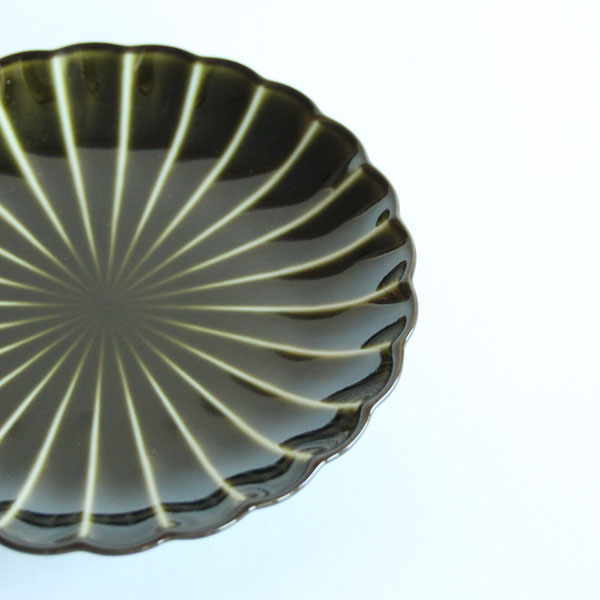
【How I'd like to use it】
・For serving Japanese sweets
・As a small plate for nikujaga or simmered fish
Japanese tableware brings life to the dining table. This time, we focused on introducing wa-zara, or Japanese-style plates. No two are exactly alike, but that's precisely what makes them grow on you and deepens your attachment over time. We hope we've been able to convey, even just a little, the charm of Japanese tableware—something that's hard to fully put into words.
▽See the Japanese plates category here
GUIDE »
CATEGORIES »
- + Gifts by recipient
- + Gifts by scene
- + Clothing
- + Bags / Backpacks
- + Wallets / Card cases
- + Jewelry
- + Shoes
- + Rainy day outfits
- + Kitchen
- + Home
- + Babies / Kids
- + Japanese products
Earn Miles


Payment & Security