.webp)


.webp)


.webp)


.webp)


Welcome to ZUTTO
Free shipping for newsletter subscribers (some areas excluded)
- トップページ/
- ZUTTO Journal/
- 選び方・使い方/
- # Is Solid Wood H...

Is solid wood hard to use? A report on living with a ZUTTO magewappa
The lingering summer heat is still intense, but according to the calendar, autumn has already arrived. It's the season of hearty appetites, and events like athletic meets, camping trips, and picnics are lining up now that the weather has become more comfortable. Whether you're feeling a bit down now that the long break is over and school has started again, or you're eager to throw yourself into work, ZUTTO has a lovely and easy-to-incorporate magewappa (bentwood box) for you. This time, a ZUTTO staff member currently challenging herself to a bento lifestyle got her hands on an actual Yamaichi magewappa and reports on how it holds up in daily use. We'll introduce its ease of use along with the points to keep in mind.
A magewappa bento box that makes rice taste even better
Today's star item is this magewappa: the Marumen Maru Bento (Sakuragawa-dome) from Yamaichi.
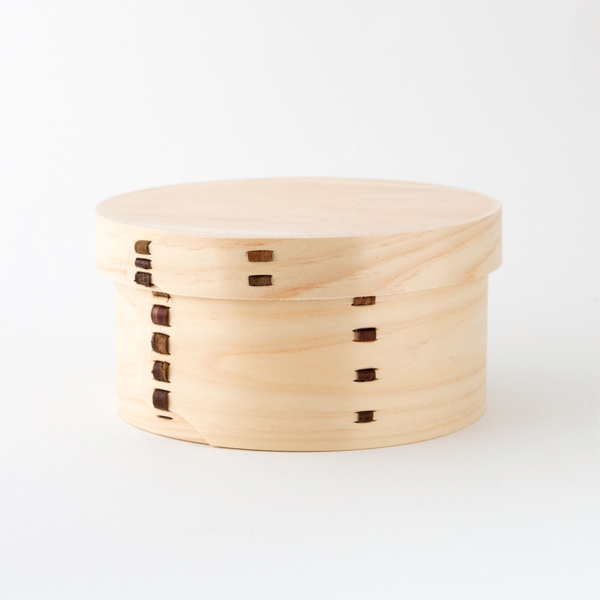
This round bento box has a rustic, warm feel to it, like something you'd find quietly tucked away in a corner of a small shop filled with handmade crafts. The bottom and top boards are made from sawara (Japanese white cedar), while the bent side panel is made of hinoki (Japanese cypress), and the panel is joined using yamazakura (mountain cherry) bark. Holding it in your hand, it feels smooth to the touch—truly giving off the impression of a "tool for everyday living."
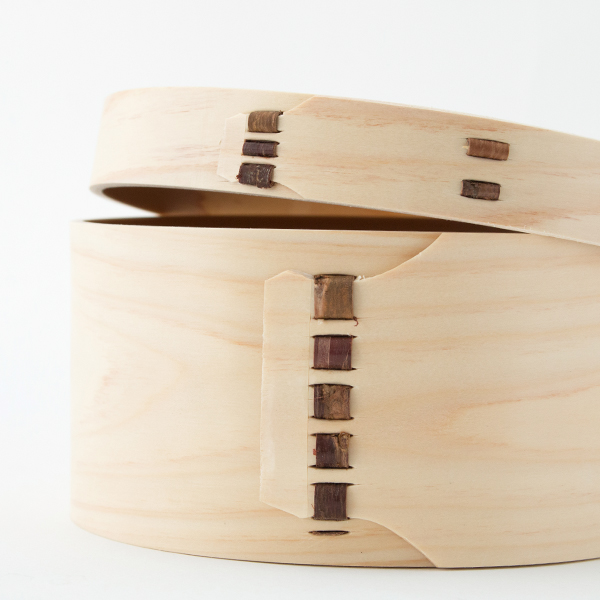
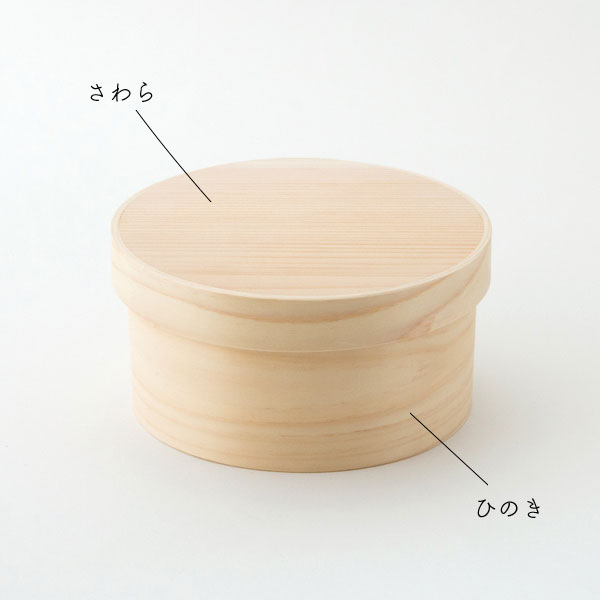
Made carefully by hand from natural wood, this piece is charming precisely because of the individual variations that mass-produced items lack.
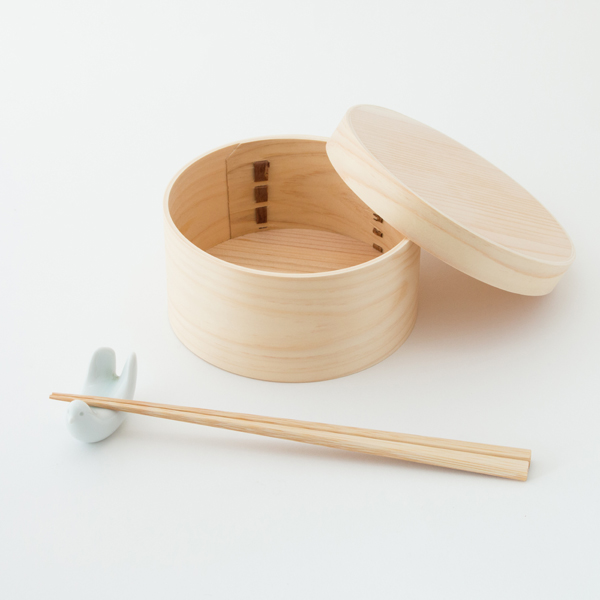
The reasons magewappa are beloved as bento boxes in the first place come down to two things: "rice tastes better," and their "adorable appearance." We've featured the magewappa our staff uses regularly before, so please take a look at that as well.
>> A comparison of two users' experiences: Odate Kogeisha's "Koban Bento Box" edition
Magewappa Living Report 1: First Impressions and Size
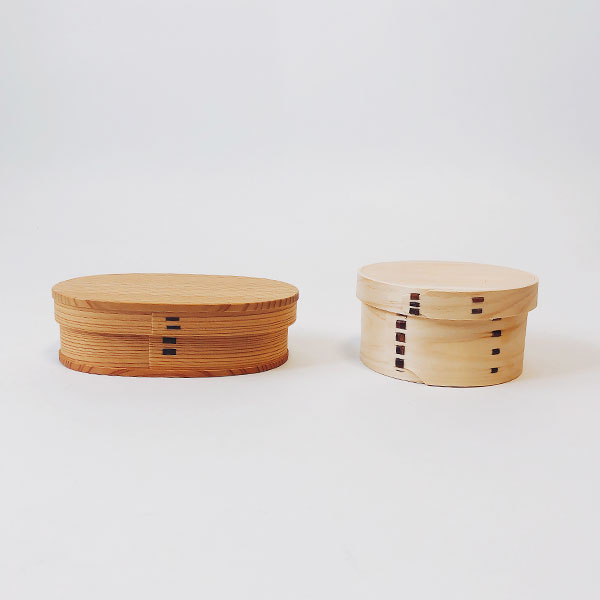
Left: Koban Bento (Small), Right: Marumen Maru Bento (Sakuragawa-dome)
For about a year and a half now, I've regularly used Odate Kogeisha's Koban Bento (Small). I really love its just-right size with urethane coating, but I've always had a longing for a round-shaped magewappa, so this time I decided to give one a try.
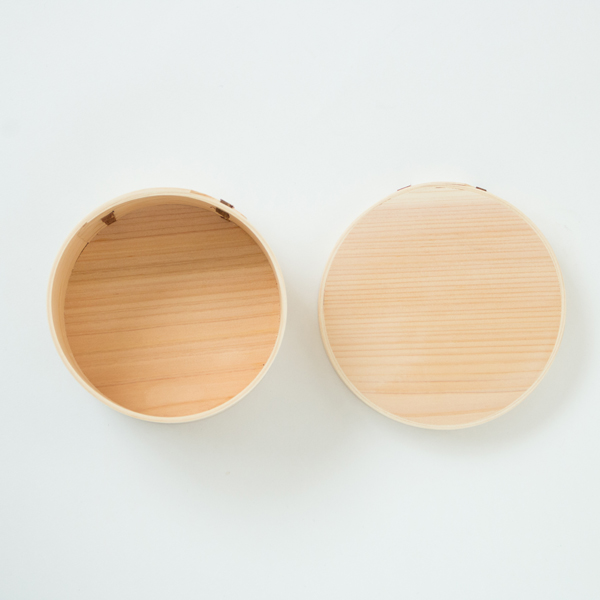
My first impression was, it's light and small! Combined with the smooth, solid wood surface and the wonderful scent of hinoki and sawara, it felt lovely—I imagined that rice packed into a bento box like this would be happy too. The Odate Kogeisha Koban Bento I'd been using is made from high-quality Akita cedar and is even designated as a traditional craft item; on top of that, its urethane coating that prevents stains and discoloration makes it very easy to use. Since this was my first-ever magewappa, I had wanted a quality one that would last a long time and be easy to maintain, so that's what I got. Compared to that Odate Kogeisha Koban Bento, this Yamaichi round bento has a more rustic feel and is more affordable, it uses unfinished solid wood without any coating, and above all, its round shape was the deciding factor in purchasing it as my second magewappa. I've heard that magewappa made of unfinished solid wood have better humidity-regulating properties and make rice taste even better, so I can hardly wait to try it out. That said, I'm also a bit worried about discoloration and oil stains, so I hope sharing my actual experience using it will be helpful for our customers.
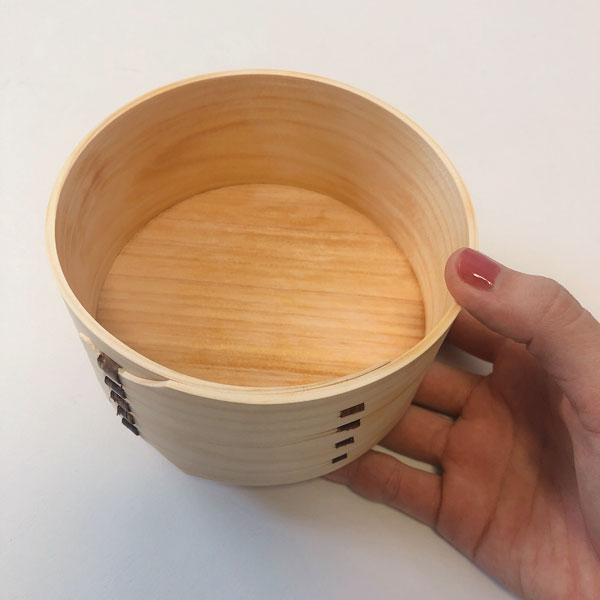
Here's a sense of the size. It's small enough to hold in one hand, but it actually holds 550ml (!). Anything over 500ml is a size that men might choose too. It's surprising that it holds more than my Koban Bento small size (350ml). Perhaps because of its height, it's compact yet holds a good amount, so it shouldn't take up too much space in a bag either.
Magewappa Living Report 2: What happens when you actually pack it?
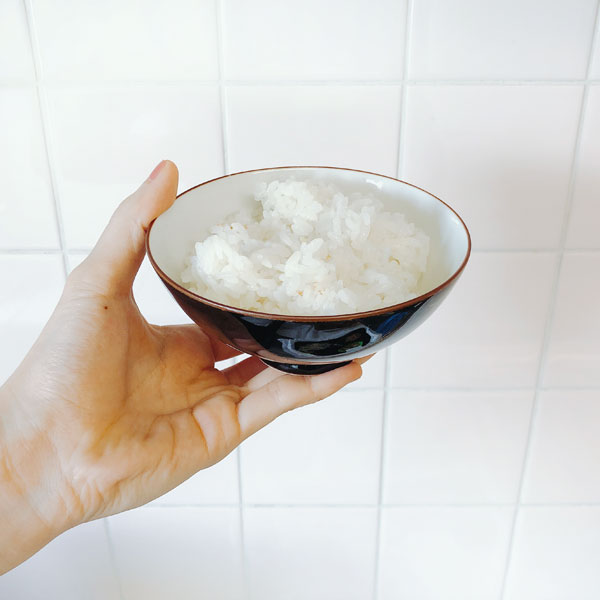
Basic Rice Bowl Tenmoku / Hakusan Toki
Now, this magewappa looks a bit small at first glance, but it's said to hold a generous amount of rice. I usually eat smaller portions, but here's what it looked like once I packed rice into the box.
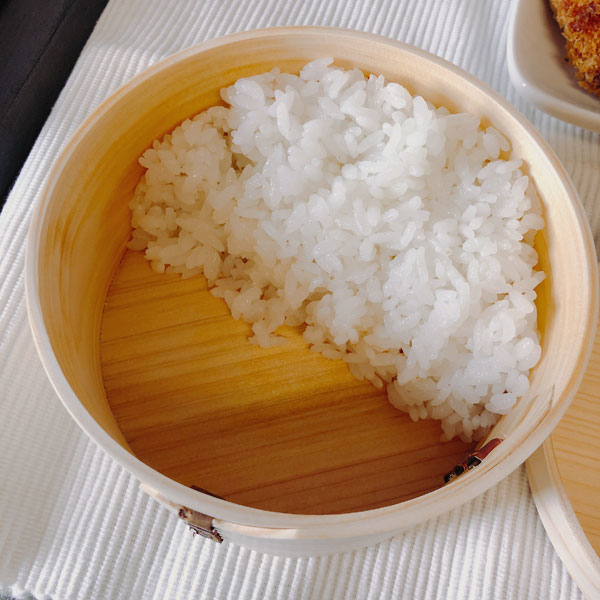
About a third of the box was filled. Next, I roughly packed in some other side dishes as well, pressing them in snugly.
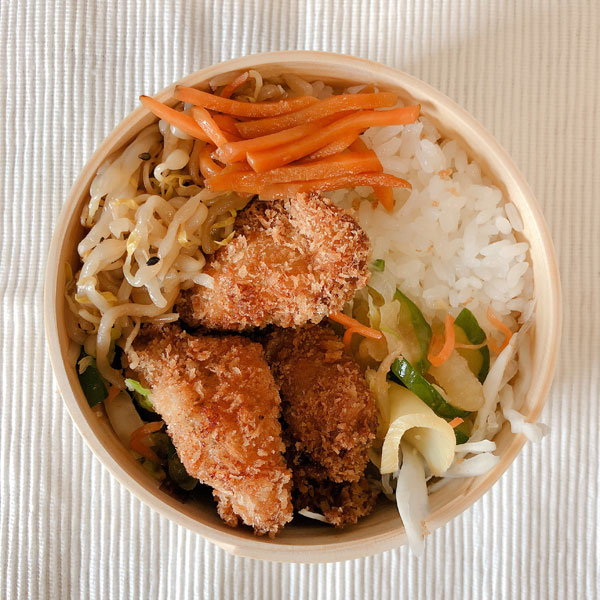
I cut up some tonkatsu and put it in. Next time I'd like to close up the gaps and fit in even more.
My impression after packing it was... how cute! A neatly packed bento box like this made me feel happy and adorable all at once. I'm still learning to cook, and since I only make food for myself, I often end up with donburi-style dishes or leftovers from dinner packed in—but no matter how you pack it, magewappa always come together looking cute, which I love. Because it's round, you can put side dishes in facing any direction, so it's easy to pack, which is great.
Once I actually packed it, I felt the size was just right. It would be great for donburi-style meals, but if you add both rice and side dishes, it might be a bit small for a man's lunch. Adding a separate soup or something on the side might be a good idea.
Magewappa Living Report 3: How does the rice taste? What should you watch out for?
This is a bento from a different day. I packed the rice in snugly and brought it along to actually eat. Today's menu is gapao rice, left over from last night's dinner.
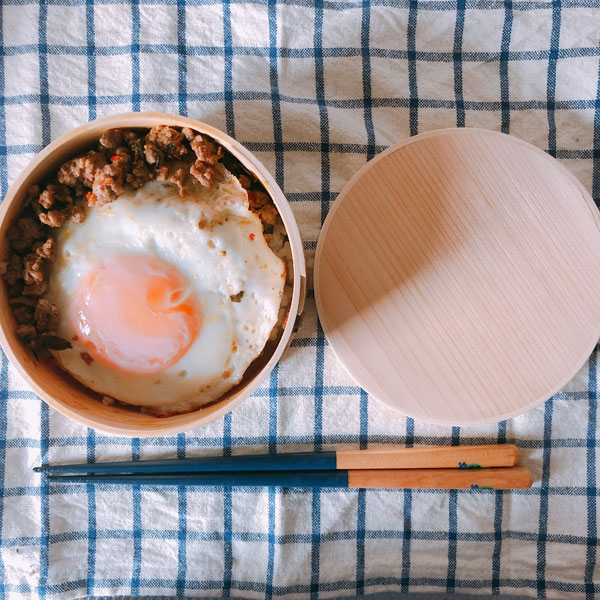
Since the meat portion of the gapao is oily, I made a small dip in the center of the rice and put the gapao there. When I'm worried about the contents leaking, I cover the gap between the lid and the box with plastic wrap before carrying it.
My impression after eating it: the rice really does taste better! Perhaps because it's solid wood, hardly any smell from the box transfers to the food, and instead you get just the right hint of pleasant woody fragrance while enjoying fluffy, delicious rice as it is. You can't microwave it, but even truly cold rice tastes great, making this a bento box you'll want to carry with you as the weather turns cooler.
Points to Keep in Mind When Handling Your Bento
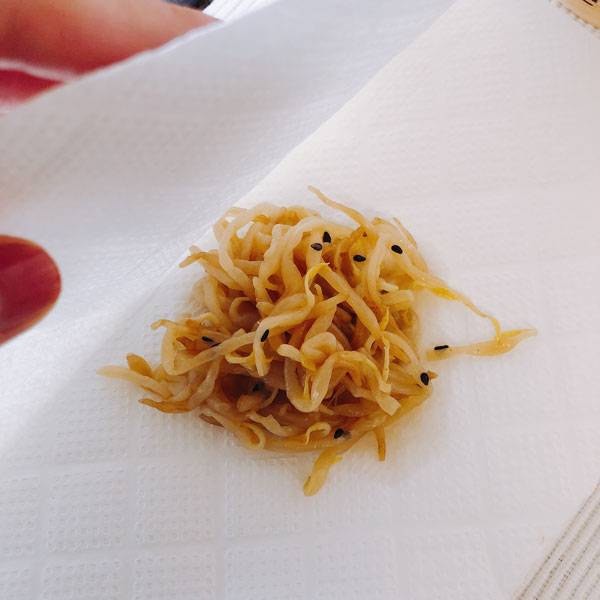
・If you want to pack oily foods, leaving them in for a long time is likely to cause stains. Remove excess oil beforehand using a paper towel.
・If you're still concerned about staining, try placing wax paper underneath before packing your food.
Magewappa Living Report 4: How Do You Care for It After Eating?
The Yamaichi Kuwa Round Bento Box (cherry bark-fastened) featured this time is made of solid wood, without any urushi (Japanese lacquer) or urethane coating. It might seem a bit troublesome at first, but with just a little care, it becomes an item you can cherish for years to come.
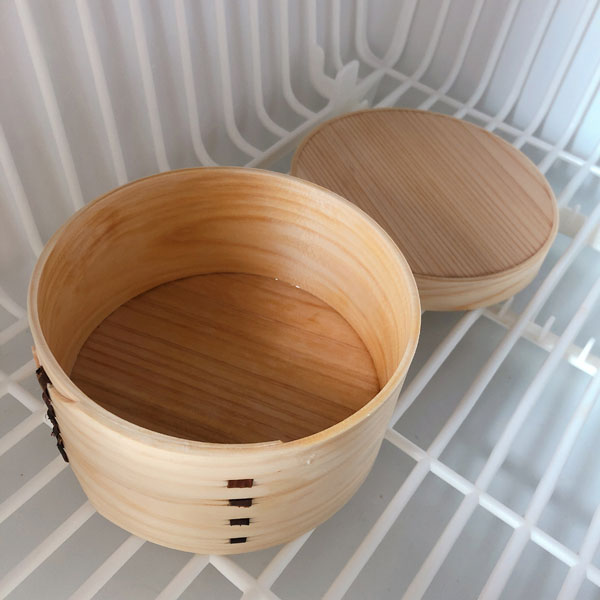
Points for Use
・After finishing your meal, avoid synthetic detergents. Use a palm-fiber scrub brush or similar to thoroughly clean off any residue.
・After rinsing, dry it in the shade in a well-ventilated place away from direct sunlight, making sure it dries completely.
・If wood resin appears, wipe it off with ethanol.
・Spray with disinfectant alcohol to prevent discoloration and mold before they start.
From the Editorial Team: A Wish List for Bento-Making
Now that Staff Member M has gotten her hands on the Yamaichi Kuwa Round Bento Box (cherry bark-fastened) and is more enthusiastic than ever about her bento-making routine, it seems there's still plenty she'd like to add to her collection. When it comes to kitchen items you want to treasure, it's nice to gradually gather good-quality pieces one at a time. Let's take a peek at a bit of the staff's wish list to finish things off.
A Masterpiece Loved by Professionals Everywhere: Tamagoyaki Pan, Kanto Type / Nakamura Doki Seisakusho
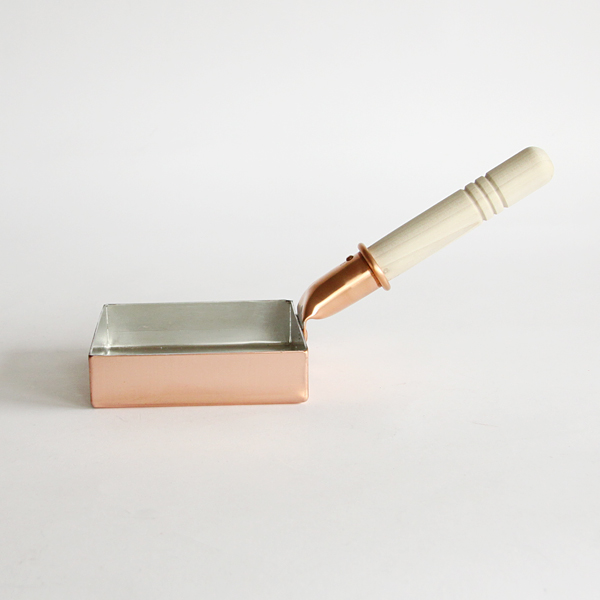
Copper pots carry a strong impression of being "a professional's tool," making them something to aspire to owning. Thanks to its excellent heat conductivity, copper is well-suited to making tamagoyaki, where subtle differences in heat control directly affect the flavor. The one chosen this time is labeled the "Kanto type," and we offer both the square Kanto type and the rectangular Kansai type.

The reason tamagoyaki pans differ in shape between Kanto and Kansai comes down to the differences in the tamagoyaki itself. Kanto-style tamagoyaki has a rich, sweet flavor and is rolled thick with a bit of browning. Since plenty of egg is used, and ingredients like eel or conger eel are sometimes rolled in, or it's made into datemaki, the Kanto type is recommended for making thicker rolls. Kansai-style tamagoyaki, on the other hand, prizes a delicate, jiggly texture like dashimaki, so the egg is spread thin and flipped many times. That's why the elongated shape is easier to flip and more practical to use.
【Staff Checkpoints】
・Wanting a coveted copper pot. (Having tried all sorts of pans, copper still comes out on top.)
・Since heat control is so crucial for tamagoyaki, something with excellent heat conductivity is just right.
・The fact that tin replating and wooden handle replacement are available (for a fee).
Beautiful Serving, Too: Azumaya Miyajima (Rice Paddle) / Azumaya
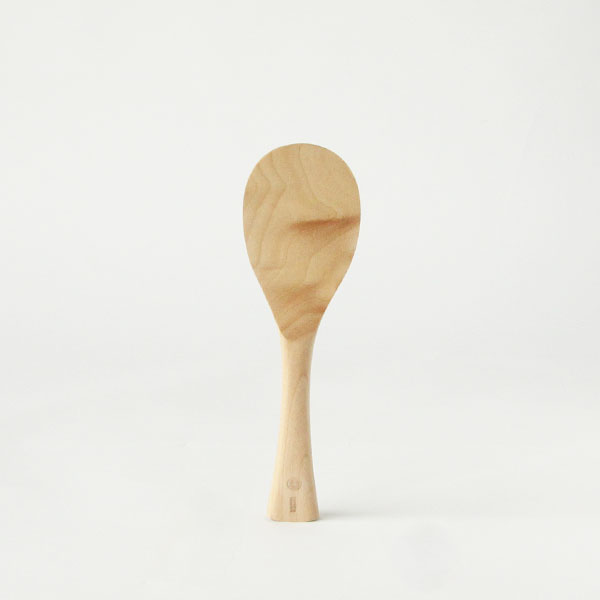
When transferring freshly cooked rice into an ohitsu or bento box, I've always felt that a wooden rice paddle would be gentler on both the rice and the eye, though I had lingering doubts about how practical it would actually be. The key feature of this Azumaya rice paddle is its flat bottom, which lets it stand upright on its own. Smooth enough to make you want to press it against your cheek, it's an unfinished piece carefully selected from domestic natural wood chosen for its beautiful grain. Its soft, exquisitely balanced form is truly lovely.
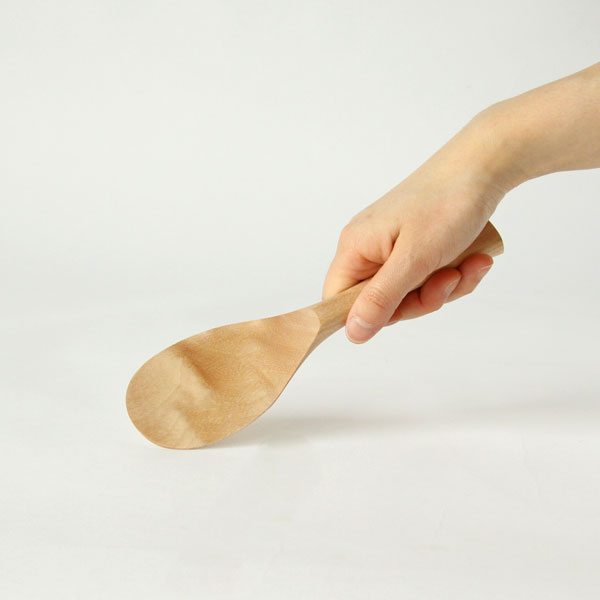
Soaking a wooden rice paddle in water while the rice cooks helps reduce sticking. When serving rice, scoop it gently without pressing it down, letting excess moisture escape so you can enjoy rice that's just the right amount of fluffy.
【Staff Checkpoints】
・A wooden rice paddle that's kind to both the rice and the eye when transferring it from the rice cooker to an ohitsu or bento box.
・A simple form that also stands on its own.
Keeping the Fridge Neat and Tidy: White Series Rectangle Deep Type / Noda Horo
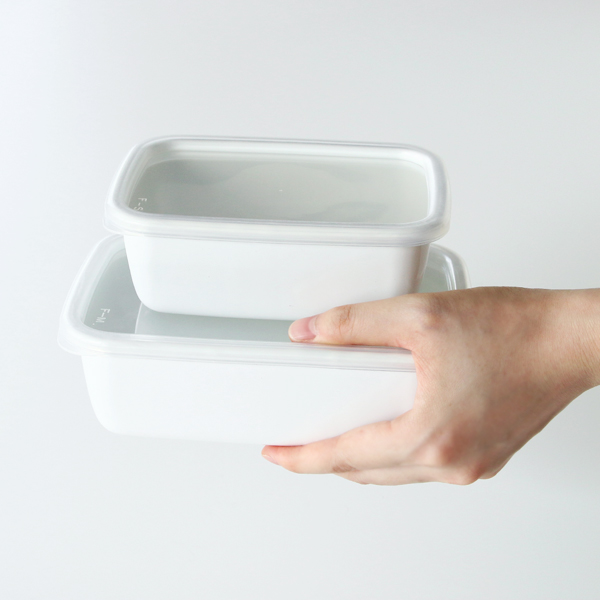
This Noda Horo series is perfect for prepping and storing meals in advance for bento. The rectangular container comes with a seal-type lid, and its thoroughly simple design makes it excellent to use as a practical tool. Because the body is made of glass-like enamel, bacteria have a hard time growing, and odor transfer is greatly reduced as well. Food stays fresh longer, making it a great asset for make-ahead storage.
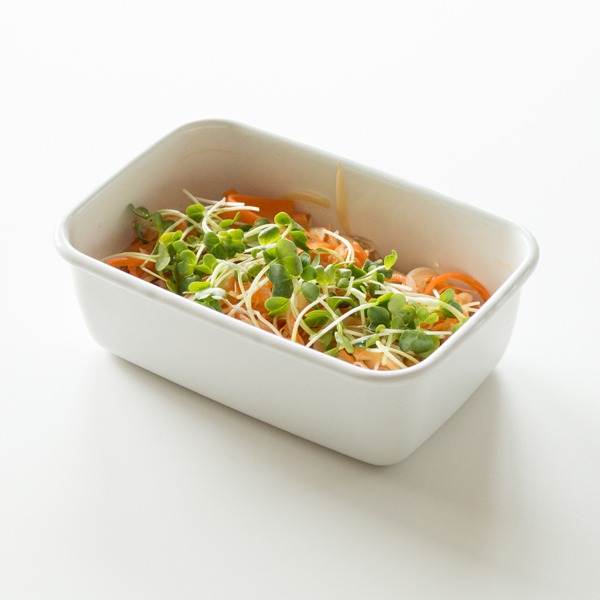
Since I often prepare food ahead on the weekend and store it for a while, I'd rather avoid plastic containers that tend to pick up color and odors. Being able to stack them and easily wash them are also strong points, keeping the inside of the fridge neat and tidy. I'd like to use masking tape labeled with things like "simmered dishes" or "spinach ohitashi," the way cooking experts often do.
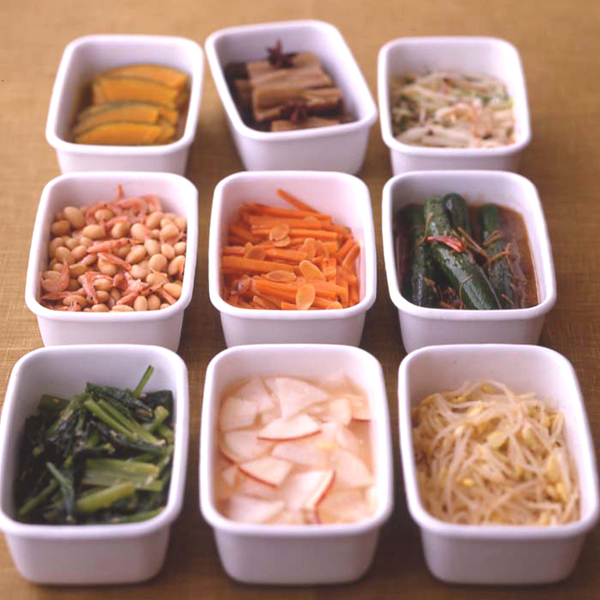
>> Browse the Noda Horo series here
【Staff Checkpoints】
・Something that won't take on odors or colors
・A clean, tidy look that keeps the inside of the fridge from feeling cluttered
Good items that make you want to use them for a long time enrich not just the eye but the heart as well. Because you want to treat them with care, it's also worth considering changing containers depending on their use or what you're putting inside. ZUTTO carries a range of bento boxes you can love for years to come, so it's fun just imagining what you might pick up next. Even when you're worn out from the daily grind, if you can enjoy lunch with your favorite companion during that moment of respite, you can find the motivation to get through the afternoon.
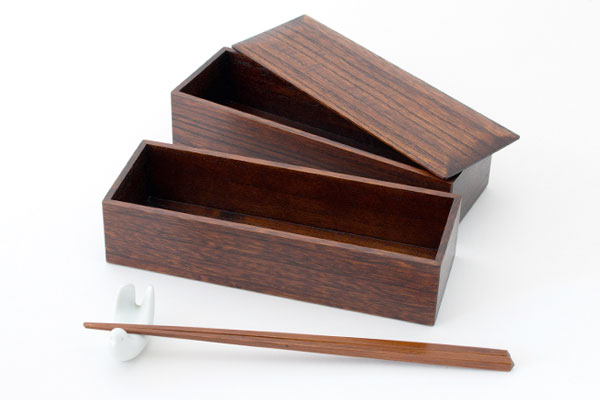
▽Available Now: Bento Boxes to Add to Your Collection This Autumn
GUIDE »
CATEGORIES »
- + Gifts by recipient
- + Gifts by scene
- + Clothing
- + Bags / Backpacks
- + Wallets / Card cases
- + Jewelry
- + Shoes
- + Rainy day outfits
- + Kitchen
- + Home
- + Babies / Kids
- + Japanese products
Earn Miles


Payment & Security