.webp)


.webp)


.webp)


.webp)


Welcome to ZUTTO
Free shipping for newsletter subscribers (some areas excluded)
- トップページ/
- ZUTTO Journal/
- 選び方・使い方/
- Your First Katsuo...

Your First Katsuobushi Shaver: How Do You Use It?
Do you shave your own katsuobushi?
Katsuobushi (dried, smoked bonito) is indispensable to Japanese cooking. Light and fluffy, with a comforting aroma, it's used to make dashi for soups, or sprinkled over cold tofu and spinach ohitashi.
These days, most households probably rely on pre-packaged, portioned katsuobushi flakes, but not so long ago, every home had a katsuobushi shaver. People would shave hon-katsuobushi—whole bonito fillets that have been steamed and dried—right before using it in their cooking.
This feature introduces how to use one of these katsuobushi shavers. Freshly shaved katsuobushi is surprisingly fragrant, and dishes made with it taste wonderfully of the ingredients themselves, even with the simplest seasoning.
Getting Started with Daiya's Katsuobushi Shaver

This time, we're using a katsuobushi shaver from Daiya.
If you're familiar with older katsuobushi shavers, Daiya's version will surprise you with its compact size. The secret lies in a design that departs from the traditional "drawer-style" shaver. Instead of the shaved katsuobushi falling into a drawer that you then pull out to retrieve it, this shaver has a structure where the blade section simply sits on top of the tray below. Wanting to create a katsuobushi shaver suited to modern life—one that's always ready to use—Daiya broke away from conventional design. The result fits neatly into a kitchen drawer and is just the right height to use while seated at a table.
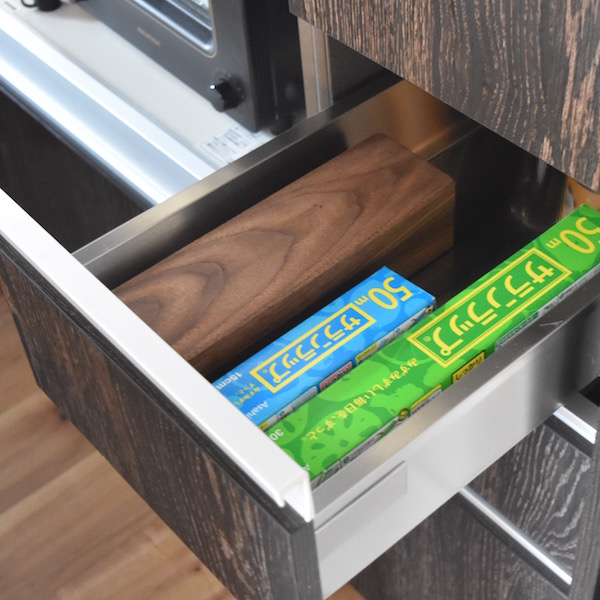
This compact size isn't just good for storage—it also makes shaving katsuobushi easier in practice. Because the shaver sits low to the ground, it's easy to press down firmly, making it simple to shave. It's also easy for children to handle, so shaving katsuobushi together with an adult as a bit of hands-on help could be a nice way to introduce kids to food education.
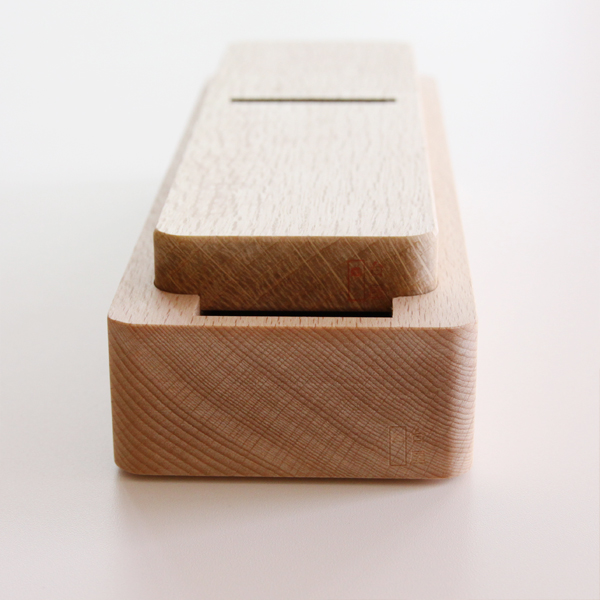
Two types of wood are available: walnut and beech. (The image above shows beech.)
Rather than kiri (paulownia wood), which is common in katsuobushi shavers, this one uses materials like walnut and beech—a choice that fits well with modern homes and dining tables.
The brand Daiya is made by Yamaya Seisakusho, a company in Sanjo City, Niigata Prefecture, that has been making kanna (carpenter's planes) since 1946. As the appeal of washoku (Japanese cuisine) has been reconsidered in recent years, Yamaya wanted to create something that would be useful in everyday life for ordinary people—and that's how this katsuobushi shaver came to be. The heart of any katsuobushi shaver is its blade, the kanna. Since professionals in blade-making craft this shaver, every unit is test-shaved before shipping, so you can start using it right away without needing to make any adjustments once it arrives.
Let's Actually Try the Katsuobushi Shaver

Now, let's actually shave some katsuobushi using Daiya's katsuobushi shaver.
1. Wipe the surface of the hon-katsuobushi

The surface of hon-katsuobushi is covered with a beneficial mold. It's perfectly fine to eat, but wipe it off with a paper towel or dry cloth before shaving.
2. Check which direction to shave

Hon-katsuobushi has a "head and tail" orientation. Always shave from the head side. You can technically eat it if you shave from the tail side, but the flakes won't curl nicely and will turn into powder instead.
3. Tips on how to hold it
Hold the hon-katsuobushi at a slight upright angle. This makes it easier to grip, and easier to shave even as the piece gets smaller.
4. Press down firmly and shave straight through with momentum

Press down firmly and shave straight through with momentum. At first, since the hon-katsuobushi doesn't yet have a shaved surface, it can be a bit difficult to shave and tends to turn into powder—but as the surface gradually forms, you'll get lovely curled flakes.
The underside of the shaver has a non-slip surface, so you can press down with confidence, but be sure to hold the shaver firmly in place with your other hand.

Left: Katsuobushi right after starting to shave—still powdery. Right: Once the surface has formed, the katsuobushi becomes light, fluffy, and curled.
*Hon-katsuobushi is sold separately. It is not included with the katsuobushi shaver, so please purchase it on your own.
*Once the hon-katsuobushi gets small, please wear work gloves while shaving, as it can be dangerous.
Let's Eat!
We've made light, fluffy, curled katsuobushi. First, let's try a bite of it on its own.
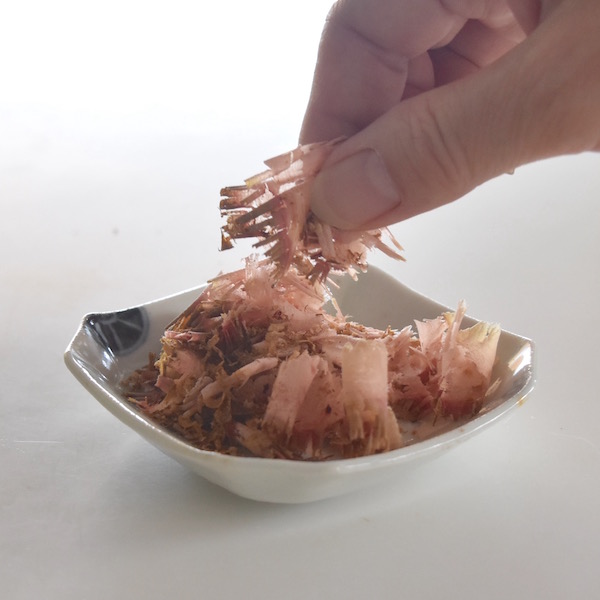

The savory umami of the bonito gently seeps out, and the aroma that rises through your nose is wonderful—it really makes you appreciate just how deep and rich katsuobushi's flavor can be.
We also tried making a few simple dishes (if you can even call them that) that make the most of katsuobushi.
・Tamago kake gohan (rice with raw egg) + katsuobushi
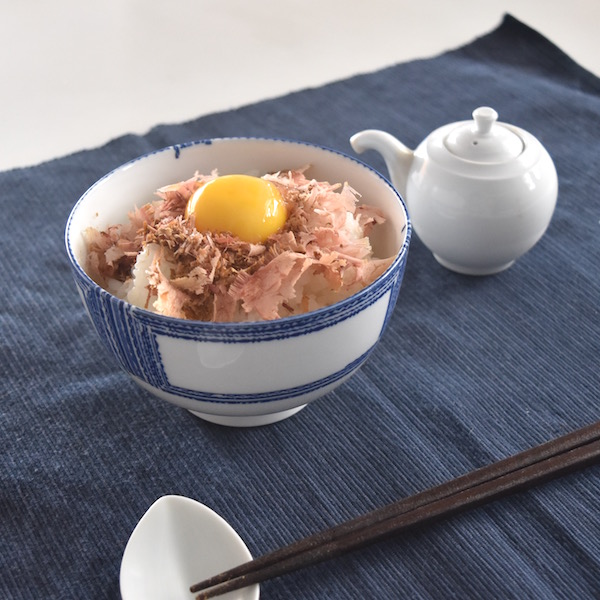
Top piping-hot, freshly cooked rice with a generous helping of katsuobushi, then crack a raw egg over it, and finish with a drizzle of soy sauce. It's hard to imagine a more delicious tamago kake gohan than this. The aroma and rich flavor of the katsuobushi hold their own against the egg without ever clashing with it, creating an exquisite balance of flavors.
・Spinach ohitashi and cold tofu
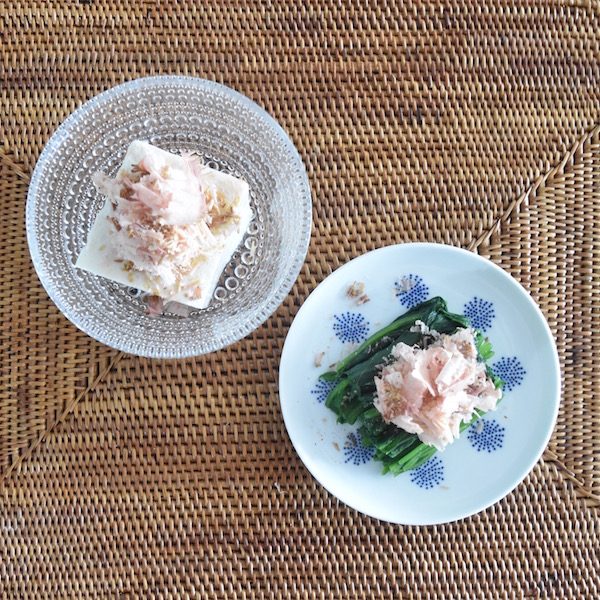
When we thought about the best ways to enjoy plenty of katsuobushi as the star of a dish, spinach ohitashi and cold tofu came to mind. Both let you fully savor the rich flavor of katsuobushi just as it is.
Beyond this, I'm also drawn to making dashi for soup, to dashi-maki tamago (rolled omelette), and to the way katsuobushi (dried bonito flakes) dance so lightly and fluffily atop okonomiyaki.
Caring for Your Katsuobushi Shaver
・Clean it with a brush

After use, brush away any leftover shavings with a brush. Please don't wash it with water, as this may cause the wood to warp.
・Use the "kamaboko kizuchi" (wooden mallet) to adjust the blade
As you continue using it over time, the way it shaves will gradually change, and the blade will need adjusting. Daiya offers a "kamaboko kizuchi" wooden mallet that makes this adjustment easy.
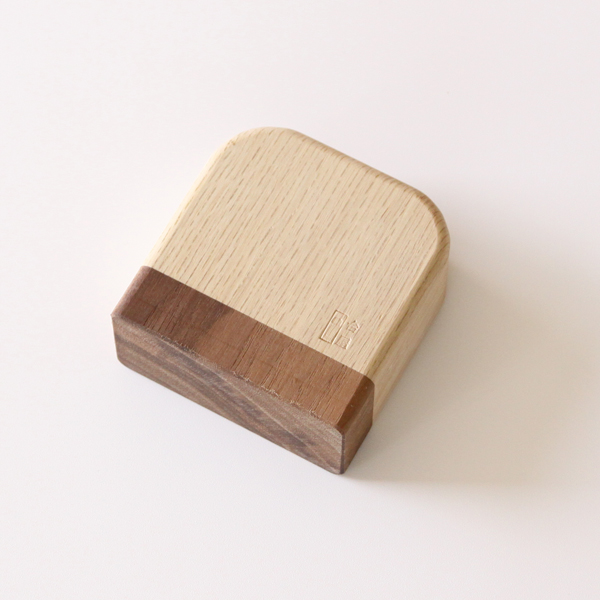
1. Extend the blade (image below)
Tap the top part of the plane blade. Extend the blade by just 0.05mm (about the thickness of a sheet of newspaper). Check the edge of the blade from various angles. (If the blade extends too far, try "3. Retract the blade" below.)
2. Check the left and right of the blade edge
When you extend the blade, it may come out at an angle. In that case, tap the side of the blade to adjust it.
3. Retract the blade
If the blade edge extends too far, tap the top part of the kanna dai (the wooden body of the plane). A light tap will retract the blade edge slightly, while a stronger tap will retract it further.
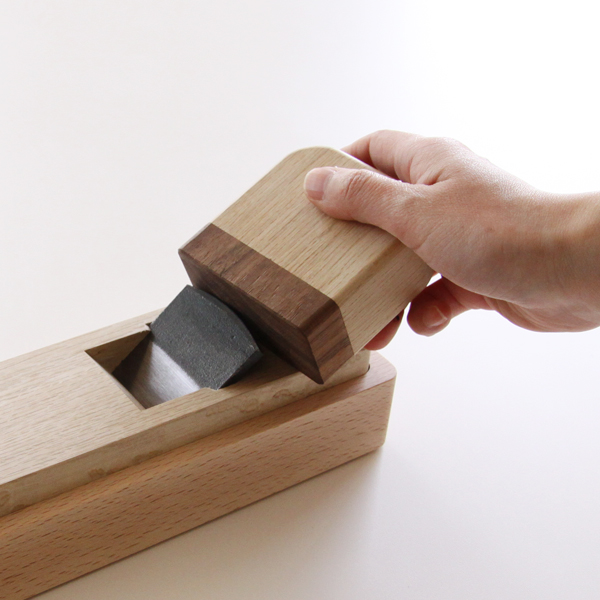
Extending the blade with the kamaboko kizuchi
・Peace of mind with maker support
If the plane blade needs sharpening or the kanna dai (wooden body) needs repair, you can send it back to Daiya, where a craftsman will carry out the maintenance—so you can use it with confidence as a tool for everyday life for years to come. (Maintenance is offered for a fee.)
・To store honkatsuobushi (whole dried bonito) partway through use, wrap it in plastic wrap and keep it in the refrigerator. (Please follow the best-by period printed on each piece of honkatsuobushi.)
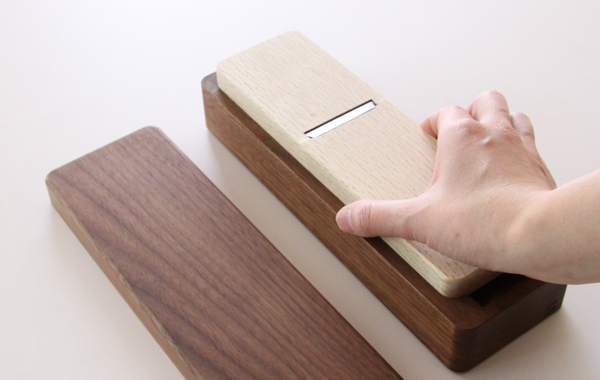
▼You'll find Daiya's katsuobushi shaver here
GUIDE »
CATEGORIES »
- + Gifts by recipient
- + Gifts by scene
- + Clothing
- + Bags / Backpacks
- + Wallets / Card cases
- + Jewelry
- + Shoes
- + Rainy day outfits
- + Kitchen
- + Home
- + Babies / Kids
- + Japanese products
Earn Miles


Payment & Security