.webp)


.webp)


.webp)


.webp)


Welcome to ZUTTO
Free shipping for newsletter subscribers (some areas excluded)
- トップページ/
- ZUTTO Journal/
- 選び方・使い方/
- Ready to wear fro...

Easy to slip on, quick to mold to your feet. The classic loafer, a mirror of fashion history
Loafers tend to conjure images of students heading to and from school. Being made of leather, you might also picture them as somewhat formal, buttoned-up footwear. But if you trace their origins back, you'll find that loafers were actually conceived as shoes meant to be worn easily and casually, day after day. Here, we introduce the background of the loafer, a shoe now beloved by people all over the world.
The loafer, where comfort meets design
A loafer refers to a shoe with a low heel that requires no laces to tie—in other words, a type of slip-on designed for ease of wear.
The prototype said to have inspired the loafer is the moccasin, worn by Native Americans in North America. Like the loafer, the moccasin is still recognized today as a fashion item in its own right. Based on the moccasin's design, a work shoe that would later evolve into the loafer was made across the Atlantic in Norway. An American shoe manufacturer that came to know this Norwegian shoe then created its own version, the "Weejun loafer" (weejun being a rendering of "Norwegian"), and this is said to be the origin of the name "loafer." It's a curious story of a single shoe style traveling back and forth between America and Norway.

The design typically associated with loafers—the slit cut into the top of the shoe—is said to have come about when an American shoe manufacturer refined the loafer's original form. This design was then adopted by other shoemakers as well: in the UK, it was taken up by royalty as indoor footwear, and elsewhere it came to be used as a work shoe. In other words, the loafer of that era was recognized as an easy-to-wear shoe that fit the foot comfortably and was well suited for walking.
Later on, maison brands began adding their own distinctive designs to the existing loafer, positioning it as a fashion item in its own right. Loafers spread in Japan when they became an essential item of the Ivy League look that was popular in the 1960s. Today, the loafer has firmly established its place both as a school shoe for students and as a fashion item. In it, we can see a distinctive history of how a shoe's role and identity can change over time.
The classic yet varied designs of the loafer
Now, there are several types of loafers. Some designs, originally conceived by a single shoe manufacturer, have since come to be worn by people all over the world. Among these many varieties, here we introduce three of the most prominent designs.
Penny Loafer

A classic loafer often worn as a student shoe, the penny loafer takes its name from the penny, the 1-cent coin, since the slit on the front of the shoe is designed to be just the right size to hold one. G.H. Bass, an American shoe manufacturer, created the penny loafer when producing the loafer style that had come over from Norway, adding fashionable flair to it beyond mere practicality. Today, the penny loafer has become the design most people picture when they think of "the loafer." Incidentally, among American students, the penny loafer was also reportedly used as a place to stash a penny for making calls from a payphone.
Bit Loafer

This next design is known as the bit loafer. "Bit" refers to a piece of horse tack, and this style features a metal fitting resembling a horse's bit attached to the upper. This form was originally devised in the 1960s by the luxury brand Gucci for men's shoes, and it became widely known and popular around the world as the "Gucci loafer." While retaining all the ease of wear that defines the loafer, the bit loafer's horse-bit motif—evoking the horseback riding enjoyed by the upper classes—has also come to be seen as something of a status symbol among fashion items. It's a loafer favored for the exquisite balance it strikes, lending a relaxed touch to an outfit while never letting the overall look become too loose.
Tassel Loafer

And finally, there's the tassel loafer, decorated with tassels on the upper. The exact origin of the tassel loafer isn't entirely clear, but as with other loafer designs, it's believed the tassels were added purely as decoration. It's thought that the design spread worldwide largely thanks to Alden, the renowned leather shoe manufacturer, which established what is now recognized as the tassel loafer. The way the tassels sway with each step gives the shoe a certain playful charm, while in America it has also been favored by lawyers and politicians alike—making it a shoe that has, in its own way, given form to new possibilities for the loafer.
Add a little flavor to your everyday outfit with loafers
Leather shoes tend to bring to mind footwear suited for business or formal occasions, but the word "loafer" itself means "idler" in English, and it's a type of slip-on designed above all for ease of wear. For that reason, we recommend wearing loafers not as formal shoes, but as an item that elevates a casual style with a touch of elegance.
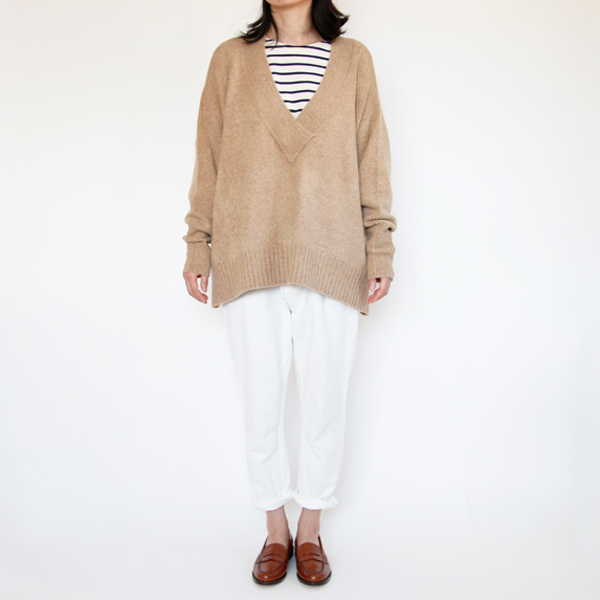
For example, simply pairing loafers with a relaxed pants style can pull your whole outfit together and give it a sharper look. This coordinate combines beige, brown, and white in a tonal palette. The simple DIEGO BELLINI Coin Loafer Brown has understated detailing, but its glossy, high-quality buffalo leather adds a touch of maturity to the look. This loafer style is recommended for anyone who feels sneakers are a little too casual.

Skirt: EASY KILT (73cm) BROWN WATCH・Bag: Shoulder Bag/D.Brown
A thoroughly traditional style really brings out the charm of loafers. Pair a tartan-checked quilted skirt with tassel loafers, and your footwear alone becomes classically styled. The DIEGO BELLINI Tassel Loafer features a design where a fringed kilt sits beneath two small tassels, creating just the right amount of flair without ever becoming too showy.

Scarf: Scarf/FUR/HOUNDSTOOTH CHECK・Skirt: Linen Swing Skirt MILITARY GREEN
Though the bit loafer has a masculine look, it can be coordinated with feminine items like skirts and scarves without feeling out of place. The DIEGO BELLINI Bit Loafer Suede has the calm, understated atmosphere characteristic of brushed suede, with the metal bit hardware providing a chic accent. Suede also pairs well with autumn and winter materials like wool sweaters, so we recommend coordinating it while keeping the balance of your whole outfit in mind.
Caring for Your Loafers So You Can Enjoy Them for Years to Come
Although loafers are designed to be worn casually, part of their appeal lies in the silhouette created by the leather material and decorative details such as tassels and bits. For this reason, maintaining that silhouette is important if you want to enjoy your loafers for a long time.

・As with any leather shoes, not just loafers, avoid putting excessive strain on them, such as stepping on the heel. We recommend always using a shoehorn when putting them on or taking them off.
・After wearing them, using a shoe keeper to help them hold their shape will allow you to keep wearing them while maintaining their beautiful form.
Brand featured: DIEGO BELLINI
Founded in 1951 in Monte San Giusto, in the Marche region of Italy—an area sometimes called the "holy land of shoemaking"—DIEGO BELLINI is a factory that has continued making shoes ranging from school shoes to men's moccasins for over 60 years since its founding. With a long track record of producing shoes as a factory for prestigious Italian maison brands such as Gucci and Pacciotti, the brand has built a reputation as a staple in women's fashion. Each pair is handmade based on lasts designed to make the foot look beautiful, resulting in shoes that are easy to wear and comfortable.
▽Browse DIEGO BELLINI products here

GUIDE »
CATEGORIES »
- + Gifts by recipient
- + Gifts by scene
- + Clothing
- + Bags / Backpacks
- + Wallets / Card cases
- + Jewelry
- + Shoes
- + Rainy day outfits
- + Kitchen
- + Home
- + Babies / Kids
- + Japanese products
Earn Miles


Payment & Security