.webp)


.webp)


.webp)


.webp)


Welcome to ZUTTO
Free shipping for newsletter subscribers (some areas excluded)
- トップページ/
- ZUTTO Journal/
- 選び方・使い方/
- How Tableware and...

Everyday home cooking changes with your choice of dishware and plating
Mealtime is something everyone has, without fail, every single day. As the number of meals you cook at home increases, your recipes can gradually fall into a routine, and when work or the kids keep you busy, many people find themselves seeking ways to save time and become more efficient. Even so, meals remain a precious time—a chance to savor the taste of food, think about your own health, and enjoy conversation with family.
What we'd like to suggest for home cooking that tends to fall into a rut is a simple approach to choosing dishware and plating your food. Just by slightly changing the dishware and how you arrange your dishes, your cooking will look even more delicious, and mealtime will become something to look forward to each day.
Try switching up your dishware

Chopstick rest: Gosai Hyotan Chopstick Rest, Set of 5
Placemat: Yotsume-ami Woven Placemat
If you think of the food as the star, then the dishware is its backdrop.
For example, a simple white porcelain plate goes well with almost any dish, giving a clean, tidy impression, so it's understandably practical to use. On the other hand, white alone can somehow feel a bit lacking, and if you use the same dishware for both Japanese and Western dishes, you may end up with the impression that everything is "always the same," even though the dishes themselves are different.
The grilled salmon in the photo looks delicious, but the plate seems to have too much empty space, giving an impression that it's a bit plain and something is missing.

So, we tried using a smaller plate in a bright color for the same dish. The vivid warm tones of Miyamoto Taizando's Aka Komon small plate match beautifully with the colors of the grilled salmon and pickled radish. Simply switching to a plate with distinctive coloring transforms the table into something festive and celebratory. Using a smaller plate also has the visual effect of making the grilled salmon look even more substantial. The Aka Komon small plate is a size that works well as an everyday individual serving plate.
Do Western dishes pair well with Japanese-style dishware?
By the way, how do you sort and use the dishware you already own? In addition to considering whether a dish is a main course, a side dish, or a soup, whether the food you're making is Japanese, Western, or a fusion of both is also a good criterion for choosing dishware. Making these distinctions leads to a richer variety of dishes, and increases the enjoyment of using your dishware. At the same time, when you try using a piece of dishware you associate with one particular type of food for something different, you may discover, surprisingly, that it fits well.

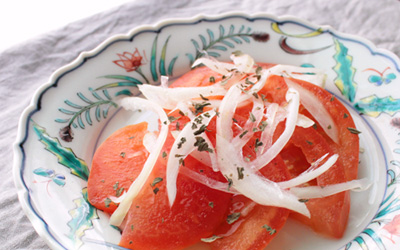
Nodoka Mon Japanese-Style Plate
Miyamoto Taizando's Nodoka Mon Japanese-style plate is a piece of Kutani ware introduced here as a Japanese-style plate, but its modern painted design pairs well with a wide variety of dishes. The lush plant motifs go perfectly with vegetables. Beyond Japanese side dishes, it's also wonderful for serving fresh tomato salad or prosciutto, giving your dishes a fresh, vibrant finish.
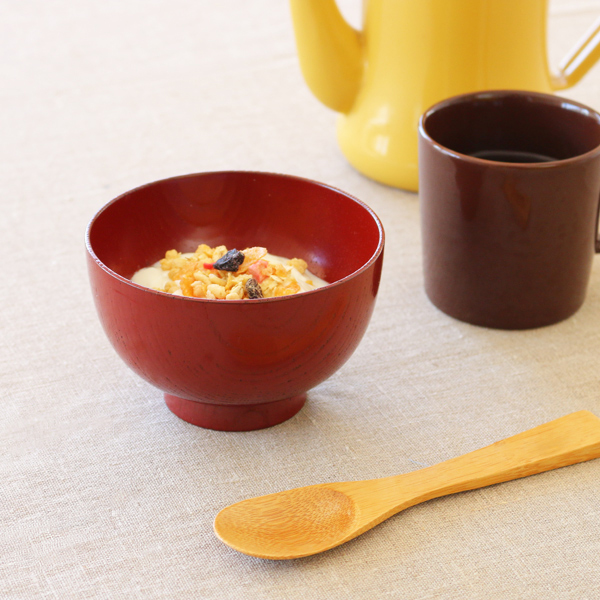
Keyaki Long Life Soup Bowl, Vermillion
Kihachi Kobo's Long Life soup bowl is intended for miso soup and other soups, but it's also handy as a dish for serving yogurt or fruit. This glossy urushi (Japanese lacquer)-coated bowl looks like a traditional Japanese soup bowl when filled with miso soup, yet takes on a completely different impression when used for another dish. We recommend experimenting to see which dishware suits which food.
Placing a small bowl on top
We tend to think of tableware as something you set individually on the table, but placing one dish on top of another creates a table setting with an entirely different atmosphere. A small bowl that's easy to handle is recommended for this.

If you place a small bowl on top of your main plate, even a side dish can look like a main course. It allows you to serve small side dishes without mixing their flavors together, increasing the variety of items you eat and making for a nutritionally well-rounded meal. It looks appetizing and is good for your health too. Since preparing many different dishes can be a lot of work, this is a method we'd recommend trying on a weekend when you have some extra time.

The Goyo mini glass set used here as small bowls has some thickness and a stem base, so the glasses sit stably even on top of a plate. Although they were originally made as ochoko (sake cups), a nice touch is that the vividly colored glass makes the food look even more delicious. It's also fun to choose which glass to use depending on what you've cooked.
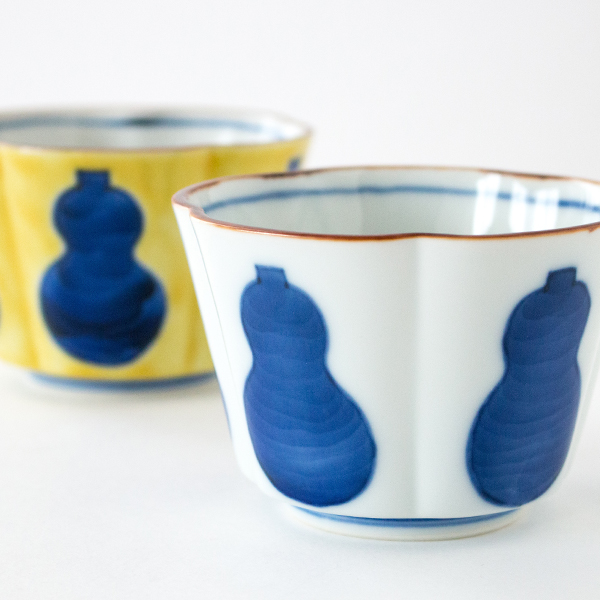
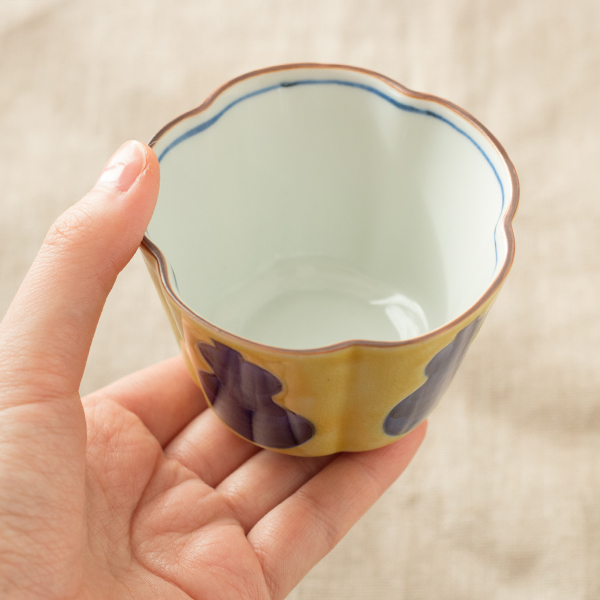
Small Bowl, Plum Blossom Shape
This plum blossom-shaped small bowl from Kamide Choemon Gama has more depth, so you can confidently use it for side dishes with liquid content. In addition to its warm, auspicious gourd pattern, it forms the shape of a plum blossom when viewed from above, making it look attractive when food is served in it. It's a handy piece of dishware not only as a small bowl but also as a container for soba dipping sauce.
Try a one-plate meal
We've introduced ways to switch up your tableware or use small bowls, but if you're looking for an even simpler approach, we recommend "one-plate meals." Serving an entire single-person meal on one plate naturally cuts down on the number of dishes to wash, making cleanup a breeze. Since you can't pile on generous portions, this method is also great for those wanting to keep their meal size a bit more modest.

One-plate meals are convenient for breakfast or lunch at home. Arrange a main dish alongside some sides, and it can look just as stylish as something you'd order at a café.
For one-plate meals, it helps to use a piece with plenty of surface area and a shallow shape. The Kakudo Dish from Takahashi Kougei (Takahashi Kogei) is carved from natural walnut wood and finished with oil, so it resists stains—even sauces won't be a worry. Its color pairs beautifully with greens and toast, making it a great choice for a breakfast plate as well.
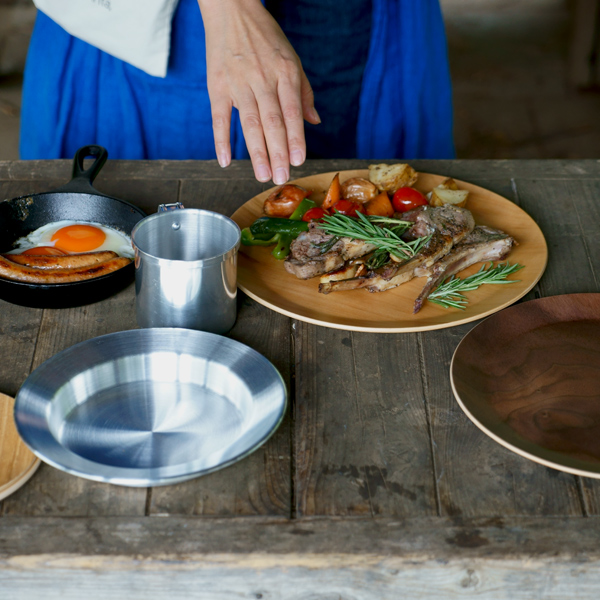
The flat rim plate from GOLD CRAFT, made using a plywood technique of thinly slicing wood and layering it together, is also perfect for one-plate meals. It's extremely lightweight and easy to handle, and since the plates stack for storage, it's nice to have a set for the whole family.
An Easy Change with Placemats
Beyond the tableware we've introduced so far, placemats are another handy way to bring freshness to your table. Simply laying one down is all it takes—they protect your dishes from knocking against the table and also help guard against stains on the tabletop. Why not gather a few different ones and switch them out day to day, depending on your mood?

SAFARI Placemat Set of 3 Rouge/Marine/Blanc
The placemats from ONA-TISS are made using the Basque linen weaving method, giving them a sturdy cotton construction. Slightly larger than average, they feature a stripe down the center as an accent. This fabric grows softer and more pleasant to the touch with every wash.

Yotsume-ami (four-eyed weave) Placemat
The placemat from Kochosai Kosuga is woven from thin strips of bamboo into a yotsume-ami (four-eyed weave) design. Remarkably light and flexible, it pairs especially well with Japanese cuisine. Thanks to its urethane coating, it resists stains and can be conveniently wiped clean with a cloth.

The placemat from TRICOTÉ has a pop, almost painting-like quality. Unusually for a placemat, it's made from a knit fabric, but a water-repellent treatment means that even if you spill something, a quick wipe will take care of it. It's perfect for meals where you want to add a touch of color.
▽From tableware to table accessories. Browse our kitchen goods here
GUIDE »
CATEGORIES »
- + Gifts by recipient
- + Gifts by scene
- + Clothing
- + Bags / Backpacks
- + Wallets / Card cases
- + Jewelry
- + Shoes
- + Rainy day outfits
- + Kitchen
- + Home
- + Babies / Kids
- + Japanese products
Earn Miles


Payment & Security