


.webp)


.webp)


.webp)


.webp)


Welcome to ZUTTO
Free shipping for newsletter subscribers (some areas excluded)
- トップページ/
- ZUTTO Journal/
- 選び方・使い方/
- A Knife That Chan...
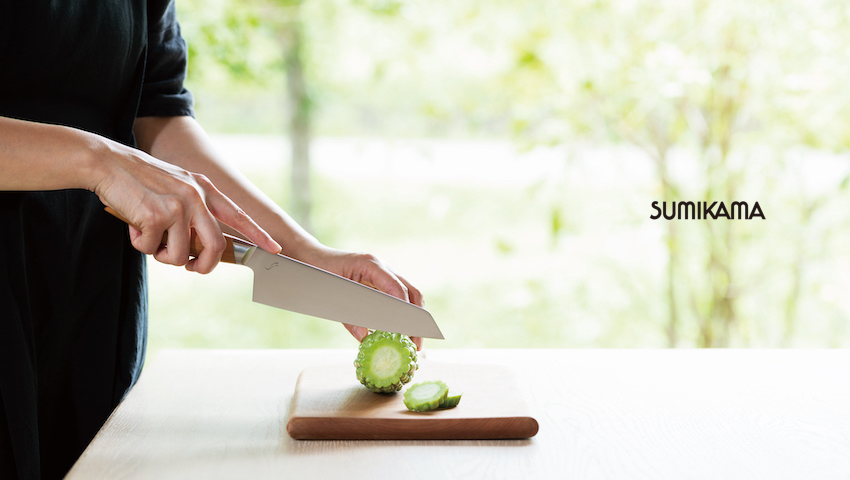
A knife that changes how you feel about cooking. Sumikama's bread knife and bunka knife, loved by our staff
Cooking is a daily task, so on days when you're not feeling motivated, you want tools you can rely on
Even when you don't feel like it, even when it seems like a hassle, there are many days when you have to cook for yourself or for someone else. On those days, one way to get through it is to make something that requires little effort, or to make only the things you like. But I keep thinking that it's also important, on those very days, to have "tools for living" on hand that work on your heart like good medicine and lift your spirits.
The representative tool used daily in cooking is the knife. Whatever you're making, the knife is usually the thing you pick up and use, and I once had a chef acquaintance tell me, "If there's one tool worth spending money on, it's the knife." That's probably because a knife becomes not just something functional for "cutting ingredients," but a partner that stays close to you as you cook.
Of course, sharpness and size matter, but I want to choose a knife whose presence and atmosphere are wonderful, not just its functionality. Let me introduce sumikama's kasane series, designed to fit comfortably in a woman's small hands.

The kasane knife, designed with ease of use for women in mind
Kasane is a line made for women by sumikama, a long-established maker with over 100 years of history based in Seki, Gifu Prefecture, a region known for cutlery production. Even though women are often the ones cooking at home, knife sizes are rarely designed with gender in mind, and many women have probably put up with knives that were hard to hold or hard to use as a result.
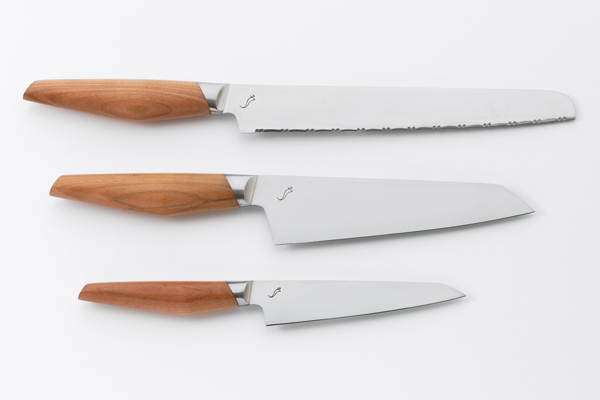
The handle, which highlights the knife's beauty, is made of smooth yamazakura (mountain cherry) wood, and is designed compact so it fits easily in a woman's hand.

The blade is a thin blade made of kinko high-carbon stainless steel, which combines excellent sharpness with strong resistance to rust. Through the maker's own "ZERO EDGE" sharpening method, it is ground down to about half the thickness of a normal knife, at 0.15mm to 0.2mm. A thinner blade means less friction against the ingredients, which is precisely why it cuts so well.
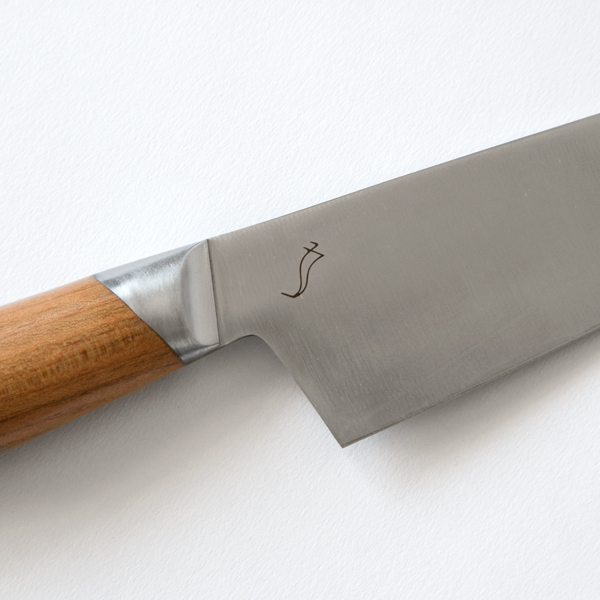
One of our staff members has fallen in love with sumikama's kasane series, using both the bread knife and the bunka knife regularly. She says she never used to be particular about knives—so what led her to pick up the kasane series?
Staff member: M, Planning Department
With children at home, she cooks for herself almost every day, though she admits she's not particularly good at it. Her motivation to cook varies from day to day—some days she wants to make something elaborate, and other days she has to cook even though she's not feeling it.
Most of her cooking tools were bought when she first got married, and she's now thinking it's about time to sort out what she needs and doesn't need, and to add kitchen items she can use and love for a long time.
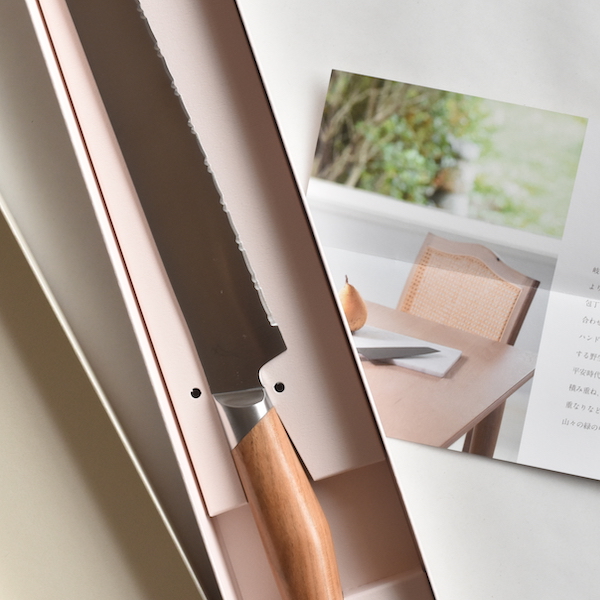
"The first sumikama knife I got was the bread knife. Before that, I'd been using a bread knife I got as a giveaway from a bakery. It wasn't exactly sharp, to put it kindly, but I didn't find it especially inconvenient either. I guess I never really thought that hard about a knife whose use was so limited—just cutting bread."
So what led you to get a new bread knife?
"One day it just occurred to me that I eat bread almost every morning. Of course I like bread, but with kids around, mornings are especially hectic, so I end up relying a lot on bread, since it's easy to prepare and works as a simple one-plate meal. Once I realized I was eating it every day, I thought I'd upgrade to a better bread knife. That was also around the time I was cooking three meals a day and spending a lot of time in the kitchen, so I think I wanted some kind of change too."
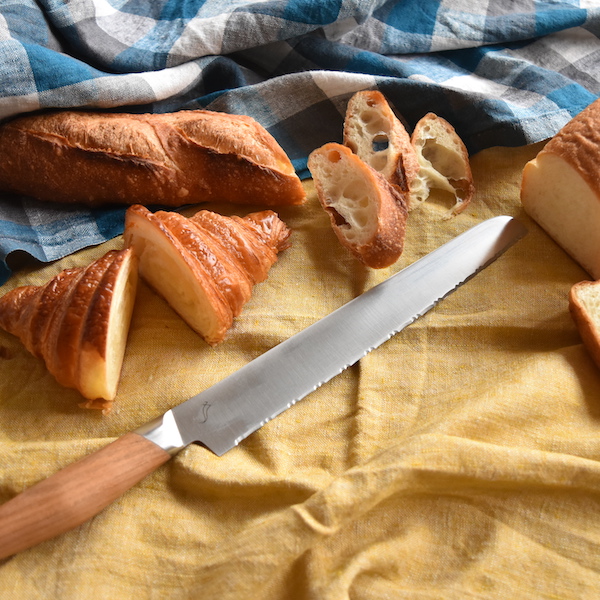
A completely different level of sharpness with the bread knife
How was it using sumikama's bread knife?
"It was completely different from the bread knife I'd been using before. First, the length was much easier to handle. I feel like bread knives tend to be unusually long, and the one I'd been using was no exception—when I measured it, the blade was 25cm. (Maybe mine was just extremely long?)"
In contrast, sumikama's bread knife has a 21cm blade. I've heard that bread knives tend to have longer blades so you can cut bread without crushing it, using the fewest strokes possible—but since sumikama's bread knife is so sharp to begin with, it seems it can cut bread just fine even at a shorter-than-usual length.
Was the feel and sharpness different when you actually cut bread with it?
"It really was surprisingly smooth—it just glides right through. Whether it's a loaf of shokupan or a baguette, it cuts in just one or two strokes, so the bread doesn't get crushed easily. And since you don't need to saw back and forth, it doesn't make much of a mess with crumbs either.
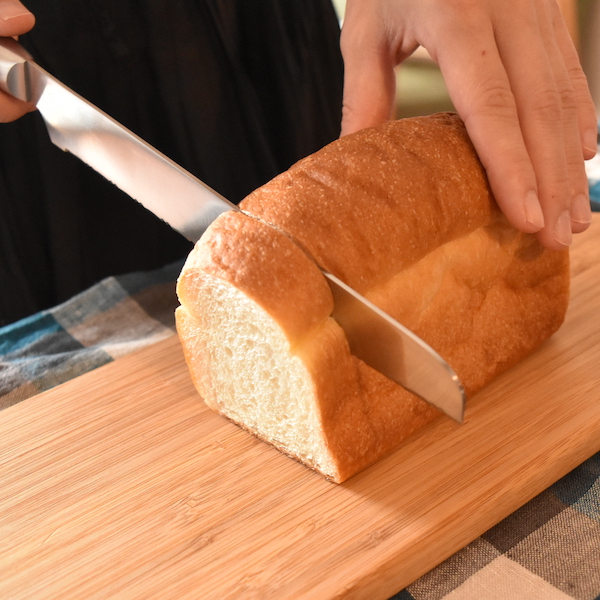
With the knife I used before, I'd have to move the blade back and forth three or four times, and I could feel it catching on the bottom crust of the shokupan. With this one, none of that happens—it glides through without any effort. It was honestly a bit of a revelation."
By alternating large and small serrations in its own unique design, the knife can be used anywhere on the loaf, cutting through everything from hard crusts to soft bread.
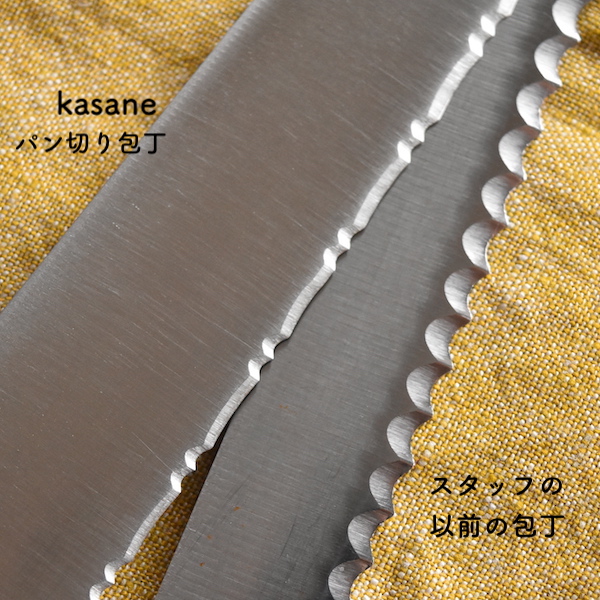
It's true that the kasane bread knife has both a serrated section and a smooth section. The knife our staff member used before had serrations running the entire length.
"It's just a feeling I have, but I think the reason it's easy to slice shokupan is related to this smooth, non-serrated part. The serrated edge creates the initial bite, and then the smooth part glides through the soft part of the bread in one clean motion. That way, you don't need to move the blade back and forth multiple times, and you get a clean cut."
However, since the blade of a bread knife has a wave pattern unlike a regular knife, she wondered how she should go about sharpening it, so we asked the maker.
The conclusion is that bread knives are basically not designed to be sharpened by the user. Since they're meant only for cutting soft foods like bread, the blade doesn't wear down much. So to make it last, you should avoid cutting anything hard other than bread, and be careful that the blade doesn't come into contact with hard objects when storing it.
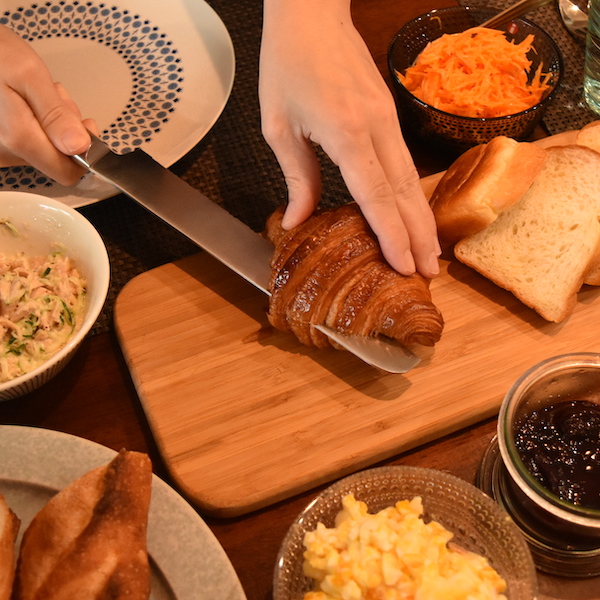
Because she wants to use her bread knife, on weekend mornings she now sets out an assortment of breads along with sandwich fillings and jam, and lets everyone slice the bread they want to eat right at the table.
A bunka bocho welcomed with high expectations
Inspired by how well the bread knife performed, staff member M went on to bring home a bunka bocho as well.
You said you had no particular complaints about the bunka bocho you were using before—so what made you decide to buy a new one?
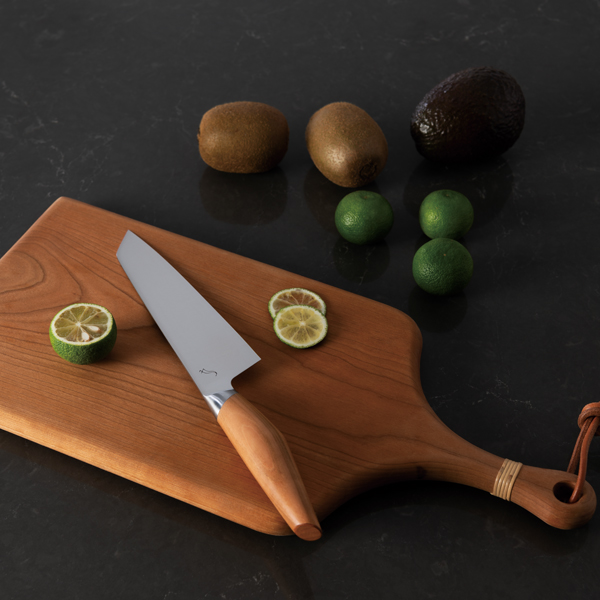
"We've been cooking as a family more often, and there were times when one main knife for cutting vegetables, meat, and fish wasn't enough. Since I already knew how good the kasane bread knife was, I had high expectations that the bunka bocho would be just as good, so I chose the same kasane series."
The bunka bocho is the first knife you need for everyday home cooking, and since it's used to cut vegetables, meat, and fish—things with an even wider range of hardness and shape than bread—I imagine how easy it is to use has a direct impact on how enjoyable and stress-free cooking feels day to day. How was your experience using it?
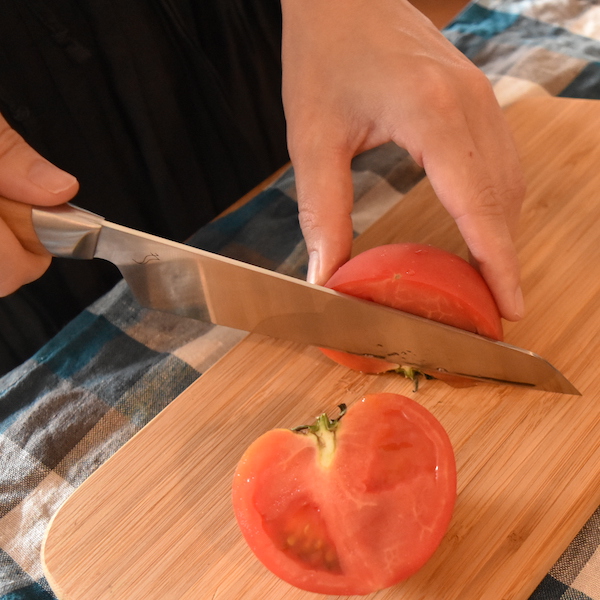
"The bunka bocho exceeded my expectations too! Just to try it out, the very first thing I cut was a tomato, and it sliced through so cleanly that I actually let out an 'ooh!' out loud. It also handles slicing firmer ingredients like carrots into thin pieces without any trouble, and I was genuinely impressed that it could cut through chicken skin in a single stroke. I always thought skin was something you had to saw through, but apparently not! (laughs)"
So the sharpness is outstanding. How does it feel to hold?
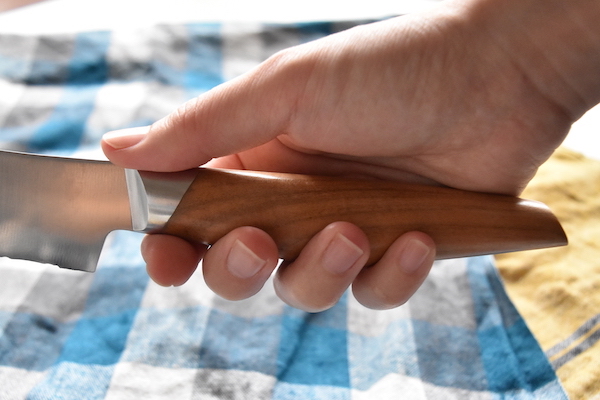
"The handle shape is the same for both the bread knife and the bunka bocho—there's a slight bulge in the middle—but I notice how well that bulge fits my hand much more clearly when using the bunka bocho, since it requires more force to cut through ingredients. My hand catches on it nicely, so it's easier to apply pressure."
What kind of care do you give it? Since the handle is wood, is there anything you're careful about?
"I make a point of wiping the knife dry right after washing it. That's not something I started doing because this kasane knife has a wooden handle—I was already doing that before. But recently, a chef I know told me that when a knife has a wooden handle, rather than washing the whole thing, it lasts longer if you only wash the blade and just wipe the handle with a damp cloth. So now I try to do that as much as possible. When it's something you really love using, that kind of care doesn't feel like much of a hassle at all—it really made me realize that it's best to use things you genuinely like."
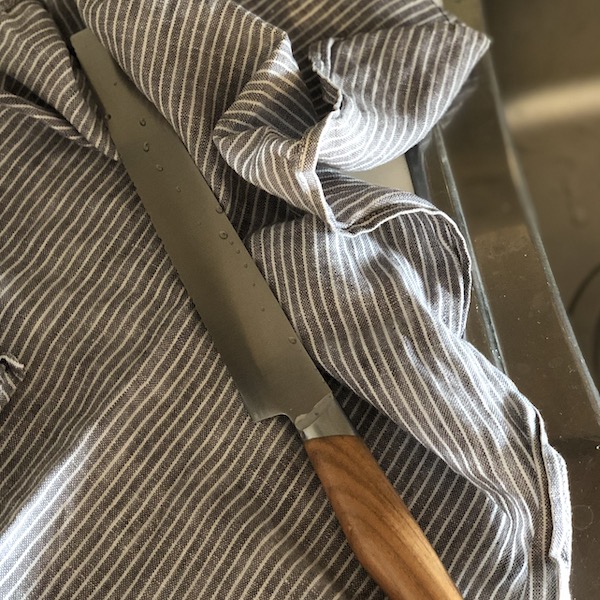
She left us with these final words.
"If you search only for 'a knife that cuts well,' I'm sure there are plenty of other great options out there. But with the kasane knives, it's not just that—I've grown attached to details you wouldn't normally pay much attention to with an ordinary knife, like how nice the plump, smooth texture of the handle feels, or how good the angle of the bunka bocho's tip is."
▼You can find the sumikama kasane series product page here.
GUIDE »
CONTENTS »
CATEGORIES »
- + Gifts by recipient
- + Gifts by scene
- + Clothing
- + Bags / Backpacks
- + Wallets / Card cases
- + Jewelry
- + Shoes
- + Rainy day outfits
- + Kitchen
- + Home
- + Babies / Kids
- + Japanese products
Earn Miles


Payment & Security




