.webp)


.webp)


.webp)


.webp)


- トップページ/
- ZUTTO Journal/
- お手入れ・エイジング/
- # My First Urushi...

A first-time report on a urushi (Japanese lacquer) bento box: why it's a great choice for those new to everyday tools
Spring is a wonderful season to start something new. April brings all kinds of fresh beginnings—kids heading back to school, people starting new jobs, and more. Amid the challenge of adjusting to new routines and unfamiliar situations, it's often our favorite everyday tools that give us the motivation to say, "Let's do our best today." Since these are things we touch every day, choosing something a little special, something we can grow attached to, is one way to make the most of a new season of life—even if it means stretching your budget just a bit.
This time, a ZUTTO staff member who is currently taking on the challenge of bento life got their hands on the Yamaichi kiri (paulownia wood) two-tier bento box and put it to the test. Here's a report on its usability, along with a few points worth keeping in mind.

A light and easy-to-handle urushi bento box
What I chose was Yamaichi's urushi-coated kiri two-tier bento box. Its capacity is 900ml, generous enough to satisfy energetic junior high and high school boys as well as grown men. Used as a single tier, it holds 450ml, making it just right for women as well.

It's a warm, wooden bento box, the kind you might find quietly tucked away in a small shop filled with lovely craftwork. Its slim shape fits easily into a commuter bag or tote, and the beautiful sheen of the urushi combined with the natural wood grain makes for an exquisite piece. Holding it in your hands, you're struck by just how light it is—far lighter than the substantial, dignified look of a proper [everyday tool] would suggest.

Made with natural kiri wood and carefully crafted by hand by skilled artisans, each piece has its own individual character—something mass-produced items simply can't offer, and part of what makes it so endearing.
The appeal of a wooden bento box lies in how beautifully it shows off the colors of your rice and side dishes. This particular box goes even further, combining the lightness and heat-retaining qualities unique to kiri with the durability and antibacterial properties that come from its urushi coating. It's not just about good looks—that's part of what makes it so popular.
◆Kiri Bento Box Report 1: First Impressions and Size

Here's how it compares in size to a typical stainless steel bento box (670ml).
Despite its slim appearance, it holds a surprising 900ml—plenty to satisfy hungry junior high and high school boys, or even grown men, with a full and hearty meal. Because it's narrow in depth, it doesn't take up much space and slips easily into a commuter bag. If your bag can hold it upright, you can skip the separate lunch bag altogether and cut down on what you carry to work—a nice bonus.

▲Being slim, its capacity comes from its height instead.

My first impression was simply how light it is! Given the dignified, weighty presence that urushi tends to have, I braced myself a little before picking it up—only to be caught off guard by how light it actually was. At around 125g, it's roughly the weight of a small banana.
On days when I make bento, I naturally plan to carry it around, and with something this light, it barely adds to the load—it's almost as if you're only carrying the weight of the food inside. Since commuting and school often already mean carrying heavy things like documents, textbooks, laptops, or tablets, I wanted to lighten the load wherever I could, and this lightness turned out to be one of the deciding factors.

▲Being slim, it fits neatly into most tote bags and business bags. Since it isn't very thick, it does have some length as a rectangle, so a larger bento wrapping cloth works best. (My own 42×42cm handkerchief was just barely enough, so I'd recommend something a bit bigger.)
Another deciding factor was how easy urushi is to handle. I had long admired wooden bento boxes for how they keep even cold rice tasting fluffy, but I'd always avoided them, assuming the upkeep would be too troublesome. However, urushi-coated boxes resist stains and discoloration, and the antibacterial properties of urushi also help keep the contents from spoiling—so if I was going to choose my first wooden bento box, I'd already decided it had to be urushi-coated.

Stainless steel and plastic bento boxes each have their own strengths, but the natural wisdom behind urushi's antibacterial properties is something those materials simply don't offer. With this kiri bento box, the natural kiri wood is coated with fuki-urushi (wiped lacquer) six times over, which not only brings out urushi's antibacterial qualities but also makes the box easier to care for and more durable—well suited to everyday use. Solid wood boxes and magewappa (bentwood) containers require a bit of know-how to maintain properly, so this is a box I'd recommend to anyone who finds that intimidating.
It was precisely this ease of handling that made urushi feel approachable even for a beginner like me, and that's why I chose it as I took on the challenge of building a proper bento routine.
It doesn't have the rich, full wood fragrance you'd get from a hinoki (Japanese cypress) wappa box, but if you take a good sniff, you can catch a faint, gentle scent of wood and urushi. With very little of its own flavor to interfere, it's an easy box to use on days when you want to fully enjoy the taste of your food—especially handy for those who normally use plastic bento boxes.
◆Kiri Bento Box Report 2: What happens when you actually pack it?
The bento box I'd been using until now held 500ml, but this kiri two-tier box lets you choose between 450ml as a single tier or 900ml as two tiers. I decided to actually test out how much it holds.

Let's try packing one bowl's worth of rice into the bento box.

Just under two-thirds of the bento box was filled.
When we cooked one gō (about 180ml) of rice and tried filling one tier, we found that three-quarters of a gō fit into a single tier. Perhaps thanks to the power of a wooden bento box, even plain rice on its own looked delicious.
On busy mornings when there's no time for an elaborate bento, we tend to throw together last night's leftovers or toss in some frozen food to save time. But no matter what you put in it, the Bento Box Kiri Two-Tier has a charm that makes everything look vibrant and appetizing.

Our actual impression after packing it was... lovely!
I've never been confident in arranging bento contents, and I usually end up taking side dishes out and putting them back in.
But with the Bento Box Kiri Two-Tier, the narrow, elongated shape naturally suggests where and in what orientation each side dish should go, given its size. This let me fill it up one after another without hesitation, and everything ended up looking nicely balanced—which made me happy.
I had been using a 500ml bento box until now, but I found that a single 450ml tier is just the right size for a woman's lunch—not too little at all. On days when you want to eat a bit more, it might be nice to bring along a small extra container of vegetables or fruit.
Please note that if you use it as a single tier, you'll need to prepare a separate band to hold the lid in place.

▲For carrying liquids on top of this, the Glass Lunch Pot also comes in handy.
The slim shape of the bento box also lends itself nicely to arranging cute little onigiri.

What struck me most when I actually ate from it was how delicious the rice tasted! There was no trace of any kiri (paulownia wood) or urushi (Japanese lacquer) smell, and I could fully enjoy the fluffy, delicious rice that only a wooden bento box can offer, even cold. Microwaving isn't allowed, but the rice was so tasty that I didn't even feel the need to warm it up. As the weather turns warmer, be sure to bring along a cooling pack too.
Magewappa Living Report 3: Does the color of food transfer onto the box? What should I watch out for?
This is a bento from another day. Having heard that color staining is less of a concern compared to solid, unfinished wood, I decided to be bold and try omurice (omelette rice).

With a plain wooden bento box, ketchup and sauces can be a bit worrying, but thanks to the fuki-urushi (wiped-lacquer) finish, there's no need to worry here.
Urushi is said not only to make stains from colorful foods less noticeable, but also to be resistant to both acid and alkali and to have antibacterial properties. It's easier to handle than plain, unfinished wood, and being able to pack a wider variety of foods is a real plus.
After eating, you can wash it with a soft sponge and neutral detergent, which offers extra peace of mind. If you're still concerned, lining the bottom with cooking sheet or wax paper is also a good idea.

Two Points to Keep in Mind When Handling Your Bento Box
1. Don't put food in while it's still hot or wet.
Wood is sensitive to heat, so putting hot food in it can cause warping or cracking—please be careful.
Also, since there's no rubber packing/seal, putting in anything with moisture can cause leaks if the box is tilted on its side.
2. Is it okay to put in fried foods or vinegared dishes?
Since staining is less noticeable than with plain, unfinished wood, there's no problem putting these in directly. If you'd like to be extra careful, lining the box with wax paper will make stains even less noticeable.

◆Kiri Bento Box Report 4: How Should I Care for It After Eating?
Since it requires no special care, the Bento Box Kiri Two-Tier by Yamaichi is a great recommendation even for those trying a wooden bento box for the first time.
By avoiding the following basic no-nos, you can extend its lifespan and enjoy using it with care for years to come.
【Things to Avoid with Your Bento Box】
・Do not put in food that hasn't cooled down enough
Wood is sensitive to heat, and this can lead to cracking or damage. Fried foods in particular tend to be very hot, so please be careful. We recommend letting anything too hot cool down first before packing it in.
・Do not use in a microwave or oven
This is for the same reason—sensitivity to heat. This is a bento box where the rice tastes delicious even cold.
・Do not use in a dishwasher, or with hard scrubbing brushes, cleansers, or bleach
These can cause the fuki-urushi finish to wear away or chip, shortening the box's lifespan. Please wash it gently with a soft sponge and neutral detergent, wipe away moisture, and let it dry in the shade.
・Do not dry it in direct sunlight
This can cause excessive drying and cracking. Simply wiping away moisture and letting it air dry is enough.
▼Product Page Here

From the Editorial Team: Our Bento-Making Wish List
A Masterpiece Beloved by Professionals: Tamagoyaki Pan, Kansai Style / Nakamura Doki Seisakusho
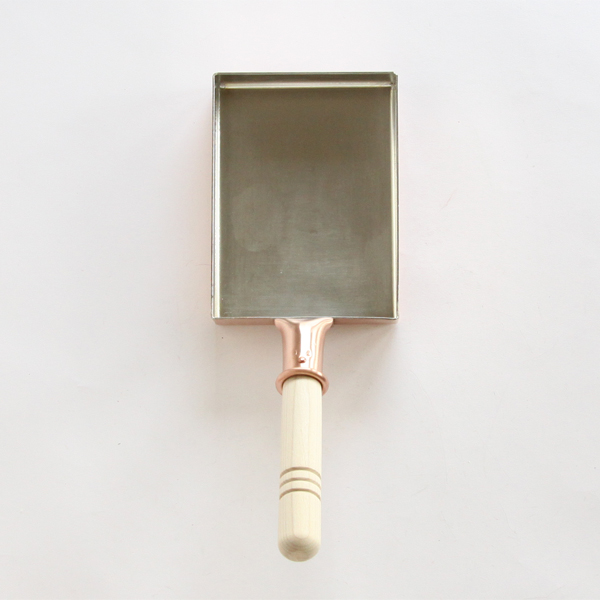
Copper pans have a strong image as "professional tools," making them something to aspire to own. Copper conducts heat exceptionally well, which makes it well suited to making tamagoyaki (Japanese rolled omelet), a dish where subtle adjustments to heat directly affect the flavor. The one we've chosen this time is labeled as the "Kanto type," but we offer two versions: the square Kanto type and the rectangular Kansai type.

The reason the shape of tamagoyaki pans differs between Kanto and Kansai comes down to differences in the tamagoyaki itself. Kanto-style tamagoyaki has a rich, sweet flavor, and is cooked with a bit of browning and rolled up thick. It uses plenty of egg, and is sometimes made with unagi (eel) or anago (conger eel) mixed in, or turned into datemaki (sweet rolled omelet)—for these thicker styles, the square Kanto type is recommended. Kansai-style tamagoyaki, on the other hand, relies on a soft, jiggly texture similar to dashimaki (dashi-flavored rolled omelet), so the egg is spread thin and flipped many times. That's why the elongated shape is easier to handle and flip.
▼For more details, see this article

GUIDE »
CATEGORIES »
- + Gifts by recipient
- + Gifts by scene
- + Clothing
- + Bags / Backpacks
- + Wallets / Card cases
- + Jewelry
- + Shoes
- + Rainy day outfits
- + Kitchen
- + Home
- + Babies / Kids
- + Japanese products
Earn Miles


Payment & Security