.webp)


.webp)


.webp)


.webp)


- トップページ/
- ZUTTO Journal/
- お手入れ・エイジング/
- Enduring affectio...

Attachment that transcends time. A closer look at the charm of vintage beads
This time, we're featuring jewelry made with vintage beads.
Compared to leather or metal, it can be hard to imagine how beads and parts undergo "aging" or change over the years, but
vintage beads passed down since the early 20th century actually gain more character as time goes on,
and given their inherent rarity, they're the kind of item that inspires a desire to use and cherish them carefully—deepening one's attachment along the way.
Here, we'll introduce the charm of vintage beads, along with care methods unique to vintage pieces.

Before we dive deeper into vintage beads,
let's first look at the history of "beads" in general.
A ball-shaped part with a hole through it is called a bead, but
there are truly countless varieties, in every shape, material, and color imaginable.
The origin of natural-material beads still isn't entirely clear, but
shell beads dating back roughly 75,000 years were discovered in South Africa, and these are considered the oldest known beads.
Before this shell-bead discovery, the oldest beads in Africa were thought to date back about 45,000 years.
As for beadwork (items woven from beads),
mammoth ivory beads dating back roughly 25,000 years have been excavated in Russia.
In ancient Egypt, glass beads and faience beads began to be made,
and it's said that full-fledged beadwork as ornamental decoration flourished from this point.
"Faience" is a type of pottery—ceramic ware made by applying a tin glaze over delicate, pale yellow clay.
A dress and necklace made from blue-colored faience beads have been discovered.
Since the history of humankind is closely tied to the history of personal adornment,
further excavation and research may well reveal new histories and origins of beads in the future.


Beads originated in Africa and Egypt, but
many beautiful beads have also been produced in Europe.
Especially striking are glass beads, with their graceful presence.
Glass beads have existed since ancient Egypt, but
the origin of beadwork using seed beads isn't especially old.
Around 200–300 BCE, glass beads under 5mm in diameter were being produced extensively in India.
Afterward, the mainstream of the glass industry shifted to Europe.
One famous example of glass craftsmanship is Venetian glass.
In 15th-century Venice, the Italian government, fearing the leak of glassmaking techniques,
forcibly relocated glass artisans to the island of Murano.
Ironically, however, this ended up accelerating the development of glassmaking techniques even further.
By the 16th century, dedicated bead furnaces were also established in the Bohemia region (present-day Czech Republic), and glass production flourished there as well.
Some of the artisans who had built up the glass culture moved to the Kingdom of Bohemia (present-day Czech Republic), where they created what came to be known as Bohemian glass.
When it comes to bead-cutting and processing techniques, the Czech Republic may well be considered the true originator.


By the way, did you know that Japan is also a bead-producing region on par with Europe?
What Japan excels at are extremely tiny beads known as seed beads.
True to their name, these glass beads are prized for their delicate form resembling small seeds,
and the main producing countries are Japan, the Czech Republic, France, and India.
Japan's craftsmanship now stands alongside these bead powerhouses, but Japanese bead companies actually only began after the end of World War II.
Seed bead manufacturing requires the delicate process of melting glass, blowing air into it to form a tube,
and then cutting it into fine pieces,
and Japanese beads are known for how uniformly shaped each individual bead is—thanks to their brilliance and gorgeous finish,
they're held in such high regard that renowned designers and brands around the world use them.

Vintage beads are rare, collectible beads made using molds and pigments that are no longer available today.
This time, using jewelry by I. Ronni Kappos as an example,
we'll introduce the materials characteristic of vintage beads.
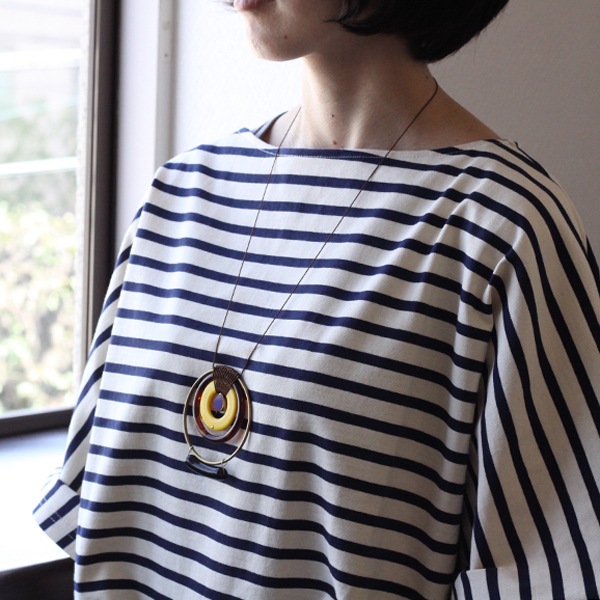
[German Glass]
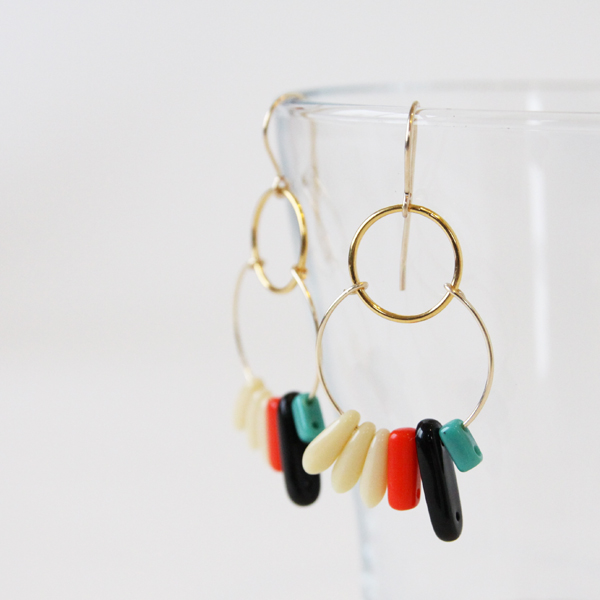
Beads produced between the 1920s and 1940s were made using materials, pigments, and molds that are no longer obtainable today.
Craftsmen reportedly drew out the colors by hand-adding trace amounts of metal to the glass.
Companies that manufactured these beads by hand in the Bohemia region, including what was then East Germany,
shut down not long after the end of World War II.
In an era without computers, everything relied on the skill of human hands.
These are highly prized, rare beads, each one crafted through the artisan's intuition and years of accumulated experience, rich in character and imbued with a deep, nostalgic coloring.
Because trace amounts of metal are added to draw color out of the glass,
the artisan's subtle sense of measure determines the final color and finish.
Unlike industrial products such as Swarovski beads,
these beads carry a certain "warmth"—you can feel the artisan's care in every piece.
[Lucite (Acrylic Resin)]
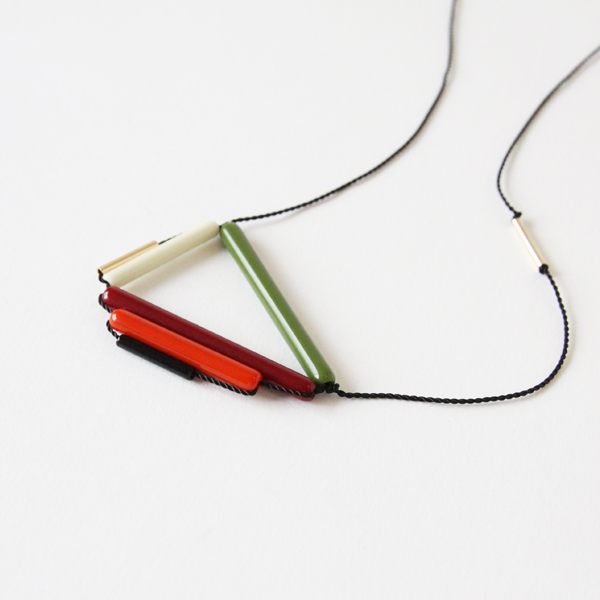
At the time, it was a plastic that attracted a great deal of attention as a new material,
and from the 1940s to the 1950s, a craft in which people carved these early plastics as a hobby at home became popular in Europe and America.
As shown in the photo, with its retro coloring
and a texture that carries a certain warmth, it has a charm all its own that nothing else can imitate.
【Gold-Coated Beads】
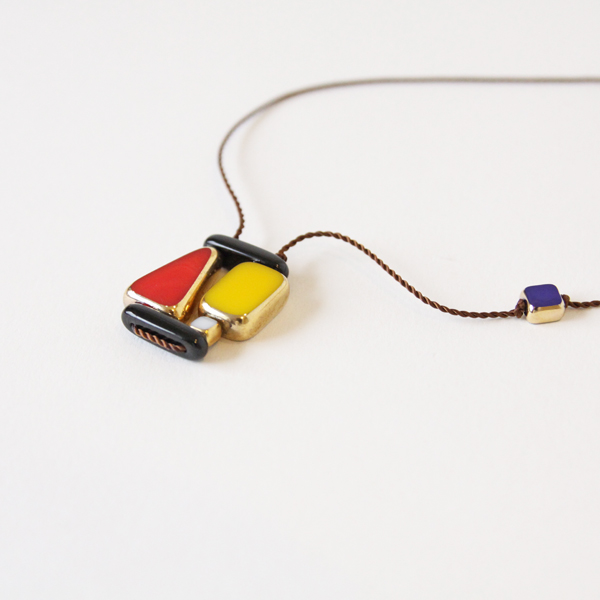
These beads, coated in 24k gold, are rarely seen today.
They are made by dipping vintage German beads entirely into molten 24k gold, coating them completely.
Depending on how they are used, the 24k coating may wear away, revealing the base color beneath,
but taking on an antique-like appearance is also part of their charm.

【Handling Precautions】
◇Because the bead parts are dead stock, there may be slight variations in color, shape, and other characteristics from piece to piece.
◇The 24k gold-coated beads, which are rarely seen today,
may partially wear away depending on the conditions of use, revealing the base color beneath, or may show fading.
◇14k gold-filled is also a material that undergoes fading over time, but this transformation into an antique-like texture is also part of its charm.
◇Please handle with care to avoid knocking it against hard surfaces.
◇Please avoid using polishing cloths that contain abrasives, as they can cause the surface coating to peel off.
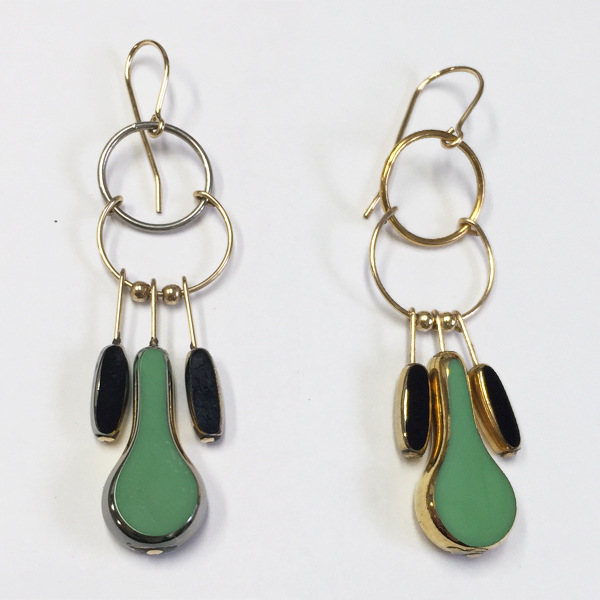
【Before and After Aging】
What is especially charming are the gold-coated beads.
They have a thickness equivalent to about a hundred layers of gold plating, giving them a very smooth surface and a deep luster.
They may fade with continued use,
but this takes on an antique-like texture that is quite lovely.
To preserve the original beautiful coloring, wipe away sweat and other dirt with a soft cloth after wearing,
and store them sealed in a zip-top plastic bag.
From time to time, gently wash them with a neutral detergent diluted in lukewarm water, wrap them in a soft cloth to remove moisture,
and let them dry thoroughly before storing. (Left: after aging, right: brand new)

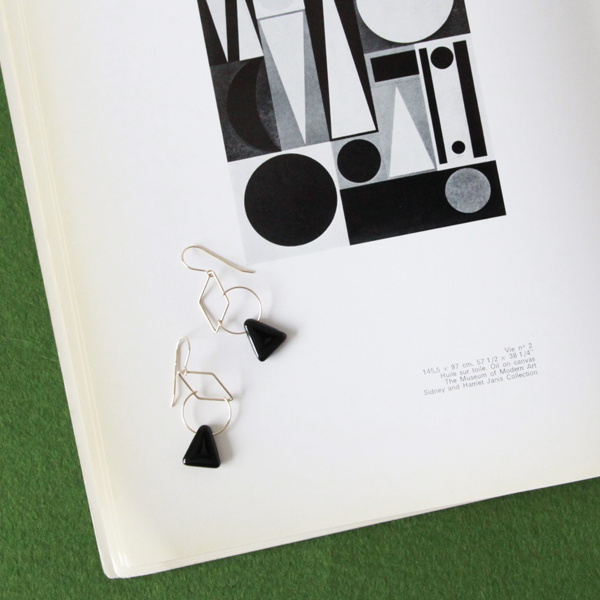
A brand that creates jewelry using vintage German beads,
crafted through the artisanal skill of Bohemian craftsmen from the 1920s to the 1940s.
Drawing inspiration from architecture, paintings, and modern art, the jewelry she creates is like a work of "art."
Lucite (acrylic-reinforced resin), which was manufactured until the 1970s, is worked with meticulous handcraft,
giving it a certain nostalgic warmth.
Encountering precious parts that were once used by major European fashion houses in the 1920s and 1930s,
the jewelry created from these limited beads is produced only in limited quantities.
Her sense of clean, geometric design, along with the meticulous, precise arrangement of beads and distinctive coloring, comes together exquisitely.
GUIDE »
CATEGORIES »
- + Gifts by recipient
- + Gifts by scene
- + Clothing
- + Bags / Backpacks
- + Wallets / Card cases
- + Jewelry
- + Shoes
- + Rainy day outfits
- + Kitchen
- + Home
- + Babies / Kids
- + Japanese products
Earn Miles


Payment & Security