



.jpg)





.jpg)

.jpg)
.jpg)

- トップページ/
- ZUTTO Journal/
- お手入れ・エイジング/
- Shaped by Trees: ...

Magemono: Japanese Bentwood Crafted from Trees
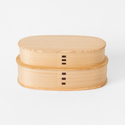
Magemono (bent wood) refers to containers made by bending thin sheets of wood into a cylindrical shape, such as wappa bento boxes or hinoki (Japanese cypress) steamer baskets. Their rounded forms are so beautiful that it's hard to believe they're made from natural wood at all. Traditional magemono possess qualities that only wood from living trees can offer—qualities no other material can replicate.


There is a theory that magemono originated in China, though the exact details remain unclear.
In Japan, it's said that magemono began with the practice of peeling bark from trees, shaping it into a circle, and stitching it together—a method still used today in kabazaiku (birch bark craft) from Akita Prefecture. Later, hinoki and sugi (Japanese cedar) began to be split into thin boards and bent into cylinders, giving rise to the form of magemono we know today. It's remarkable to think that the technique of bending hard wood into containers was already established as far back as the Kofun period.
Hinoki and sugi are considered the ideal materials for magemono, since their fibers can be split into extremely thin sheets without breaking. The process begins with peeling the bark from a felled log. Since heat and moisture soften wood, the planed bark is boiled and then bent into shape using a mold. This bending process, which requires shaping the wood precisely to the mold, demands the most skill of all. Once bent, the wood is dried, and the two ends are joined together to form the shape of a container. Finally, a base is attached, and the piece is bound with cherry or birch bark to complete it.

Besides magemono, are you familiar with a type of tool called tagamono (hooped ware)?
Tagamono refers to containers made by arranging long, narrow strips of wood vertically in a circle and securing them with a ring-shaped hoop, or "taga." Wooden water buckets and rice storage containers (ohitsu) bound with round copper hoops are examples of tagamono.
Tagamono is said to have emerged during the Kamakura period, a little after magemono began to spread. While magemono had limits on the thickness of its side panels, making it difficult to produce large, sturdy containers, tagamono had no such restrictions on thickness, width, or length, allowing for large and durable vessels—useful for transporting liquids such as sake. Depending on their purpose, both magemono and tagamono came to be widely used throughout Japan.

Magemono are made using wood in its natural state. Despite the challenges that come with working with a natural material, the fact that this form has survived to the present day is largely due to the unique qualities that only wood can offer.
As mentioned earlier, conifers such as hinoki and sugi are best suited to magemono. With these woods, the process of peeling the bark is relatively easy, and their fragrance, moisture resistance, and durability make them especially well-suited to this craft.
■ Hinoki Steamer Basket (Seiro)


Teradomari, a town in Sanshima District, Niigata Prefecture, has been home to a thriving sieve-making industry using tōhi (a type of hinoki) since the late Edo period. Adachi Mokyu Shoten, which has continued making magemono here for over ten generations, produces steamer baskets crafted from thinly processed hinoki.
You can feel just how thin the finish is the moment you touch it. Being made so thin, it's remarkably light and easy to carry. From the moment you open the box, the hinoki releases a gentle, refreshing fragrance, and the pale wood color shines beautifully.
The seiro has a simple structure consisting of a lid, a slatted rack, a body, and a base. When food is placed inside and heated, steam passes through it, resulting in a fluffy finish while preserving its nutrients. You can sense how the hinoki body regulates moisture from within. What's more, the biggest appeal of Adachi Mokyu Shoten's steamer baskets is that they can also be used in the microwave. From leafy greens and root vegetables to cold rice and shumai, the range of dishes you can prepare expands considerably.
■ Akita Cedar Wappa

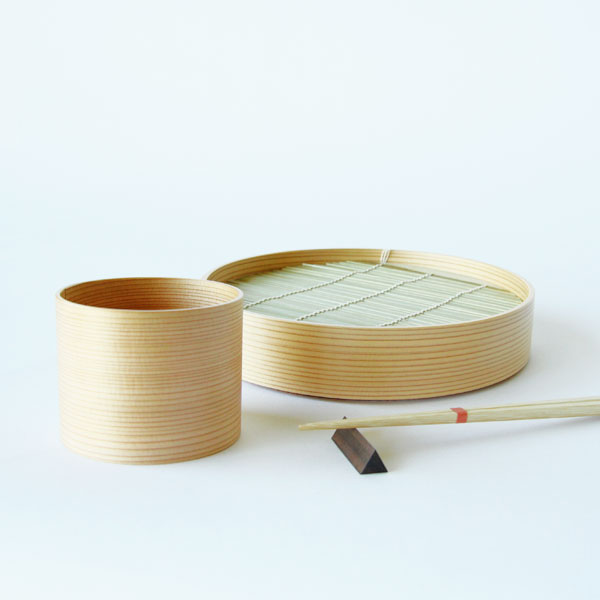
The magewappa made by Odate Kogeisha, designated as a traditional Japanese craft, embodies the true spirit of magemono. "Wappa" means "ring" in the Tohoku region's dialect, and true to its name, this piece is made from Akita cedar and stitched together with cherry bark—a shape that perfectly represents old-fashioned magemono craftsmanship.
Like hinoki, Akita cedar has high splitting properties (it splits and peels easily), making it well-suited for magemono. Its straight-grained masame wood pattern is beautiful, and it's also notably lightweight. Since it absorbs moisture well, it helps regulate the moisture of food, whether used in a bento box or a soba plate.
*Note: Odate Kogeisha's products are coated with urethane, so they resist water stains and food residue.
■ Kiso Sawara Hooped Ware


Sawara (Japanese false cypress) grown in the Kiso region is known as "Kiso sawara" and boasts exceptional acid and water resistance unmatched by other woods. Yamaichi is a company that crafts products by making the most of these Kiso trees. Using the heartwood of trees over 100 years old, Yamaichi produces high-quality magemono and tagamono.
Ohitsu, a type of tagamono used for storing rice, is made by shaping sawara into uniform boards and binding them with a ring-shaped copper hoop. Since sawara has very little scent of its own, it doesn't transfer odor to food, making it an ideal material for ohitsu. Thanks to sawara's excellent moisture-releasing properties, rice stored inside stays fluffy and delicious.
Sawara wood also boasts remarkably high water resistance, thanks to its high oil content. It's fascinating how the opposing properties of water and oil come together to make sawara so well-suited for buckets and tubs. Pairing a sawara water bucket with a refreshingly fragrant hinoki bath stool lets you enjoy a forest-bathing experience right in your own home.

Magemono continues to serve us faithfully in daily life, even today. By making the most of the natural qualities of its material, we hope you'll enjoy using it for many years to come.
■ Care After Use
Although the material has a certain degree of water resistance, leaving it in contact with water for long periods, or leaving food inside it, can cause mold or dark stains. Be sure to rinse with water immediately after use and dry thoroughly.
※Using synthetic detergent on Yamaichi ohitsu (wooden rice containers) and similar items may leave an odor behind. If this concerns you, use salt instead of detergent when washing.
※Do not use metal scouring pads or scrubbing brushes, as they will scratch the surface.
■How to Dry
Dry thoroughly in a well-ventilated place out of direct sunlight. Please be careful, as direct exposure to sunlight or heat sources can cause the product to warp or crack.
■About Wood Resin (Kiyani)
Products made from sawara (Japanese hinoki cypress), which contains a lot of oil, may develop wood resin depending on the conditions of use.

The item shown above is a Yamaichi ohitsu. Can you see the faint yellowish area on the surface?
Because sawara wood contains a lot of oil, this kind of wood resin can appear.
Wood resin refers to the natural resin found in wood, and it has a sticky feel when touched. It is harmless to the human body, but if it bothers you, wipe it off with rubbing alcohol. We also recommend wrapping sawara wood products, which are prone to developing wood resin, in paper or cloth for storage.


GUIDE »
CATEGORIES »
- + Gifts by recipient
- + Gifts by scene
- + Clothing
- + Bags / Backpacks
- + Wallets / Card cases
- + Jewelry
- + Shoes
- + Rainy day outfits
- + Kitchen
- + Home
- + Babies / Kids
- + Japanese products
Earn Miles


Payment & Security