
.jpg)



.jpg)

.jpg)
.jpg)





- トップページ/
- ZUTTO Journal/
- お手入れ・エイジング/
- Rainy Season Rain...

What You Should Know About Caring for Your Raincoat During the Rainy Season
What Is a Raincoat?
With their high level of waterproofing and water-repellent effect, raincoats have
long been a beloved outer garment for rainy days all around the world.
These days, raincoats are designed with more than just water resistance in mind—many now feature designs suited to everyday wear,
and they are increasingly recognized not only as rain gear but as a regular part of one's outerwear.

Raincoats made from rubber were originally devised in the early 1800s,
and they became known around the world thanks to their groundbreaking waterproofing effect.
Today, in addition to raincoats coated with rubber,
there are also ones made from fabrics such as nylon and polyester.
Beyond waterproofing and water repellency, it's important for a raincoat
not to feel too heavy when worn, and to avoid trapping moisture inside,
so materials are chosen that satisfy these requirements as well.
Raincoats Come in a Variety of Sizes and Shapes
At ZUTTO, we currently carry raincoats from the following three brands:
・K-WAY
・RAINS
・elka
■K-WAY
K-WAY was born in France.
Its construction is similar to that of a windbreaker,
made from nylon fabric that offers excellent water repellency along with moisture permeability and wind resistance.
As the name "packable" suggests,
the fact that the whole garment can be stowed into its own pocket shows just how
functional it truly is.
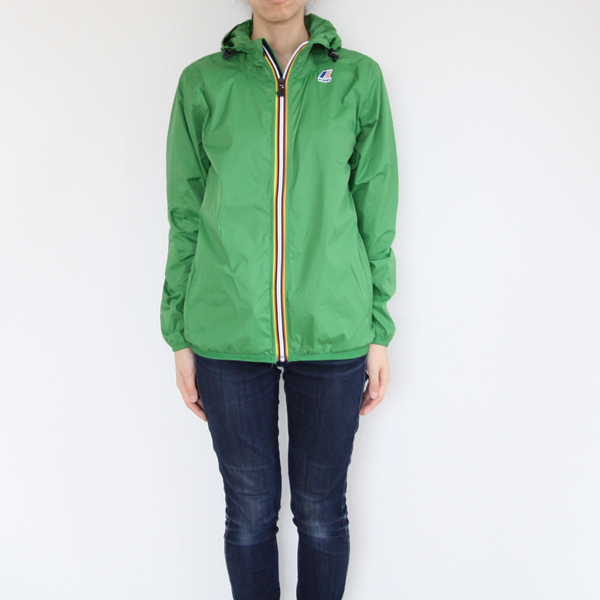
The UNISEX Packable Windbreaker has a length that covers the waist down to about the hips,
making it a size that's easy to wear as an everyday outer layer.
Since the body and sleeves are cut with a relaxed fit, you can wear layers underneath
without it looking bulky.
It comes in sizes XS, S, and M, so it can be chosen by men as well.

For petite women, or those who prefer a more compact fit,
the WOMEN Packable Windbreaker is recommended.
It's made with a slightly smaller length, sleeve length, and shoulder width than the UNISEX version.
The Packable Windbreaker also has a drawcord at the hem,
allowing you to adjust the length as well.

If you'd like something that covers you all the way down to your hips, try the long-type Packable Windbreaker.
Its thin fabric allows for an easy, breezy way of wearing it, and it also creates a silhouette that makes you look taller.
Like the UNISEX and WOMEN series, it has a drawcord at the hem,
which is great for adjusting your ease of movement and stride.

▲When traveling, it packs down neatly into its own pocket.
■RAINS
RAINS lets you enjoy a stylish look even on rainy days.
Since the brand was born in Denmark, a country with frequent rainfall,
its polyester fabric is given a water-repellent finish, and
the width of the cuffs can be adjusted with snap buttons.
The sleeves and hood are joined using special ultrasonic welding, giving the garment a construction
that keeps rain from getting in.

The Curve Jacket, with a belt at the waist, creates a construction
that shows off a beautiful overall silhouette, much like a trench coat.
There's also a zipper behind the front buttons, so there's no need to worry about rain getting in.
With a length that reaches down well past the knee, and a simple design
that pairs easily with office attire, it's a raincoat we'd recommend for commuting as well.


This one is a poncho type, which you slip on over your head.
While ponchos tend to bring to mind a wide, billowing shape,
the RAINS Rain Poncho features buttons running vertically at the neckline,
which helps maintain a clean, vertical silhouette.
Even so, when you spread your arms, there's plenty of room under the sleeves,
making it easy to move around—a raincoat that's also convenient to wear while riding a bicycle.
■elka
Also founded in Denmark, elka is a brand
that has produced waterproof gear for many years.
Their raincoats use a fiber material certified as OEKO-TEX Standard 100,
meaning it is harmless to both the human body and the environment and is low in allergens,
and the garments undergo a process of rigorous testing by fishing industry professionals.
Furthermore, parts such as the sleeves are all welded by hand,
resulting in a carefully considered, watertight construction.
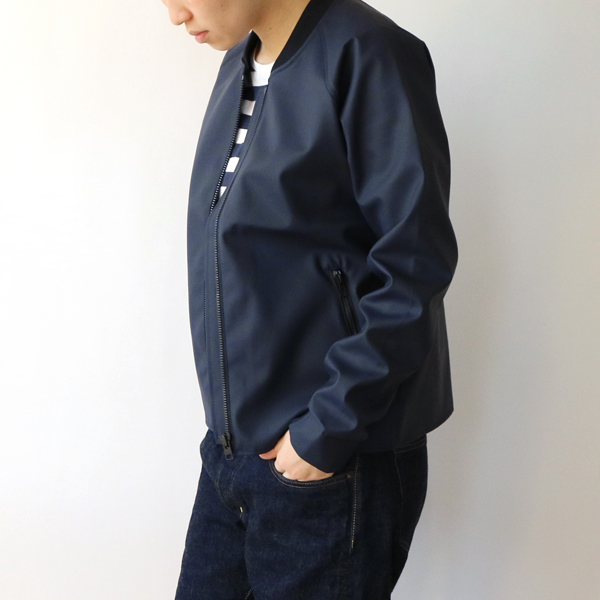
The Testrup Jacket is a compact raincoat similar to a blouson,
making it easy to wear more like a jacket than a raincoat.
It doesn't have a collar, but when you zip it all the way up to the neck,
it fits snugly to the body, so there's no need to worry about wind or rain getting in,
and the cuffs cinch in nicely as well, so it also works well as a windbreaker.

The hooded raincoat type has snap buttons placed throughout,
giving it a construction that's been carefully designed for thorough waterproofing.
A drawcord on the inside of the waist
also gives you the advantage of being able to adjust the silhouette to your liking.
Tips for Use
■Things to Keep in Mind Before Use
Water repellency is a key feature of rain coats, but
this effect has a tendency to gradually diminish with use.
Rain coats with a coating treatment inevitably
have this characteristic, but if you spray a waterproofing (water-repellent) spray for clothing before use,
it can help maintain the water-repellent effect.
■What to Do After Wearing
Rain coats, which are often used on rainy days, tend to accumulate rain and dirt easily, and
if left in a state where sweat has caused moisture to build up, this can lead to odors and mold.
After use, always hang the coat on a hanger in a well-ventilated place,
and let it air out before storing.
Also, if the coat becomes dirty, use a damp cloth,
and for stubborn stains that cannot be avoided, use a cloth dampened with a small amount of neutral detergent,
wiping to remove the dirt.
Afterward, wipe with a dry cloth and let it dry before storing.
About Washing
Washing with water affects the fabric's water-repellent effect, but
if dirt or odor is a concern, we recommend washing the coat.
Some rain coats can be washed in a washing machine, while
others recommend hand washing; care methods vary by product, so
please first check the care instructions on the label attached to the product.
■Washing in a Washing Machine
Rain coats from RAINS and K-WAY
can be washed in your home washing machine.

When washing, first close the rain coat's zippers and buttons,
and if there are any accessories such as belts, remove them separately.

Turn the rain coat inside out, place it in a laundry net, and wash it.
Use water at around 30 to 40 degrees Celsius so as not to put strain on the fabric,
and wash using the hand-wash mode (dry mode).
*Using neutral detergent can strip away the water-repellent coating, so
we generally recommend washing with water only.

For spin drying, instead of using the washing machine's spin-dry mode, remove the coat after rinsing,
and use a large towel to gently press out excess water.
After that, shape the coat properly and let it dry thoroughly in a shaded, well-ventilated place.
When drying, so that the inside and inside of the hood dry thoroughly,
hang the coat with the inside open.
*Please do not use tumble drying.
■Washing by Hand
Depending on the special processing applied to the fabric or the material used,
some coats cannot be washed in a machine and hand washing is recommended instead.
elka rain coats are assembled using a special welding process to join
parts together, and to prevent damage to the fabric,
hand washing is recommended.

▲The joint sections of elka parts. These are welded by hand.
When hand washing, fill a basin with water or lukewarm water,
and focus on washing away the dirty areas.
Rinsing with a bathroom shower is also a good method.
When doing so, avoid scrubbing the fabric hard and instead gently press-wash it.
Afterward, remove excess water with a towel and let it dry thoroughly in a well-ventilated place.
■About Ironing
Synthetic fabrics made of nylon or polyester are sensitive to heat.
Exposure to heat can cause the fabric to wrinkle, and at high temperatures, it may even melt,
so ironing is not recommended.
After washing, we recommend shaping the coat to smooth out wrinkles
before hanging it up to dry.
When Storing for a Long Period

▲Storing a RAINS rain coat
When storing for a long period, it's important to prevent moisture buildup, so
we recommend hanging the coat on a hanger as much as possible in a closet or similar space that
is not exposed to sunlight and is well ventilated.
If folding the coat for storage, we also recommend occasionally unfolding it
and letting it air out.
K-WAY and RAINS rain coats are designed so they
can be packed into their own pockets or hoods, but this should be considered temporary storage only;
for long-term storage, we recommend keeping the fabric unfolded and spread out.


GUIDE »
CATEGORIES »
- + Gifts by recipient
- + Gifts by scene
- + Clothing
- + Bags / Backpacks
- + Wallets / Card cases
- + Jewelry
- + Shoes
- + Rainy day outfits
- + Kitchen
- + Home
- + Babies / Kids
- + Japanese products
Earn Miles


Payment & Security