.webp)


.webp)


.webp)


.webp)


Welcome to ZUTTO
Free shipping for newsletter subscribers (some areas excluded)
- トップページ/
- ZUTTO Journal/
- お手入れ・エイジング/
- Two Users Compare...

Comparing how two people use it. The PATRICK STEPHAN "3-way Leather Pochette" edition
This time we're featuring the PATRICK STEPHAN "3-way Leather Pochette," a bag loved by two ZUTTO staff members. It's an all-black leather bag that can be used three ways: as a pochette, a hand-carried bag, and a clutch. In an age overflowing with things, what you wear and what you carry is entirely up to you—but there's always a reason behind choosing the same item as someone else. So we asked two people who both love this same bag about their "everyday experience" with it, to see what they had in common, and where they differed.
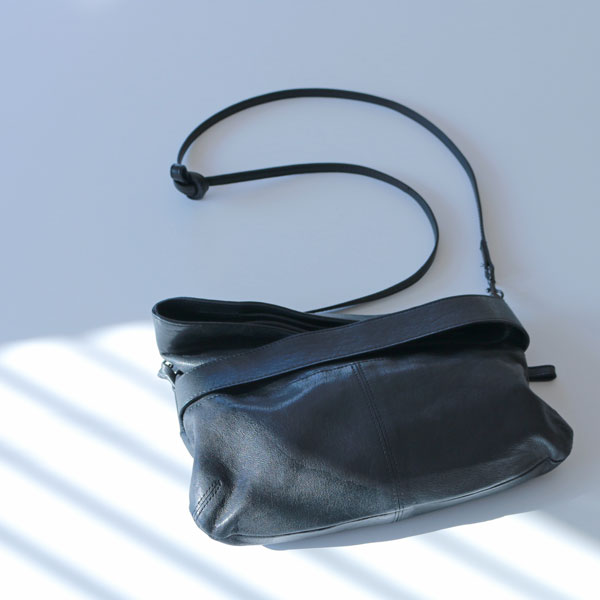
Two bags, two years on

When we asked them to bring the bag "just as it usually is, with whatever's inside, wearing whatever you'd normally wear," both of them happened to show up in ZUTTO original cashmere knits. Their personal styles are close, but not too close—and yet it seems they share a common image of what to wear with this bag. So what differences might there be in how these two actually use and enjoy it day to day?
Today's two users are as follows.
Product Planner N:
Planner for ZUTTO original apparel. Her desk is perpetually piled with samples and materials for new products. She loves old buildings.
Editor S:
Editor in charge of the ZUTTO reading content. Being indecisive, she doesn't buy much. Tall, and wears glasses.
N: I happened to see a staff member at PATRICK STEPHAN using a prototype, and I thought the shape was just exquisitely lovely. After that, I asked them if they could make one especially for ZUTTO, and we chose this black leather—easy to use every day and one that molds nicely to the hand—and had it made as a special order (*). Because of my work, I see a lot of bags, but what really caught my eye about this one was its clever 3-way design and the wonderful overall balance when you hold it in your hand.
*Added on 2021/3/23: PATRICK STEPHAN has since begun selling the same design as part of their regular lineup, and ZUTTO now carries this as a standard brand item. (It is no longer a special order.)
S: It has that kind of presence where, if you saw someone carrying it, you'd want to ask, "Where's that from?"
N: There's real craft in the small details too—like the pattern where the leather panels are stitched together, or the way the stitching runs along the outer pocket.
S: When I took part in the product photoshoot for this bag, I saw N's own personal one and found myself wanting it too. I'm the indecisive type who has trouble buying things, so come to think of it, this was actually the first time I ever bought a bag for myself at ZUTTO. The ease of use, the feel of the leather, the way it can look a bit more fashion-forward—it all comes together beautifully.
N: So we both ended up wanting one after seeing someone else's, huh? (laughs)
S & N: (in unison) "As a hand-carried bag!"
S: Same answer! (laughs)
N: When you pull out the inner handles, the bag gains height and actually holds more than it looks like it would, so I end up carrying it by hand without really thinking about it. Also, when you let the strap hang and hold the bag by hand, the visual balance is just perfect. You can detach the strap, but except for when I'm using it as a clutch, I tend to just leave it hanging.
S: I leave the strap attached too. When I'm heading out with only the bare minimum, I use it as a pochette, and if I pick up a little extra along the way—like a small bottle of water from the station, or a snack—I switch to carrying it by hand. So for me, it's pochette on the way out, and hand-carried bag on the way back, in a sense. Being able to switch from pochette to hand-carried is really convenient.
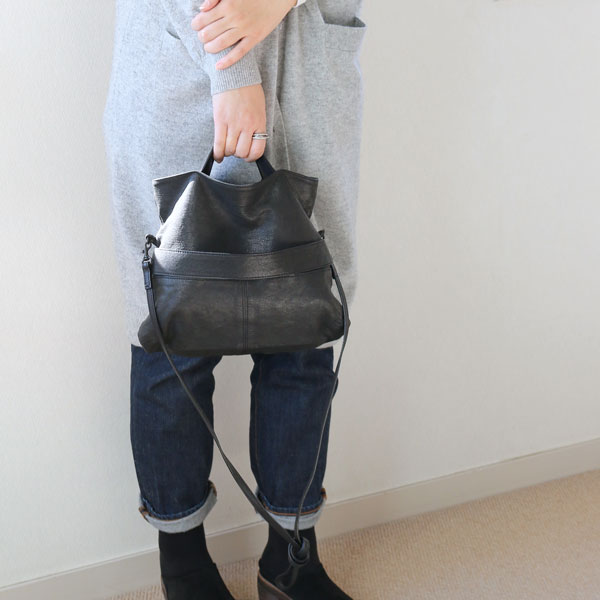
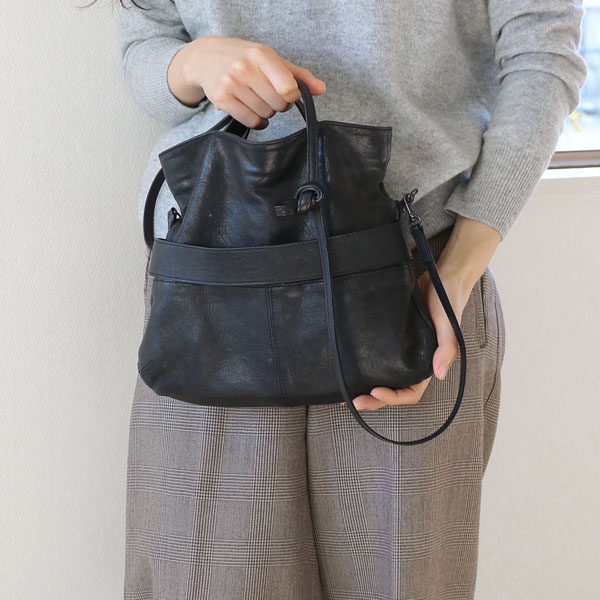
Top: Letting the strap hang naturally. A balance that feels effortless, yet is surprisingly rare to find.
Bottom: Holding the hand-carry handle and the strap together. The strap adds just the right accent.

S: On my days off, of course, but also for commuting on days when I don't need to bring my laptop. I pair it with a small tote for my lunch, and travel light. I'll also sometimes pack it in my suitcase for business trips. When traveling for work, my priority is to pack light and choose functional, outdoorsy items—but having one slightly refined, feminine piece tucked into the suitcase somehow lifts my spirits. And since it works three ways, it's convenient when traveling too.
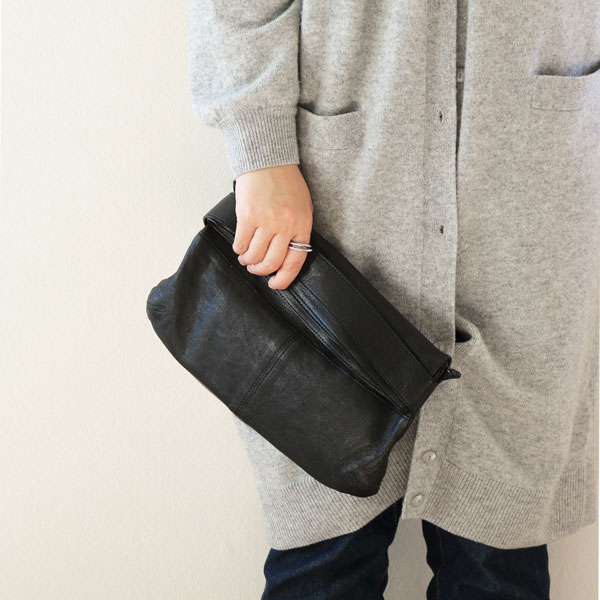
N: A travel companion, nice. I'm often out and about on weekdays and tend to accumulate a lot of things, so I mainly use this as my weekend bag. I use it most often when going out to eat, or heading out for just one specific errand. I also think it could work nicely for a slightly dressed-up party occasion.
S: Clutch bags tend to have only one way of carrying them, so I'd always hesitated to get one—but with this, all it takes is removing the strap from your everyday bag to get a subtly dressier look, which I really like.
What's inside tells the story of how each of them uses it
Staff N: "I love that it fits a long wallet and a large pouch with room to spare"


Staff N, who often changes bags depending on her outfit and destination even on weekdays, says that since her usual long wallet and pouch fit right in, transferring her things over is no trouble at all. The zippered pocket on the outside serves as the fixed spot for her pass case and smartphone.
"Smaller shoulder bags often can't fit a long wallet, but with this combination, it slipped right in perfectly. Since I keep all my small odds and ends together in a pouch, the volume of my belongings might be a bit more than usual. It's a bit tricky to fold the top down and carry it clutch-style, but if you carry it as a hand bag, everything fits in together."
Staff S: Wants to put small odds and ends in directly
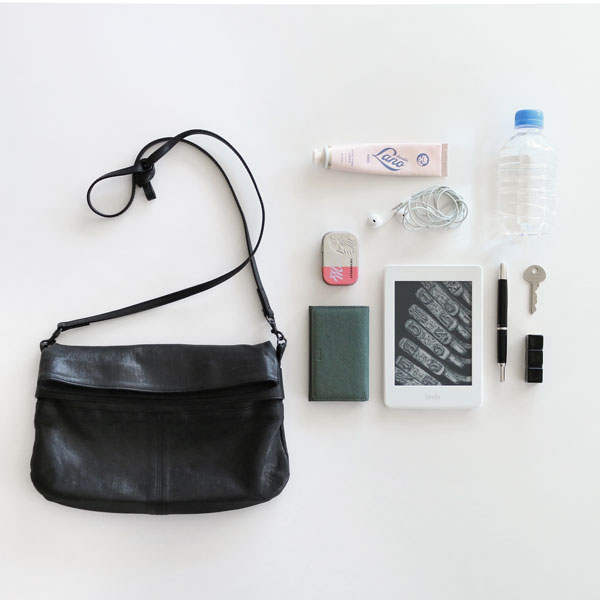
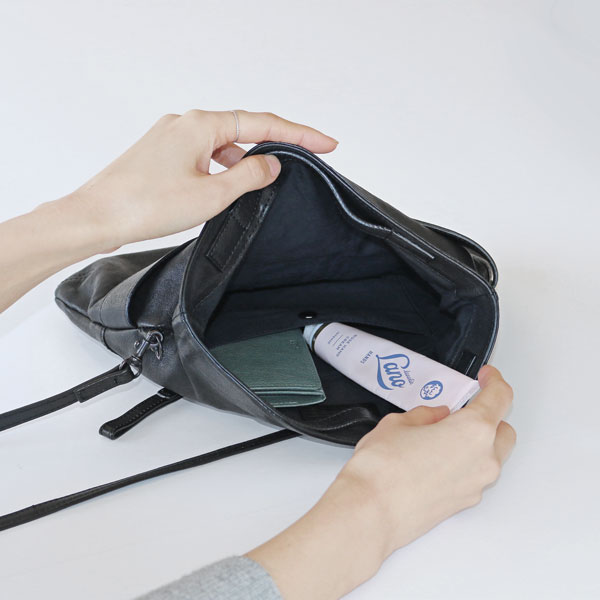
Staff S doesn't use an inner pouch, instead putting small odds and ends directly inside. With the idea that her belongings will increase once she's out, her motto is "pack the bare minimum before leaving the house." She packed the bag's contents with the image of going to read a book at a neighborhood coffee shop in mind.
"There's a pocket with a snap button on the inside, so small items like hand cream or lip balm go directly in there. I once bought a small plastic bottle of water while out and about, couldn't finish it, and thought 'oh no!'—but when I tried putting it in, it fit right in perfectly."
Time Speaks Through Objects: An Aging Comparison

S: (Looking at N's bag) Somehow the grain texture on the surface looks clearer than on mine. Mine is smoother.
N: This is probably an individual difference from the start, depending on which part of the leather was used. Beyond that, as you keep using it, differences in how the sheen develops can also emerge depending on how often it's used.
(Now looking at S's bag) Also, doesn't the bottom part look like it's curving into a rounder shape? When I'm not using mine, I fold the bottom inward, so mine stays straight.
S: Now that you mention it, that's true. I use it often with somewhat heavy items like a tablet inside, so maybe the bottom has stretched a bit.
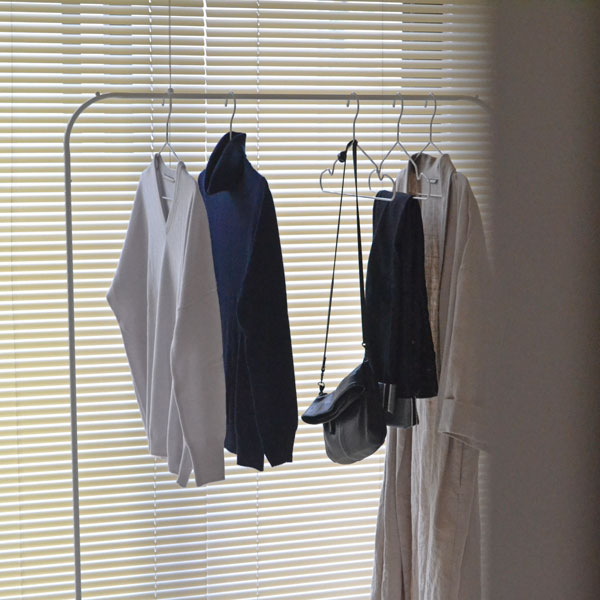
Also, at home I hang it on a hook in the closet so it's ready to grab anytime, so maybe the weight has made it go a bit soft and slouchy.
N: It's interesting how the way you store a bag when you're not using it can change its silhouette to reflect the owner's personality. I never expected such differences to appear, even though we started using them at almost the same time.
S: I bet we could tell which one is ours just by touching them with our eyes closed! (laughs)
What Fellow Fans Secretly Want to Ask: "How Do You Handle This?"
① How long do you set the strap when you use it?
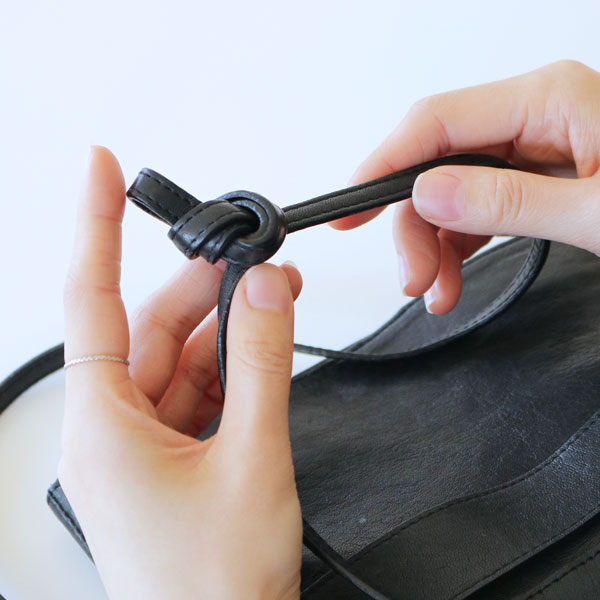
N: With slightly larger shoulder bags, many have a belt-style strap you can adjust the length of, but with small bags called pochette, the straps tend to be thin and often lack any adjustment feature. This bag is the same way—the strap is 125cm, so as is, it's a bit on the long side. It's designed with the idea that you'll tie a knot wherever you like to adjust the length. Personally, I think that's part of its charm, and I feel like the knot becomes a nice little accent point—but do you actually tie a knot in yours?
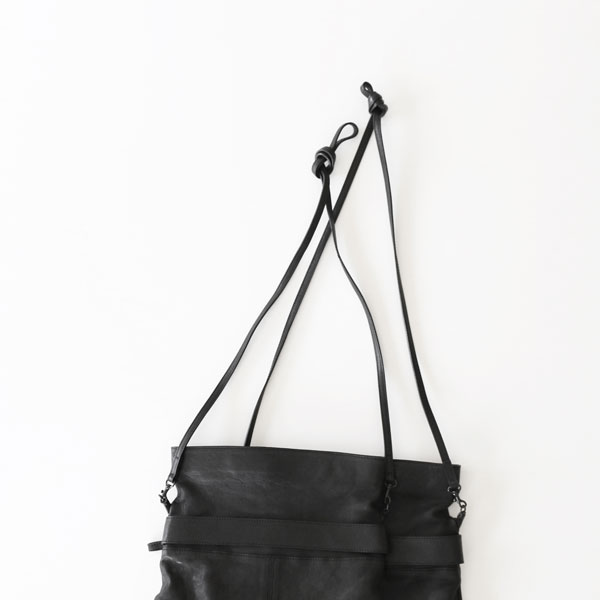
S: I tie mine too! I'm on the taller side (166cm), but even so it's still too long as is, so I tie a knot wherever feels right and use it that way.
N: (Laying the two bags on top of each other) I guess everyone's preferred length is subtly different after all.
S: When I use it as a shoulder bag, I mostly just let it drop onto one shoulder, so this length feels like the best position for that. I think it's originally made a bit long so you can tie it to suit your preference, but a knot really does look cute once you make one.
② Do you wear it crossbody?
S: Thinking about it now, I probably don't wear this bag crossbody all that much. Since the flap has no metal fittings and is a simple design, if I wear it crossbody with the bag swung around to my back, I get a bit worried the contents might fall out. Do you wear yours crossbody?
N: I like using it as a shoulder bag hung on one shoulder, so I don't really wear it crossbody either. But if you untie the knot in the strap, there's enough length to wear it crossbody however you like.
③ Do you use moisturizing cream or oil?
N: Do you put anything on it, like moisturizing cream or oil? Mine already has a moist, soft feel to it to begin with, so I don't do anything to it.
S: Same here (laughs). People tend to assume "leather bag" equals "requires upkeep," but it's nice that a natural sheen develops even without frequent care.
N: The tricky thing about leather is that you can't know how it will age until you actually use it, but if the leather is too delicate, it's not suited for everyday use. I think choosing leather that feels just right in your hand once you've put your things inside is really important from a product-making standpoint too.
S: I use mine without worrying too much and just keep taking it out with me, so there's hardly a weekend I don't use it. It naturally gets touched by hand often, and since it rubs against my clothes and coat when I use it as a shoulder bag, I feel like its character has been developing without my even noticing.
N: I imagine it'll take on an even different character after another five or ten years of use. That's something to look forward to as well.
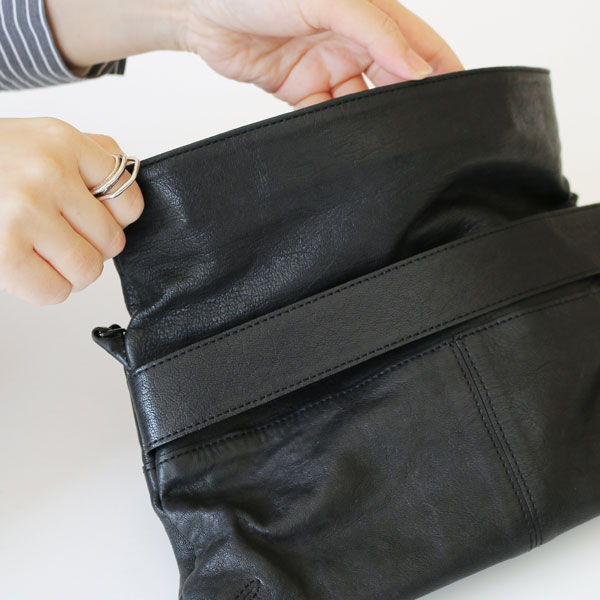
While there are several common threads—"letting the strap hang down to use it as a tote bag," "changing its shape for 3-way versatility depending on the occasion," "enjoying the way it ages to fit your hand over time"—differences in "how it's used," such as where people take it and how often they use it, also bring out differences in how each piece ages. There are many things "things made to last" have in common, but flexibly adapting to the user's lifestyle also seems to be an important point.
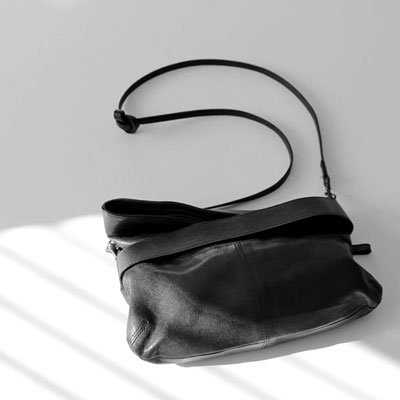
Designer PATRICK STEPHAN was born and raised on an island along the rugged, windswept coast of Brittany in northern France. He spent his student years in Paris, after which he honed his craft under renowned designers, learning techniques from a range of skilled artisans. In 1998, he joined the couture division of Dior. Meanwhile, in the back streets of Tokyo, a leather factory has been sharpening its skills since its founding in 1984, earning the deep trust of well-known domestic brands for its ability to realize designs that no one else could handle. When these two came together, a brand of rare brilliance was born—one that fuses French sensibility with Japanese craftsmanship.
GUIDE »
CONTENTS »
CATEGORIES »
- + Gifts by recipient
- + Gifts by scene
- + Clothing
- + Bags / Backpacks
- + Wallets / Card cases
- + Jewelry
- + Shoes
- + Rainy day outfits
- + Kitchen
- + Home
- + Babies / Kids
- + Japanese products
Earn Miles


Payment & Security