
.jpg)


.jpg)

.jpg)
.jpg)






- トップページ/
- ZUTTO Journal/
- ブランドストーリー/
- Boots people cher...

Boots loved for 10, 20 years. What makes BARBARIAN CHIEFTAIN so trusted?
Rain boots are used in all kinds of situations, from rainy days to washing the car, farm work, fishing, and the outdoors, and their prices range from inexpensive options to branded ones. For those who don't wear rain boots on a regular basis, the differences can be hard to see, but it turns out that comfort—shaped mainly by materials and manufacturing methods—was what influenced the price.
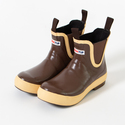
Hunter and Aigle, the brands that sparked the trend for stylish rain boots, both make carefully crafted boots using natural rubber. But quietly, there is also a long-selling Japanese brand doing the same. It's called BARBARIAN CHIEFTAIN, a rain boot brand known mainly to those in the know, and this brand, too, makes its boots from natural rubber.
Ordinary rain boots are typically made from around 10 parts, often using inexpensive PVC. BARBARIAN CHIEFTAIN, however, draws on its background of making boots for professionals, using a much larger number of fine parts to achieve a fit that hugs the foot and stays comfortable even after long hours of wear. True to its roots as a Japanese brand, it's also designed to suit feet with high insteps and wide widths, making it a brand that people who wear rain boots every day come to rely on for 10, even 20 years.
A look at BARBARIAN CHIEFTAIN, born in Japan in 1982

27 parts, built for safety and comfort
Walking is one of the most basic human movements.
It's said that for a person weighing 77 kg who walks 8,000 steps a day, the impact of walking places a cumulative load of 1,000 tons on the feet.
BARBARIAN CHIEFTAIN reduces the loose, sloppy feel so common in rain boots by increasing the number of parts used, making for comfortable walking. Using roughly three times as many parts as usual is the result of a relentless pursuit of fit and function.

Why natural rubber?
Why is natural rubber the material of choice for highly rated rain boots?
Boots made mainly from synthetic rubber or PVC, for instance, tend to use harder materials, which become even stiffer in cold temperatures—making them harder to walk in and more likely to slip on snowy or icy winter roads. That said, they do have the advantage of resisting deterioration over time, so for those who care more about the material staying unchanged than about comfort, PVC is a valid option.
Even so, the reason to choose natural rubber comes down to its softness and stretch, which give an excellent fit that makes walking easy and reduces fatigue. Natural rubber boots also take more time and cost to manufacture, but they resist stiffening even in cold or low temperatures, so they stay flexible whether in water or out in the cold—making them especially popular among people who wear rain boots often, not just on rainy days. The downside of natural rubber, however, is that it deteriorates over time. Cracks, splits, and worn soles do appear as the years pass. (It can still be used for 10 or 20 years, but it doesn't quite match PVC in this respect.)
Why is it so soft?
The pleasant softness of this natural rubber comes from a method called "direct vulcanization." This vulcanization process, it turns out, is essential for producing rubber with elasticity. There are two types of vulcanization—direct and indirect—and direct vulcanization results in a material that is soft and extremely durable, offering real benefits to the wearer.
By contrast, most mass-produced rain boots are made using indirect vulcanization. This allows for efficient mass production and consistent color quality, which is an advantage from a manufacturing standpoint. However, it's a shame that the material ends up less soft and less durable than what direct vulcanization produces.
Rain boots made from natural rubber through direct vulcanization might be described as something like a craft—each pair made carefully, one at a time. Rather than something you use up and discard, these are boots to keep and love, letting you experience the difference in everyday situations where your feet matter—camping, the outdoors, heavy rain, shoveling snow, fishing, gardening, farm work, washing the car, and more. That's what BARBARIAN CHIEFTAIN boots offer.
Careful craftsmanship, made to last
◇Material: Natural rubber is durable and highly recommended. Compared to synthetic rubber, it's softer and easier to walk in.
◇Thickness and weight: Many shoes, like sneakers, are lightweight, but when it comes to protecting your feet, it's better to choose sturdily made, weightier rain boots. The weight comes from the safety-conscious upper and the reinforced rubber at the toe and heel, which cushions impact to the foot. Thanks to this, you can feel at ease even in mountain terrain full of branches and stones.

◇Slip resistance: For wet ground or areas near water, rubber soles are recommended. Wide, wave-like grooves cut into the sole prevent mud and debris from clogging it, improving grip on the ground. The seam where the upper meets the sole is also reinforced all the way around with rubber tape to boost durability and water resistance.

◇Opening: Boots with an adjustable opening are convenient to put on and take off. Because the opening widens generously, it's easy to tuck in thick socks or pant cuffs.

◇The insole is made of EVA material with excellent cushioning. Shock-absorbing padding is used at the ball of the foot and the heel. The surface uses a highly sweat-absorbent material and can be removed for washing.

◇Tall boots are practical for work and for heavy rain days as well.

Durable, comfortable to wear, and good-looking, rubber boots that you can use with affection for ten or twenty years—like a pair of leather shoes—are everyday items that become a companion in shaping your life, not just something to be consumed and discarded. We hope these boots will be cherished especially by those living in nature-rich areas who enjoy spending time outdoors on a daily basis, whether tending a home garden, working in the fields, heading into the mountains, or going to the sea.
Thoughtful design that makes it easy to load into a car or carry to your destination
◇ Comes with a non-woven eco bag that lets you carry both the boots and the boot storage box together.

- A special compound containing an anti-degradation agent is used to prevent deterioration of the rubber surface. Because of this, wax may rise to the surface and create a whitish, uneven appearance.
- If dirt gets on the boots, carefully wipe it away with a soft cloth using lukewarm or room-temperature water. If you use a detergent, please use a neutral one.
- If you'd like to bring out the wax finish, spray a commercially available water-based silicone polish (the kind made for cars or furniture) onto a soft cloth and buff the boots with it. When using a polish, check that it is suitable for use on rubber. Never spray it directly onto the boots, and never apply it to the soles, where it could create a dangerous slipping hazard.
- When drying the boots, first remove any moisture, then dry them in a cool, well-ventilated, shaded spot (avoid direct sunlight). Never dry them using high heat, such as with a stove.
- Before storing, clean off any dirt, place cardboard or newspaper inside the boots to help them keep their shape, and store them in a plastic bag in a dark place. Avoid storing the boots for long periods in direct sunlight or in hot locations (such as a car trunk in summer), and avoid storing them in a folded or bent state, as this can cause deformation or deterioration.
▶︎See the full lineup of BARBARIAN CHIEFTAIN (Barbarian Chieftain) products here
GUIDE »
CATEGORIES »
- + Gifts by recipient
- + Gifts by scene
- + Clothing
- + Bags / Backpacks
- + Wallets / Card cases
- + Jewelry
- + Shoes
- + Rainy day outfits
- + Kitchen
- + Home
- + Babies / Kids
- + Japanese products
Earn Miles


Payment & Security