.webp)


.webp)


.webp)


.webp)


- トップページ/
- ZUTTO Journal/
- ブランドストーリー/
- [Special Order] T...
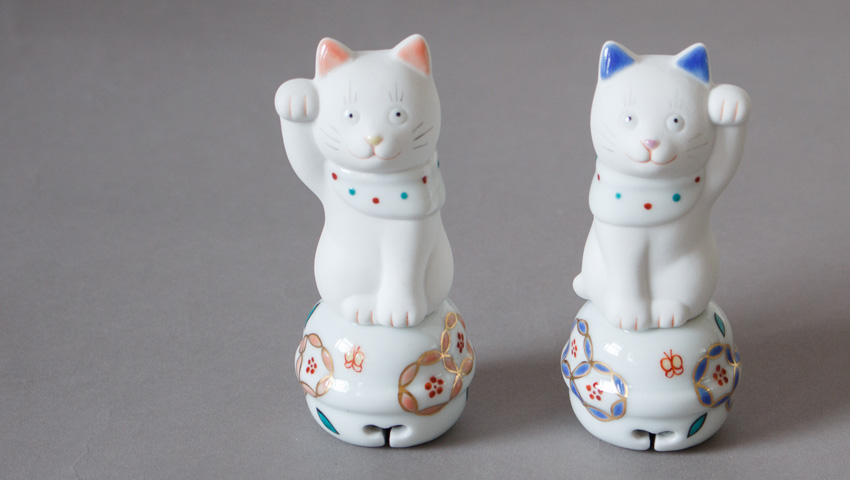
【Special Order】The gaze of Johoen Kiln, held within a small pair of hands. How the two-sun Choemon Maneki-neko comes to be.
A maneki-neko (beckoning cat) sitting quietly at a shop entrance is the kind of thing that catches your eye without you quite meaning to look. It's a good-luck charm with a long history in Japan, yet not so many people actually keep one at home.
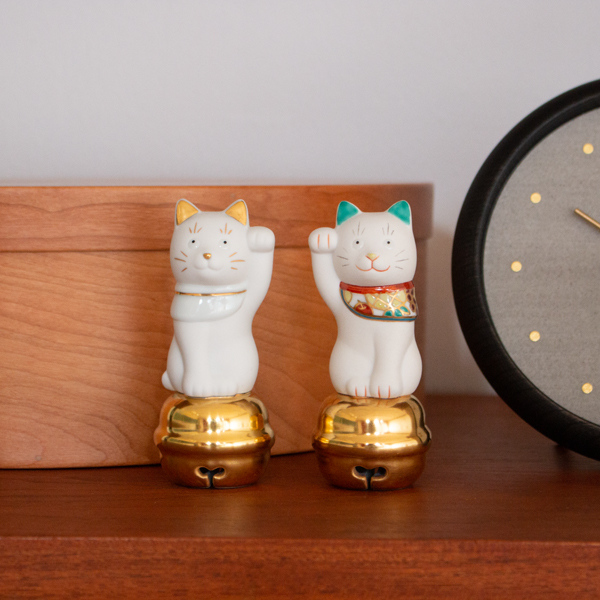
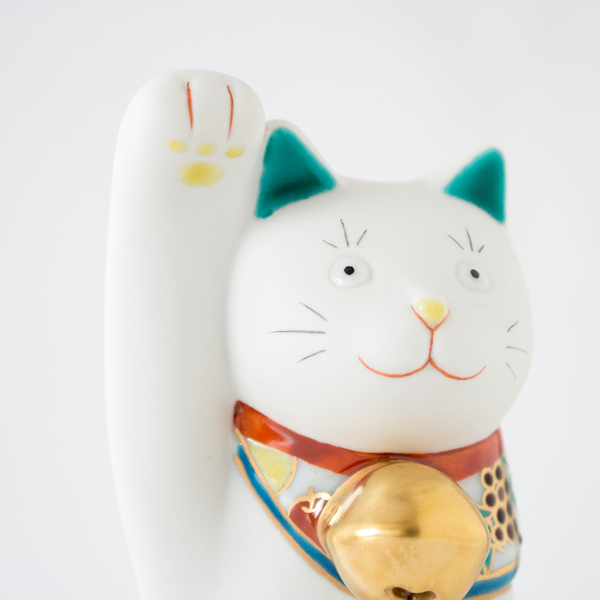
This time, we'd like to introduce a Kutani-yaki (Kutani ware) maneki-neko small enough to sit in the palm of your hand. It's originally a popular item from Johoen Kiln, which we asked them to remake with a design painted exclusively for ZUTTO. This special-order piece features newly designed patterns on the bell and apron, along with different colors on the nose and ears.
With the wish that "the good fortune it invites will last forever"
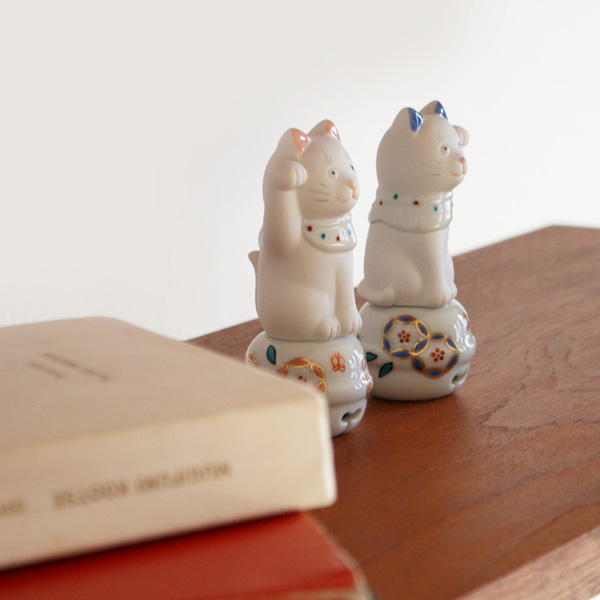
Ever since we began carrying it, Johoen Kiln's two-sun Choemon Maneki-neko has been a very popular item. We asked for this special order because we wanted to work with the maker to shape a maneki-neko that people would want to keep using forever.
A maneki-neko raising its right paw is said to invite good fortune in money, while one raising its left paw invites people and good relationships. With the hope that this invited fortune would "last forever," we at ZUTTO shared our thoughts with the kiln, and together we created this special-order piece.
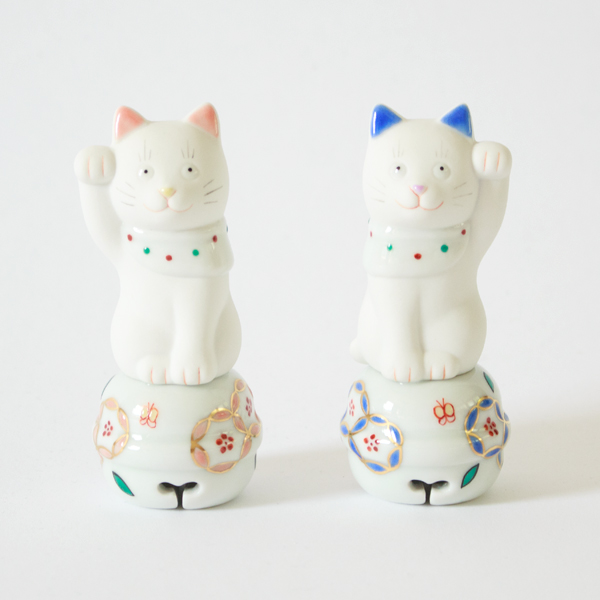
On the bell the cat sits upon, we asked them to add a floral pattern reminiscent of "shippo" (seven treasures), a motif that carries the meaning of continuity. It's a design of interlocking circles, cherished as an auspicious pattern.
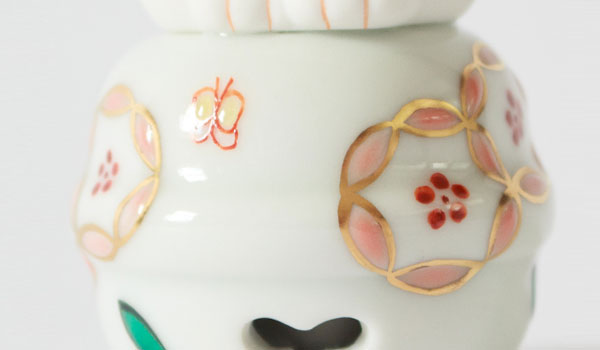
In addition, the pattern on the apron has been changed to a light, playful dot design. The colors of the ears and nose have been changed as well.
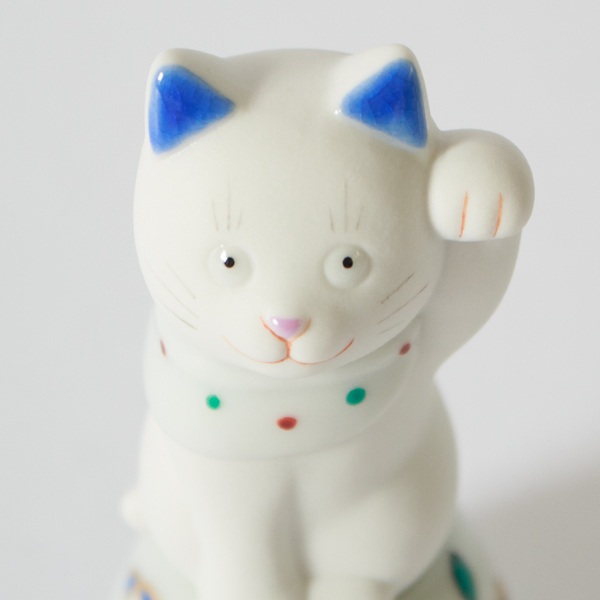
A maneki-neko you can keep close by regardless of the season—the kind that softens your mood a little whenever your gaze happens to land on it in the course of daily life. Here, we introduce how it comes to take shape, through the production process at the workshop and an interview.
Workshop Tour | How the Small Maneki-neko Comes to Be
We visited the workshop toward the end of summer.
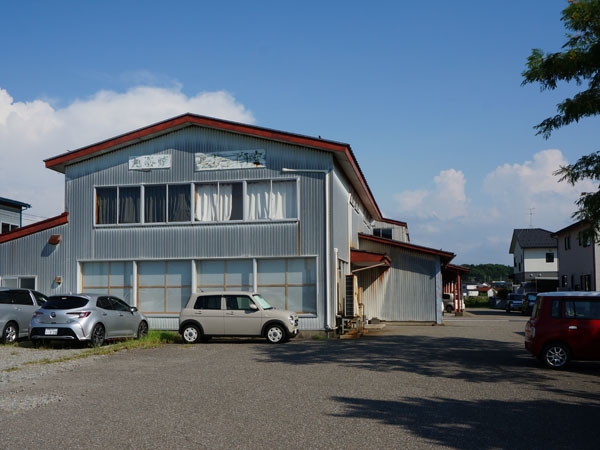

Even in the lingering summer heat, many people were hard at work in the studio. We were shown the process of making the maneki-neko.
1. Clay is poured into separate molds for the cat and the bell to form their shapes.
The process begins by pouring liquid clay into a plaster mold. It hardens from the outside in, and after some time has passed, the excess clay is poured out, leaving a hollow shape inside.
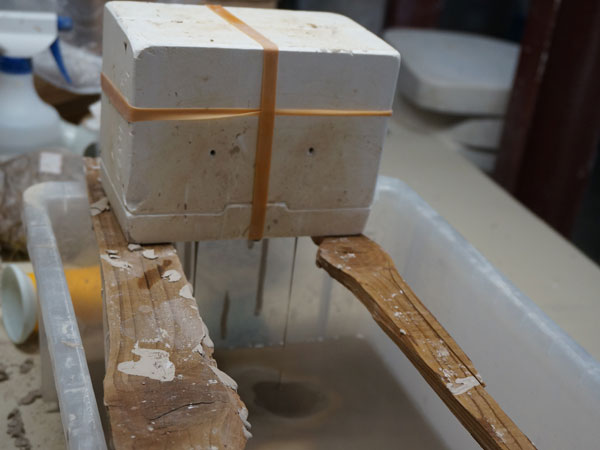
The cat and the bell are made using separate molds and joined together at the end via a small protrusion on the bell, so up until the painting stage, the two pieces are worked on independently.
2. The piece is removed from the mold, the seams are trimmed, and the shape is refined.
After waiting about 15 minutes for it to harden somewhat, the mold is removed, revealing a still-soft maneki-neko.
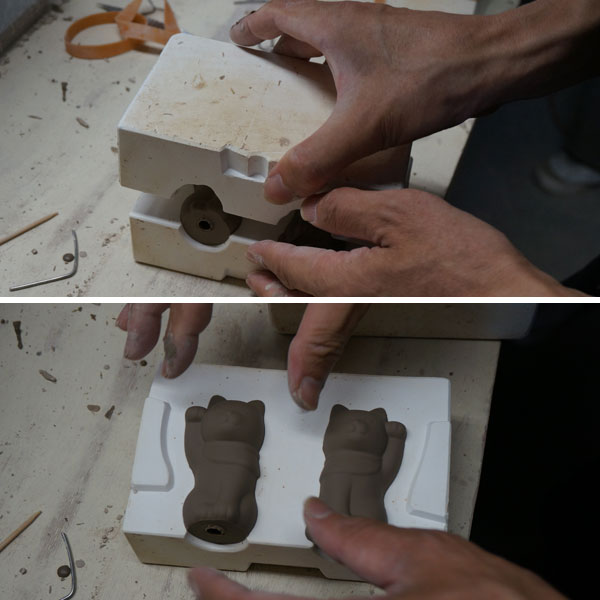
Since ridges (seam lines) remain where the mold pieces met, the base is adjusted so the cat can "stand properly," and the seams are carefully trimmed away.
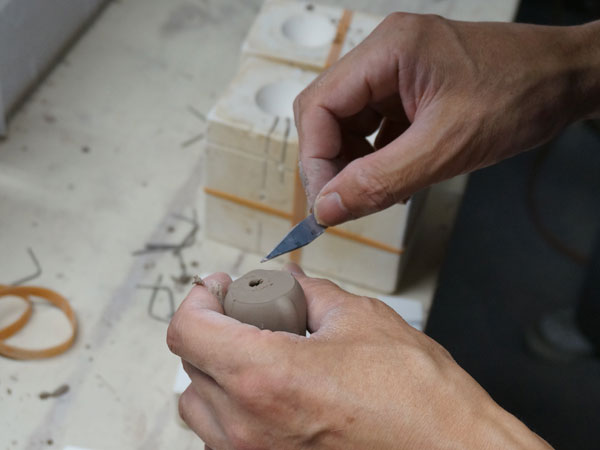
▲Adjusting the base of the maneki-neko.
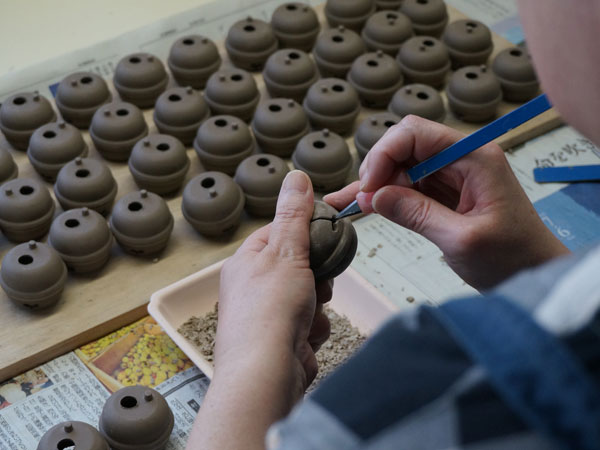
▲These are the bell parts. The hole is said to be a particularly small, delicate part to adjust.
If dried too quickly, the marks from the mold become too pronounced, so the drying speed is controlled, for instance by covering the pieces with plastic sheeting. After drying, the pieces move on to the initial firing.
3. The initial firing is done in an electric kiln.
Once dried, the cats are fired in an electric kiln to fix their shape.
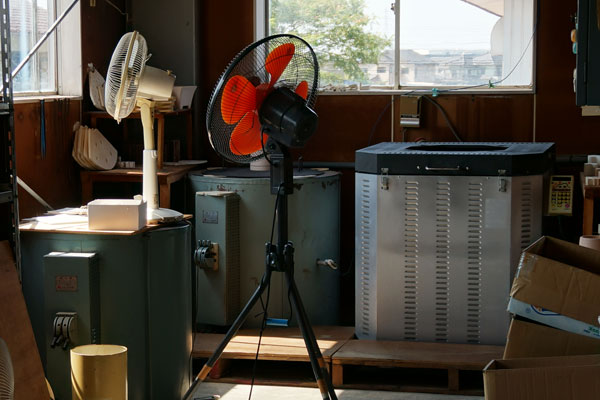
This silver kiln is the electric kiln. Depending on the design, they're often fired at around 800 degrees.
After this initial firing, the cats turn a pale skin-like color all over.
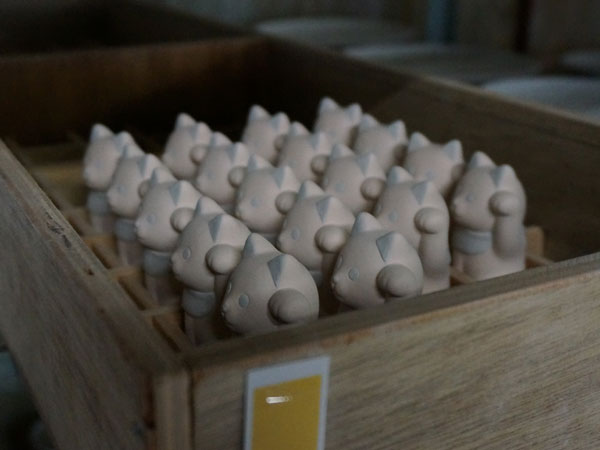
4. Glaze is applied to the areas that will be painted.
After the initial firing, glaze is applied only to the areas where the design will appear.
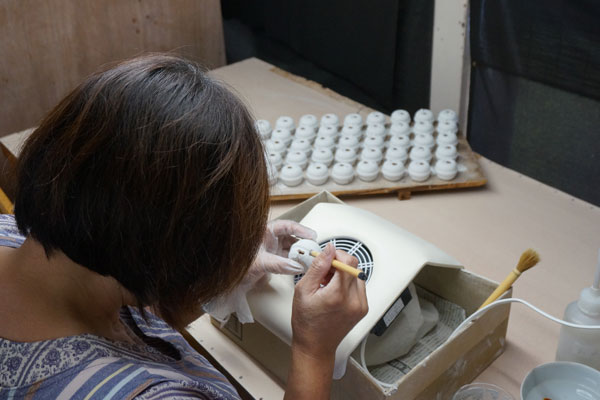
For the two-sun size cats, glaze is mainly applied to areas like the ears, eyes, and collar. Normally, glaze is often applied to vessels all at once by dipping. But because the maneki-neko has a complex shape, the glaze is applied with a brush—a more painstaking process than glazing a vessel.
Any glaze that spills over during application is scraped away with a small spatula-like tool, smoothing the surface so it's ready for painting.
5. The main firing turns the piece white.
After the glaze is applied, the pieces undergo the main firing in a gas kiln, at a temperature of around 1300 degrees.
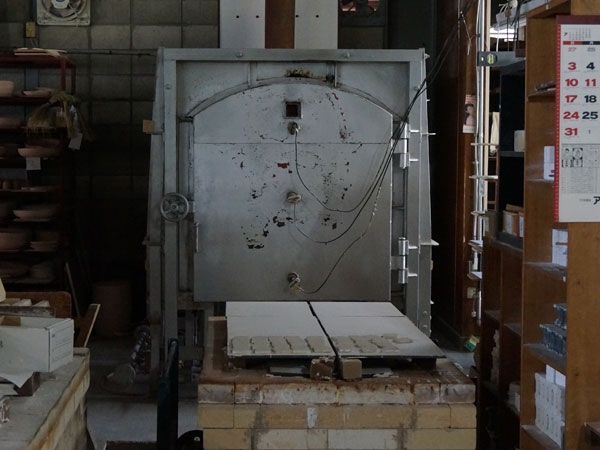
The pale, skin-colored clay body emerges from the kiln white. The piece shrinks slightly during this firing—here is a comparison of the piece before and after.
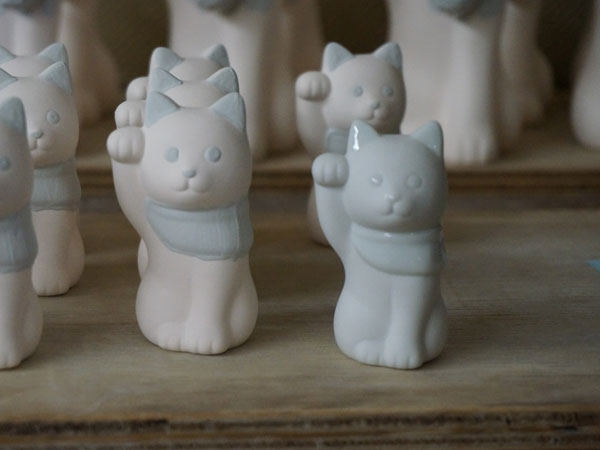
The smaller cat on the right is after the main firing. The glazed areas have a glossy sheen, while the rest has a matte texture.
6. The cat and bell parts are joined together, glazed, and painted.
After the main firing, the bell's protrusion is fitted into the hole at the cat's feet, glaze is applied, and the piece finally takes the form of a single figure. Painting comes next.
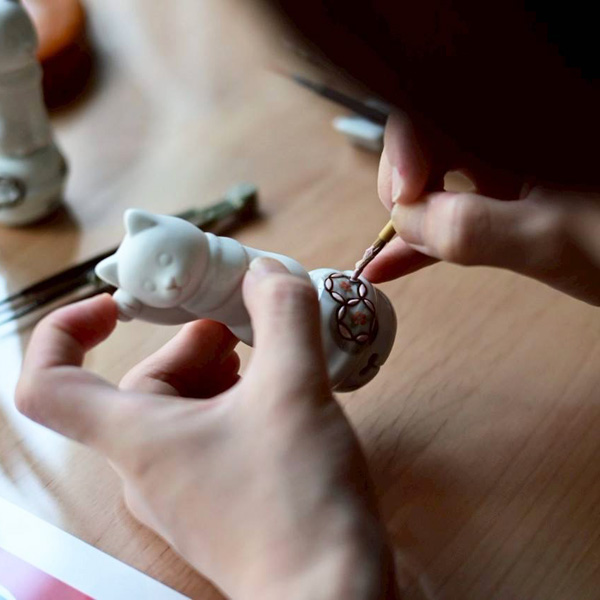
The timing of the painting varies depending on the item's use and design, but since the maneki-neko generally uses "overglaze painting," where the design is applied on top of the glaze, the painting happens at this stage.
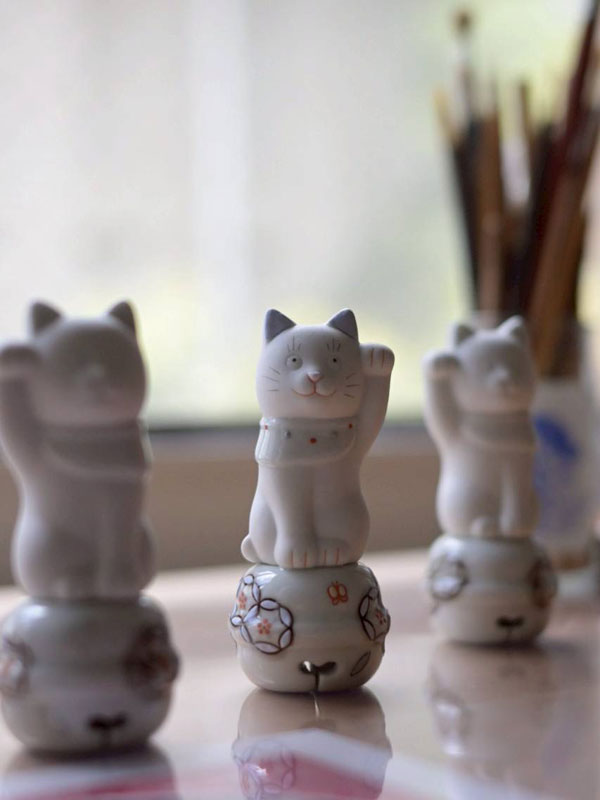
7. One final firing, and it's complete.
After painting, the piece goes into the kiln once more. And so, at last, the two-sun Choemon Maneki-neko is complete.です。
Brand Interview
What does the "beckoning cat" mean to Kutani Choemon Kiln?
The first figure ever made using a mold.
Kindly agreeing to speak with us for this interview was Ayuko Kamide, wife of Keigo Kamide, the sixth-generation head of the kiln.
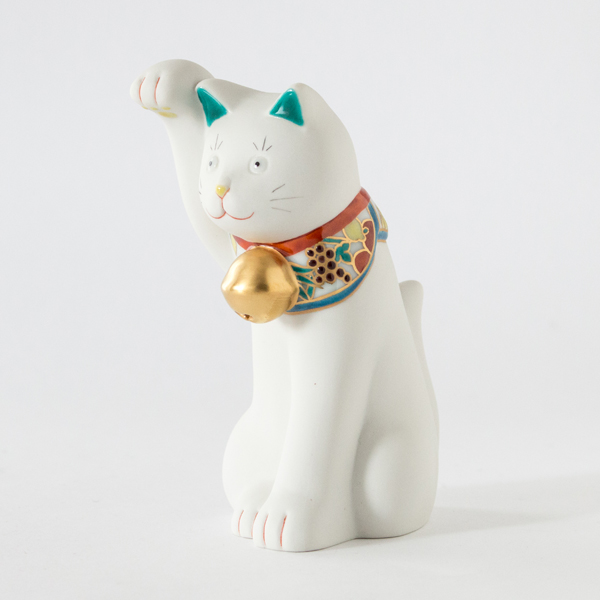
▲The very first beckoning cat to be turned into a product, Manekineko Suzunari.
"That was around 2015, so it's been about ten years now. It was the first original figure that Choemon Kiln—which had mainly focused on making tableware—created by building a mold. The very first impetus was a beckoning cat that the sixth-generation head made as a wedding favor for a friend, so it wasn't actually intended for sale.
He made the plaster mold himself, shaped it, and even painted it. When we displayed that sample at the entrance of the shop, customers kept asking, 'Is this for sale?' That's how the idea of turning it into a product got started."
"But making the original mold for a figure isn't easy. Getting it to release smoothly from the mold requires specialized knowledge."
"By coincidence, around that time a friend of the sixth-generation head from his university days—who had studied sculpture—happened to be traveling back and forth between Ishikawa and Tokyo, so we asked him to make the original mold."
"At the time, he was doing other work, but now, remarkably, he works with us as a potter at Choemon Kiln."
"That's right. If the timing hadn't worked out for him to come to Ishikawa Prefecture, this might never have happened, and we might have asked someone else entirely. Starting with the beckoning cat, our figure-making has gradually expanded to include Hina dolls and Chawan Musha (tea bowl warriors)."
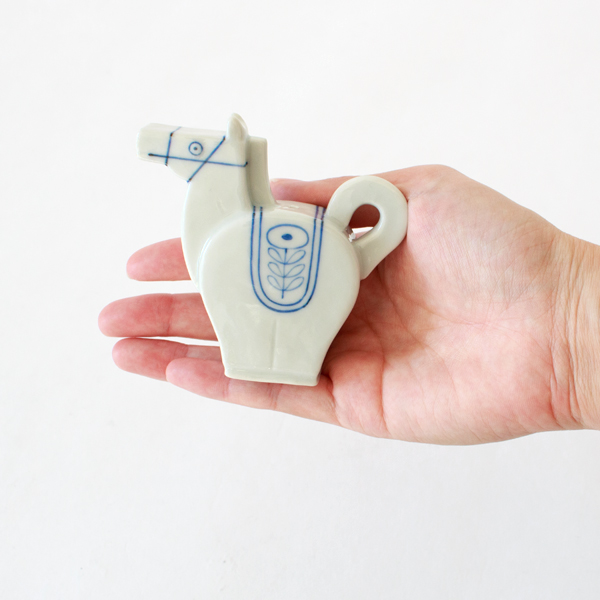
▲The Suiteki (water dropper) modeled after the horse, the zodiac animal of 2026, was also given its original mold by the same person. The design is by sixth-generation head Keigo Kamide.
The beckoning cat was the first challenge for a kiln that had centered on tableware, made as a "figure created by building a mold." Craftsmanship that began through a chance encounter between people continues today as the origin point of Choemon Kiln's beckoning cats, and of its figure-making as a whole.
The Playful Spirit Held Within the Nisun Choemon Manekineko
The Idea of Sitting on a Bell
"The first beckoning cat was so well received that we thought, why not try making another size from a fresh perspective? That's how the Nisun Choemon Manekineko was born."
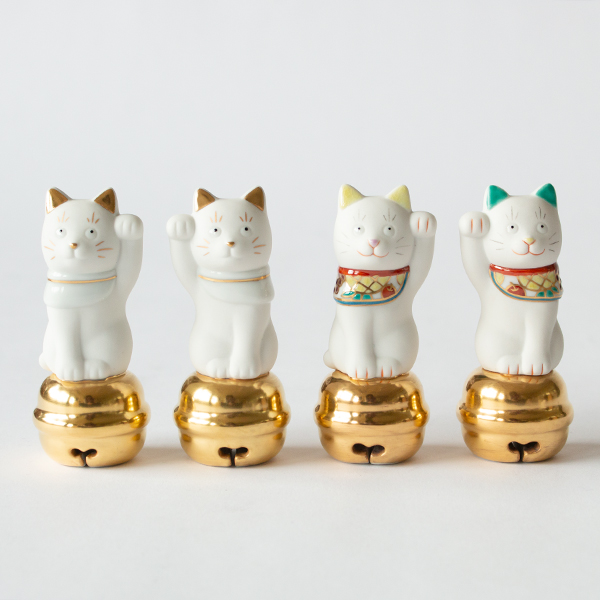
"One thing they were particular about was that the bell should actually make a sound. But when you attach it to the neck of a small beckoning cat, the bell becomes very tiny, and getting the overall balance right becomes difficult.
So we arrived at the idea of simply placing the cat on top of the bell instead."
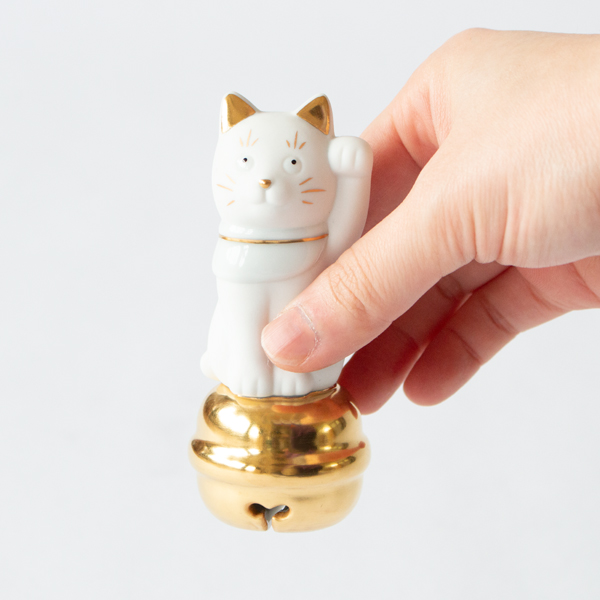
The cat perches neatly atop a bell that actually rings. Give it a little shake, and a small, soft chime rings back.
A Form That "Doesn't Look Odd Even When Made Smaller"
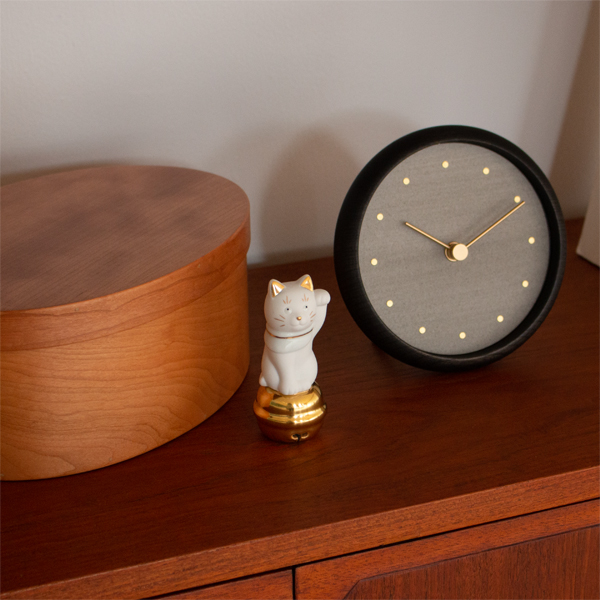
"Even though it's the same beckoning cat, the Nisun-size version isn't simply a uniform scale-down of the original. Since the body is smaller, the arms are a bit shorter, and the gaze is angled slightly upward."
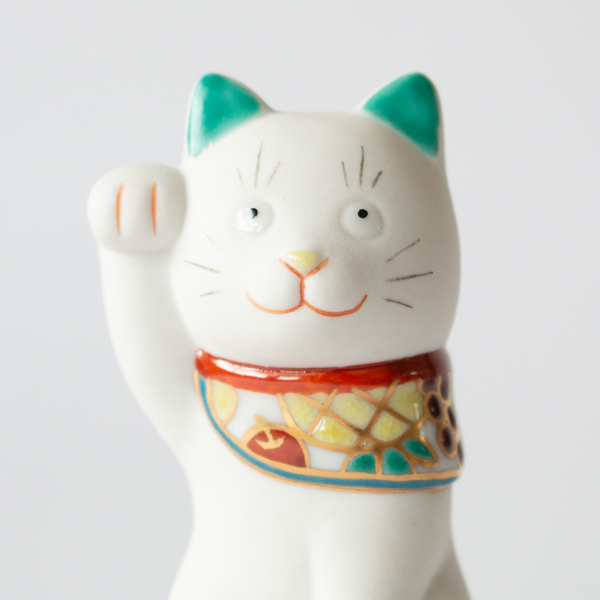
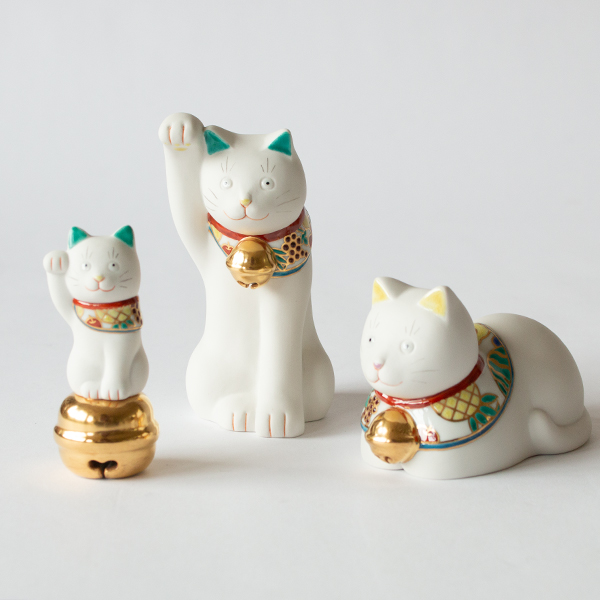
▲When you line them up side by side, each one's individual character really comes through.
A Painter Dedicated Solely to the Beckoning Cats
"For our other products, the painting is done at the workshop, but for the beckoning cats, we ask a painter who used to belong to the kiln and now works exclusively on the beckoning cats. She comes up with a variety of designs and paints them, both for the one-of-a-kind beckoning cat projects sold exclusively at our directly run store and for collaborations with other shops."
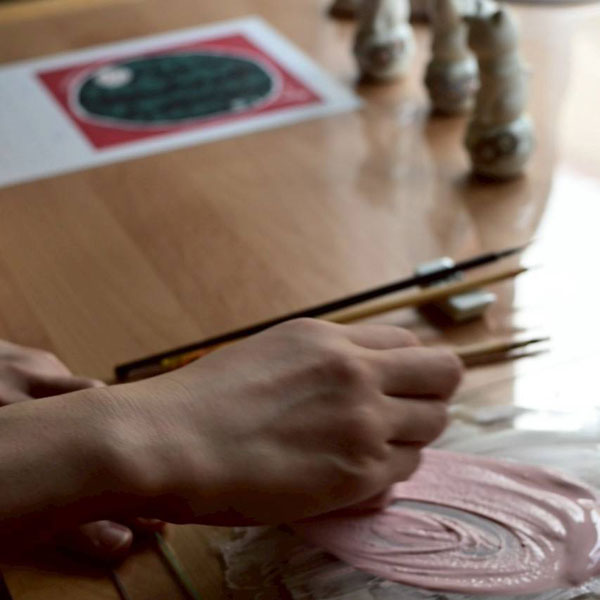
"When she comes up with a design, she draws it on paper with colored pencils and proposes it to us. Some of the beckoning cats are handled by our own workshop, but for the most part, we leave it to her. The standard fruit and gold-and-white designs are by the sixth-generation head, but she is basically the one behind the rest of the beckoning cats."
Creating "Something Distinctly Choemon Kiln" Through a Unique Point of View
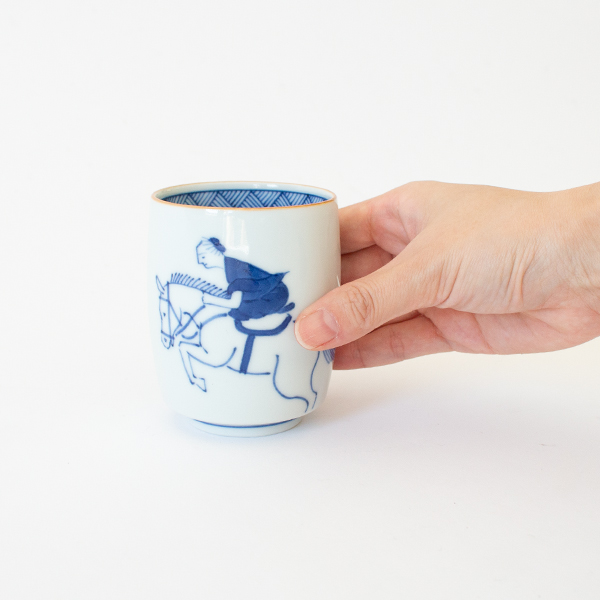
"The designs for the maneki-neko and the figurines themselves are conceived by Ueide Keigo, the sixth-generation head of the kiln. Working from a sensibility cultivated mainly through tableware, he starts from the question 'what is a shape that feels truly like Kutani Choemon?' and reinterprets long-standing motifs—maneki-neko, Fukusuke, the zodiac figurines—in a new way.
The inspiration varies from piece to piece, but one interesting example is the Otogi Hakku (White Dog). On January 11th of the Year of the Dog (a date read as 'wan-wan-wan,' or 'woof-woof-woof' in Japanese), a dog that appeared vividly in a dream became the basis for its image. I feel it also bears some resemblance to the dog we keep as a pet, a Japanese Chin."
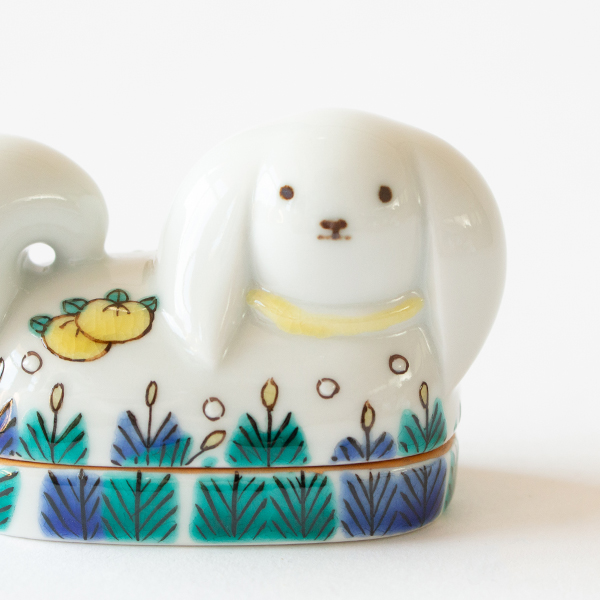
▲The "Otogi Hakku," which was also popular at this year's order event.
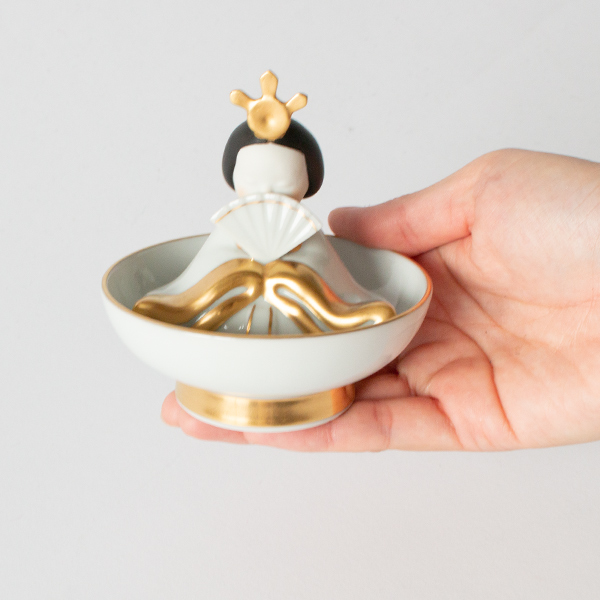
▲The "Momozome no Hina," for which an order event was held at the same time. The pair of sake cups can also be removed for display.
"As for the Hina dolls, since our kiln has long been a chawan-ya (rice bowl maker) producing tableware for Japanese restaurants, we placed them on rice bowls, in place of sake cups. What we value most, I think, is the idea of 'not simply reproducing something traditional as it is, but always considering what it means for Kutani Choemon to make it.'"
・・・・・・・・・・・・
After the Interview
What stood out most was the way the kiln builds on the careful, meticulous craftsmanship characteristic of a long-established workshop, while also reinterpreting traditional forms and pursuing originality. What emerges is never eccentric for its own sake—yet it still feels distinctly "like Kutani Choemon," unique in its own right. This interview offered a glimpse into that delicate balance.
A Small Maneki-Neko You'll Want to Keep Close All Year Round
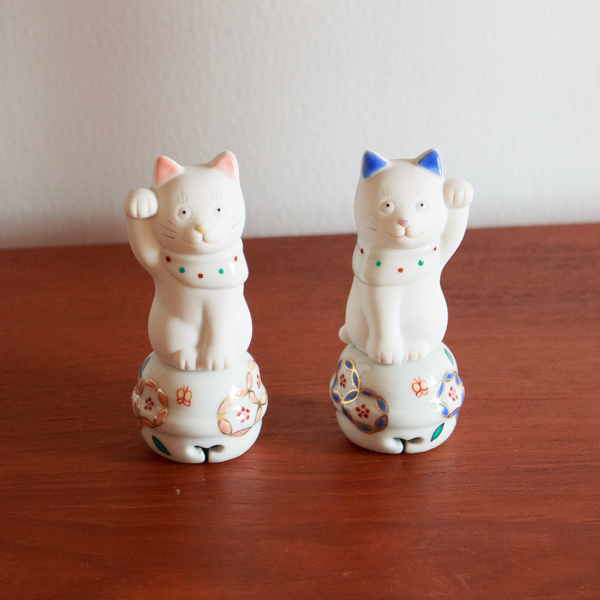
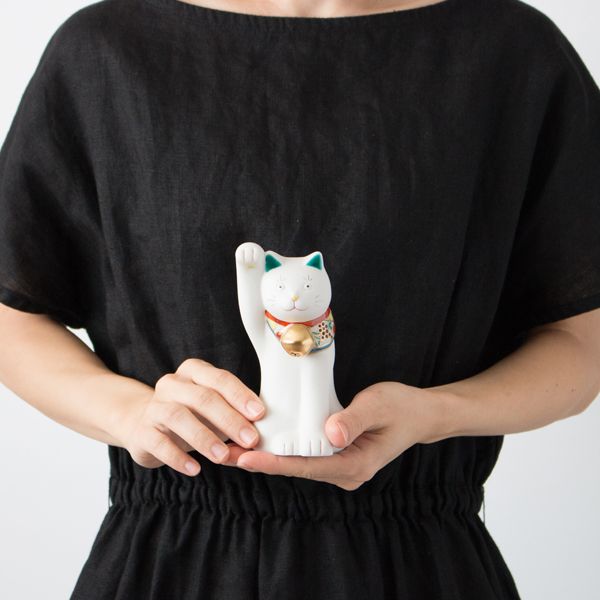
When you think of a maneki-neko, you might imagine it as a decoration for New Year's or other special occasions. But the Nisun Choemon Maneki (two-sun beckoning cat) feels like something you can enjoy much closer to everyday life.
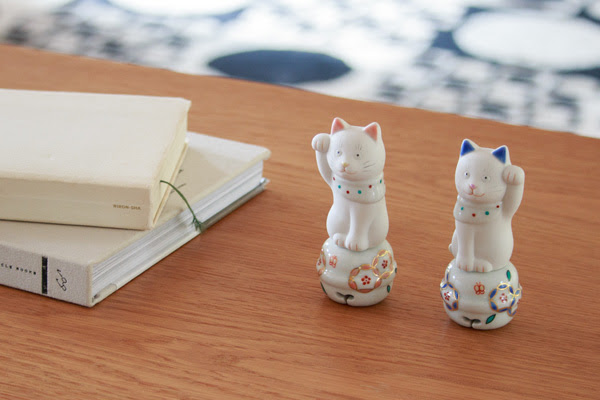
On top of the shoe cabinet by the entrance, in a corner of the bookshelf, on a corner of the desk—perched neatly atop its small bell, this maneki-neko takes up almost no space and fits naturally into any part of daily life. Whether you welcome it in at the start of a new year, keep it as a kind of charm for a move or a fresh start in life, or simply because you find yourself thinking "I love this face"—we hope you'll enjoy having the gaze of Kutani Choemon, held within such small hands, close to you in everyday life.
▼You can find the product page here
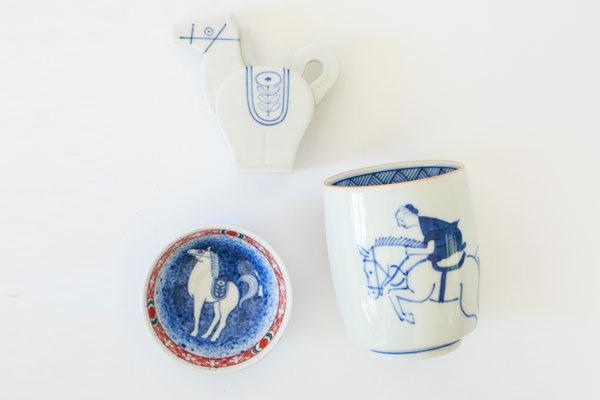
▼Browse all Kutani Choemon products
GUIDE »
CATEGORIES »
- + Gifts by recipient
- + Gifts by scene
- + Clothing
- + Bags / Backpacks
- + Wallets / Card cases
- + Jewelry
- + Shoes
- + Rainy day outfits
- + Kitchen
- + Home
- + Babies / Kids
- + Japanese products
Earn Miles


Payment & Security