Welcome to ZUTTO
Free shipping for newsletter subscribers (some areas excluded)
- トップページ/
- ZUTTO Journal/
- ブランドストーリー/
- Tableware with a ...
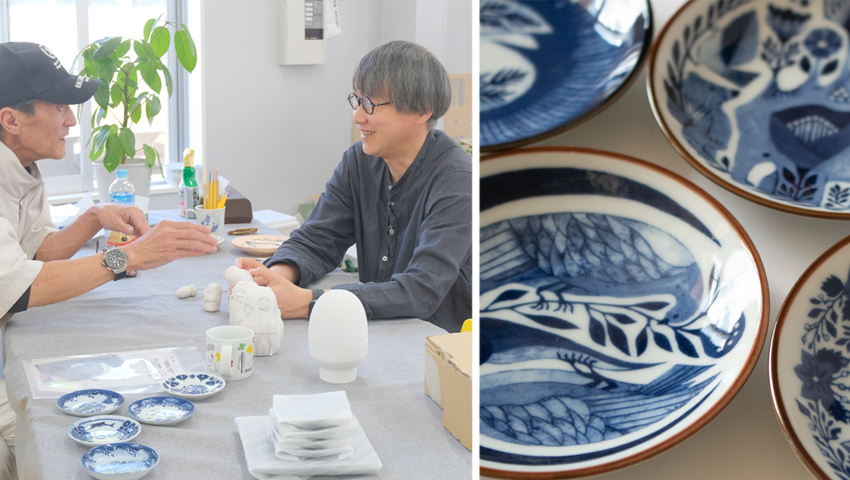
Tableware with a story to tell. Behind the scenes of Hasami-yaki year plates and mamezara small plates
Among ZUTTO's treasure-hunt pottery market, the year plates and mamezara small plates are especially popular. This year too, illustrator Fukuda Toshiyuki × Hasami-yaki collaboration features a new release.
Here, we go into more detail about the background, techniques, and the voices of the makers behind these pieces — details we couldn't fully cover in our newsletter. After reading, we're sure you'll see these pieces in a whole new light.
1| Tableware You'll Want to Welcome Into Your Life—"Vessels That Hold Memories"
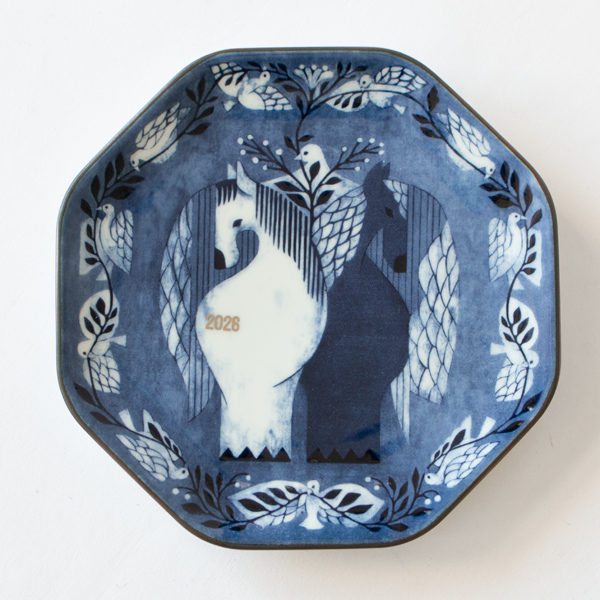
▲The motifs for the new 2026 year plate are the zodiac animal "horse" and the "bird," which has been featured throughout the series.
What Fukuda draws are creatures with charmingly rounded forms, each with its own distinct personality. The illustrations, created especially for this plate, come vividly to life on the white porcelain. Based on the traditional European year plate, this piece harmonizes the gentle white porcelain characteristic of Hasami-yaki with Fukuda's flowing, expressive lines—making it as lovely to display as it is practical to use. Its special charm is exactly why it's chosen as a keepsake to mark the year or as a gift.
2| The Mamezara Series—Small Plates, Each with Its Own Story
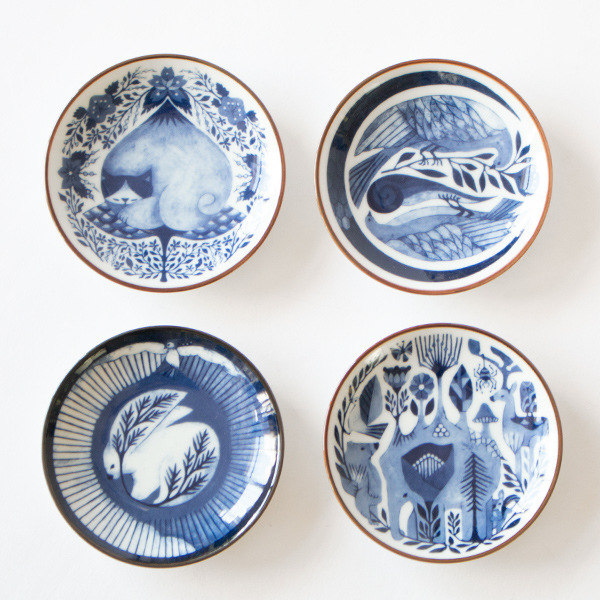
▲The mamezara small plates are a popular series, with a new theme drawn each year.
Following last year's theme of the four seasons (spring, summer, autumn, winter), this year's motif is yojijukugo (four-character idioms). The unique designs express words through animals and plants, giving each small plate remarkable presence despite its size. They're charming whether displayed alone or arranged together.
3| The Meticulous Detail That Only a Highly Skilled KilnCan Deliver
From here, we'll take a deeper look behind the scenes of how these pieces are made.
Despite their charming appearance, the year plates and mamezara small plates are made using extremely delicate techniques. At the heart of this is a highly skilled approach to porcelain-making.
✔︎ The Hand's Sensitivity That Determines the Finished Result
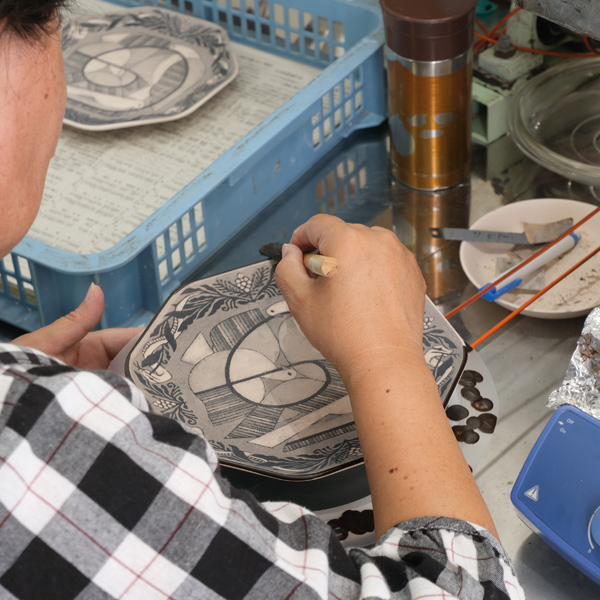
This series uses a technique that transfers the design onto the surface much like stamping with a hanko (seal), and while it may look uniform at first glance, the craftsperson's skill actually plays a major role.
For instance, the precision of the plate itself, the speed at which the design is stamped, and the density of the gosu (cobalt blue pigment) all come into play. Even the slightest difference can change the shading, alignment, or subtle variation. It's precisely these small variations that harmonize beautifully with Fukuda Toshiyuki's soft linework, giving the pieces their gentle expression.
✔︎ Gradation Is Harder to Achieve on Porcelain Than on Paper
One of the charms of Fukuda's design is his expression of light and shade. Reproducing this in porcelain is far more difficult than one might imagine, requiring delicate adjustments starting from the plate-making stage.
Where should the color be darker?
How should the boundaries be softened?
Because the color changes during firing, there's no way to know the result until the piece has actually been fired. This year, too, the team went through as many as three rounds of trial production before arriving at the ideal shading. This is craftsmanship where the effort truly lives in the details you can't see.

✔︎ Hand-Drawing Isn't Impossible—But the Precision Required Would Take It Beyond Everyday Tableware
The fineness of the lines and the density of the pattern are so intricate that they invite a closer look. If this design were to be reproduced entirely by hand, the price would climb to a level no longer suitable for everyday tableware.
This delicate balance—achieving the beauty of a fine craft piece while keeping it affordable for daily use—is one of the reasons this series continues to be so beloved.
✔︎ And in the End, It's the Human Eye That Decides the Final Finish
In the end, Fukuda himself travels to the kiln to check each detail—line thickness, density, overall impression—making fine adjustments along the way. Only after firing the pieces again and again, checking for misalignment and shading, does the work reach completion.
Pottery-making is often thought of as a divided process, but this series is truly a piece born from the unity of designer × craftsperson × kiln.
4 | SPECIAL INTERVIEW "Fukuda Toshiyuki × Saikai Toki"
Curious to learn more about the background of this collaboration—the behind-the-scenes process rarely seen by outsiders—we sat down for an interview to ask all the things we wanted to know.
Q. How did this collaboration begin?
●Saikai Toki:
"We had admired Fukuda's work for some time, and the collaboration began when we worked together through a client relationship, with him as the designer. When he visited Hasami, we heard about his interest in ceramics and knew right away that we wanted to ask him to create something with us."
Q. (To Fukuda Toshiyuki) How was the production process in Hasami?
◾️Fukuda:
"In Hasami, where traditional techniques mix with new ones, I was really looking forward to seeing what kind of chemical reaction my artwork would create. In the end, it matched well with the medium, and I'm very satisfied with the result. As the project progressed, the cultural differences with the people of Hasami were sometimes interesting and sometimes challenging, but altogether it was a wonderful experience."
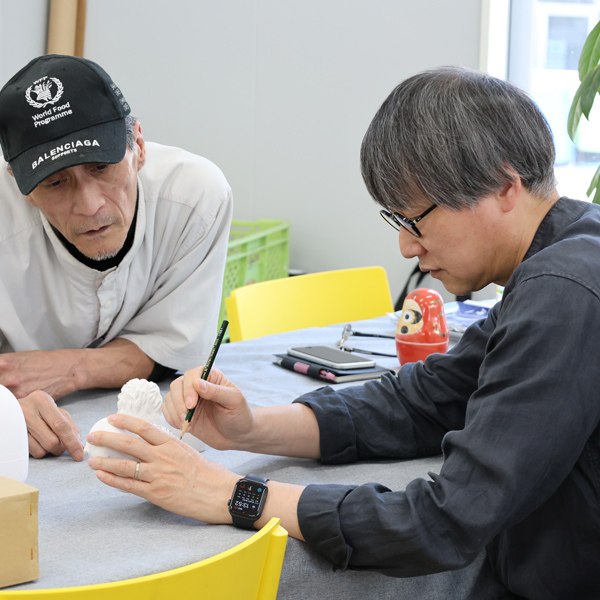
Q. (To Fukuda) What kind of care went into translating the designs onto ceramics?
◾️Fukuda:
"We asked a lot of the craftspeople and went through many rounds of trial production. Since pottery involves working with nature, there's always some individual variation between pieces, but this time again we're satisfied with the result. Since this is our second year working together, the trust and experience we've built up made things go more smoothly than the first year."
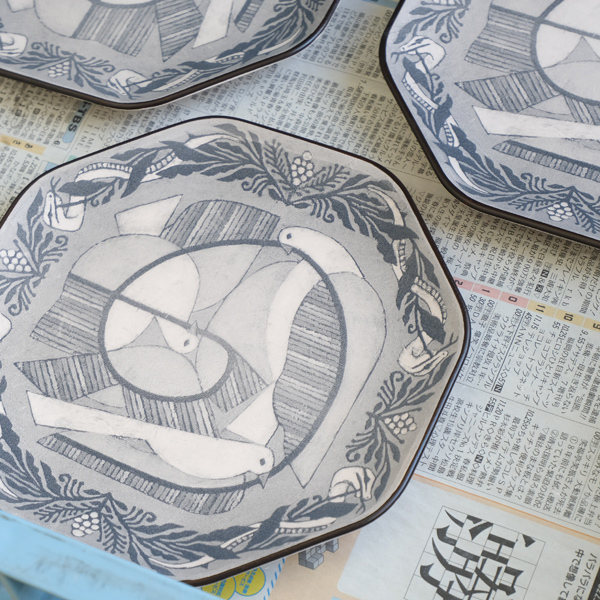
▲For the very first production, it's said that they went through as many as five rounds of sample-making and revisions before reaching a satisfying result.
Q. How do you go about creating works like this? Do you draw inspiration from everyday life?
◾️Fukuda:
"I'm influenced by everything I see, everything that moves me. I want to bring something just a little bit special into ordinary daily life. I create my work while thinking every day about how my art can find its way in."
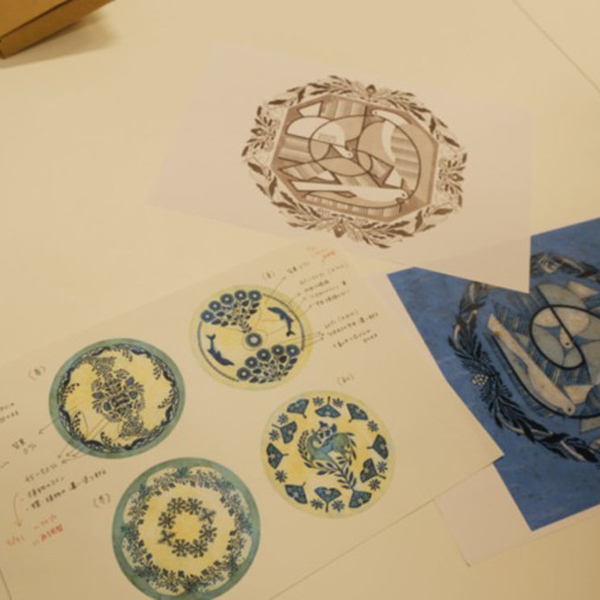
Q. Why do you think gosu (cobalt blue pigment) has been loved for so long?
●Mr./Ms. Saikai Toki:
"Porcelain is sturdy and easy to handle, yet it allows for a wide range of expression through shading and patterns. I think this balance between practicality and aesthetic appeal is what makes it so special. Sometetsuke (blue-and-white underglaze) was widely used during the era when everyday tableware became common, and that may be one reason it's still loved today."
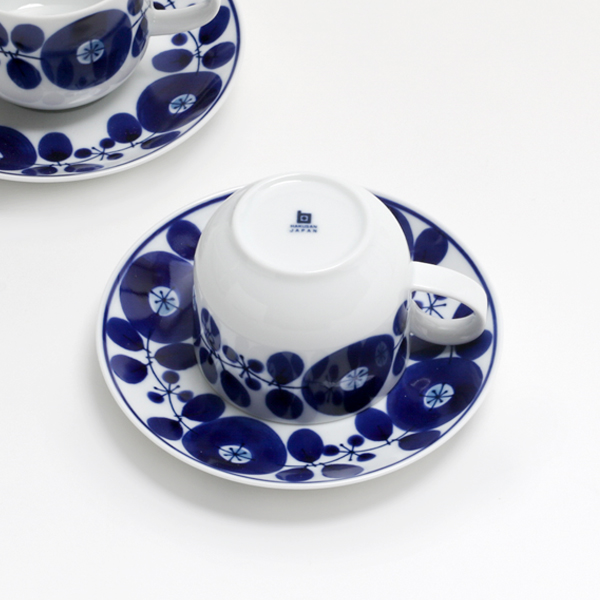
Q. What are some recommended ways to use this year's tableware?
●Mr./Ms. Saikai Toki:
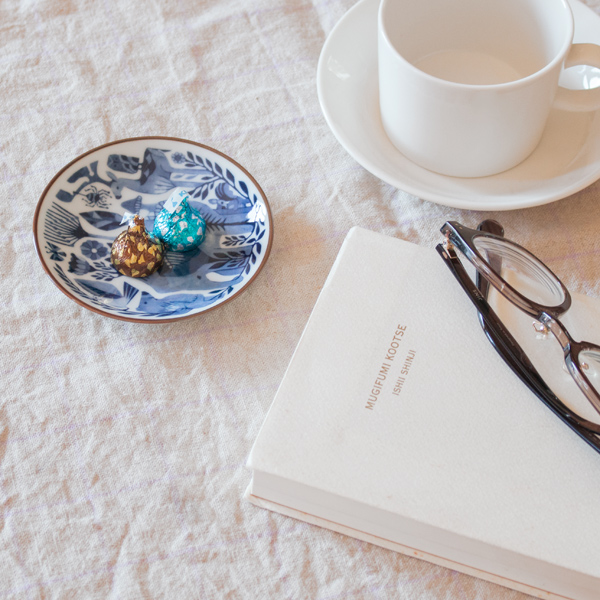
"Because Fukuda-san's designs have a universal quality, they work well in both Japanese and Western settings. Beyond the dining table, they can also be enjoyed as interior décor, such as an accessory tray."
Q. Can we look forward to next year's edition as well?
●Mr./Ms. Saikai Toki:
"We definitely intend to continue."
5|Ways to Enjoy Them in Everyday Life
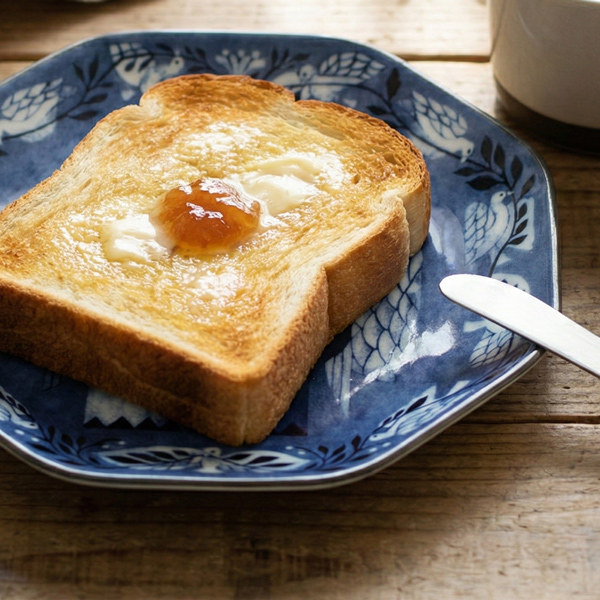
● For a morning one-plate meal
The ear plate makes toast or fruit look beautiful. The mameзара (small dish) is perfect for jam, butter, or nuts. It's precisely in these unassuming mornings that the charm of this tableware really shines. Taking your time over breakfast while gazing at the pattern makes the moment feel just a little richer than usual.
● For year-end entertaining
Use them as small serving plates or for finger food, and the table instantly feels more festive. When a guest says, "Oh, this plate is lovely," you can't help but want to share the story behind its making. The way these dishes can spark conversation is part of what makes this series so appealing.
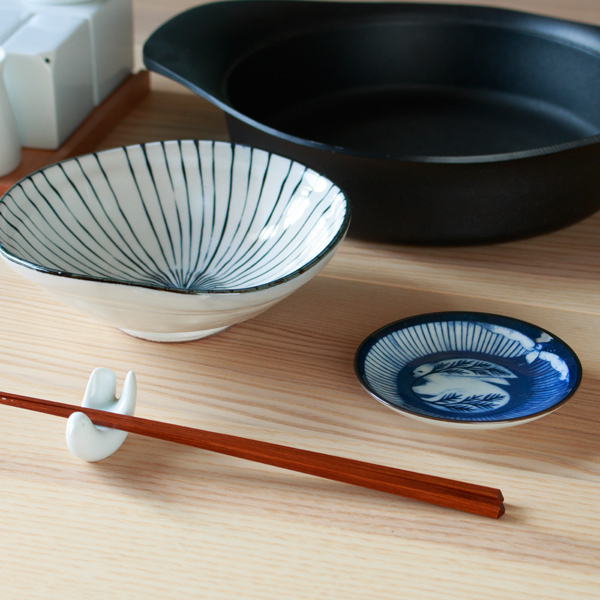
● As interior décor
Use the mameзара as an accessory tray, or hang the ear plate on the wall. Keeping them somewhere visible, even when you're not using them, brings a little comfort in unexpected moments. Many people welcome these plates into their homes around Christmas or the New Year, but they also make a memorable gift for celebrations like weddings or births.

In Closing
After finishing this interview, Fukuda-san's words—"I want to bring a little something special into everyday life"—resonated with me all over again. These pieces truly embody that idea. Blending seamlessly into daily life, they're the kind of thing that makes you pause for a moment and think, "Ah, this is nice."
Knowing the story behind these pieces seems to deepen the affection you feel each time your eyes happen to fall on them in daily life. We hope this year's ear plates and mameзара bring a bit of story to many people's tables.
GUIDE »
CONTENTS »
CATEGORIES »
- + Gifts by recipient
- + Gifts by scene
- + Clothing
- + Bags / Backpacks
- + Wallets / Card cases
- + Jewelry
- + Shoes
- + Rainy day outfits
- + Kitchen
- + Home
- + Babies / Kids
- + Japanese products
Earn Miles


Payment & Security