
.jpg)








.jpg)

.jpg)
.jpg)






- トップページ/
- ZUTTO Journal/
- ブランドストーリー/
- Delicate embroide...
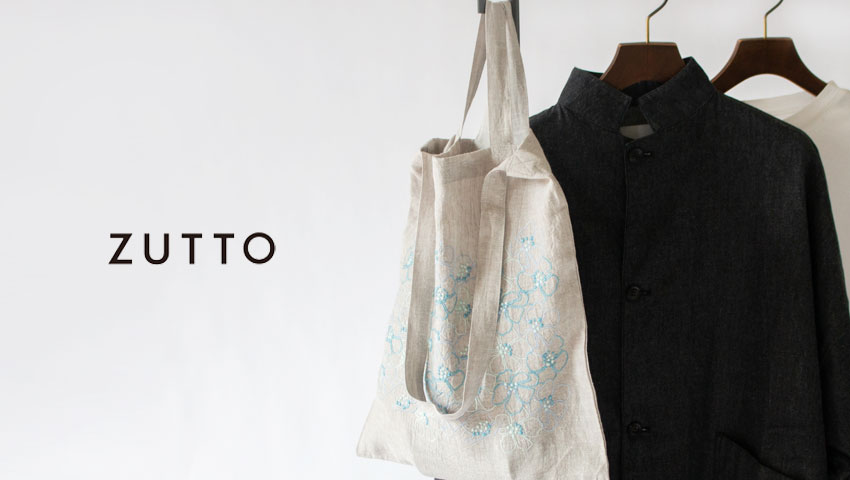
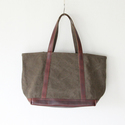
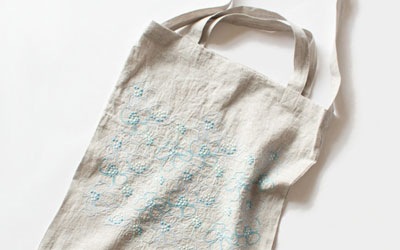
Delicate embroidery born from the long-established embroidery workshop "Kasamori." A daily tote bag that adds a touch of elegance to everyday outfits.
Because it's something we use every day, we wanted something that makes us think "I love this" the moment we catch sight of it. That thought led us to create this original embroidered tote bag.
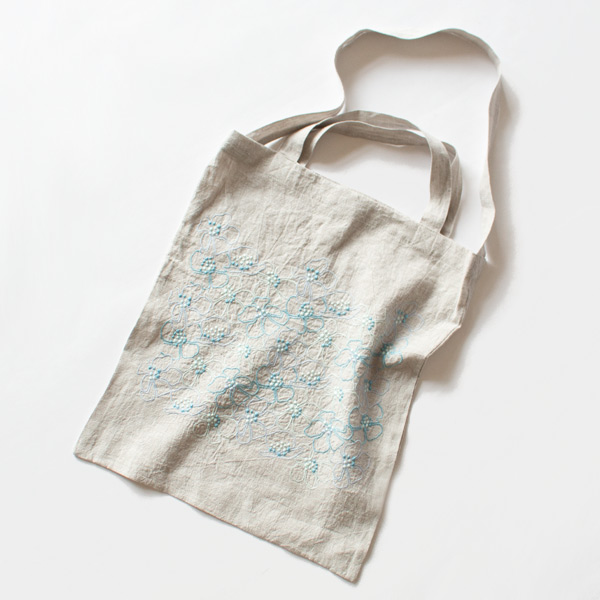
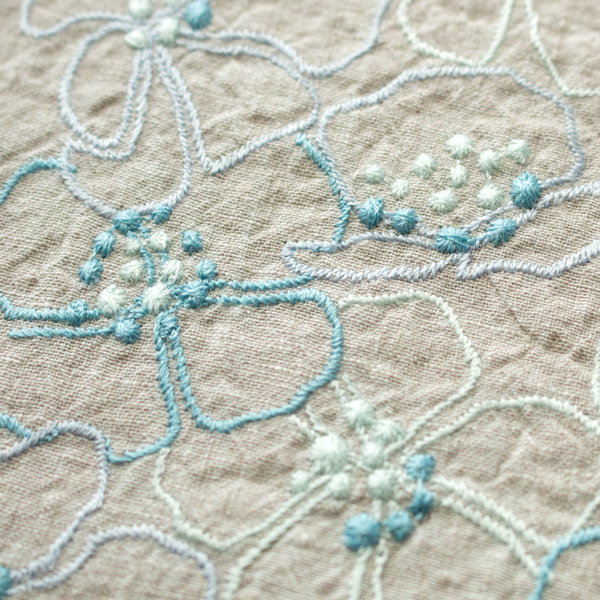
The star of the piece is the delicate, beautiful embroidery by the long-established embroidery workshop "Kasamori" of Kiryu City, Gunma Prefecture. Without disturbing the rhythm of daily life, it lets you sense its solid craftsmanship in unguarded moments. The result is this wonderful tote bag.
A just-right feel for everyday outings
A "blue" with depth that doesn't overstate itself
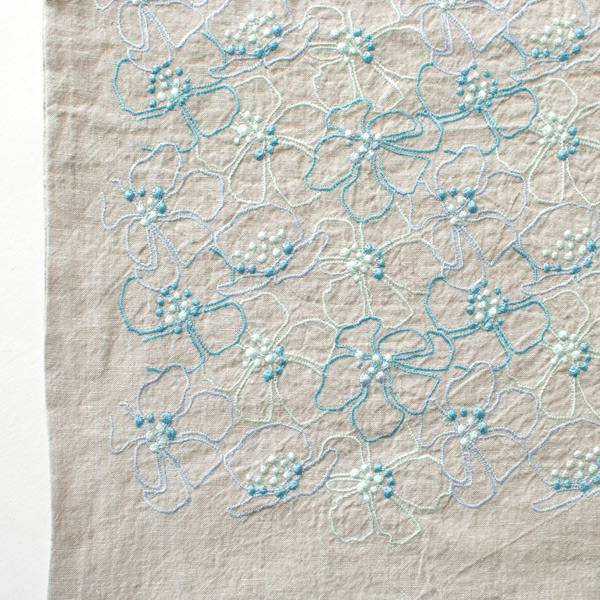
What defines the look of the bag is the calm blue flowers set against a gray fabric. The three distinct shades of blue are each embroidered individually using a jacquard embroidery machine. One craftsperson tends each machine, carefully watching over the process, and this is repeated three times to complete the three-color embroidery.
The layering of threads and the sense of dimension have a beauty that draws you in for a closer look. Rather than decorative flashiness, we placed importance on a calm presence that deepens in affection the longer you use it.
Linen cotton that ages beautifully over time
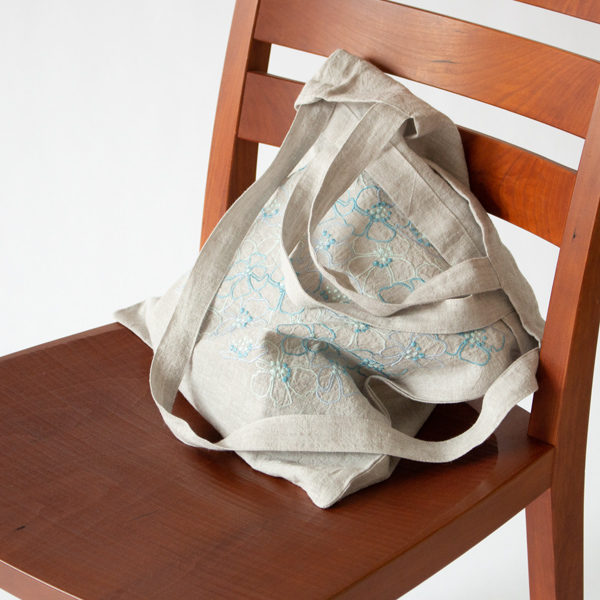
For the fabric, we chose a yarn-dyed linen cotton that uses linen for the warp and a cotton-linen blended yarn for the weft. It has a depth of expression that mass-produced fabrics lack. By taking the time to carefully wash and work the fabric, we achieved a softness and rich texture that feels already well-worn from the very start.
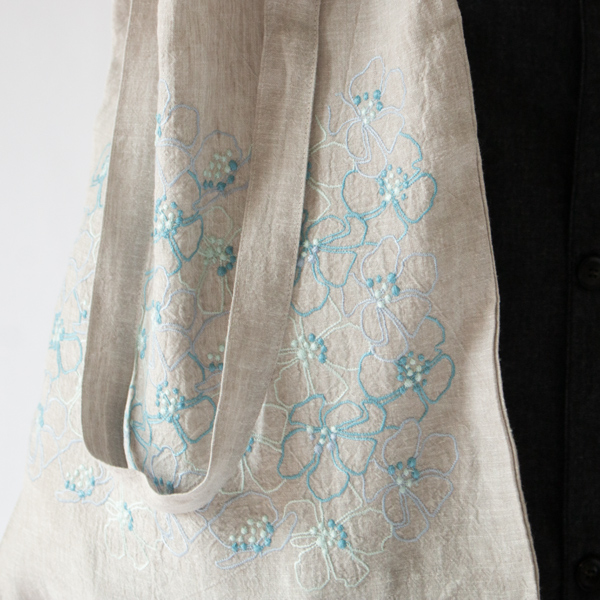
Carry it your way, depending on the occasion
So it's easy to use in any situation, the bag comes with two types of handles. You can switch naturally between them to suit your everyday movements.
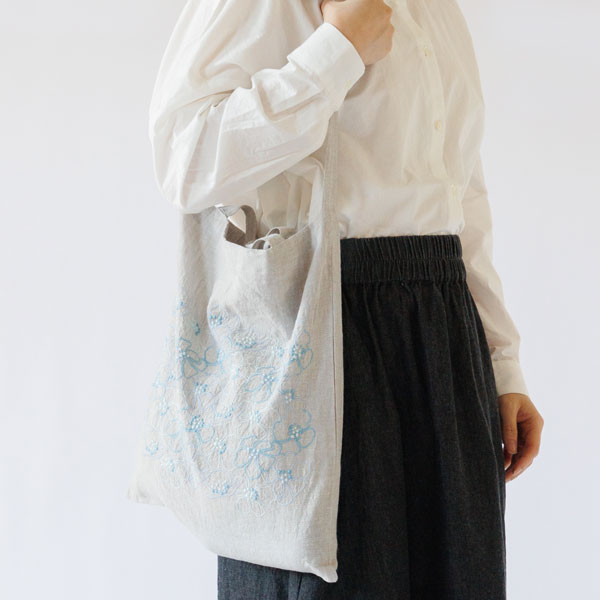
▼One-handle shoulder strap: For when you want to move briskly with the bag over your shoulder. Also handy when you're carrying a lot.
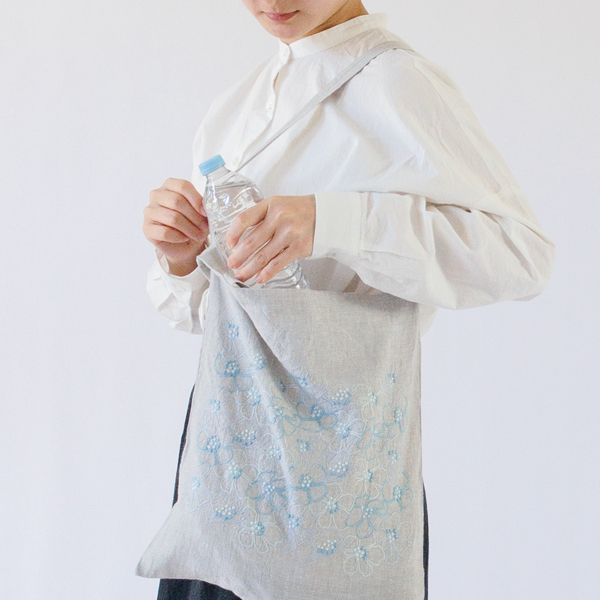
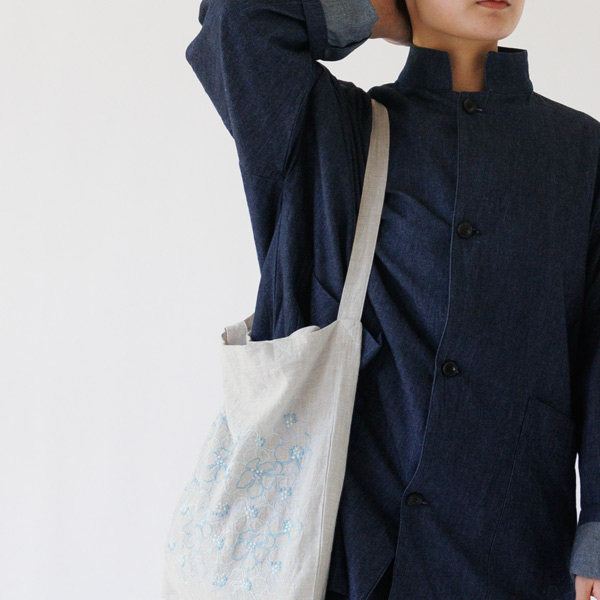
The shoulder strap is long enough to wear over your shoulder even with a coat on.
▼Hand-carry handle: For when you want to pick it up quickly, or keep things compact on the train.
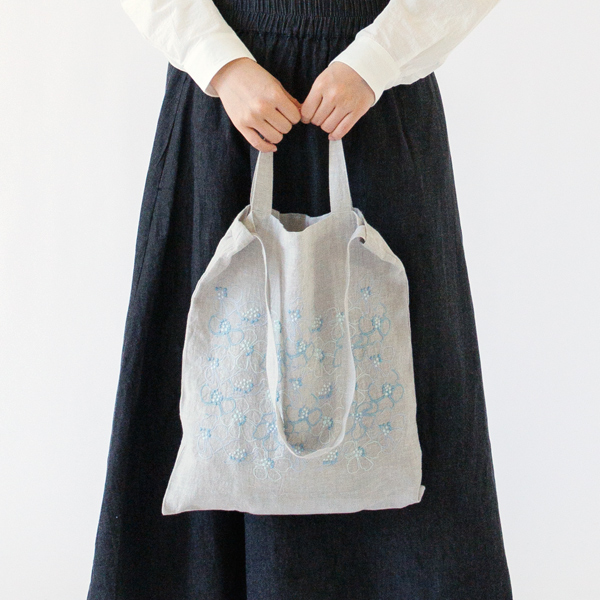
As a sub-bag on days when your load increases, or as a companion on your travels. It also works well as a sub-bag for when you want to carry your favorite mini bag. Being thin and not bulky, it comes in handy for all kinds of occasions.
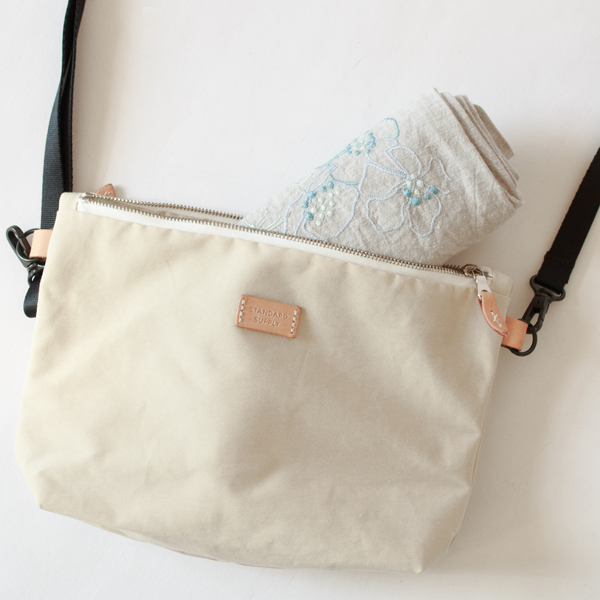
▲Roll it up and tuck it into your bag.
"I'd love to use it like this!" Staff comments
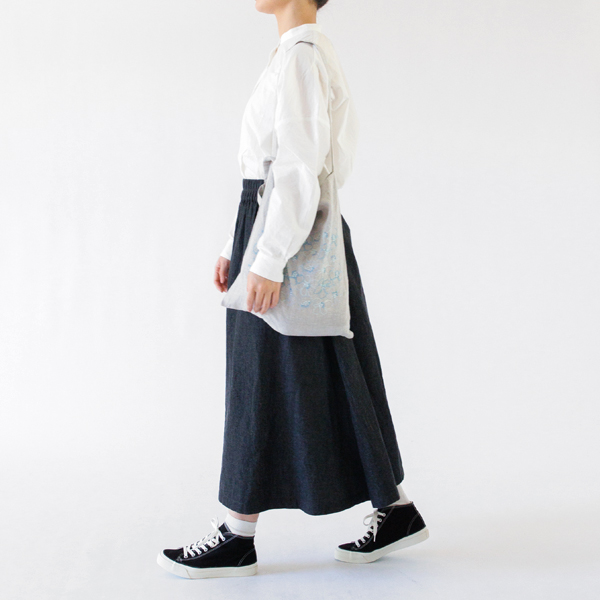
A visit to where the embroidery is born
The delicate embroidery for this bag was created by the long-established embroidery workshop "Kasamori," founded in Meiji 10 (1877). Known also as the parent company behind the accessory brand 〈000 (Triple O)〉, it is a workshop with some of the finest craftsmanship in Japan.
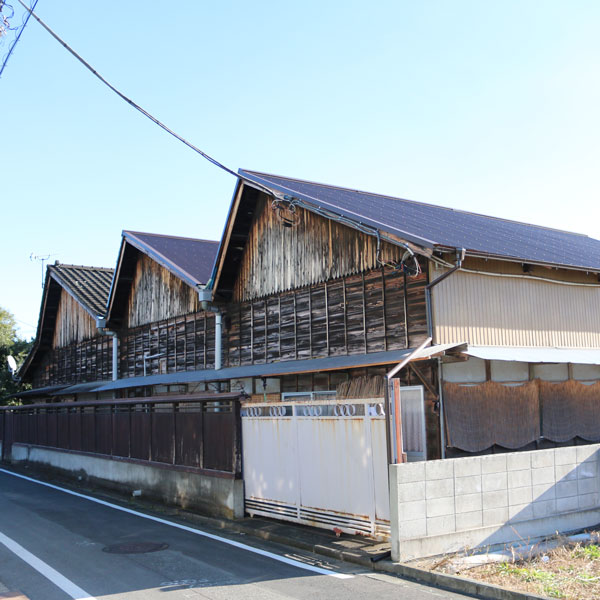
Kiryu City in Gunma Prefecture is a town where the textile industry surrounding kimono once flourished, thanks to a thriving silk-farming trade.
Kasamori itself is said to have started out as a weaver of obi (kimono sashes). As people's fashions changed with the times, the craft shifted from weaving to embroidery, but the spirit of adding beauty to people's attire through the power of thread has been passed down unchanged, from generation to generation, then as now.
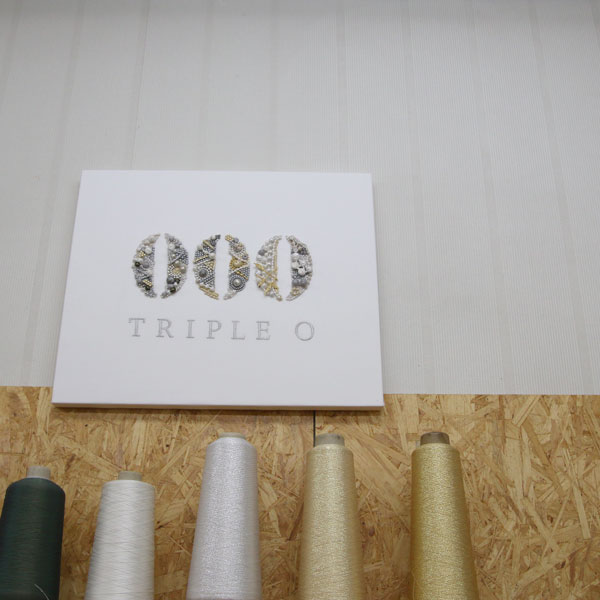
We previously had the opportunity to visit their workshop in Kiryu City, Gunma Prefecture for an interview, and saw the embroidery process firsthand. What surprised us was the overwhelming presence of "the human hand" alive within the mechanized factory.
Listening to the voice of the thread, adjusting to the air
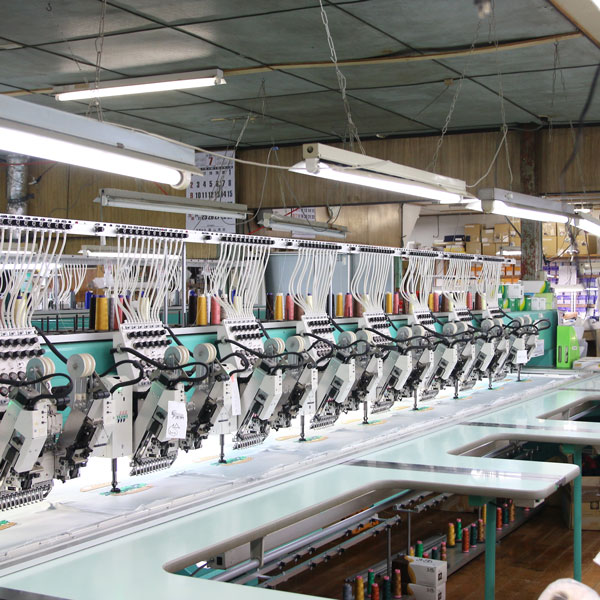
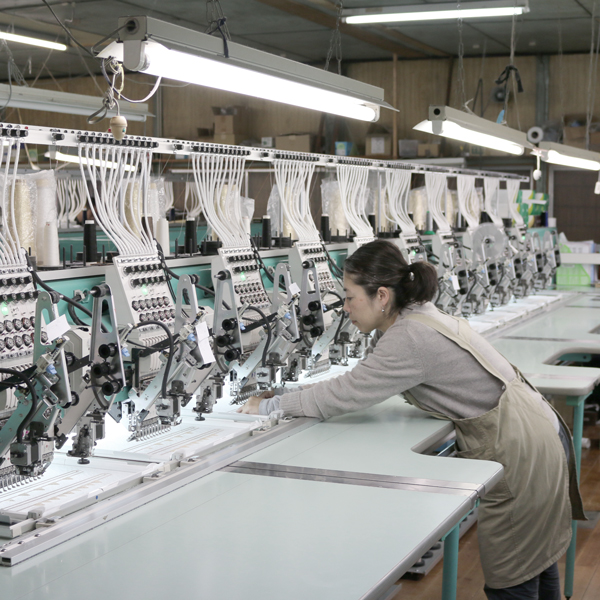
Rows of embroidery sewing machines line up in a row. Yet the machines aren't simply left running on their own—craftspeople stand before each machine, carefully watching over the embroidery as it takes shape.
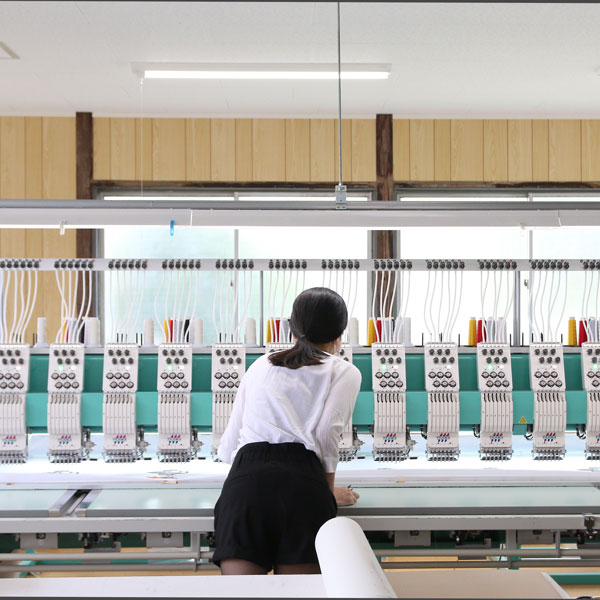
.jpg)
Checking the finish while finely, finely adjusting the tension of the upper and lower threads is work that cannot be done without the eyes and hands of a skilled craftsperson. Watching over the condition of the needle and thread while checking quality is work that requires patience. At one point, the company apparently tried production overseas, but considering that thread quality varies depending on humidity and temperature, and that controlling the finish requires the skill of experienced craftspeople, they now insist on manufacturing at their own workshop in Kiryu. The embroidery on this bag, too, is born from this kind of thorough management.
In the end, the finishing touch is always done by hand
Even after the machine finishes the embroidery, the work is not over. At the workshop, veteran craftspeople picked up each product one by one, checking for loose thread ends or fraying, and making corrections by hand.
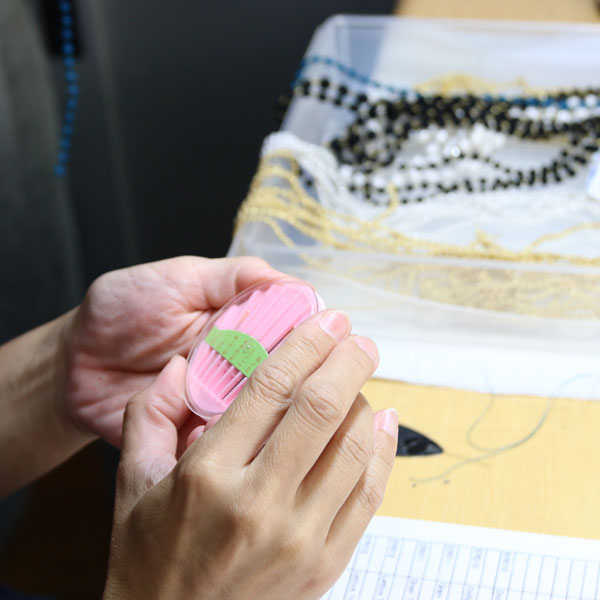
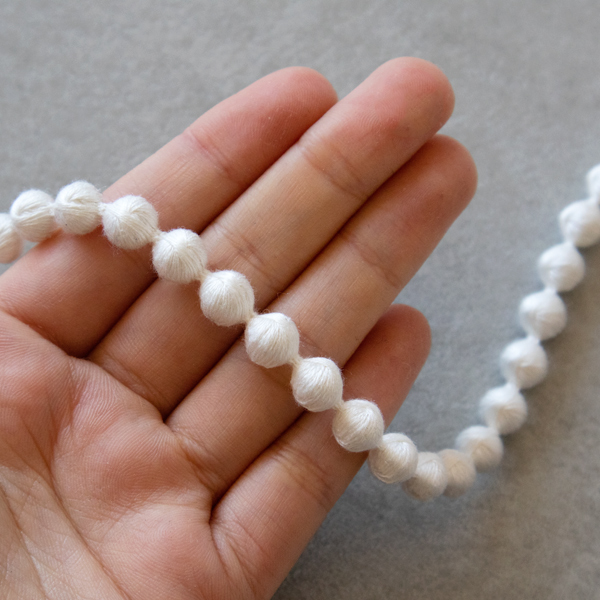
The meticulous care given to things that touch the skin, and the dedication to the beauty of the finished product, have both been cultivated through 000 (Triple-O)'s accessory making. That same philosophy lives on in the embroidery of this tote bag as well.
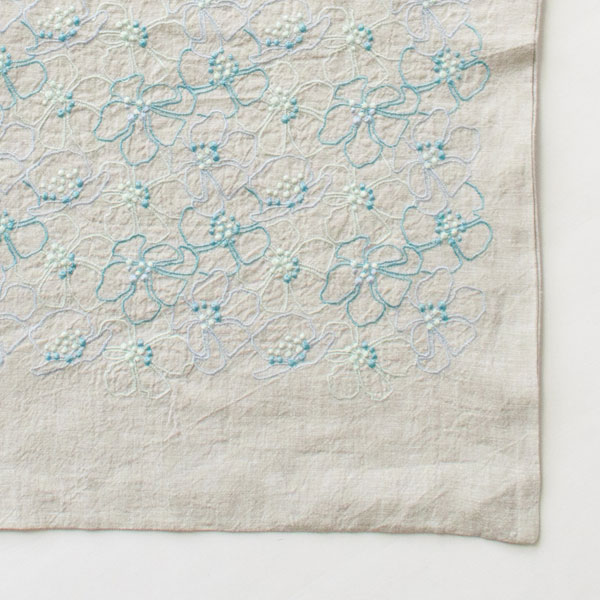
The embroidery techniques that craftspeople have passed down in the land of Kiryu, brought into everyday attire. We hope you'll enjoy this piece for a long time, alongside fabric that deepens in character the more you use it, as the years go by.
▼You can find the product page here
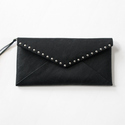
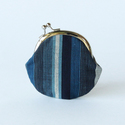
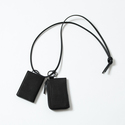
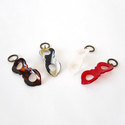
▼You can find 000 (Triple-O)'s products here

GUIDE »
CATEGORIES »
- + Gifts by recipient
- + Gifts by scene
- + Clothing
- + Bags / Backpacks
- + Wallets / Card cases
- + Jewelry
- + Shoes
- + Rainy day outfits
- + Kitchen
- + Home
- + Babies / Kids
- + Japanese products
Earn Miles


Payment & Security