










今ご注文頂くと、最短で9/14(Mon.)に発送します

[Made-to-Order Event] A Thorough Look at a Meticulously Crafted Trench Coat from Bishu: Introducing the Hataya Trench by Shin-Mihon Kojo

There are several coats that have been loved across generations around the world, but among them, the trench coat may be the one whose silhouette has changed the least over time. Especially here in Japan, with its four distinct seasons, qualities like being able to withstand wind and rain, and being wearable throughout the year once the liner is removed, along with the fact that it carries almost no fleeting trends, are likely part of why it continues to be chosen today.


This time, we're introducing a luxurious trench coat from Bishu. Packed with careful craftsmanship and detail, it's a piece that flatters whoever wears it, and we're pleased to offer it through a made-to-order event at ZUTTO.

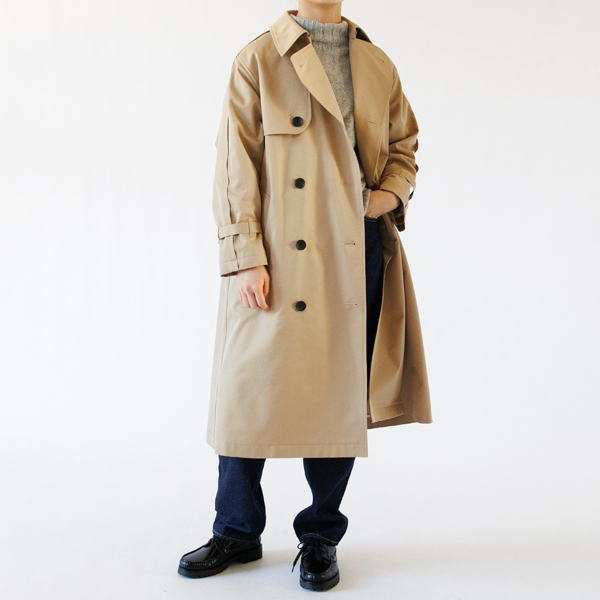
Hataya Trench

Hataya Trench

A Lustrous, Clear Fabric Woven from Wool and Cotton: Uncovering the Secrets Behind the Craftsmanship

Trench coats are usually made from 100% cotton or a cotton-polyester blend, but this one uses a cotton-wool fabric instead. Weaving in wool thread raises the coat's warmth and makes it far more resistant to wrinkling. Even if it does wrinkle, it recovers faster than a 100% cotton fabric would, and a quick pass with a steamer smooths it out again in no time.

Wool's natural moisture absorption also keeps the inside of the coat from feeling stuffy, so it stays comfortable to wear even in the damp early days of spring. The fabric's natural weight gives it an elegant sway as you move and brings out the beauty of its drape. At Shin-Mihon Kojo, this cotton-wool blend was chosen because it keeps all the ease of handling that cotton offers while adding wool to boost the benefits, without introducing any real downside.

Hataya Trench

The warp is Taisho Boseki's "Ultimate Pima Cotton," a premium cotton yarn with an exceptionally soft touch that conveys real quality.

The weft uses a merino wool yarn called "Float" from Towa Keori. Its fibers are finer than typical merino wool, giving it a smooth feel and beautiful color depth, truly a first-rate yarn.
Together, cotton and wool bring out the best in each other, making this truly an ideal pairing.

The weave is a twill (gabardine). Because a twill weave lets the threads be packed in tightly, the fabric gains thickness and body, resulting in the kind of stable, substantial finish that suits a coat well.

Hataya Trench

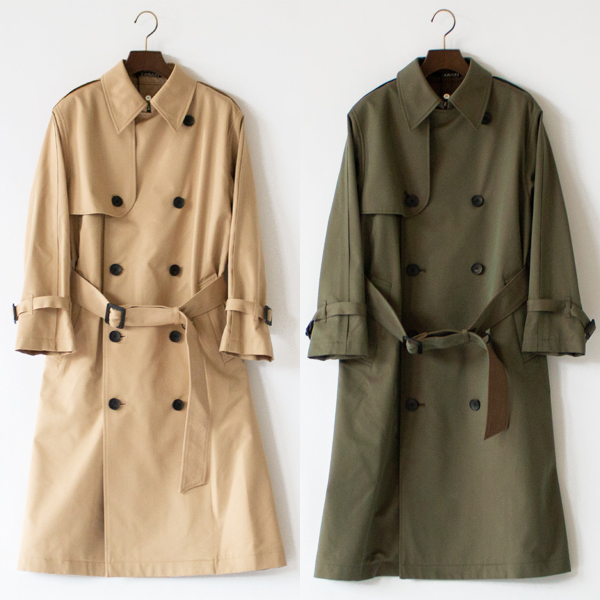
It's easiest to see in the Solora Green fabric, but it's actually woven from green cotton thread and orange wool thread. On top of wool's natural sheen, this gives the fabric a beautiful iridescent quality, so it catches the light with a deep, shifting color as you move. The yarn is good enough quality that the effect could have been made much flashier, but it was toned down slightly to aim for a texture suited to a trench coat you can wear for years.

Hataya Trench

The beige, too, actually uses different-colored yarns for warp and weft, giving it that same iridescent quality that shifts expression depending on the angle you view it from. It's easier to appreciate in person, but it carries a faint golden sheen with real depth, a texture that's genuinely striking.

Hataya Trench

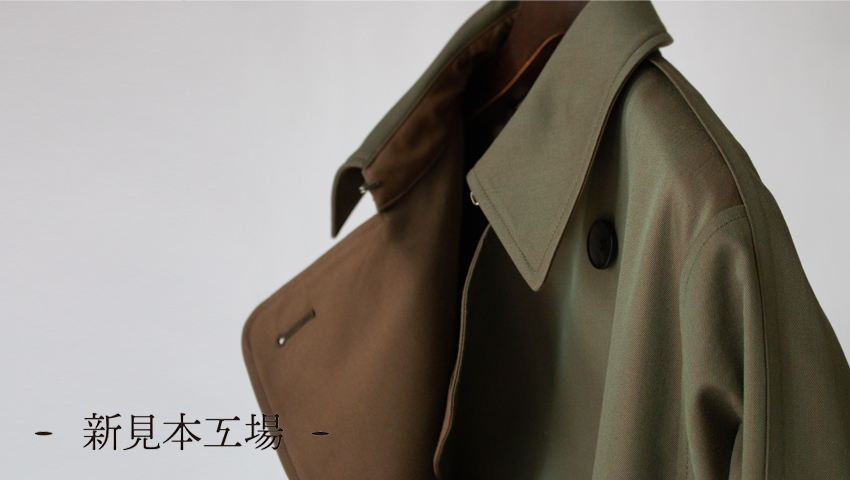
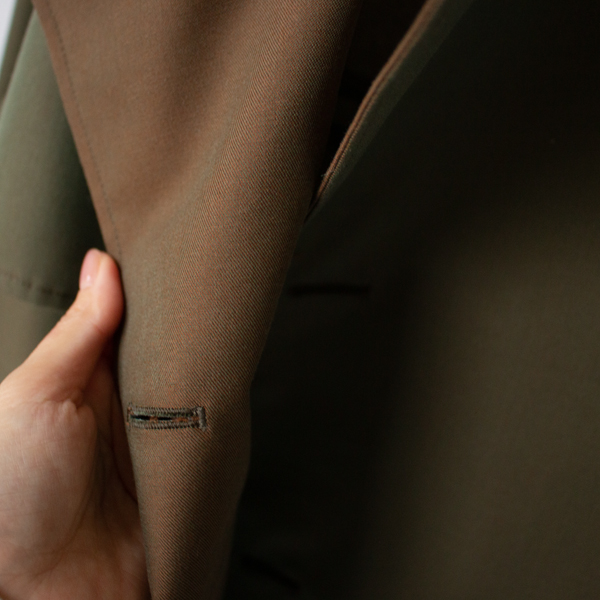
Normally, matching fabric faces are sewn together, but here the face and reverse sides were deliberately combined instead. That's why, at the collar and its underside, the back of the chin tab, the inside of the flap, and the underside of the waist belt, a subtly different shade peeks through as you move.

This detail comes from wanting you to enjoy, as part of the design itself, the way a twill weave naturally looks different on its face and reverse. It's when you look closely at the details that you really feel the fabric's depth and the craftsmanship's charm.

Because the Trench Coat Has Been Loved for So Long, We Chose Only the Finest

Hataya Trench

The trench coat originally began life as a military garment. Accounts vary, but the raglan sleeve is said to have been devised by Baron Raglan with battlefield mobility in mind.

The sleeve used on this coat is a split raglan sleeve, a hybrid construction that combines the set-in sleeve found on suits with the raglan sleeve.

It offers a wide range of arm movement while keeping the neat, jacket-like look you'd expect when viewed from the front. Even worn oversized, it doesn't tip into overly casual territory and keeps a put-together feel, making it an easy coat to wear across both work and everyday occasions.

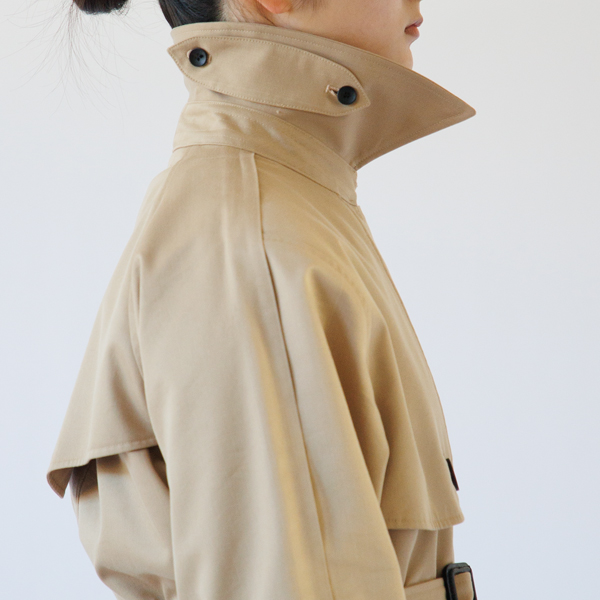
Chin Warmer

Hataya Trench

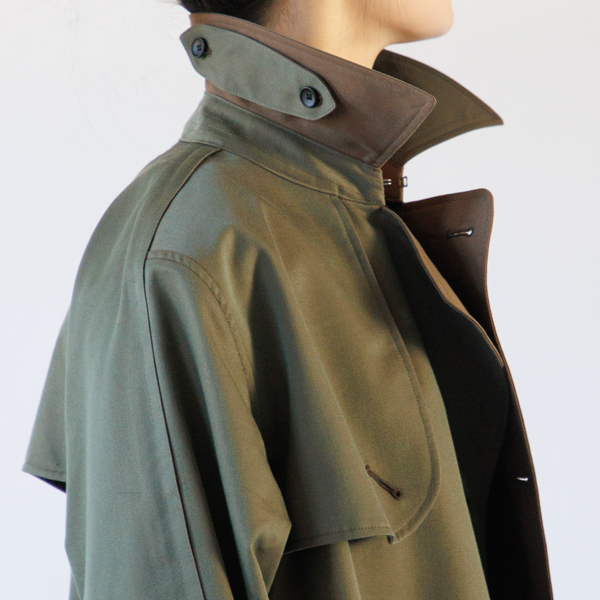
A chin warmer protects you from wind and rain. When you're not using it, you can tuck it away as shown in the photo, or simply let it hang at the neck.

Gun Flap 

Hataya Trench

The flap on the right shoulder is called a gun flap. It was originally designed to absorb impact when shouldering a rifle, and this coat carries that design forward.

Buttons

Hataya Trench

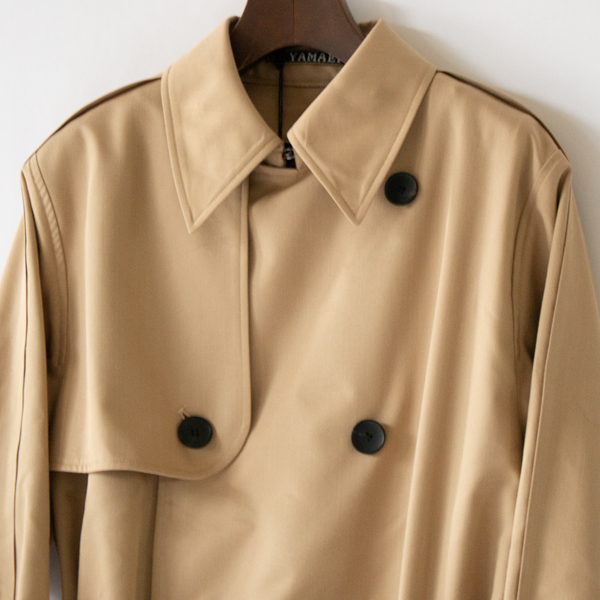
The front buttons, which double as a design feature, are made from natural buffalo horn. It's a costly material, yet the same buttons are used even on the chin warmer. They're also a four-hole style with the holes set close to the center, which was chosen specifically so the look doesn't tip too far into casual. 

Hataya Trench

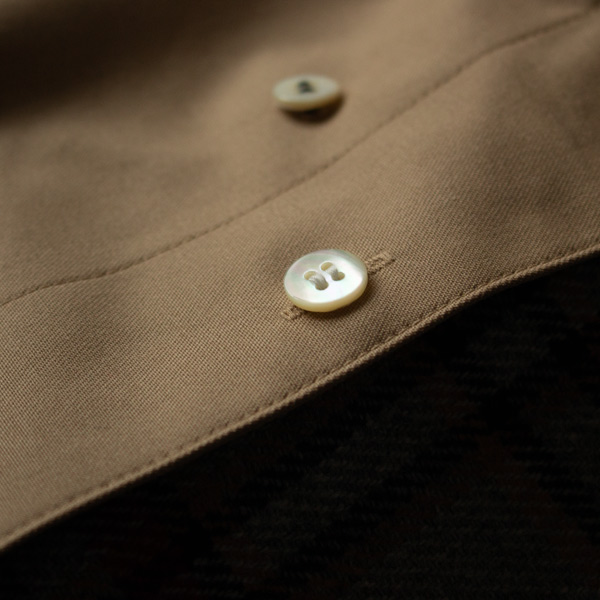
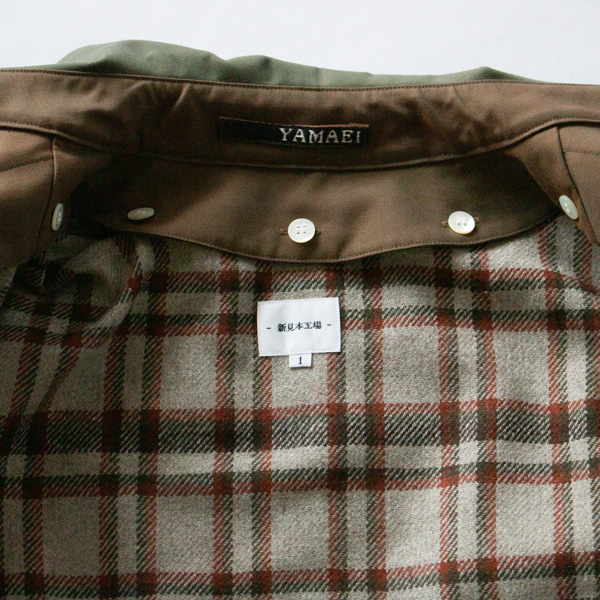
The interior buttons are shell buttons. The way they catch the light like a spiral shell is beautiful in its own right, showing the care put in even where it can't be seen.

Over Yoke

Hataya Trench

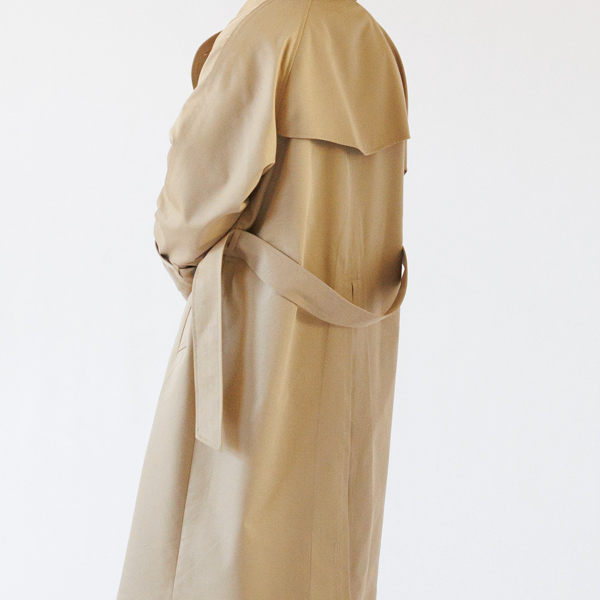
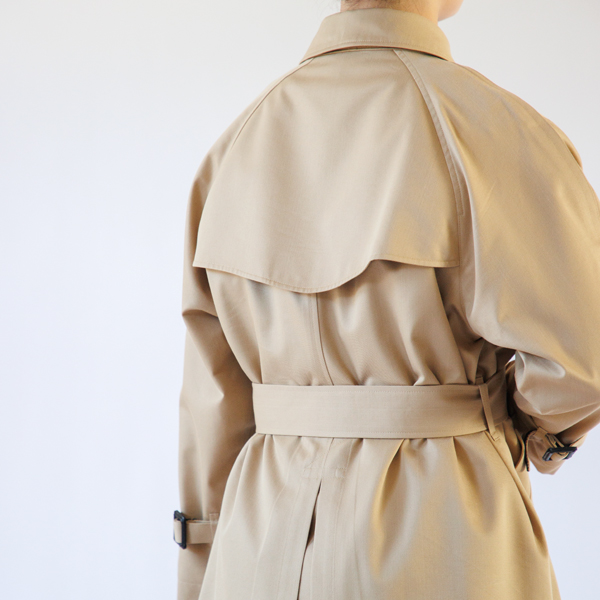
The over yoke channels rain down and off the back. It's cut with extra ease to make the most of the fabric's drape, letting you enjoy that draping quality throughout the coat.

Waist Belt 

Hataya Trench

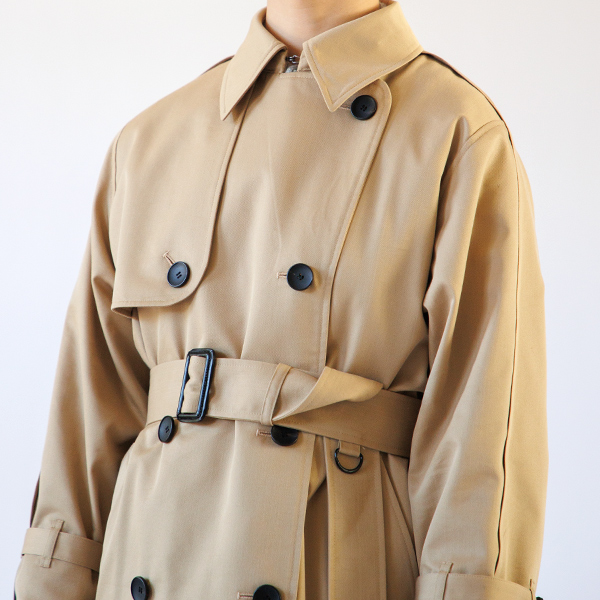
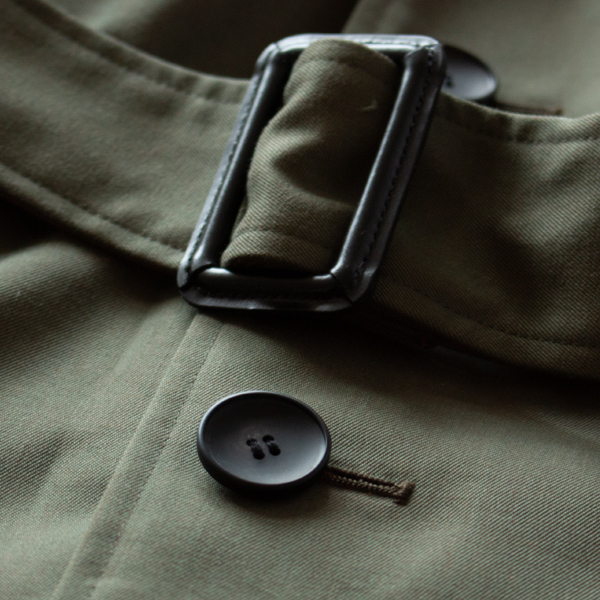
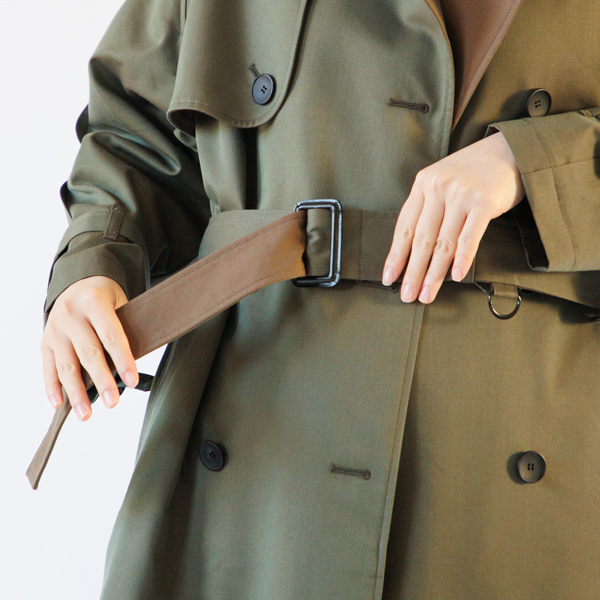
Most buckles come with a pin and belt holes, but this one was deliberately made without either. That way, whatever way you choose to style it, the belt looks clean and lets you adjust the size freely.

Hataya Trench

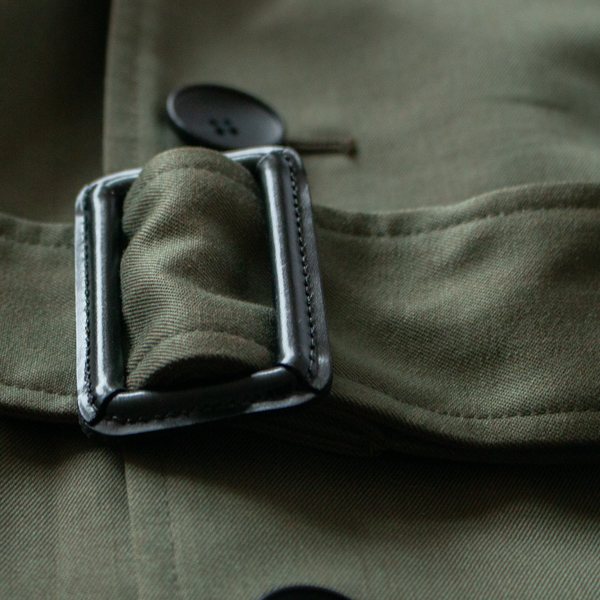
For this, a genuine leather buckle was chosen. The same buckle is used not only on the waist belt but on the cuffs as well, giving the coat an especially luxurious finish.

Only genuine leather develops more character the more you use it, letting you enjoy the way it changes over time. That rich, deepening texture is sure to resonate with anyone looking for a piece they can keep for years. It's a detail rarely seen these days, sewn by hand, one stitch at a time, by a craftsperson. You can feel the time and attention that went into every detail.

D-Ring 

Hataya Trench

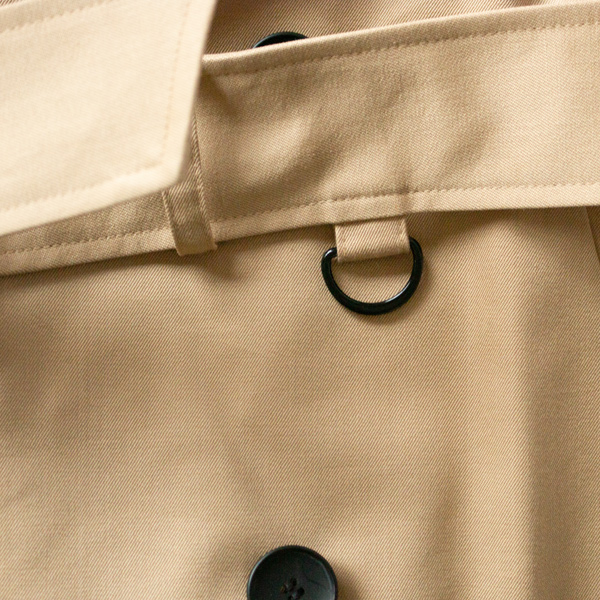
The D-ring sewn beneath the belt is a detail unique to trench coats, originally used to hang grenades or a canteen. It's stitched on securely along with its strap, giving it real strength and practicality. The hardware is brass finished in black, lending a rugged look a more understated impression.

Interior Pocket 

Hataya Trench

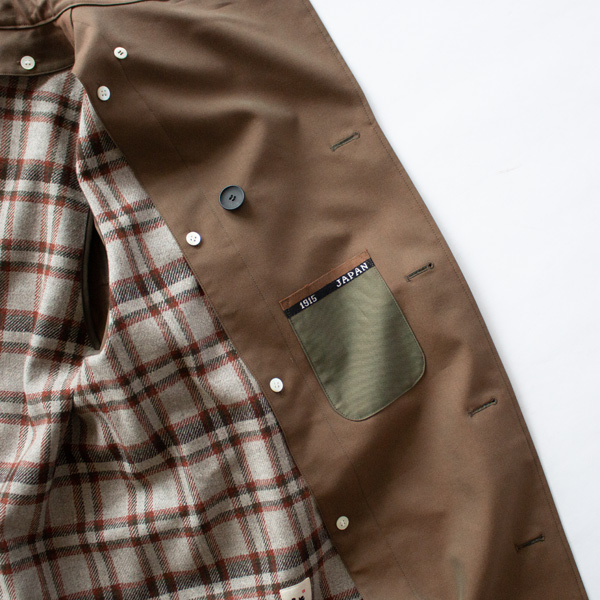
The coat also has an interior pocket, something not often found on trench coats. This pocket was, in fact, one of the trickiest parts of the whole production process.

It's made using the fabric's selvedge as is, positioned where it can't be seen from the outside while still being sized for real everyday use. It's a practical pocket you can trust with keys, a card case, and other things you don't want to lose.

Wool Liner 

Hataya Trench

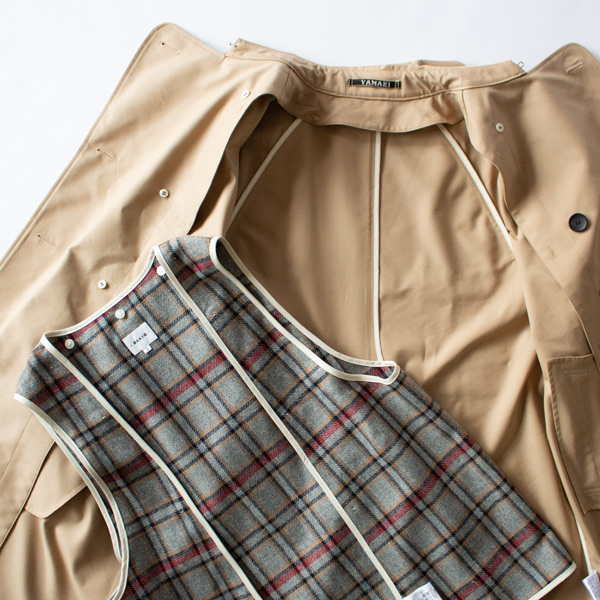
A removable inner liner is included.
It's a wool liner from "Keshichi," a Bishu wool textile brand. It offers solid warmth and has the potential to be worn not just in spring but over a long stretch from autumn onward. Even on a day when you want to dress for spring but it's still chilly outside, there's no need to go back to a wool coat or down jacket. Simply adding this liner lets you adjust the warmth, so this is a coat you can reach for with confidence even through the seasonal back-and-forth of early spring.

Hataya Trench

How to Choose Your Size

Worn with the liner attached, over a knit, buttoned closed

Worn open over a lightweight knit

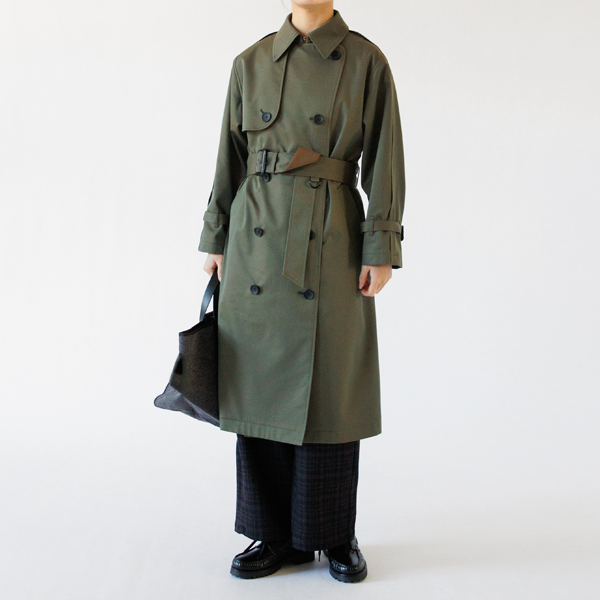
As a general size guide: if you're up to about 158cm tall and want a true fit, size 1 is recommended; around 160cm, size 1 or 2 depending on the silhouette you're after; and if you're 160cm or taller, or want a loose, relaxed drape, sizes up to about 3 are a good match.

For men, sizes 3 to 5 or above are recommended. (For this event, beige is available in sizes 1 through 3, and Solora Green in sizes 1 through 5.)

Please choose according to your own preference, whether you'd like a slimmer fit or a more oversized silhouette.

Care Instructions

After wearing, simply hanging it up to let it settle back into shape is enough. Although the fabric contains a good amount of cotton, it wrinkles far less than a typical 100% cotton coat, which makes it easy to wear day to day.

If wrinkles bother you, a light pass with a steam iron will smooth them out.
Unless it's visibly soiled, frequent dry cleaning isn't necessary; care at home is enough.
The removable liner can be machine washed at home as well.

How the Coat Is Made: Gathering the Craft of the Bishu Textile Region

Shin-Mihon Kojo, which makes the Hataya Trench, is one of the brands under Oshika Co., Ltd., also known to ZUTTO customers for its blankets. Founded in 1922 as a weaving mill, it's a wool textile specialist that now handles everything from fabric production to sewing.

Bishu, where the company was founded (present-day Ichinomiya City, Aichi Prefecture), has long been known as a center of wool textile production, and it remains Japan's largest such region, still accounting for about 80% of the country's domestic output. Bishu is also the only place in Japan that can still carry out the entire process, from yarn to fabric to finishing, in one place. This coat was born from the broad knowledge and refined skill passed down through generations in that very region.

First-Come, Limited-Quantity Gift: A Cedar Coat Hanger

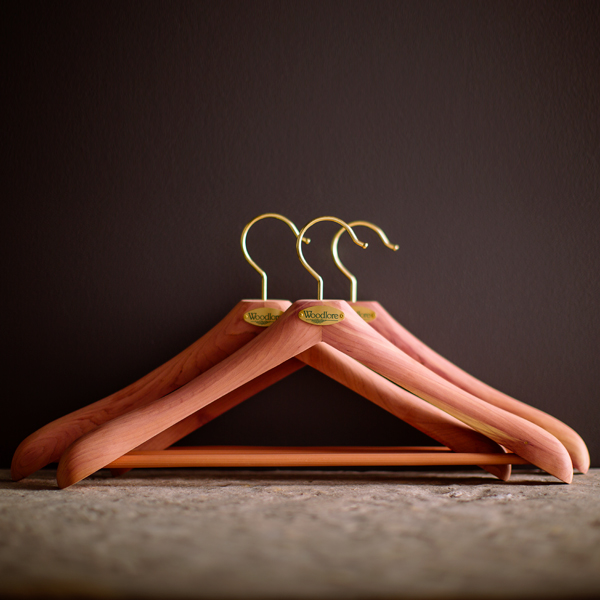
Bringing a new coat home and hanging it in the closet with a satisfied smile, and then looking forward to the weather finally turning cold: that waiting period has its own quiet pleasure. Since you've gone to the trouble of buying it, we thought you'd want to wait for real winter with a nice hanger, and to keep a coat this special on a hanger that does it justice. So that you can enjoy your coat with full satisfaction from the day it arrives through the end of the season, we're including a Woodlore classic hanger, perfectly suited to the coat, on a first-come, limited-quantity basis.

*One hanger per coat.

Woodlore's classic hanger is a well-made hanger sturdy enough to hold even a thick, substantial coat. It's a great help in storing pieces you want to keep wearing for years to come. Made from natural Western red cedar, it offers a fresh cedar scent along with moisture-absorbing and insect-repelling properties. It measures 48cm wide and 3.8cm thick, and a light sanding will refresh its scent and insect-repelling effect for roughly four more years.

The classic hanger was originally used mostly for men's suits. The bar is fitted with non-slip plastic for hanging trousers. It runs a little wide for women's wear, but as a coat hanger it's just right and will look after your treasured piece.

*If we're unable to include a hanger, we'll notify you by email.

[Notes on the Hataya Trench Made-to-Order Event]


Order period: Friday, September 11 through Monday, September 28, 12:00 noon
Shipping: Expected to ship in late October


▼ Please be sure to check the following before ordering.

・We're unable to accept cancellations or returns once an order has been placed. Thank you for your understanding in advance.

・This item is only available for purchase during the order period.

・Cash on delivery is not available. Please choose one of the following payment methods: credit card, Amazon Pay, or carrier billing. Please also note that payment will be finalized promptly once the order event ends. (Please be aware that we do not send a confirmation email when payment is finalized.)

・Items from this order event cannot be combined with other items in one order. We apologize for the inconvenience and ask that you place a separate order for anything else.

・Items will ship progressively starting in late October. Please note that we're unable to accommodate requested delivery dates.

▼ Shop the Hataya Trench here

投稿者: ZUTTO編集部 日時: 2026年09月11日 11:00 | permalink

閉じる