


.webp)


.webp)


.webp)


.webp)


Welcome to ZUTTO
Free shipping for newsletter subscribers (some areas excluded)
- トップページ/
- ZUTTO Journal/
- ブランドストーリー/
- From Thread to Fo...
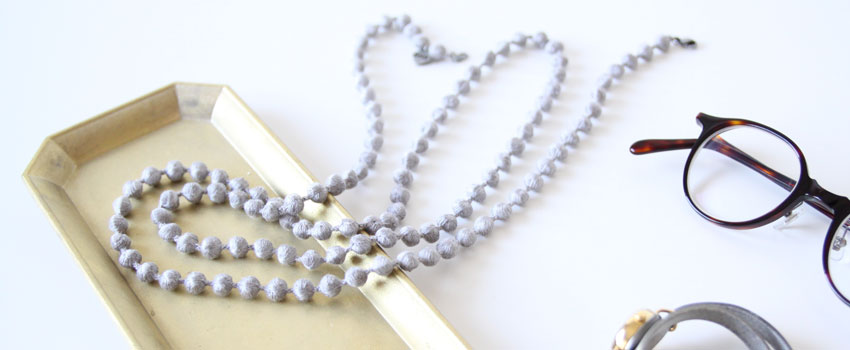
From thread to form. A closer look at the accessories born from embroidery, 000
000 (Triple O) is an accessory brand by Kasamori, one of Japan's leading embroidery makers. It is a brand that expands the possibilities of thread through embroidery techniques, crafting delicate works.
Wanting to learn more about the appeal of 000 (Triple O), a brand carrying on this spirit of craftsmanship, we visited an embroidery workshop in Kiryu City, Gunma Prefecture.
From Kiryu, a town of silk and embroidery
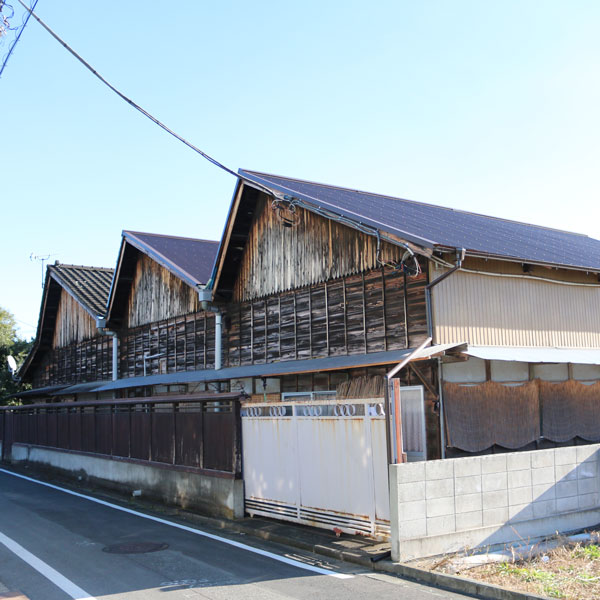
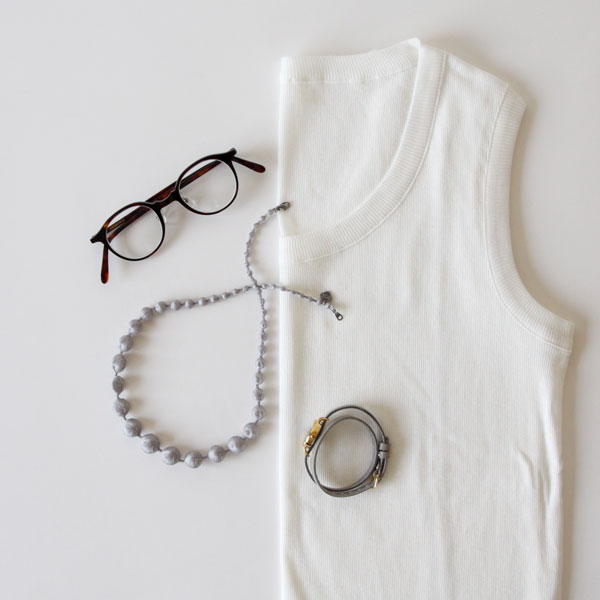
Kiryu City in Gunma Prefecture is a town where the textile industry, tied to kimono production, once flourished thanks to a thriving sericulture (silk farming) trade.
Kasamori, the embroidery maker behind 000 (Triple O), actually got its start as an obi weaving workshop. As people's fashion changed over time, the form of their craftsmanship shifted from weaving to embroidery, but the spirit of adding beauty to people's attire through the power of thread has remained unchanged, passed down through the generations.
We spoke with Yoichi Katakura, designer of 000 (Triple O), and Daiki Arai, in sales.
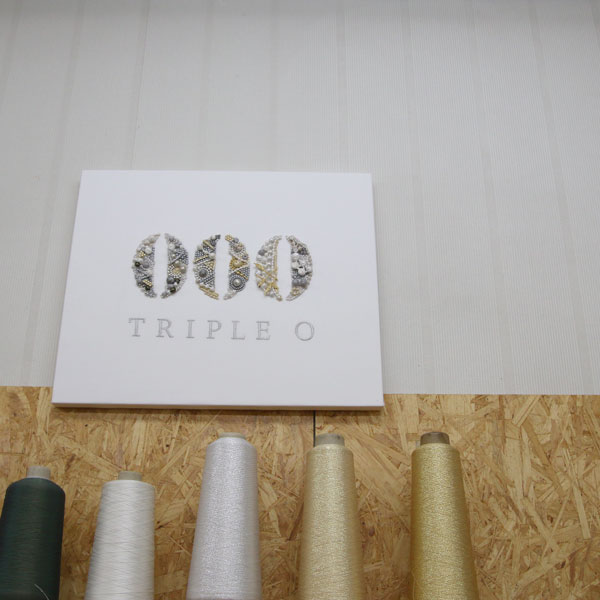
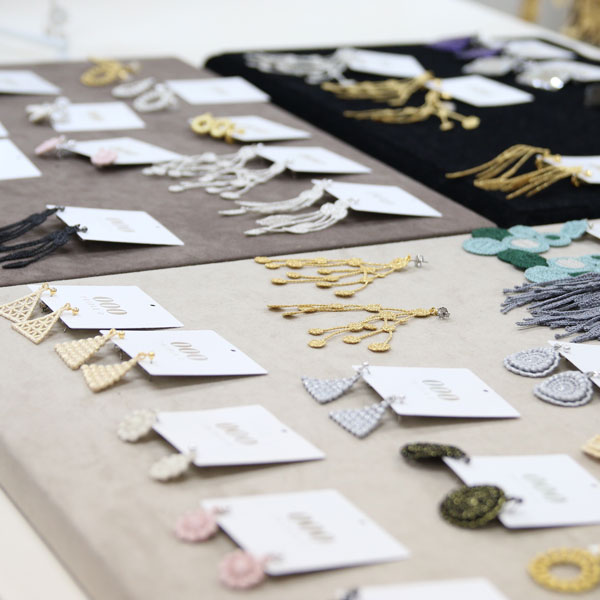
The day we visited happened to be an open showroom day, when the showroom attached to the atelier is open to the general public and 000 (Triple O) accessories are sold.
The open showroom started as a project in response to requests from our general customers, and we now open the showroom like this twice a month. We display a variety of accessories here as a place where visitors can see the full lineup of what our embroidery techniques can produce.
As Kasamori, our position is that of embroidery professionals, providing embroidery techniques on request from fashion designers and manufacturers. But with 000 (Triple O), we have many opportunities to talk directly with general customers, which I think gives us a good chance to think about what we can achieve with the power of embroidery, here in this place called Kiryu.
Shaping form through embroidery technique
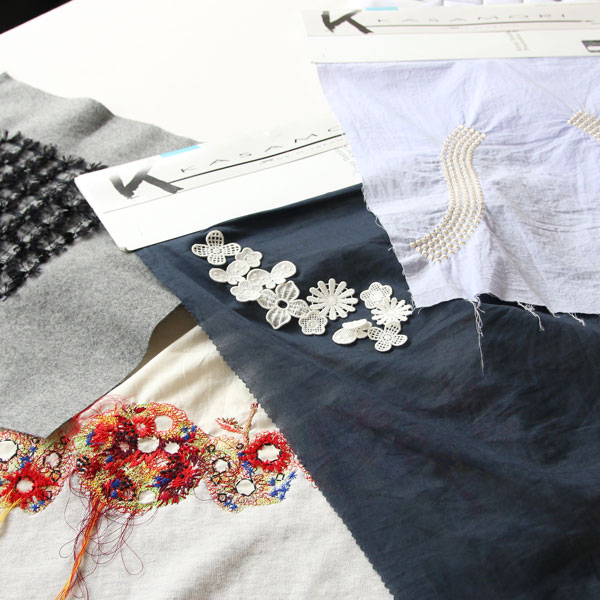
Samples of embroidery techniques handled by Kasamori. From flat designs to three-dimensional forms.
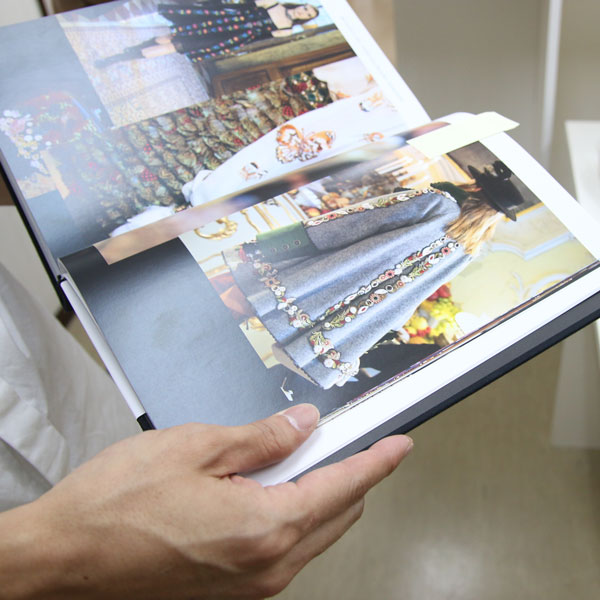
A piece created at the request of a long-established French fashion house.
The brand name 000 (Triple O) was born from the concept of creating new work unbound by convention—starting from zero, and combining the three elements of "material," "design," and "technique" to form a thousand possible combinations, from 000 to 999.
Having started as an obi weaving workshop and then engaged in craftsmanship for many years as an embroidery maker, we have experience developing apparel materials such as patches and embroidered tape for overseas markets.
At ModAmont, a world-scale trade show held in Paris in 2007, we began receiving requests for embroidery techniques and materials from long-established French fashion houses and accessory designers. Sensing real potential in embroidery-focused items—especially accessories worn directly against the skin, where one can feel the texture of the thread—became the first step toward further developing "embroidery" and creating work that goes beyond its conventional boundaries.
When we received inquiry emails from overseas, we honestly thought they might be spam (laughs). Amid all this, with the desire to "use embroidery to create and deliver accessories unlike anything that had existed before," we launched the accessory brand 000 (Triple O).
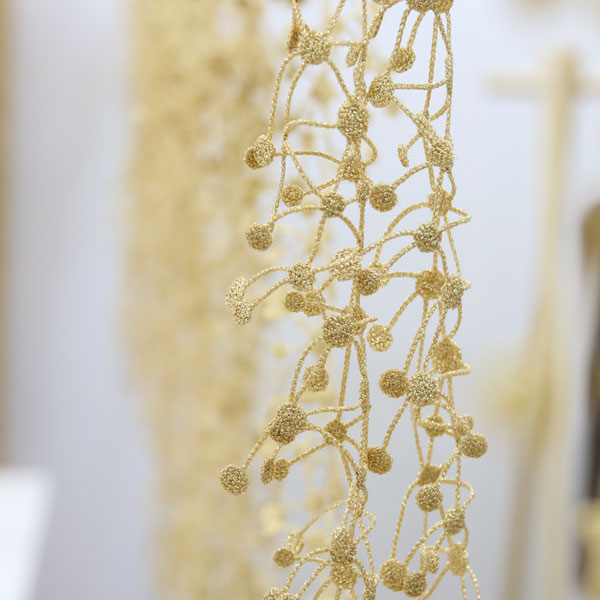
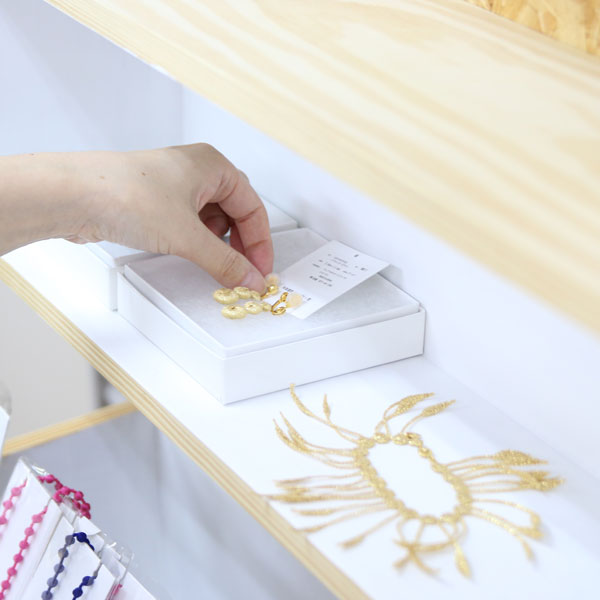
That's right. These days we make many three-dimensional designs too, but the very first series we created had flat designs. At first glance they look like knitwear, but they're actually all made from a single continuous thread through embroidery. We use durable materials like cupra and polyester, and we adjusted the thread's specifications so that once formed into embroidery, the coloring and reflection of light would look beautiful.
The degree of twist in the thread greatly affects both the texture and strength of the finished piece. When testing new threads, the sewing machine needle would sometimes snap, and I remember breaking out in a cold sweat as we repeated trial and error.
Back when 000 (Triple O) was still just starting out, the machines would need adjusting during our busiest periods, and the craftsmen would scold me for it (wry laugh). It took about two years from the initial concept, and this became 000 (Triple O)'s very first product. Since it's made entirely of thread, it has volume yet feels very light when worn. It's a series where you can really feel that unique charm that only thread can offer.
Beautiful embroidery starts with beautiful thread. I think that says it all.
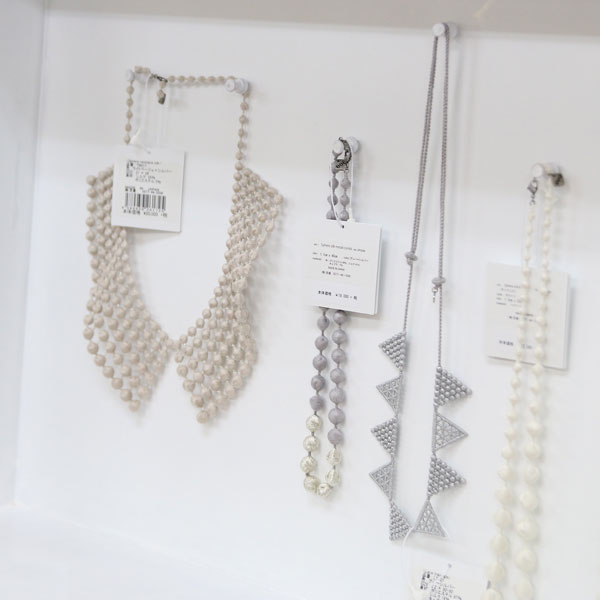
Why we're particular about the material of silk

After cupra, which we could produce reliably in terms of color development and durability, silk was the next material we took on. Kiryu is a place where the culture of "silk" remains historically rooted, so conveying the charm of silk thread is truly a mission for us as a maker.
Designed with this kind of silk thread, the "Sphere Silk" series was created with the idea of making rounded, three-dimensional pearls. It uses a thread called kenboshi (spun silk yarn), made by spinning silk fibers, and its characteristic is a gentle touch created by the fine fuzz on the thread's surface.

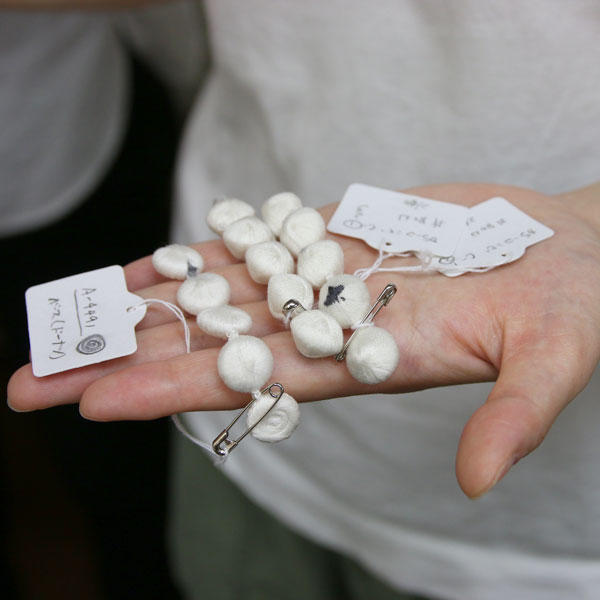
Early samples made by changing the program to try various forms
The Sphere series, which looks like a string of connected balls, had already been made into products using cupra and polyester. But changing the thread material also changes the thread's thickness, which in turn changes the tension when run through the sewing machine—meaning the embroidery pattern (program) has to be rebuilt from scratch.
The manufacturing itself is done using the latest computer-controlled sewing machines, but the design that forms the basis of the embroidery must be conceived by a person. Skilled artisans specializing in embroidery data make full use of special computer programs, drawing on their experience and intuition to input data stitch by stitch in order to create more beautiful embroidery.
It is extremely meticulous work—operating special programs to bring three-dimensional forms into being from a flat surface on a computer screen.
Artisans, thread, and sewing machines
At last, we were shown the workshop where the embroidery machines run.
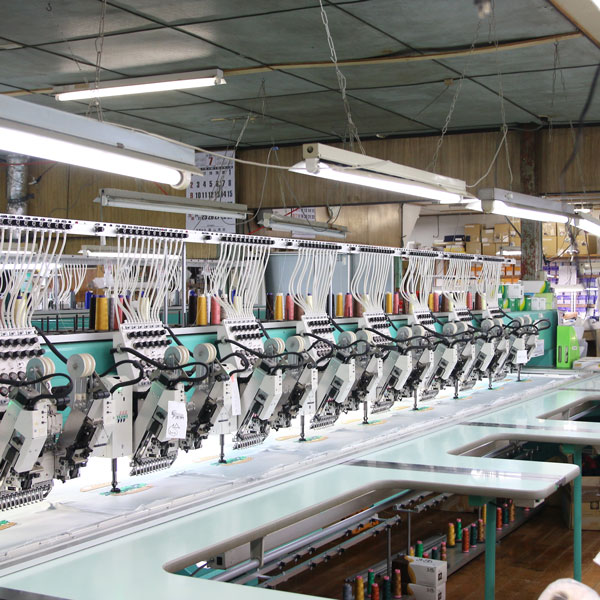
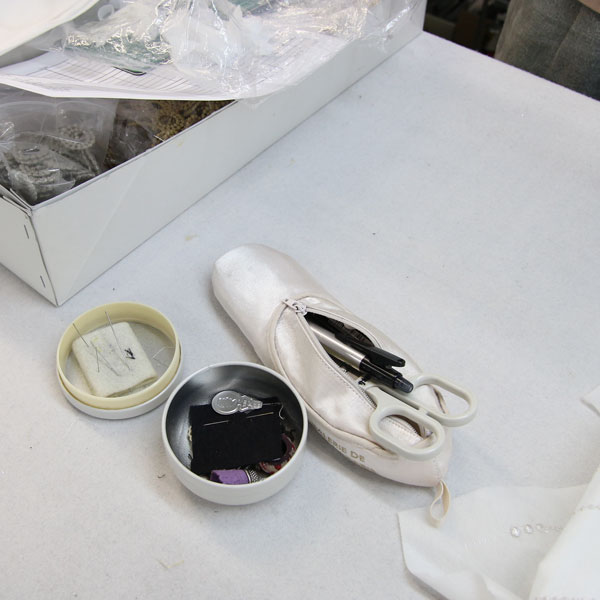
There are roughly 15 staff members, each handling their own tasks—working at the machines or processing the finished embroidery threads. The embroidery machines used at Kasamori are a special type called multi-head machines: large, wide machines fitted with many needles that can stitch the same design many times at once. But the basic principle—threading the upper and lower threads and dropping the needle into the fabric to create a pattern—is actually the same as a household sewing machine.
The needle drops according to a program devised by a person, drawing out various designs, but one artisan is assigned to each machine, carefully adjusting the settings. Although the program itself is computer-controlled, the properties of the thread change subtly depending on the environment, which can affect the finished result. So we record the temperature and humidity each day as part of our quality control.
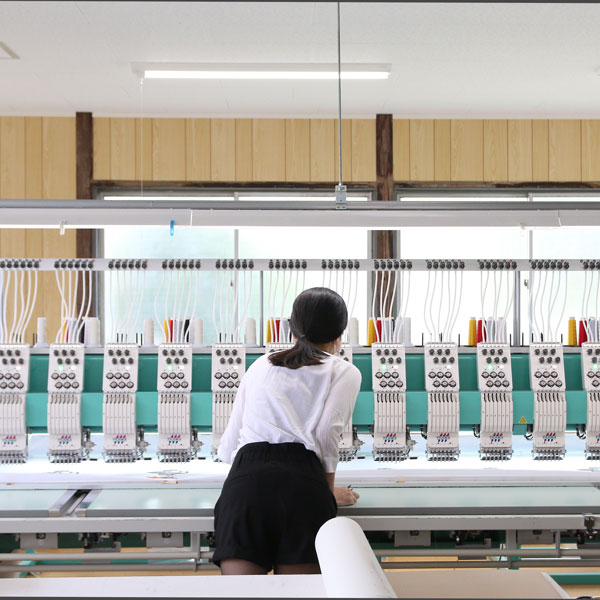
We need to check the finished result while making extremely fine adjustments to the tension of both the upper and lower threads, and this is work that absolutely requires the eyes and hands of a skilled artisan.
For the 000 (Triple-O) accessories, in the case of the Sphere Silk series, the machine runs continuously for two hours to complete a single piece of jewelry. Watching over the condition of the needle and thread while checking quality requires a great deal of patience.
At one point, we tried having production done overseas, but because thread is affected by humidity and temperature, quality varied, and controlling the final finish required skilled craftsmanship. Considering this, we now insist on manufacturing everything at our own workshop in Kiryu.
The hands and eyes of the artisans are indispensable
Once the embroidery process is finished, the next step is the finishing work.
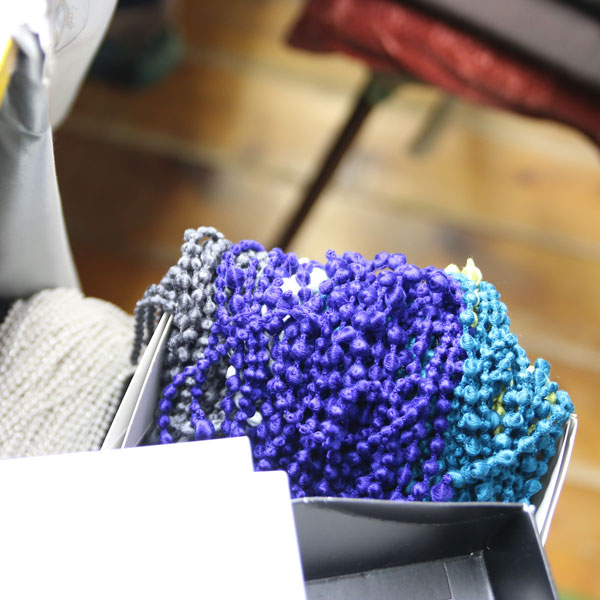
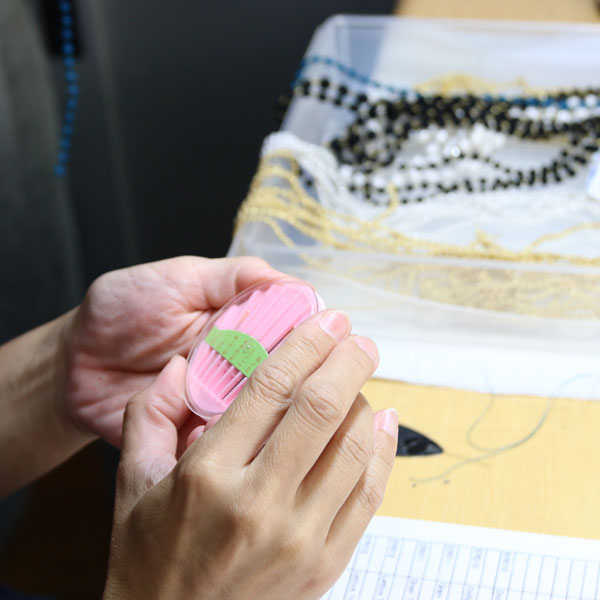
What you see here are the embroidered pieces with the base fabric removed. They're checked by the hands and eyes of the artisans, and any spots where loose thread ends stick out or there's fraying are corrected by hand.
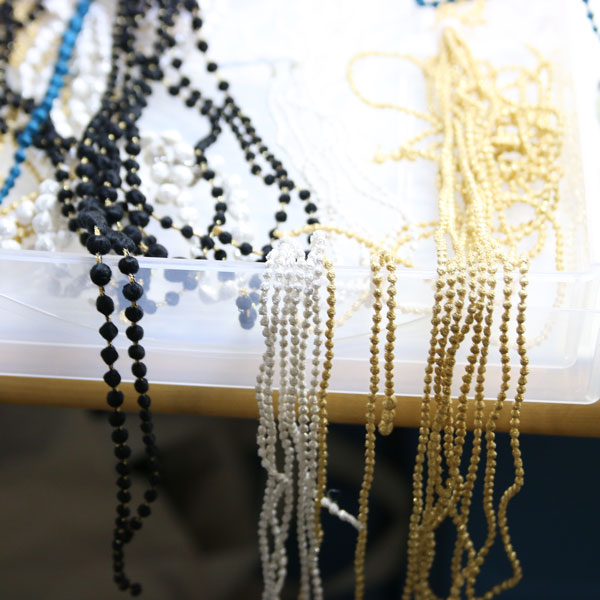
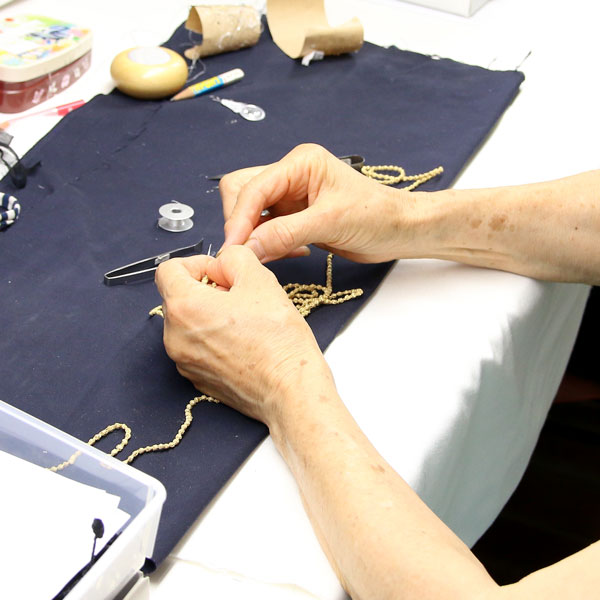
The person working on this now is a veteran staff member with more than 20 years of experience in this line of work. If a thread end is sticking out, it not only looks unattractive but can also feel scratchy against the skin when worn, so the final finishing is always done by human hands and eyes.
The workshop has artisans of various ages, from those in their twenties to those in their seventies, and passing down technical skills in this way from veteran staff to younger staff is also an important part of the work.
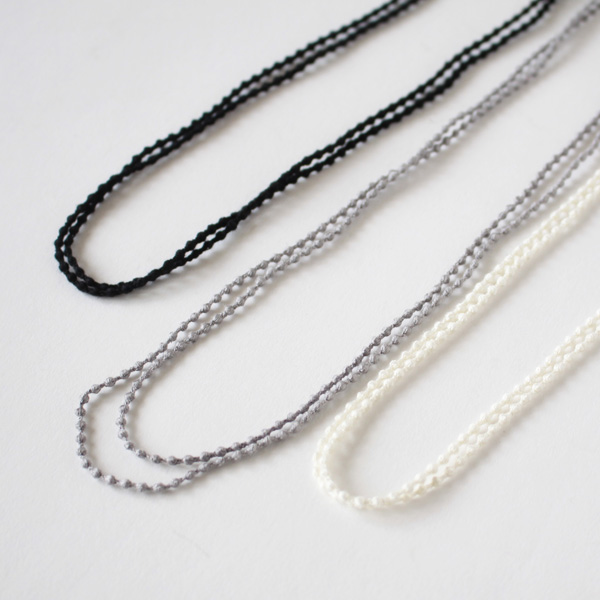
The finished silk accessories are the crystallization of thread, design, and craftsmanship.

In the workshop, there are "thank-you cards" used for communication among the staff.
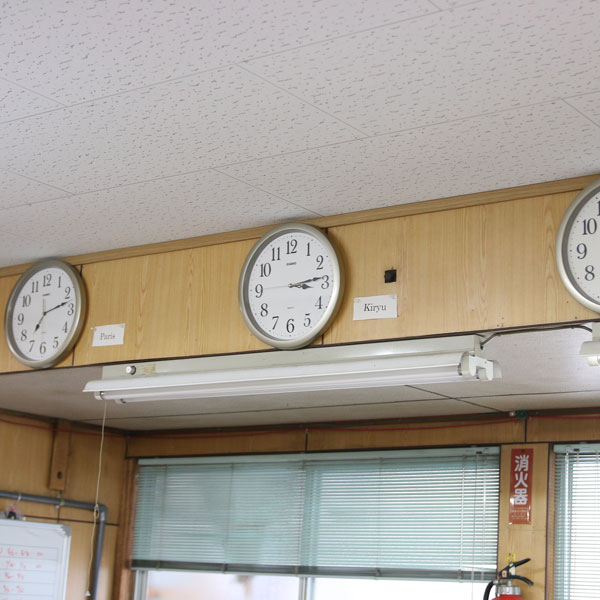
Three clocks showing Paris, Kiryu, and New York. Their stage of work is the whole world.
What can only be done because it's thread, and because it's Kiryu
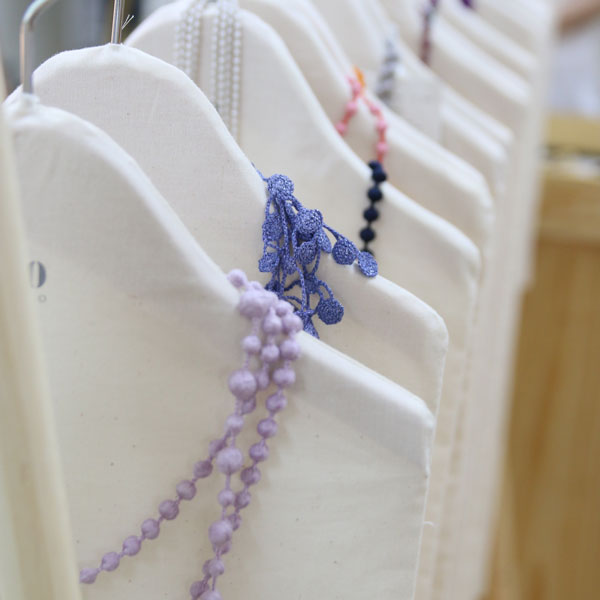
Well, our stance of facing the thread with sincerity and continuing to expand the series we've developed as 000 (Triple-O) up to now hasn't changed. But if I had to name something specific, it would be this: continuing to pursue new forms that make people think "embroidery can do that?!", and pursuing an originality that says "this could only be made in a place like Kiryu."
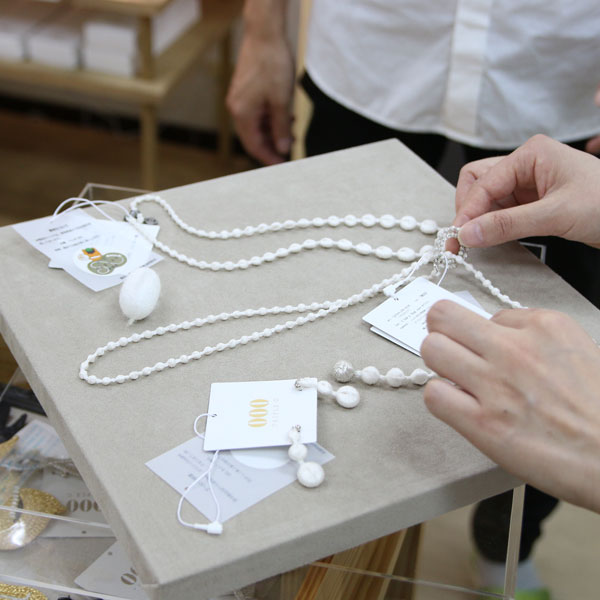
This is a special accessory made using silk thread produced in Gunma Prefecture.
It uses a delicate silk thread called "Gunma 200," made from long-fiber raw silk, allowing you to enjoy a luxurious, glossy sheen. As mentioned earlier, the number of sericulture farmers has been declining, and the supply of domestic silk has been shrinking—but in fact, about 60% of that remaining supply is produced within Gunma Prefecture.
Even though the amount is decreasing, we believe it's very important to carefully use the limited materials available and pass on their charm and craftsmanship. As an embroidery maker, we continue to work with thread, but embroidery techniques only exist because there is thread. It may eventually become necessary for us to handle spinning and thread-making with our own hands. That's something we've come to think about.

We are also putting effort into developing new series, from the perspective of pursuing forms that feel distinctly Japanese.
This is one example—a motif featuring domestically produced pearls. Pearls are paired with a shell motif made through embroidery. Collaborating with makers in other fields of Japanese manufacturing in this way is one of the possibilities we're exploring.
For Long-Lasting Use
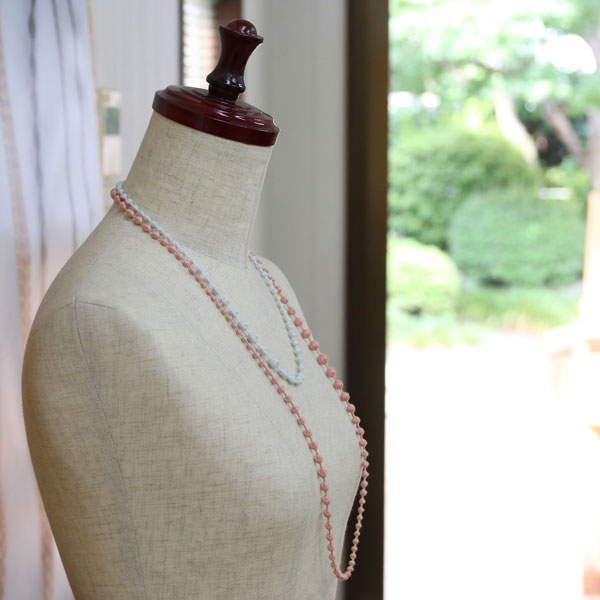
Since silk is a natural fiber, wearing it for long periods will cause it to develop a worn look from rubbing against clothing and skin. We hope you'll consider this as part of the unique character of silk.
When You Notice Dirt
000 (Triple-O) accessories made through embroidery have no core material inside—they are made of 100% thread, so if you notice any dirt, you can wash them at home with water.
Dilute a small amount of neutral detergent in water, soak the item, and gently rinse it clean. Avoid soaking for extended periods; gently pat away excess water, and dry in a well-ventilated place away from direct sunlight.
When Not Wearing It for a Long Time
If left balled up in a small shape for a long time, the shape and twists at that moment will become fixed, creating creases. So for long accessories like necklaces, store them in their case stretched out in their natural shape.
If you notice any kinks, lightly applying a steam iron to add moisture and then hanging the piece so it stays straight will help it return to its original shape.
▽View the full list of 000 (Triple-O) items

GUIDE »
CONTENTS »
CATEGORIES »
- + Gifts by recipient
- + Gifts by scene
- + Clothing
- + Bags / Backpacks
- + Wallets / Card cases
- + Jewelry
- + Shoes
- + Rainy day outfits
- + Kitchen
- + Home
- + Babies / Kids
- + Japanese products
Earn Miles


Payment & Security




