.webp)


.webp)


.webp)


.webp)


Welcome to ZUTTO
Free shipping for newsletter subscribers (some areas excluded)
- トップページ/
- ZUTTO Journal/
- ブランドストーリー/
- A gentle feel aga...

Extra-fine wool and circular knitting create a gentle feel against the skin. ZUTTO's original inner wear
Inner wear touches the skin directly, making it one of the more delicate items of clothing we wear. It should fit gently without itching, wrap around the body softly without any sense of constriction…in other words, it's clothing that calls for a certain kind of "gentleness." Based on what we wanted from inner wear, ZUTTO created three types of inner wear from extremely fine wool yarn. Both the carefully chosen materials and the shapes were developed together with Japanese artisans who have mastered the art of knitting. Here we introduce the story behind how this inner wear came to be, along with its appeal.
Morishita Meriyasu, professionals of knitting
We asked Morishita Meriyasu, a knitwear maker in Wakayama Prefecture, to produce this inner wear. Wakayama Prefecture boasts the highest production volume of circular-knit fabric in Japan, a tradition that began in 1909 when Tokuoshi Kusumoto introduced five Swiss-made circular knitting machines in Ono-cho, Wakayama City.
Since its founding in 1907, Morishita Meriyasu has been engaged in the production of circular-knit fabric. Despite the effects of wartime hardship, the company introduced hanging knitting machines and continued manufacturing knitwear and undergarments. Today, it operates an astonishing 200 knitting machines, producing a wide variety of knitwear using natural fibers such as cotton, wool, and silk, as well as long fibers such as polyester. Morishita Meriyasu adjusts its machines according to the raw materials used, continually refining soft, stretchy knit fabrics. The company also plans and develops its own original textiles, and even manufactures its own knitting machines. Its quality is so highly regarded that luxury brands from overseas have commissioned the company to produce knitwear for them. With an extraordinary passion for knitting and a commitment to independent production and development, Morishita Meriyasu is truly a team of knitting professionals.
The craft made possible by new wool and a circular knitting machine
Super 120's extra-fine wool
What we wanted for this new inner wear was a gentle feel against the skin. To achieve this, we chose wool as the material.
When people hear "wool," many probably picture a winter sweater. Indeed, various types of wool, such as merino wool and lambswool, have excellent heat retention and low thermal conductivity, meaning they block cold air and keep the body warm.
Conversely, this also means that when the outside temperature is high, wool doesn't easily let heat in from outside. Wool fibers also have the unique property of absorbing moisture while repelling water on the surface, so even if you sweat, the fabric still feels dry and smooth against the skin. Because the moisture wool absorbs is gradually released, there's no sudden temperature change on the skin's surface, which helps prevent the chill that can come from sweat cooling on the body. In addition, natural wool is known for its inherent antibacterial and deodorizing properties. So even if you're worried about odor from sweating, wool inner wear takes care of that concern. Considering that wool's natural benefits truly shine during warmer seasons when we sweat, it becomes clear that wool isn't just for winter after all.
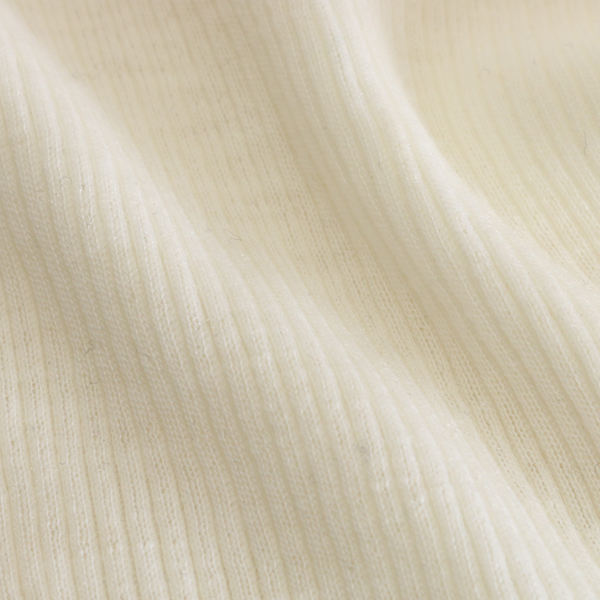
For this new inner wear, we chose Super 120's, a particular grade of wool. Super 120's (17.5 microns) refers to an extremely fine, long fiber—approaching the fineness of cashmere.
・Human hair: 70–80 microns
・Typical sweater wool: 19.5 microns
・Sheep's wool: 19–24 microns
・Cashmere: 14–16 microns
This fineness gives the fabric a softness that fits the body like a second skin. While retaining all the benefits of wool, the fineness of the yarn further enhances the gentle, comfortable feel of the fabric.
Fabric made on a circular knitting machine
Circular knitting, the technique widely practiced in Wakayama Prefecture, is a knitting method that, as its name suggests, involves knitting in a circular pattern. Because it can be shaped to follow the contours of the human body, it's an ideal method for garments we wear close to our bodies, such as cut-and-sew tops and socks. Also known as "marudo" (round barrel) knitting, this method was used for the torso section of this inner wear as well.

This is the German-made seamless knitting machine, ALBI, which creates the marudo fabric. Standing next to a person, it looks like a large machine, but among knitting machines, it's actually considered small. Manufactured in the 1960s, ALBI was built with a narrower width than typical knitting machines because it was designed to knit undergarments (fleece jersey) once called "meriyasu." This narrower width allows the machine to knit garments, like undergarments, that require a close fit, in sizes closer to the actual human body.
Lined up at the top of ALBI are the yarn feeders, called "kyushiko," which hold the yarn bobbins. About 20 of them are arranged in a circle. Typically, a machine has around 90, so this number alone shows just how small ALBI is.
The yarn extends downward from the feeders, and as the machine rotates, it knits the fabric. If the machine runs too fast, the yarn can't keep up, and the resulting fabric loses its softness. Depending on how well the machine and yarn suit each other, knitting can also become more difficult in certain cases. The artisan slows the machine down or, at times, stops it entirely to make adjustments as the fabric is knitted.
The glowing light visible in the center is an inspection lamp positioned between where the fabric is knitted at the top and rolled up at the bottom. The artisan must keep an eye on the fabric even while the machine is running, in order to catch any flaws as they occur during knitting—making this an incredibly patience-demanding process.

Even after the knitting is complete, the fabric undergoes careful inspection under separate lighting. Once the torso section has been knitted on ALBI, other parts such as the sleeves are joined according to the specific product, and the finished item takes shape.
Products knitted by ALBI are tubular-knit, so there are no vertical seams. This maru-do (round-body) knitting method is ideal for innerwear that touches the skin. In addition, this innerwear has ribbing throughout, which is another key point—giving it excellent flexibility.
Three innerwear pieces, uncompromising in comfort
There are three types of innerwear knitted on the ALBI knitting machine. The tank top, U-neck, and high-neck each have a different construction, but all share the same commitment to a gentle, comfortable feel.
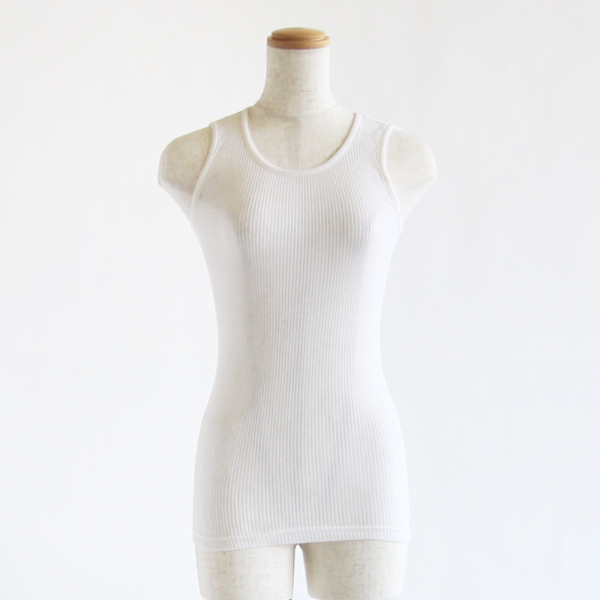
① Wool Maru-do Rib Tank Top
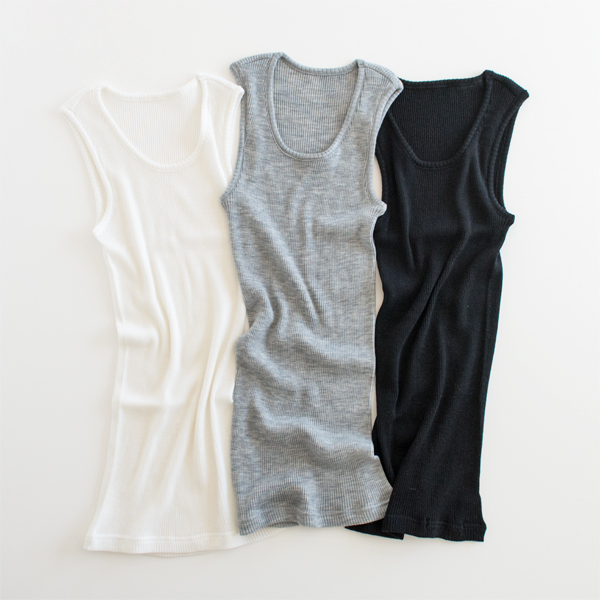
The tank top is a classic piece of innerwear that can be worn regardless of the season. The vertical ribbing allows the body width to stretch well, while still giving a soft, close fit to the body. The straps are made a bit wider, and the neckline is carefully sized so it's neither too open nor too tight—just right.
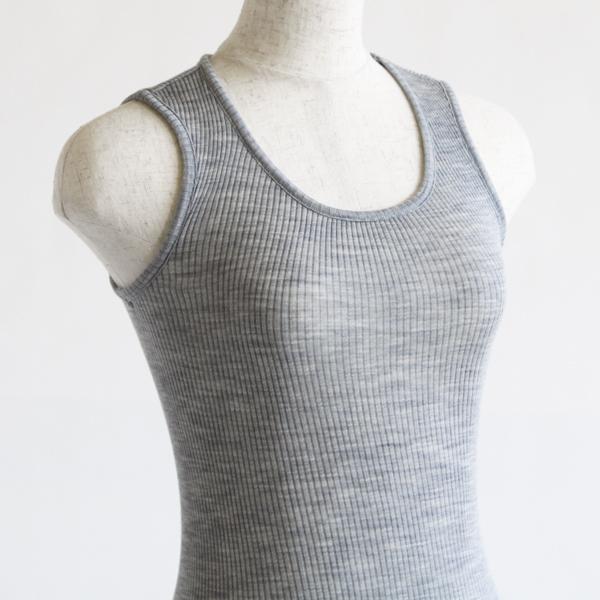
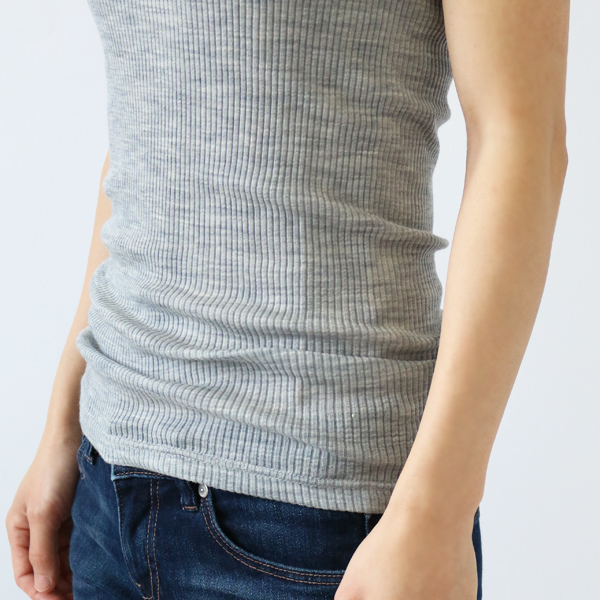
Since the entire tank top is knitted on the ALBI knitting machine, there are no seam allowances at all on the inside. The texture against the skin is extremely smooth. In summer it fully absorbs sweat and gradually releases it, and in winter it keeps body heat in reliably—this basic innerwear lets you experience the true appeal of wool innerwear.
② Wool Maru-do Rib Long-Sleeve U-Neck
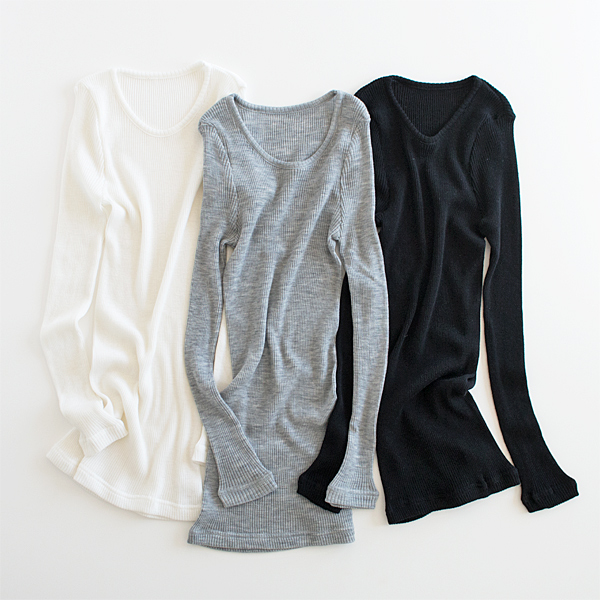
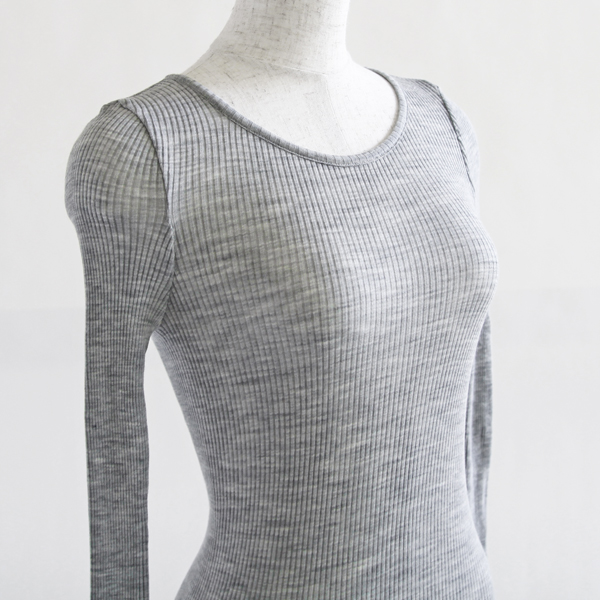
This is a long-sleeve U-neck with a U-shaped neckline. It comes in handy during early spring, when the air can feel surprisingly chilly at times, and through autumn into winter as temperatures gradually drop.
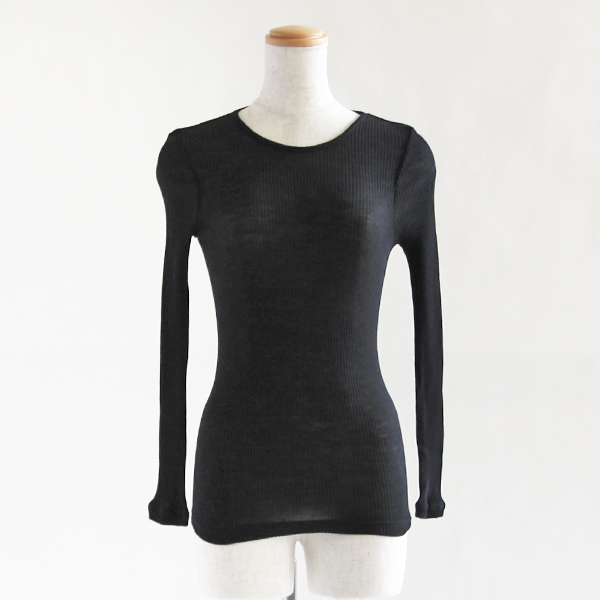
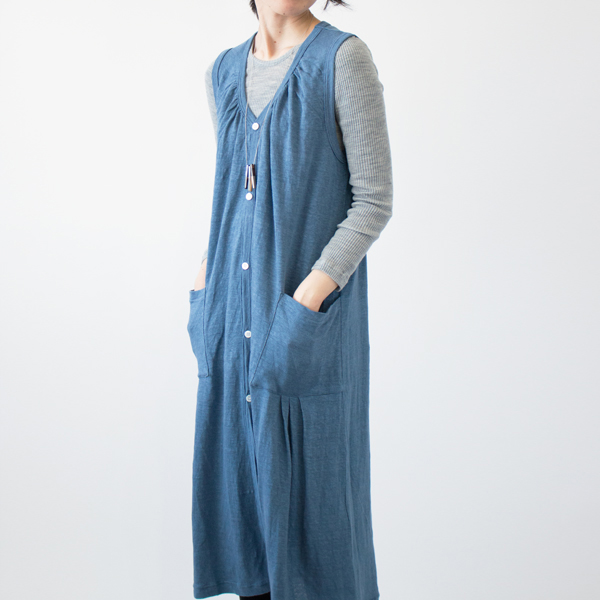
The long-sleeve U-neck works not only as innerwear but also as a layering top on its own. It's great worn as an under-layer beneath a shirt, or you might deliberately let the cuffs and neckline show while layering a sleeveless dress over it. Worn under a winter sweater, it keeps you plenty warm. It's an innerwear piece worth having as a foundation for your outfits.
③ Wool Maru-do Rib Long-Sleeve High-Neck
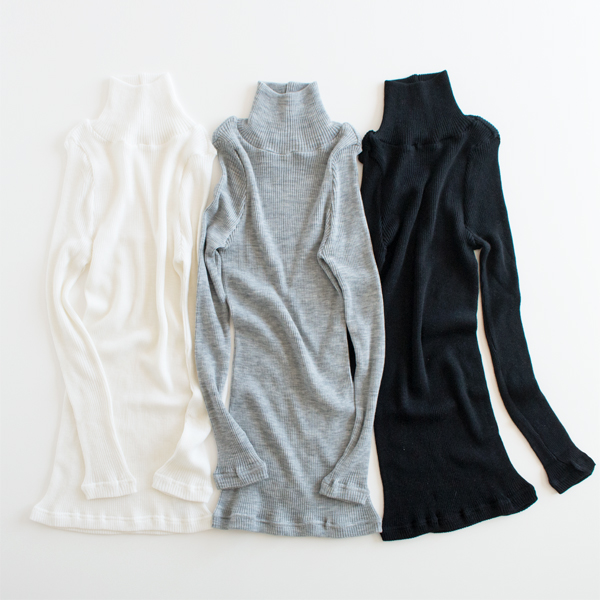
The third piece of innerwear is the high-neck type. When you hear "high-neck," you might picture a thick winter high-neck sweater, but since this one is made as innerwear, it has a thinner, softer feel.
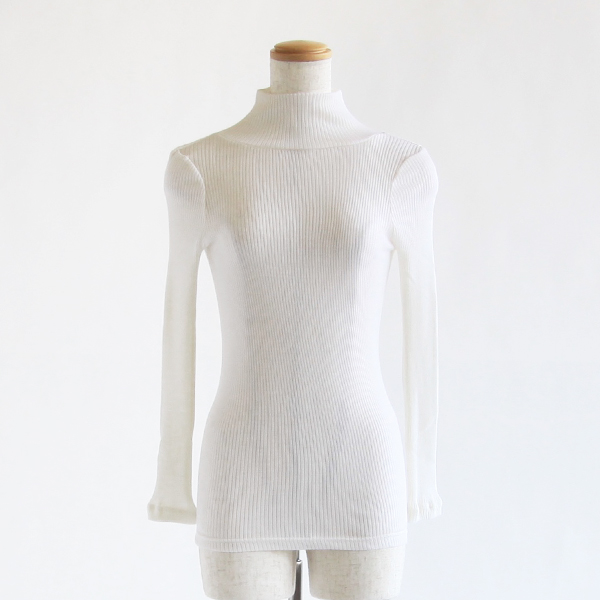
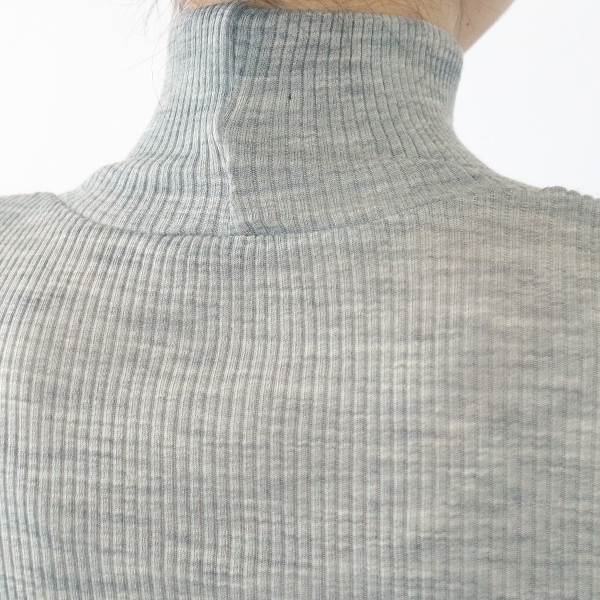
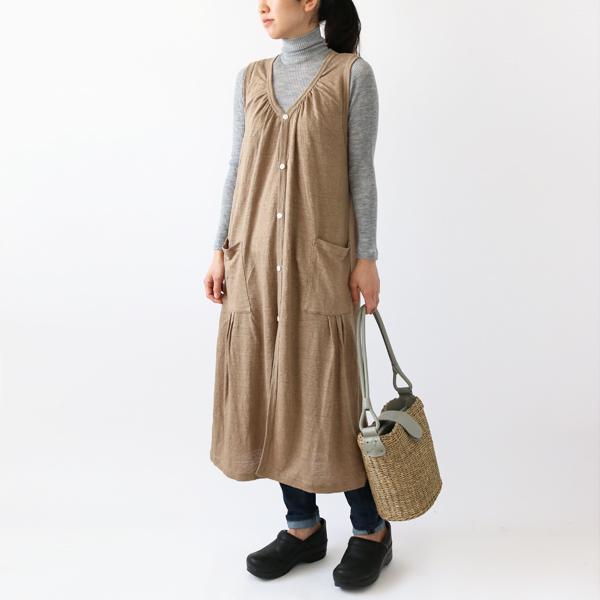
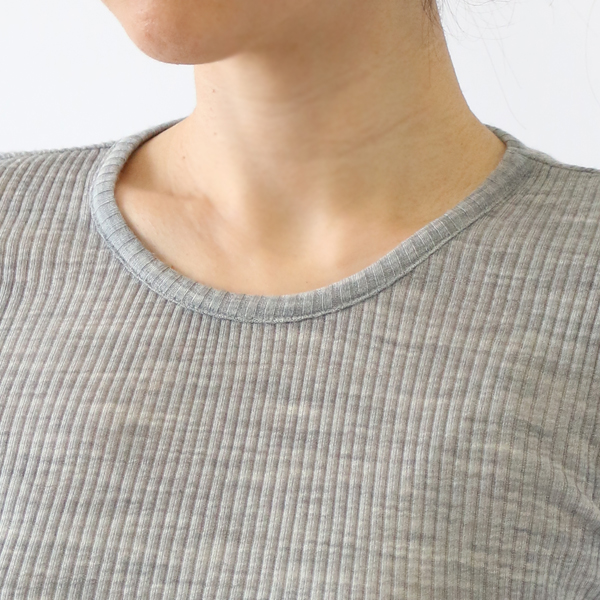
The high-neck section is knitted separately from the body. There is a seam allowance at the back of the neck, but the texture against the skin is soft, and since it's made as a double layer of two overlapping pieces of fabric, you can scrunch it up and adjust it to your preferred height. It's decidedly thinner than a sweater, so even though it's a wool high-neck, it's recommended for wear from autumn through early spring. As a base for layering, the high-neck also serves as a nice accent point, blending in naturally without feeling out of place.
For Long-Lasting Use of Your Innerwear
Innerwear that touches the skin needs to be washed after every wear. You might worry that washing wool will cause it to shrink, but ZUTTO's wool innerwear is treated with a shrink-resistant finish, so it's resistant to shrinking and can be washed with peace of mind.
◎ When washing, we recommend hand-washing.
We recommend using a detergent for delicate garments. Dissolve a small amount of detergent well in lukewarm water, and gently press-wash the garment.
◎ For drying after washing, we recommend laying the garment flat in a shaded spot, out of direct sunlight.
Please avoid direct sunlight, to prevent discoloration.
Since all of these innerwear pieces are knitted, hanging them on a hanger to dry may cause them to stretch out of shape. Please dry them flat.
▼ You can find ZUTTO's innerwear here

GUIDE »
CONTENTS »
CATEGORIES »
- + Gifts by recipient
- + Gifts by scene
- + Clothing
- + Bags / Backpacks
- + Wallets / Card cases
- + Jewelry
- + Shoes
- + Rainy day outfits
- + Kitchen
- + Home
- + Babies / Kids
- + Japanese products
Earn Miles


Payment & Security