Welcome to ZUTTO
Free shipping for newsletter subscribers (some areas excluded)
- トップページ/
- ZUTTO Journal/
- 選び方・使い方/
- A Pottery Fair fo...

Enjoying Food. ZUTTO's Pottery Market / Treasure Hunt
For anyone who loves tableware, a pottery market is somewhere your heart can't help but skip a beat. Traveling to a pottery-producing region and discovering beautiful, individual pieces that were never mass-produced—these are special items you simply can't find at your neighborhood shop or online store. This time, we've gathered new arrivals and dead-stock pottery so you can experience a taste of that treasure-hunting thrill you'd feel at a real pottery market.

The Appeal of Yakimono (Japanese Pottery)
In Japan, the history of yakimono stretches back over 10,000 years to the Jomon period. Pottery is broadly divided into two types: toki (earthenware), made from clay, and jiki (porcelain), made from powdered stone. Together, these two are referred to as tojiki (ceramics).
Even today, pottery is actively made all across Japan. What sets Japanese pottery apart from ceramics elsewhere in the world is that "beauty is found in irregular, natural forms." Indeed, when you look at pottery from overseas, it tends to consist of tableware with a symmetrical, refined beauty—quite different from the warm charm of the slightly uneven pieces found in Japan. Since Japanese people often eat while holding their tableware in hand, attention is paid not only to design but also to size, weight, and texture. From north to south, each region across the country has its own wonderful characteristics, and enjoying the variety of textures is part of the appeal. Searching for that one destined piece while traveling is a joy in itself.
Pottery also plays a very important role in tea ceremony and ikebana (flower arranging). In this way, pottery in Japan continues to be part of daily life not merely as "tableware," but as an expression of artistry and spirituality.
Tableware you can enjoy arranging together, from brands long loved at ZUTTO

If you're an adult who loves tableware, you probably already own quite a few favorite pieces. What can still hold its own among such a discerning collection is likely the "small to medium plate" size that has long graced the traditional Japanese table. A generously sized dish that can accept a bit of liquid content will let you enjoy pairing it with the tableware you already have.
Here are the new arrivals we'd like to introduce this time.
Sansui Kumo-gata Mame-zara (Cloud-Shaped Landscape Small Plate) / Hikifune-zu Sourin Mame-zara (Boat-Towing Design Twin-Ring Small Plate)


The Hikifune Sansui design depicts a man wearing a mino (straw raincoat) and a sandogasa (traveler's woven hat), rowing a boat along a river. It's a plate that draws you in somehow—the world of travel depicted on a piece small enough to fit in your palm, and the reddish-brown color used to render the rim and the water's surface. The four-piece set is a happy little surprise, as one plate features a different design from the rest.


>>Sansui Kumo-gata Mame-zara / Hikifune-zu Sourin Mame-zara
Choju Giga Kumo-gata Kobachi, Set of 5

The design depicted is Choju Giga (Scrolls of Frolicking Animals), said to have been created between the Heian and Kamakura periods and often called Japan's oldest manga. It's a sumi-e (ink painting) picture scroll some 10 meters long, passed down at Kosan-ji Temple in Kyoto, and designated a National Treasure. The scroll depicts animals such as rabbits, monkeys, and frogs playing happily together, almost like humans.
This tableware selects humorous scenes from the scroll, rendered in sumi ink and arranged with color painting. Each piece carries a one-of-a-kind originality, infused with the essence of Kutani ware. It's the kind of Choju Giga tableware that makes you want to imagine a story—and even add dialogue—for each differing scene.

Miyamoto Taizando's Choju Giga Kumo-gata Kobachi, with color added to the ink-drawn landscape, is such a lovable piece that you find yourself gazing at it before you've even served anything in it. The charming cloud-shaped small bowl is a handy size for lightly saucy side dishes like ohitashi or vinegared dishes.

>>Choju Giga Kumo-gata Kobachi, Set of 5
Sogyomon Wazara / Miyamoto Taizando

With its stylish octagonal form and gently curving lines, this plate stands out with even more presence when placed among round tableware. The pair of fish painted at the center, complete with scale patterns rendered right down to the back, evokes the atmosphere of a Japanese painting. The thistle-like plant motif drawn along the rim, together with the winding blue lines, gives it a modern and gorgeous effect. Making the most of the beauty of white porcelain, this plate works wonderfully for serving an individual portion of sashimi and is equally handy as a small serving plate.

The paired-fish motif, often painted at famous Japanese kilns, has long been used as a design symbolizing prosperity of descendants, since fish produce many offspring. The potter Kitaoji Rosanjin, who wholeheartedly loved food and created tableware that brought out the best in dishes, also made plates with this paired-fish design. Conceived with an image of the kind of tableware professional chefs would favor, this piece truly embodies Miyamoto Taizando's aesthetic of subtraction—a plate designed to enhance the food it serves.
>>See the Sogyomon Wazara here
Karako Shin-mokko-gata 5-Sun Plate / Miyamoto Taizando

Karako-e refers to paintings depicting children from China's Tang dynasty. Inspired by images of children playing happily, the design has come to symbolize wishes for prosperity of descendants and longevity without aging. In the past, it was mainly used on tribute pieces of tableware, and the number of children depicted was reportedly fixed by rank: seven for gifts to the imperial court, five for daimyo households, and three for samurai and commoners. It's said that each artist expressed their own individuality through the expressions of these karako figures, and the karako painted by Miyamoto Taizando have a soft, gentle expression, reminiscent of naive folk art in a way that warms the heart.

It's the artist's skill that creates this feeling, even though the design isn't a fanciful character illustration. This is a plate with a gentle, dance-like quality to it, elegant coloring, and a carefully painted braided-cord pattern along the rim. The plate's shape, mokko-gata, is one of Japan's family crests; because it also resembles the shape of a bird's nest, it came to symbolize the prosperity of descendants and was beloved by daimyo lords of the past. By using a plate that combines these auspicious motifs in your everyday life, you can bring brightness and liveliness to your table.
>>Karako Shin-mokko Gata 5-sun plate is here
Miyamoto Taizando is a kiln that has produced traditional colored porcelain in Komatsu City, Ishikawa Prefecture—the place where Maeda Toshitsune, the third lord of the Kaga domain, retired. Working in Komatsu, Ishikawa, the kiln focuses on colored porcelain in the mainstream tradition of Kutani ware, creating works under the themes of "a fusion of tradition and modernity" and "vessels that are, above all, enjoyable to use." At the time of its founding, it is said to have been a Kutani ware shop, but through three generations of Taizando's history, in pursuit of the questions "What makes a vessel enjoyable to use?" and "What vessels do we want on our everyday table?" the workshop transformed into a studio that creates its own original ceramics. While staying true to the plump, thickly raised overglaze enamels of blue (green), purple, deep blue, and yellow characteristic of Kutani ware, the kiln shapes the two ideals of "tradition and modernity" and "vessels that are enjoyable to use" through skilled craftsmanship, bringing together user-friendly designs and sending them out to everyday tables.
Rinka Plate / Kaneko Kohyo Seitosho

The Rinka plate from Kaneko Kohyo Seitosho is a truly versatile piece, suited to Japanese, Western, and Chinese cuisine alike—the plates are just the right size for serving a main dish, while the bowls are perfectly sized for individual servings. With its large, petal-like form blooming like a single flower on the table, the Rinka plate brings a sense of festivity to any meal. With the warmth of ceramic ware, a rustic antique-like quality, and yet a touch of modern sensibility, this plate is dependable in that it looks good holding either Japanese or Western dishes. Appearing often at the everyday table, it quietly adds color to your daily go-to menus.

Rinka Plate (Bowl, White)

Rinka Plate (Plate, White)
This is a vessel with the warmth typical of pottery finished by hand, piece by piece. For the Rinka plate, the rim has been made thick, prioritizing ease of use, resulting in a design unlike any other—one that lets you use it without worrying about it being ceramic, while still clearly conveying the character of the clay. The uneven, not-too-perfect texture gives a soft impression, making this a truly charming piece. Since it suits any kind of food you serve on it, it will prove useful at your table every day.


Kaneko Kohyo Seitosho was founded in Taisho 10 (1921) by Ito Kohyo in Toki, Gifu Prefecture. At the time of its founding, the kiln used a shared climbing kiln and mainly fired Buddhist and Shinto altar fittings, but because the local clay proved well-suited for molding, the kiln began focusing on producing tokkuri (sake bottles), eventually becoming the top producer in Japan. Later, as the diversification of alcoholic beverages made the kiln realize it could no longer sustain itself on tokkuri production alone after all those years, Giyaman-toh was born. Giyaman-toh is a beautiful chrysanthemum-shaped vessel completed on the strength of the molding and manufacturing techniques Kohyo had developed as Japan's top producer of tokkuri. With its glass-like transparency and a texture reminiscent of urushi (Japanese lacquer) coating, it has been called a masterpiece born from the pursuit of beauty. And yet it also dries quickly and is durable, so that beauty and everyday practicality coexist in this design.
Grill Plate / TOJIKITONYA

This grill plate is made by TOJIKITONYA. The grill plate is produced in Iga, Mie Prefecture, a region known for pottery production. The clay taken from the ancient Lake Biwa strata that make up Iga's geological layers has an extremely high fire resistance, and it has long been known as a clay well-suited to heat-resistant ceramics. It excels at retaining heat and warmth, and its rough-textured surface is another distinctive feature. In addition, Iga clay is said to produce a far-infrared effect that draws out the natural flavor of ingredients and gives dishes a mellow finish.

Since you place a single serving of fish, meat, or eggs into the deep plate and grill it at high heat all at once, the inside of the grill stays clean, making cleanup very easy. The shape is easy to wash, so it's fine for hand washing, and it's also dishwasher safe, which means you can use it with peace of mind even for oily or strong-smelling foods. Making the most of the far-infrared effect that TOJIKITONYA specializes in, this item lets you enjoy healthy, delicious cooking while bringing out the best in your ingredients. Since it comes with a handle that makes it easy to remove from the grill, you can bring freshly cooked food straight to the table, cutting down on the number of dishes you need.

In 2007, TOJIKITONYA was founded by three companies that had been running wholesale businesses, with the mission of making the most of materials nurtured by the region's history and culture to pass on high-quality ceramic products suited to modern life. Even as traditional techniques and craftspeople are rapidly disappearing, even in pottery-producing regions, TOJIKITONYA carries the hope of passing on the excellent techniques and products of the ceramics industry, which has walked alongside the history of Japanese food culture.
A once-in-a-lifetime encounter with warehouse finds. Introducing the treasure series of unearthed ceramics
消費が多様化し、暮らしが大きく変化した1970年代後半〜90年代のものづくりは、華やかで手の込んだものが多くありました。 In the world of manufacturing from the late 1970s through the 1990s, an era when consumption diversified and daily life changed dramatically, many products were ornate and intricately crafted. Today, due to a shortage of skilled artisans, difficulties in passing on techniques, and rising costs, it is becoming harder each year to produce work in the same way, and the trend has shifted toward simpler, more streamlined manufacturing. Against this backdrop, such elaborate ceramics have become truly precious—so much so that we wonder if pieces like these will ever be made again. These are lovely, one-of-a-kind treasures pulled from storage, items we'd still love to bring into our lives today. These sturdy, aged ceramics are exactly the kind of pieces that, forty years from now, will have moved from "vintage" to "antique." We hope you'll use them often in daily life and cherish them for years to come.

The place where we uncovered these treasure series ceramics is Hasami, a town in Nagasaki Prefecture. Among the ceramic-producing regions of Kyushu, this is one of the largest, having flourished as a major pottery center ever since porcelain stone was first quarried here around 1580. Hasami-yaki now accounts for a 16% share of Japan's daily tableware shipments nationwide, but until around the year 2000, the area was home to many kilns that produced Arita-yaki. Due to circumstances within this production region, which operates under a division-of-labor system, the area reached a point where the future of its traditional manufacturing looked uncertain. It was then that Seikai Toki Co., Ltd.—a company that had long supported the region's craftsmanship by standing between individual workshops and the people who used their wares—took the lead in launching what would become known as Hasami-yaki anew.
Hasami-yaki has recently gained attention through media exposure, but behind its modern tableware lies over 400 years of history and the accumulated skill of producing tableware and art crafts alike. For this storeroom release of treasure series ceramics, we've picked out a small selection of items from Hasami-yaki's history that are now nearly impossible to find. In today's world, recreating the same quality would require an amount of time, skill, and material cost that simply doesn't add up—making these treasures that also let us feel the vibrant energy of an earlier era in Japan.
Jewelry Box
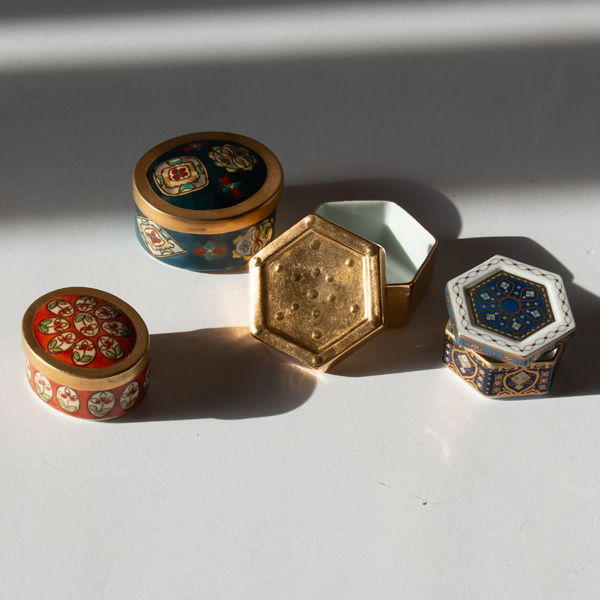
This ceramic jewelry box is said to be made by first applying layers of slip (a muddy liquid made by mixing clay and water) onto the raw clay body to create a raised dot pattern, then bisque-firing and firing the piece, followed by hand-painting with gold pigment and a final overglaze firing to complete the design.
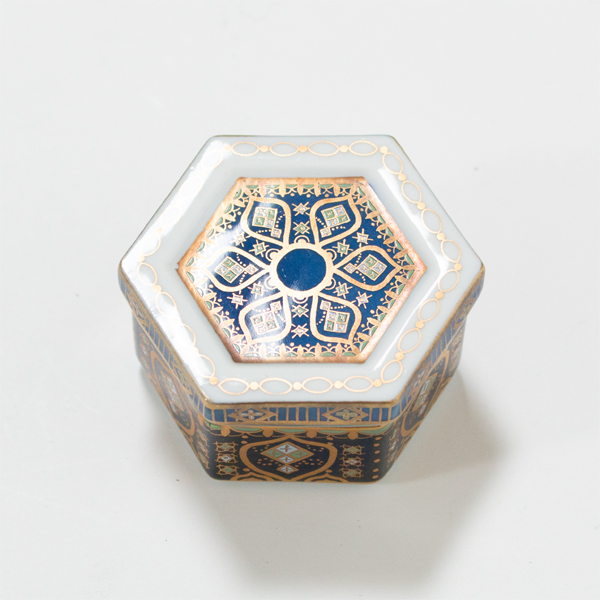
The jewelry box hand-painted with flowers that evoke an Eastern European atmosphere is a piece of handiwork you can sense was carefully made, piece by piece—you can feel it in the subtle shading created stroke by stroke with each color of glaze paint. The hexagonal "Royal Nouveau" box, with its Western air, is said to be made by applying and firing an intricately patterned overglaze transfer. The jewelry box with no painted design but finished in gold has its own distinct character, with a raised, polka-dot-like surface. Each piece carries the atmosphere of vintage wares from abroad, and in them you can sense the history of how ceramic traditions around the world have influenced and reflected one another over time.

Kincho-e (Brocade Butterfly) Series

The Kincho-e series was made 30 to 40 years ago as Chinese-style tableware. The butterfly, whose Japanese pronunciation "chō" echoes that of the word for "long" (長), is said to symbolize longevity. With its beautifully shaped and colored wings and the loveliness of its form as it grows and takes flight, the butterfly has long been regarded as a symbol of "beauty," a motif cherished in crafts and paintings alike—and here it has been rendered in the designs of small tableware pieces.

With its shape reminiscent of a small teapot and a hint of European charm, along with its lovely small floral pattern, this is an adorable pot you might even want to use for holding dressing. It's part of the charming Kincho-e series—lovely even just displayed on its own, perhaps holding a trimmed sprig of greenery from a cut flower arrangement if you have a bit of space in your kitchen. Even the lettering on the handle has a certain nice atmosphere to it. The small plate, meanwhile, works not only for soy sauce or condiments but also carries a Western feel that makes it suitable as a dessert plate to accompany coffee or tea.

Hakusan Toki Vintage U-Shaped Vase

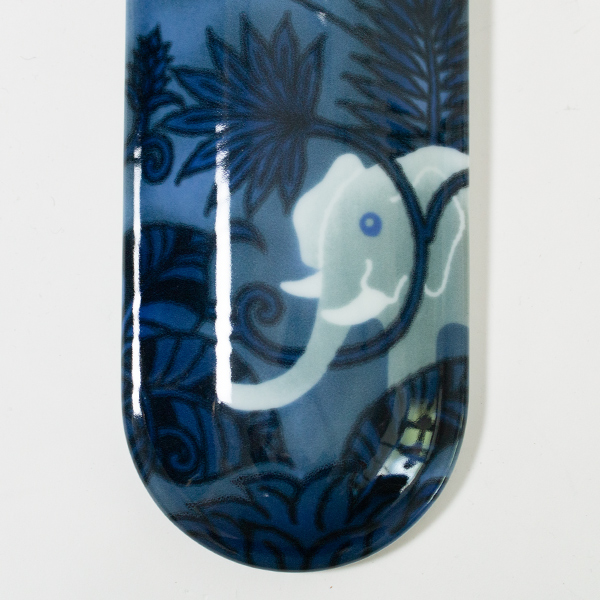
This is a wall-mounted vase by Hakusan Toki. Well-suited for entryways, wash spaces, or attaching to pillars along a staircase, this wall-hanging vase features an exotic elephant motif as its highlight. Hakusan Toki is well known as a long-life brand, and this piece is the result of a collaboration—no longer seen today—with a brand favored by the Kingdom of Thailand. The elephant, an animal symbolizing the brand, is rendered here in shades of gosu (cobalt blue). That an animal motif avoids feeling childish is likely thanks to the design sensibility and coloring unique to a high-end brand—this too is a piece that transcends the conventional image of retro Japanese ware.
Serving Ideas: Ways to Enjoy These Ceramics

Gratin baked in the home oven, served with a baguette. Perfect for sharing at the table.
Tableware used: Rinka Plate, Shallow Pot 18cm (Igneous Rock)

Stacking plates of the same kind but different sizes to create a layered plate setting.
Tableware used: Rinka Plate

Great as the main dish for a one-plate breakfast topped with grilled fish.
Tableware used: Rinka Plate (black)

It's also nice to bring together sashimi and small side dishes that go well with drinks.
Tableware used: Sougyomon Japanese-style plate, Karako Shinmokka-gata 5-sun

It also works wonderfully as a plate for seasonal fruit. At this time of year, persimmons or pears really set the mood.
Tableware used: Karako Shinmokka-gata 5-sun
ZUTTO Pottery Fair 2023
Simply changing the plate can make your everyday menu look more delicious, or give it the appearance of a restaurant dish—tableware that quietly adds color to daily life.
Even menus that have become routine take on a new look, and depending on how you choose your dishes, you might even save time on cooking prep. It's easy to find yourself wanting more and more of them.
At the ZUTTO Pottery Fair, we've gathered plates that make it easy to create balanced menus, favorite recipes, and everyday table settings for every household. In addition to pottery, we also offer a wide range of other items, so please be sure to check them out together.

GUIDE »
CONTENTS »
CATEGORIES »
- + Gifts by recipient
- + Gifts by scene
- + Clothing
- + Bags / Backpacks
- + Wallets / Card cases
- + Jewelry
- + Shoes
- + Rainy day outfits
- + Kitchen
- + Home
- + Babies / Kids
- + Japanese products
Earn Miles


Payment & Security