.webp)


.webp)


.webp)


.webp)


Welcome to ZUTTO
Free shipping for newsletter subscribers (some areas excluded)
- トップページ/
- ZUTTO Journal/
- 選び方・使い方/
- French craftsmans...

French craftsmanship that brings together design and function
Every product has, without exception, a place of origin.
"Japanese craftsmanship that lets you feel the artisan's handiwork"
"Craftsmanship from around the world that lets you feel a country's history and sense of design"—thinking about it this way,
if we look at craftsmanship through the lens of nation, we find two broad directions: Japan and the rest of the world.
In either case, looking at the place of origin somehow gives us a sense of the particular character of the craftsmanship from that land.
It's almost like traveling to various places together with the "things" themselves.
This time, our feature is on France.
Starting with Paris, it is the center of fashion, where long-established maisons and up-and-coming designers alike
draw on craftsmanship passed down over the years while keeping an eye on trends,
creating a wide variety of fashion items.
Let's take a closer look at that kind of French craftsmanship.


When we think of France, Paris—the city of flowers—comes to mind.
While images of glamorous streets lined with the boutiques of luxury fashion brands come to mind,
we also hear that Parisian women don't actually own that many clothes, and instead skillfully mix and match a set of staple pieces
to enjoy a style that is uniquely their own.
French craftsmanship tends to be associated first with outward beauty—design and glamour—
but when we look at the development of craftsmanship through France's modern and contemporary history,
we can sense not only an attention to appearance, but also a dedication to inner qualities such as function, practicality, and durability.

What is especially interesting is the era known as the "Belle Époque."
Belle Époque means "beautiful era," and while there is no strict definition of its exact duration,
it generally refers to the period from the late 1800s until the outbreak of World War I (1914).
Every country seems to have had its own "good old days," a time of celebrating the progress of daily life built on industrial development.
This era stood apart from times of war and turmoil, and people were filled with hope and vitality.
Naturally, the people who lived through the Belle Époque took great interest in fashion as well,
and alongside haute couture—luxury clothing based fundamentally on made-to-order garments—
this was also the era when ready-to-wear clothing, known as prêt-à-porter (prêt-à-porter), began to spread.
In that sense, this era can be seen as an important turning point, one in which ordinary people also came to enjoy fashion.
In other words, it became possible for anyone to develop their own sense of value around fashion.
It was an era when Impressionist painters like Cézanne and Renoir sought out their own unique ways of capturing light.
It was an era when Émile Gallé's glasswork delighted people's eyes.
Alongside these developments in art, the idea of "dressing in a way that's true to oneself" became something much closer to everyday life.
Now, having developed through such an era, French craftsmanship today
offers many items available to us that successfully combine both function and design.

Starting in 1924, founder LEON began making
leather bags and canvas bags by hand in Paris,
marking the beginning of LEON FLAM (Leon Flam).
The original design patterns, fabrics, and fittings are all made in France or Portugal,
and LEON FLAM's pilot bags are crafted with an approach that avoids materials burdensome to the environment.
With their distinctive presence, these are quality bags with a simple, refined design.
Production takes place only in France and Portugal,
and with a fixed quantity produced each season, these bags are precious—crafted with real dedication by the makers themselves.

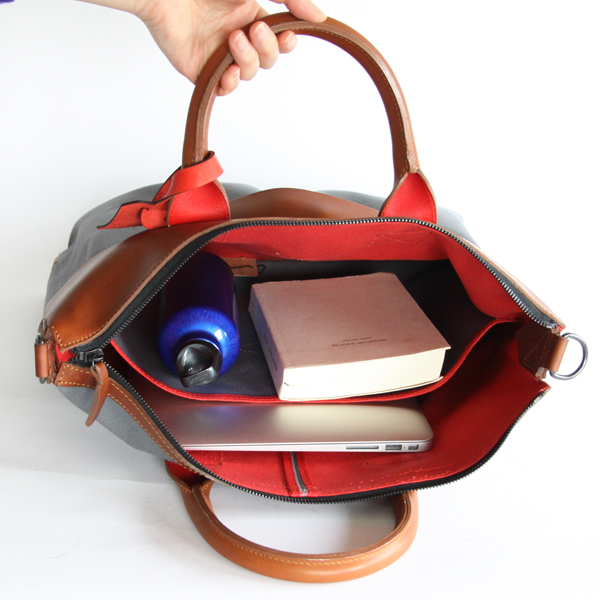
Simple yet full of presence, this bag has a width generous enough to hold A4-size documents with ease,
and it's roomy enough to fit a laptop even held upright, making it a great choice for business use as well.
On the front, there are two deep outer pockets,
perfect for storing small items or things you need to take out frequently while on the move.
The pockets are covered with a flap of leather, which also keeps the contents hidden from view,
while the interior lining is made of red canvas fabric,
giving it a distinctly French feel. It's also convenient that the interior is divided into two sections, like a partition.

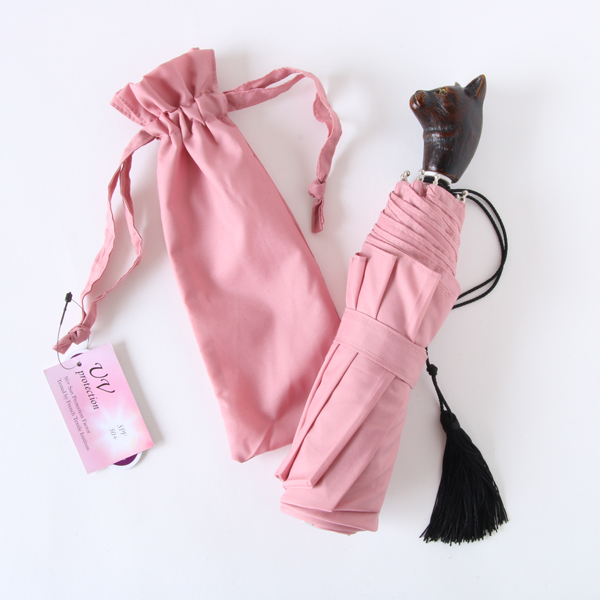
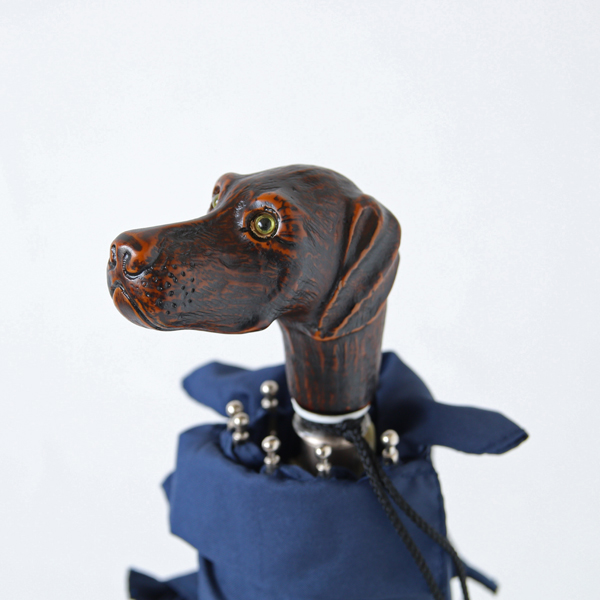
This is an all-weather umbrella from Guy de Jean of France, suitable for both sun and rain.
This long-established umbrella workshop continues to carry on traditional handmade methods, crafting umbrellas with great care to this day.
Building on their distinctive style and know-how, they also incorporate new techniques and ideas
into elements like the fabric and handles, earning strong trust from designer brands
centered mainly in France.
The waterproof-treated polyester fabric
has been proven to achieve an SPF50+ level of protection under France's official UV-shielding test standards.
The inner ribs are covered with a durable carbon casing.
The fringe on the handle adds a subtle, understated accent.

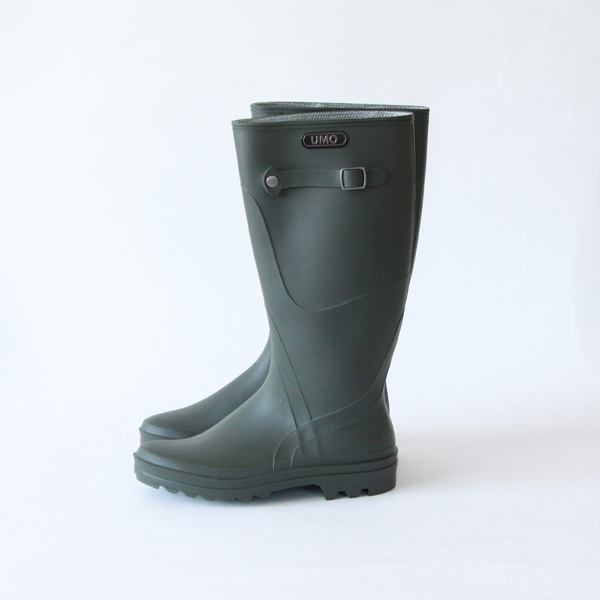
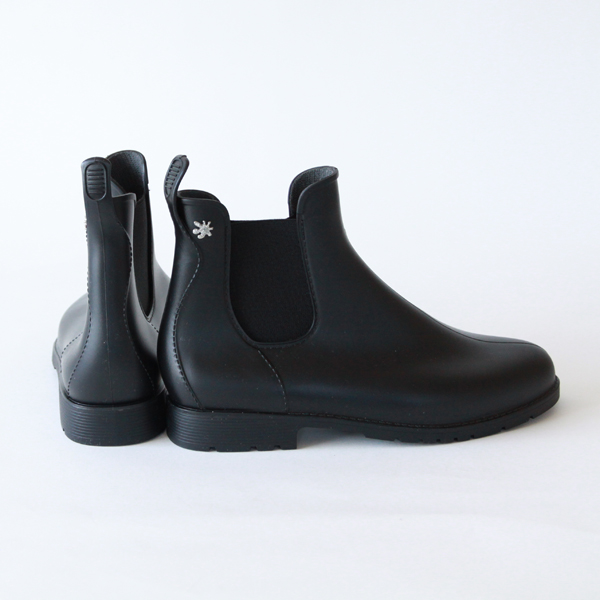
UMO, a long-established shoe factory brand founded in France in 1905.
The shoe business began when the current chairman's grandfather started making slippers.
After its founding, the company expanded its manufacturing scale, and after World War II began producing PVC shoes.
It mechanized production of Wellington boots (rubber boots), rain boots, and beach sandals
in order to increase output, which led to the branding of UMO.
UMO took its inspiration from the beach sandals that were hugely popular around 1946,
and created one-piece molded rain shoes made from a water-resistant, soft, and durable material,
which became a huge hit within France.
It swept away the previous generation of rain shoes, which were highly practical but rather plain in design,
and began producing colorful rain shoes with a strong sense of fashion.
Today, it stands as a leading figure among French shoemakers, producing four million pairs a year.

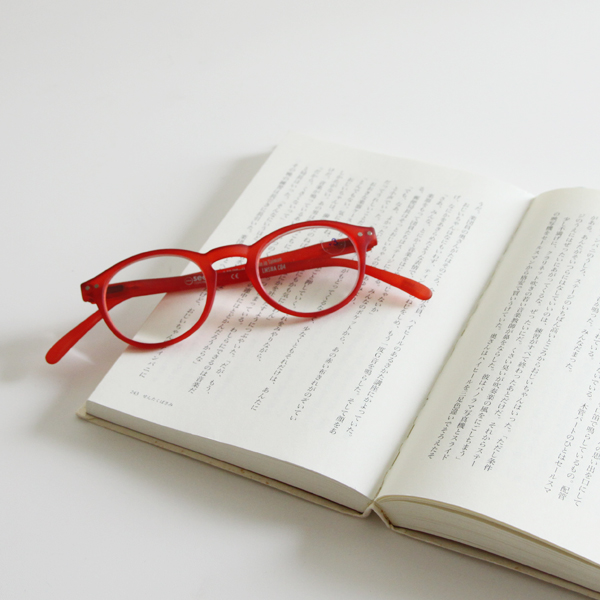
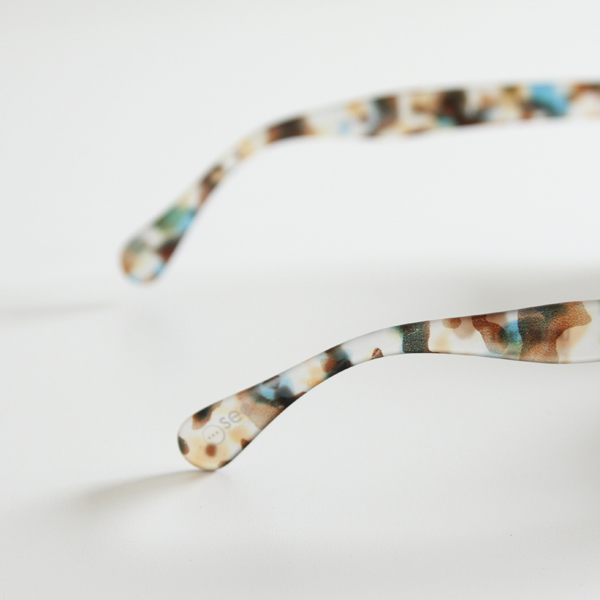
"Reading glasses that will transform your customers' lives." That is the philosophy of See Concept.
Three designers from Lyon, France, watched their parents constantly struggling to find where they'd left their reading glasses,
and this led them to reconsider the fact that everyone, eventually, develops presbyopia.
See Concept was born in Paris in 2010.
At first, it made tabletop-style glasses, which came to be placed in banks, insurance companies, and hotels,
and later, an eyeglass-type version that was easier for ordinary people to use was introduced.
The stylish, colorful, fashionable designs that make your heart skip a beat
make you want to wear them all the time—it's almost curious how appealing they are.
Today, in addition to reading glasses,
the brand also offers sunglasses that are handy for summer, and its fans are said to be growing worldwide.
What did you think of French craftsmanship?
Of course, the stylish, eye-catching designs and colors are appealing,
but it's the functionality—good to wear, good to use—that makes you want to keep using these items for years to come.
Some brands have now moved their manufacturing processes overseas,
but even so, behind each brand,
I sense that the historical background of France's experience—the transformations in industry, fashion, and people's daily lives—
has brought about a shared quality: "the union of function and design."


GUIDE »
CONTENTS »
CATEGORIES »
- + Gifts by recipient
- + Gifts by scene
- + Clothing
- + Bags / Backpacks
- + Wallets / Card cases
- + Jewelry
- + Shoes
- + Rainy day outfits
- + Kitchen
- + Home
- + Babies / Kids
- + Japanese products
Earn Miles


Payment & Security