.webp)


.webp)


.webp)


.webp)


Welcome to ZUTTO
Free shipping for newsletter subscribers (some areas excluded)
- トップページ/
- ZUTTO Journal/
- 選び方・使い方/
- Know the differen...

Know the differences, collect them, and use them wisely. Parasols and umbrellas
Rainy season and summer. Parasols and long umbrellas are indispensable in both seasons, and in fact, there are many different types. If you understand the differences in construction and materials and learn to use umbrellas wisely, you can stay comfortable whether it's raining or the sun is beating down.
The differences are actually this significant. Parasols and umbrellas
When you hear "parasol" and "umbrella," you might think of them simply as items suited to sunny or rainy weather, but in fact there are many differences in their construction as well.
The first thing you'll notice is the difference in size. Parasols are made more compact, while umbrellas are made larger so they can properly shield you from the rain. Looking at the parasol and umbrella below, you can see that the length of the shaft and the size of the canopy are completely different.


In addition, the shape of the ferrule differs between parasols and umbrellas to match their size.
The ferrule refers to the tip of the umbrella, the part that gathers the fabric together. A parasol's ferrule is rounded and small, while an umbrella's is long and slender. Because an umbrella touches the ground when closed, it is made to be more durable.

A KOMIYA all-weather folding umbrella with a small ferrule

A ZUTTO long umbrella with a slender, elongated ferrule
Another point of difference is the material used for the canopy. Since the primary purpose of a parasol is to block sunlight, materials that not only block sunlight but also absorb its heat are mainly used. Representative examples are natural materials such as cotton, hemp, and silk. In addition to being traditional materials, they offer the unique character that only natural materials can provide.
On the other hand, for umbrellas—where preventing rain from leaking through is the top priority—chemical fibers such as polyester are often chosen. Polyester is selected for being lightweight, highly durable, and having excellent color reproduction.

A Makita Shoten parasol made from cotton blended with polyester and polyurethane
What exactly is an all-weather umbrella?
Now, there's a type of umbrella that has become quite popular recently: the all-weather umbrella. An all-weather umbrella is basically constructed as a parasol, but its fabric is treated with waterproofing and water-repellent finishing, allowing it to handle sudden rain as well.


The KOMIYA all-weather folding umbrella, Stripe Organic Shade, features a black coating on its underside. Despite being a high-performance "first-class UV-blocking" folding umbrella with a UV-blocking rate of 99.99% or higher, it is also treated with a water-repellent finish, allowing it to handle temporary rain as well.


This is a women's all-weather folding umbrella from FOX UMBRELLAS. It uses fabric in the same tone on both the outer and inner surfaces, giving it a bright, UV-blocking canopy. The bamboo handle lends it an elegant touch, giving off a sense of luxury not found in ordinary folding umbrellas. It's an umbrella that anyone can use with ease.
That said, since all-weather umbrellas like these are designed as parasols that can also handle temporary rain, using them as a rain umbrella for extended periods may cause leaking. Please use them not as a proper rain umbrella, but as an umbrella that can also respond to sudden rain.
The materials that support parasols and umbrellas
As mentioned earlier, the materials used for parasol and umbrella canopies are mainly natural materials such as cotton and hemp, as well as polyester and similar synthetics.
There are also various other materials that support an umbrella's structure. Materials used for the ribs inside the umbrella and the shaft include fiberglass and aluminum. Fiberglass is based on glass fibers, and because it is springy and flexible, it's a material that resists breaking even when buffeted by wind. Aluminum, meanwhile, is ideal for reducing weight. It's a recommended material for those who want an umbrella that's as light as possible to carry by hand.

The German folding umbrella brand Knirps also uses aluminum and fiberglass for its frames. Its umbrellas are lightweight, can be stored compactly, and open and close easily. They also come in a wide range of sizes, so choose one according to your needs.
There are still more materials used in umbrellas. The handle, the part you hold, is made from a variety of materials depending on the umbrella, and it's also the part that gives each umbrella its individual character.
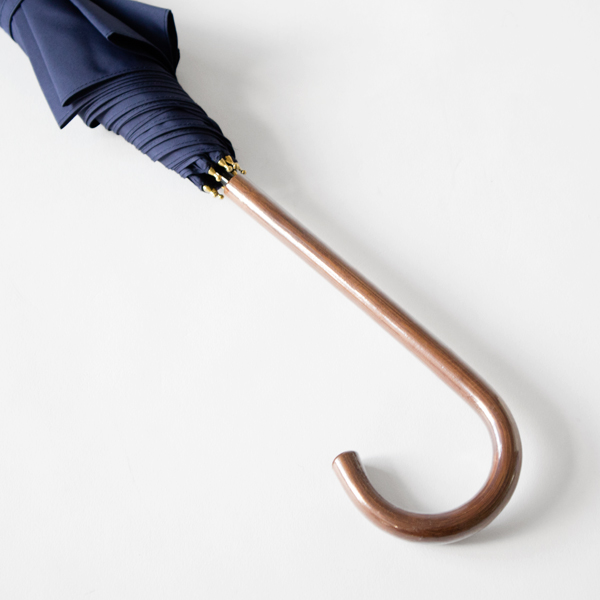
ZUTTO's original umbrellas use unfinished rattan (shiraki tou). Rattan deepens in color the more it is used. The dark spots that appear on its surface are also a characteristic feature of rattan. It creates a calm atmosphere that pairs well even with traditional Japanese clothing.

The KOUMORIUMBRELLA uses tamo (Japanese ash) for its handle and kashi (oak) for its shaft. Both are materials often chosen for furniture due to their beautiful appearance and durability, and they also convey the warmth unique to natural wood.

And here is the KOMIYA Koshu-ori Folding Umbrella Kasane. Its handle is made of acrylic synthetic resin. The use of this translucent synthetic resin creates a curious handle that seems to let light pass through it, making it a defining feature of this umbrella. The handle is joined to the main body with wooden parts, giving this compact folding umbrella an especially sturdy construction.
Choosing wisely among umbrellas that suit you
We've introduced how, even though we simply call them "parasols" and "umbrellas," there is actually a wide variety of construction methods and materials involved. Umbrellas, made all over the world as an indispensable item in daily life, also have a range of distinct characteristics depending on the brand. Among the many types available, we hope you'll find the one that suits your taste.

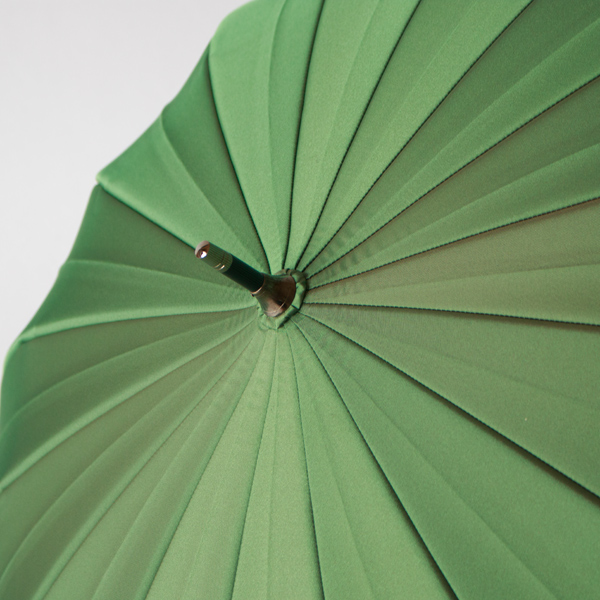
KOMIYA (Komiya) was founded in Tokyo in 1930. What distinguishes KOMIYA above all is its beautiful fabric, best represented by koshu-ori (Koshu weave). At the time, Western-style umbrellas were considered luxury accessories, but by making them from koshu-ori—a specialty of Yamanashi Prefecture—KOMIYA helped bring umbrellas closer to everyday life. Weathering the changing tides of the times, the brand continues to be one of the few makers still producing umbrellas domestically in Japan.
The Kasane series, finished beautifully in two-tone colors, retains all the charm of the glossy, yarn-dyed koshu-ori fabric, giving it an elegant presence. Open the umbrella, and you'll find a striking beauty.


Makita Shoten is another umbrella brand that has continued production in Japan since its founding in 1866. From the Showa 30s (mid-1950s) onward, it established its name as a major production hub for yarn-dyed umbrella fabrics, and today it is engaged in groundbreaking manufacturing of both parasols and rain umbrellas, incorporating the latest electronic jacquard looms.
Makita Shoten also continues to produce umbrellas with striking three-dimensional motifs, such as the Sai series of parasols, characterized by fabric with an embroidery-like textured, raised surface.
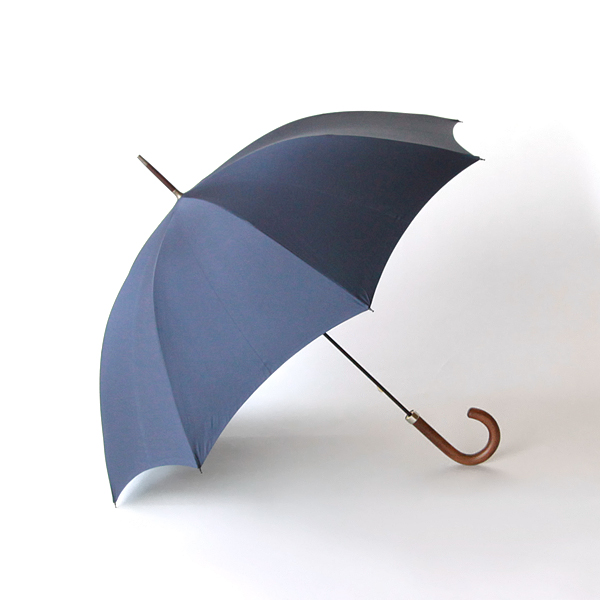


FOX UMBRELLAS is a British brand that became widely known for developing the world's first rain umbrella using synthetic fiber.
The U-shaped steel frame that FOX UMBRELLAS devised has now become the world standard for umbrella ribs. The balance of its curved surface is calculated to gently receive falling rain and guide water droplets off the edge of the umbrella.
Elegant, slender long umbrellas evocative of gentlemen and ladies, and compact folding umbrellas built with a structure that still keeps the rain firmly at bay—these are just some of the features found throughout a brand developed in rainy England.
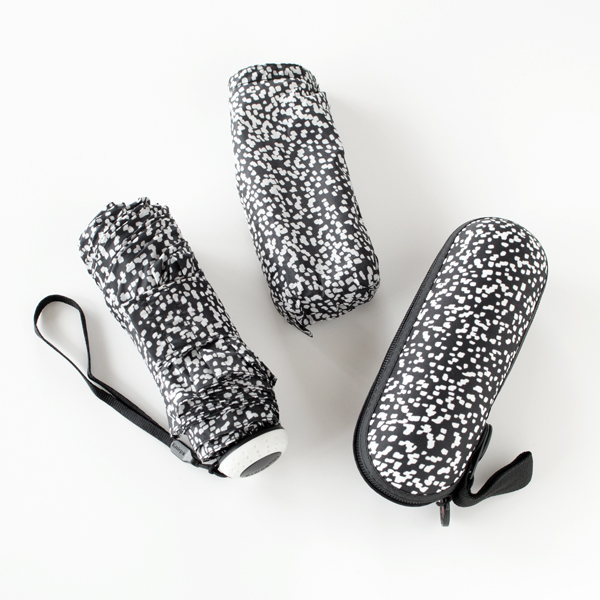

KNIRPS is a German-born rain umbrella brand that devised the world's first folding umbrella. Beloved for its conveniently portable size, its lightness that makes it easy to carry even for petite women, and its sturdy construction that still stands up to wind and rain once opened, the brand is so widely loved that the word "Knirps" has even made its way into German dictionaries.
Among its folding umbrellas, KNIRPS offers a wide range of sizes: the basic 8-rib T.220, the compact 6-rib TS.220, the light and slim 6-rib U.220, and the ultra-compact X1 with a soft cover, among others. Some series even feature one-touch open-and-close buttons. These are umbrellas designed with careful consideration given not just to size, but to practicality as well.
▽ Parasols can be found here

▽ Rain umbrellas can be found here

GUIDE »
CATEGORIES »
- + Gifts by recipient
- + Gifts by scene
- + Clothing
- + Bags / Backpacks
- + Wallets / Card cases
- + Jewelry
- + Shoes
- + Rainy day outfits
- + Kitchen
- + Home
- + Babies / Kids
- + Japanese products
Earn Miles


Payment & Security