.webp)


.webp)


.webp)


.webp)


Welcome to ZUTTO
Free shipping for newsletter subscribers (some areas excluded)
- トップページ/
- ZUTTO Journal/
- 選び方・使い方/
- # A truly beautif...

The all-purpose shoe with a history as beautiful as its looks. How to choose a side gore boot, and how to care for it so you can wear it for years
This time we're taking a look at side gore boots. Easy to slip on and off, comfortable to wear regardless of season, and versatile enough to match any outfit.
Part of the fun of choosing shoes is that you always want one more pair, no matter how many you already own. But shoes that satisfy both of two key conditions—fitting the foot comfortably enough to walk in easily, and being simple to incorporate into everyday outfits—are surprisingly rare. No matter how beautiful a shoe looks, if it takes time to put on and take off, or if high heels make walking difficult, wearing it while putting up with some kind of discomfort inevitably reveals a flaw somewhere: your posture suffers, or you keep someone waiting while you struggle with it.
In that sense, the simple side gore boot might be called a shoe that makes even your movements look beautiful. The appeal of the side gore boot lies in how well it hits the key points of shoe selection.


A formal boot devised for a queen
As the name suggests, a side gore boot is a short boot with stretchy fabric panels (gores) set into both sides at the ankle. Because so many models are designed with functionality in mind—reducing the cold of winter, keeping out rain—side gore boots today are often thought of as a type of work boot. Surprisingly, though, their roots actually lie in formal occasions.
The story goes back to the 19th century. A short boot with gore panels was created for Britain's Queen Victoria, designed to be easy to put on and take off while still fitting the foot snugly, and this is said to be the prototype of today's side gore boot. Queen Victoria ascended to the throne in 1837—the era of the novelist Charles Dickens and the painter Millais—which gives some sense of just how long this history stretches back.
It's both surprising and a little unexpected that this boot was originally devised for a queen, but it was Queen Victoria's husband, Prince Albert, who took a particular liking to the design. Prince Albert is said to have worn side gore shoes to attend Parliament, and the boot even came to be called the "Albert boot" in his honor in earlier times—a testament to just how popular it became.

Why it's also known as the Chelsea boot
The side gore boot, having been born this way, crossed the sea and spread from Britain to various places, becoming popular in America under the name "Congress boot," for example. Even so, it seems to have retained a strongly formal, dignified character in its early days. In Japan too, it's said that the boots Sakamoto Ryoma wore during the late Edo period were side gore boots. This shows just how much a shoe that combined visual beauty with functionality captivated people in different parts of the world.
It was after the 1960s that the side gore boot came to be widely recognized as a fashion item. In the 1960s, artists in London's Chelsea district all began wearing side gore boots, and the style suddenly became famous as the "Chelsea boot." Anyone picturing the black boots worn by the four members of the Beatles—with their high heels and sleek, tapered toe lines—will immediately understand why.
A shoe devised as a boot for a queen went on to develop into a formal boot for men, and came to be loved across oceans and across eras—which shows that the side gore boot is a rare thing indeed: a shoe that combines beauty and functionality in equal measure. Today many casual versions are produced, but when you consider that it once served as a formal boot, there's something about wearing one that seems to straighten your posture without you even trying.
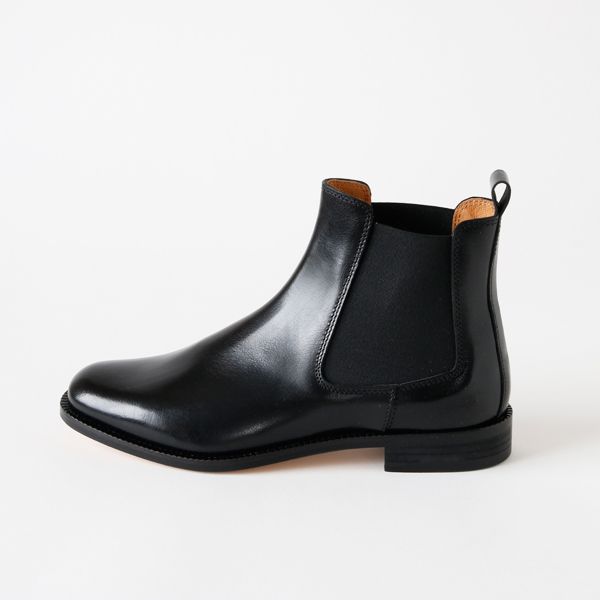
How the details change both the look and the feel
The simple construction of the side gore boot means that small differences in craftsmanship can change both its appearance and how it feels to wear. Let's take a closer look at the elements that shape a boot's character.
1: The toe curve, which determines the first impression

This isn't unique to side gore styles, but the curve of the toe has a major effect on a shoe's overall impression. As in the photo, a sharp, near-triangular toe design gives a neat, precise appearance. The closer the toe gets to a pointed shape, the sharper the impression becomes; conversely, a rounder, fuller shape gives off a gentler, more casual feel.
Especially with leather boots, slimmer designs sometimes include what's called "sute-sun"—about 2 cm of extra space left at the toe. In this space, the toes shouldn't reach all the way in; the correct fit is one where the toes don't touch the inside of the boot at the front. If your toes are pressing against the shoe, it can actually hurt your feet. To keep your posture straight and walk comfortably, it's worth paying close attention when choosing your size.
2: The junction between the outsole and the upper, where the details create elegance

This is a point that's easy to overlook, but since side gore boots are a slip-on style, they lack laces or other conspicuous decorative elements. That makes small differences in construction all the more influential on the overall look. One detail worth paying attention to is where the upper meets the sole. Depending on the boot, the stitching in this area can serve as a subtle accent, or, if barely visible at all, it can create a smooth, beautifully seamless finish—each giving a different impression. In the case of this black boot, the stitching is kept unobtrusive, giving it an especially elegant appearance.

Meanwhile, here's a pair where the stitching serves as just the right accent. Since brown leather is easy to enjoy as it ages, the color of the upper will change over time as well. It's exciting to imagine what shade it will develop into.
3. Materials that determine comfort and functionality

From left: smooth leather, oiled leather, PVC
Here we've lined up boots made from three different materials. All are simple ankle-height side gore boots, but depending on the material used, the occasions they suit and the wearing comfort they offer change considerably.
【Smooth leather: a refined shine for a dressy finish】

If you're choosing a truly classic pair, go for glossy smooth leather. We recommend cowhide with a surface polished to a smooth finish. Paired with formal outfits like a skirt and tights or center-crease trousers, it still holds its own with an air of quality. When first worn, the leather is a bit stiff and takes some patience before it softens and conforms to your foot, but the joy of caring for the leather and watching it develop over the years is something no other material can offer.
【Oiled leather: a dependable choice for both rain and shine】
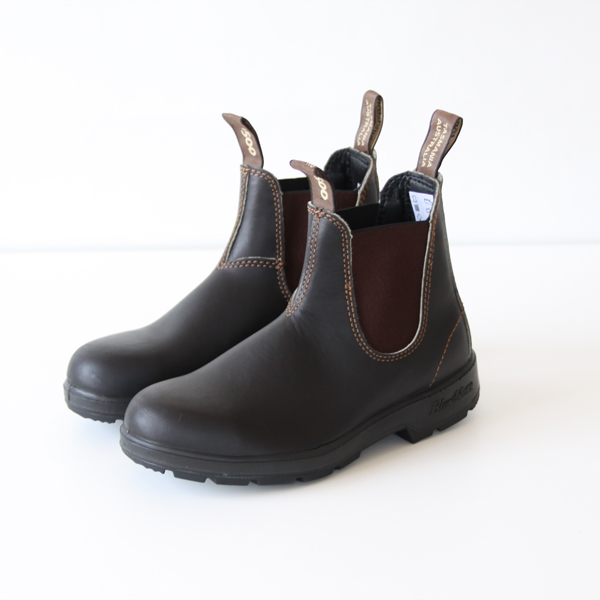
Easy to slip on and off while covering the ankle, side gore boots are wonderfully comfortable to wear on rainy days—but the drawback of leather shoes is that they're vulnerable to rain. Oiled leather solves that problem. Boots made with waterproof leather that has been infused with oil can handle rainy days without trouble. As short leather boots, they're also well suited to keeping warm in winter, so depending on the outfit you pair them with, they see long service throughout the year—from autumn into winter, and from early spring through the rainy season.
【PVC: perfectly suited for rainy days only】

If you already own a pair of leather short boots and are looking for a pair you can wear on rainy days as well, PVC is the perfect fit. PVC stands for polyvinyl chloride, which is said to be virtually immune to deterioration, and it's also lightweight and resistant to scratches and stains. It offers an extremely supple wearing feel, without the stiffness often found in rain shoes, and its slim silhouette—whether worn or removed—makes it convenient for everyday use. Oiled leather is great, but for those who want to walk lightly without worrying about heavy rain, PVC is the better recommendation.
Similar yet different: a variety of boots
・DIEGO BELLINI


The side gore boots crafted by DIEGO BELLINI are captivating for their elegant curves and lustrous leather, almost like a work of art. Originally established as a long-standing maker of women's loafers known for their comfort, the brand was founded in 1951 in Montegranaro, in Italy's Marche region—a place often called the "sacred ground of footwear." Montegranaro is a town with a long history of leather goods development and many craftsmen with true artisan spirit, and DIEGO BELLINI has been a factory there for over 60 years since its founding, continuing to make everything from students' shoes to men's moccasins.
・Blundstone


Blundstone, the originator of the side gore boot, was born on Tasmania, an island rich in nature in southeastern Australia. It's known for being lighter than typical side gore boots, with a wearing feel comparable to sneakers. Its durable polyurethane sole makes walking easy and reduces fatigue, and its patented SPS (Shock Protection System) delivers comfortable steps. It's remarkable that the quality is high enough to absorb as much as 90% of impact.
・UMO


UMO took inspiration from the beach sandals that were wildly popular around 1946, and created a huge hit in France with one-piece molded rain shoes made from a material that was water-resistant, soft, and durable. The brand swept away the drab designs of rain shoes that, until then, had prioritized practicality over style, and began producing colorful rain shoes with a strong sense of fashion. Today, UMO has become a leading French shoe maker, producing 4 million pairs a year. One notable detail is the jellyfish motif, the brand's logo, placed at the opening of the shoe.
Things to keep in mind for long-term use

For basic care of side gore boots, there's no problem simply following the same maintenance routine as any other shoes made from the same material. On top of that, since side gore boots tend to be worn for a long season throughout the year, it's worth keeping in mind a few care points specific to them.
▼Upper care
・Leather shoes that are vulnerable to moisture: After wearing, brush the shoes, and periodically apply cream to moisturize and polish them. Because boots are constructed in a way that traps moisture easily, if you have a short boot type that accommodates a shoe keeper, inserting a wooden shoe keeper will help restore the shoe's shape and let it rest, preventing deformation and set-in creases. Avoid wearing them on rainy days.
・Waterproof oiled leather: Even water-resistant leather deteriorates faster if left wet for a long time. When the leather gets wet from rain, wipe off the surface moisture and remove the moisture inside so the leather lasts longer. Regularly replenishing oils with oil or cream will help preserve the leather's original texture.
・PVC, rubber, and other materials used for rain shoes: These are water-resistant materials, so there's no need to be overly cautious about rain exposure. However, if water droplets are left sitting for a long time, the dust and grime carried by the rain can remain and leave marks like water stains. Wipe them regularly with a cloth to remove dirt. Depending on the material, some may be sensitive to temperature changes (becoming hard in low temperatures, or deforming and cracking in high temperatures). Be mindful of temperature changes during long-term storage.


▼Pay Attention to the Outsole
This isn't unique to side-gore boots, but the sole of the shoe (the outsole) is one of the parts most prone to wear. Even when the upper design looks similar across shoes, the outsole specifications vary widely depending on the intended use. There's a huge range of variation—from the smooth leather soles common on dress shoes, to soles with deep tread patterns designed to prevent slipping on rain- or snow-covered roads.
The longer you wear the shoes, the faster the outsole wears down, so side-gore boots—which tend to have a long wearing season throughout the year—require particular attention. If you diligently care for the upper and keep it looking beautiful, but let the outsole deteriorate, the shoe won't be able to fulfill its function properly. Especially with leather outsoles, inserting a thin insole while wearing them, then removing it to air out once you're home, can help reduce wear.


▼Use a Shoehorn to Prevent the Gore from Deteriorating
Side-gore boots are easy to put on and take off because of the gore. The elasticized gusset with rubber is precisely what characterizes side-gore boots, but if that gore deteriorates, both the visual beauty and the functionality of the shoe are lost. If the rubber stretches more than necessary, the shoe's overall form will become distorted, so avoid pulling forcefully when putting them on or taking them off.
We recommend using a shoehorn when putting your foot in. Doing so makes it easier for your foot to slide in without having to stretch the opening wide. Without thinking about it, people often end up sitting down at the entryway and using both hands, but if you can quickly pull out a shoehorn and slip your foot in smoothly, the whole motion becomes much more refined. Having a foldable shoehorn, or one that can also double as a keychain, makes putting on any pair of shoes feel effortlessly smart.
▶︎Shoes to Enjoy for Their Clean, Refined Form

▶︎For Rainy Day Outfits

▶︎Oiled Leather Boots to Break In and Nurture Over Time
GUIDE »
CATEGORIES »
- + Gifts by recipient
- + Gifts by scene
- + Clothing
- + Bags / Backpacks
- + Wallets / Card cases
- + Jewelry
- + Shoes
- + Rainy day outfits
- + Kitchen
- + Home
- + Babies / Kids
- + Japanese products
Earn Miles


Payment & Security