.webp)


.webp)


.webp)


.webp)


Welcome to ZUTTO
Free shipping for newsletter subscribers (some areas excluded)
- トップページ/
- ZUTTO Journal/
- 選び方・使い方/
- A Spring Notebook...

Enjoy It Twice: A Spring Notebook on Using Enamelware for "Hot" and "Cold"
Items that have been loved by people for generations, transcending eras, always have good reason for their staying power. This time, we're taking a closer look at "horo" (enamelware) — those milky-white, glassy-smooth vessels. In a world where trends change at a dizzying pace, we explore why this material continues to be so strongly supported by cooking professionals and those who live with care and attention.
Did You Know? The Charm of Enamelware Goes Beyond Storage
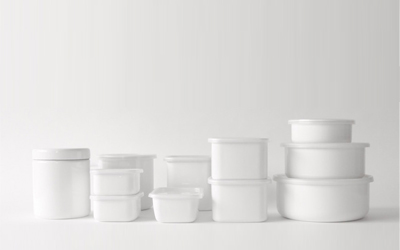
"Horo" — chances are you've seen it in your kitchen at least once. Enamelware has long played a role at the dining table, and it has been especially widely used in households as a storage container. But in truth, it's a versatile vessel suited not only for storage but also for cooking. As other materials like stainless steel and plastic came onto the market, enamelware lost a significant share of its popularity for a time. But its appeal — convenient for both storage and cooking, simple in design — fits perfectly with today's growing trend toward mindful, unhurried living.
① It Can Be Heated Directly Over an Open Flame

*Not compatible with IH cooktops.
Just as there are enamel pots and kettles, enamelware can be placed directly over an open flame. You can cook in it as a pot, then let any leftovers cool and put them straight into the refrigerator as they are. When you take them out again, reheating is just as simple. This means far fewer pots and dishes to wash. Because enamelware conducts heat well during cooking, it can bring things to a boil or thaw food quickly. It's also handy for cooking small amounts — a single serving, baby food, or meals for someone who's unwell. When placing it over an open flame, be sure to use a mitt or kitchen towel, and avoid touching it directly.
② Once Cooled, Cover It and Put It Straight Into the Refrigerator
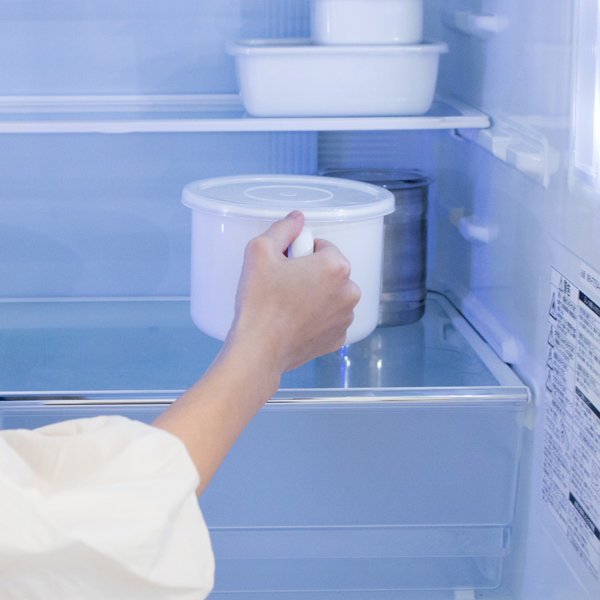
After cooking, once the dish has cooled, you can simply seal it with a lid and place it straight into the refrigerator — suitable for both refrigeration and freezing. Dried goods, side dishes prepared in advance, homemade seasonings, and leftovers can all be stored this way. It's convenient to use a label sticker to note the contents and the date it was made. Half-cooked dishes can also be frozen as they are. When reheating something frozen, remove the seal lid and warm it over low heat. Keeping ready-to-eat, freshly reheated dishes on hand in the freezer makes for a richer variety of meals and saves time, too.
It's often said that enamelware works well for both "hot" and "cold" use, but placing it directly over a flame or in the oven takes a bit of courage. To really experience this appeal firsthand, our staff decided to actually try cooking with enamelware as a piece of cookware.
We wondered: is there something we could easily use to test both "hot" and "cold" in a single vessel? That's when we thought of custard pudding. Since enamelware can go both over an open flame and into a steamer, we figured it might be possible to make it easily with just a few tools. After some trial and error with quantities and timing, we arrived at this recipe.
Making Custard Pudding Using Enamelware
Making custard pudding requires several steps — baking, steaming, and chilling. Normally you'd need multiple pots and molds for the custard base and the caramel, but this time we tried making pudding using enamelware, which dramatically cuts down on the dishes to wash afterward.
◆ Cooking over an open flame → Heating water and sugar to make caramel
◆ Into the refrigerator → Once cooled, seal with a lid and chill in the refrigerator
【Recipe for Pudding Made with Enamelware】
Enamelware used: White Series Square
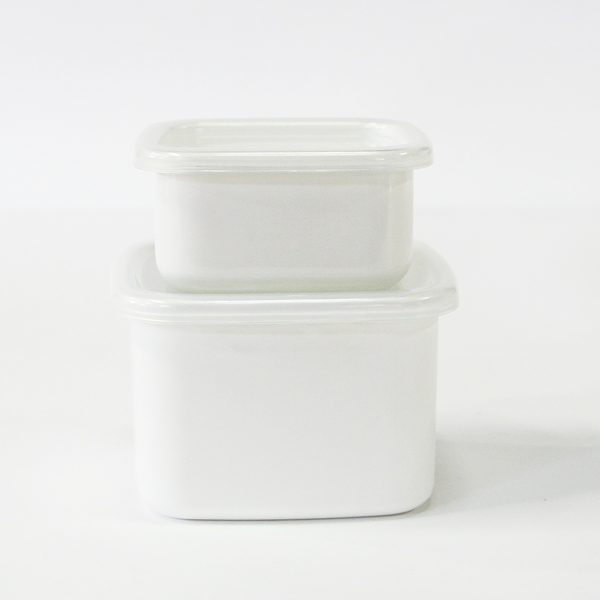
We used the S size (shown in the photo above).
Ingredients (for one White Series Square S size)
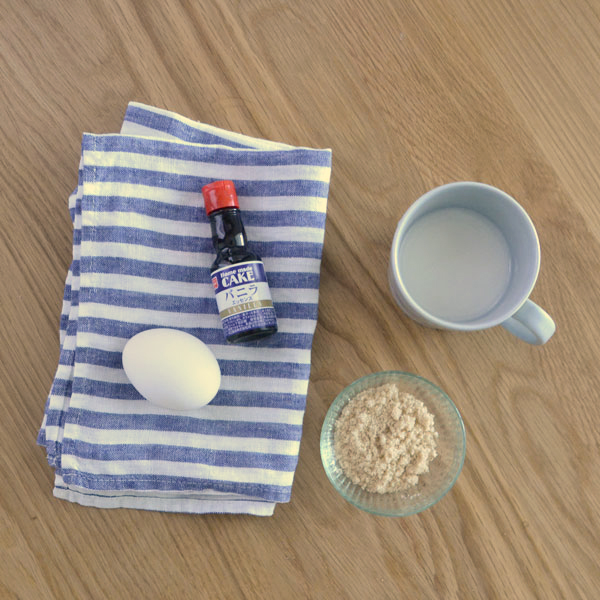
1 egg
100cc milk
10g sugar
A dash of vanilla essence
5g sugar (for the caramel sauce)
A small amount of water (for the caramel sauce)
【Making the Caramel Sauce】
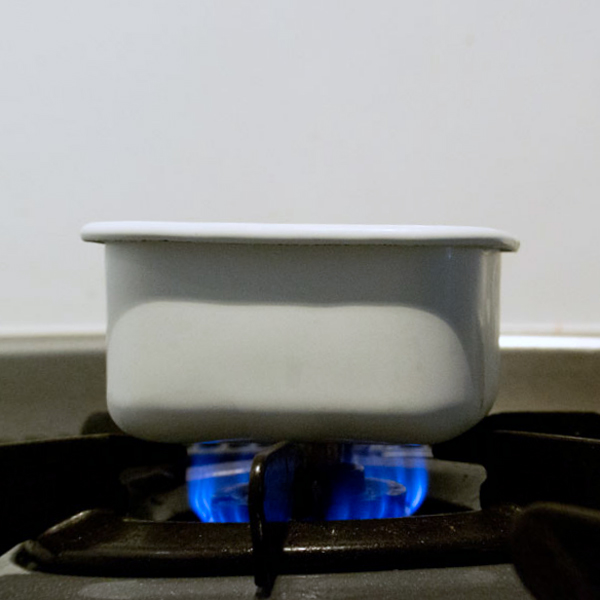
1. Put 5g of sugar into the enamel container and heat over low heat, letting it caramelize until it turns a caramel color.
2. Once bubbles start to form, gently swirl the container so it becomes an even brown color. When it starts turning a deeper brown and large bubbles begin to form, remove from heat and add a small amount of water (about half a teaspoon). (Be careful — the hot sauce will sizzle loudly and may splatter. It helps to use a pot lid or similar to guard against splashes.)
3. Blend the sauce until it's an even consistency, then let it rest until the caramel sets.
*Making caramel sauce is a race against time, so it takes a bit of skill at first. Even if it seems tricky in the beginning, once you get used to it, you can go from making the sauce to finishing the steamed pudding in just 20 minutes.
【Making the Pudding Base】
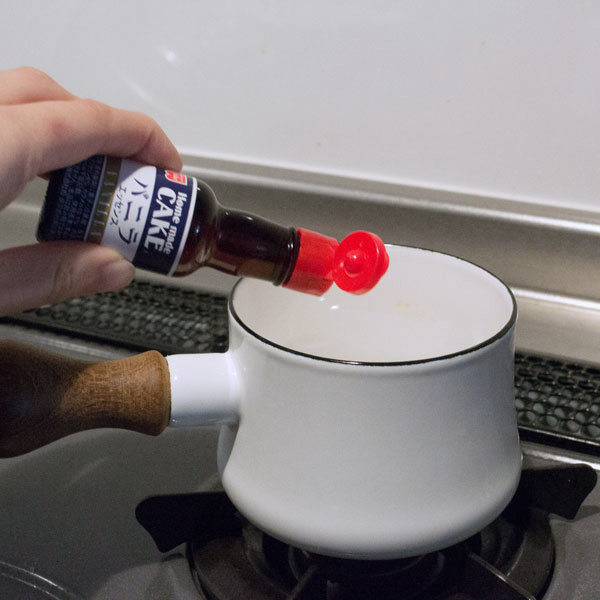
1. Crack 1 egg into a small pot, beat it well, and strain out the stringy part of the egg white.
2. Add 100cc of milk and 10g of sugar. *This recipe is lightly sweetened, so feel free to adjust the sugar to your taste. If you skip the caramel sauce, you can also add more sugar to the pudding base instead.
3. Heat over very low heat, stirring well. It's ready once it's gently warmed to about body temperature.
4. Add a dash of vanilla essence for flavor.
【Steaming the Pudding】
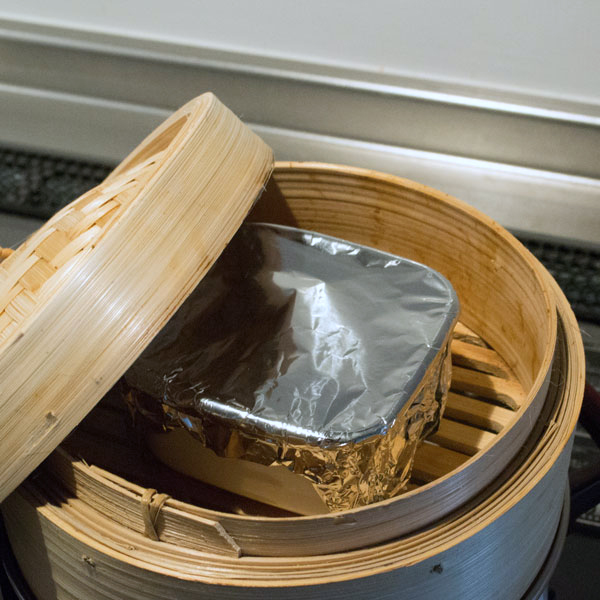
1. Gently pour the pudding base over the caramel sauce. Straining it through a tea strainer or sieve as you pour will give a smoother finish.
2. Cover the enamel container with aluminum foil and steam for 10–15 minutes in a steamer basket over high heat, once steam is rising well.
3. Once it has cooled slightly, chill it in the refrigerator.
Here's the finished result.
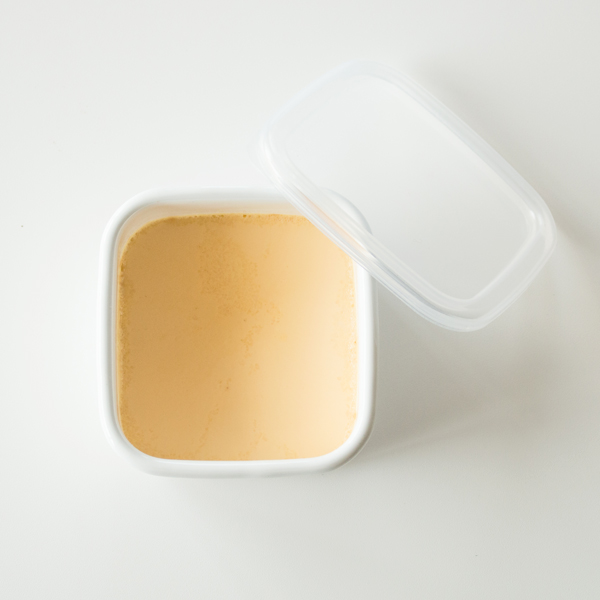
A charming, homemade pudding fits just right in the S size of the White Series Square, which measures 10.6 x 10 x 5.4cm (height).
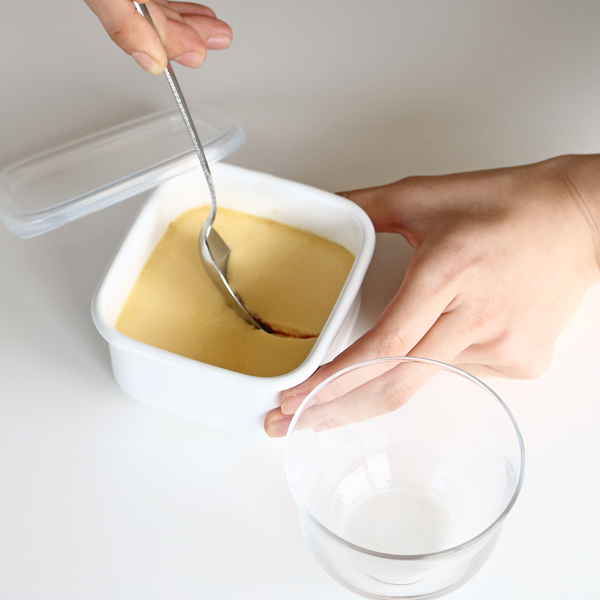
This amount serves about two adults, or roughly four people if served as a small after-dinner treat. It makes a delightful little dessert to cleanse the palate.
From the Staff's Perspective — What We Learned Through Making Pudding
The staff member who actually made the pudding this time commented, "I really felt how convenient it is that enamelware can be used for so many different purposes in just one piece. Normally, making pudding requires separate cups or bowls for heating, steaming, and cooling, but this time being able to do it all in a single container meant a lot less washing up—it was really great."
【Tips for Making Pudding, Learned Through Trial and Error】
Watch Out for Burns & the Size of Your Stove Burner!
When placing the enamelware directly on the flame or steaming it in a seiro (bamboo steamer), the body of the container gets very hot, so be careful of burns! Always be sure to hold it with a pot holder or kitchen towel. Also, if the enamelware is too small, it may wobble unless it fits properly onto the burner's trivet, so please check that it fits your stove before using it.
Steam-Baking Method
You can also steam-bake it in an oven, but steaming it in a seiro is quicker and easier. Please adjust the time and heat as you check on it along the way.
This time, the staff member used her own DANSK butter warmer, which turned out to be perfect for making the pudding mixture. A compact enamel pot like this is an all-around performer that reaches those hard-to-reach spots.
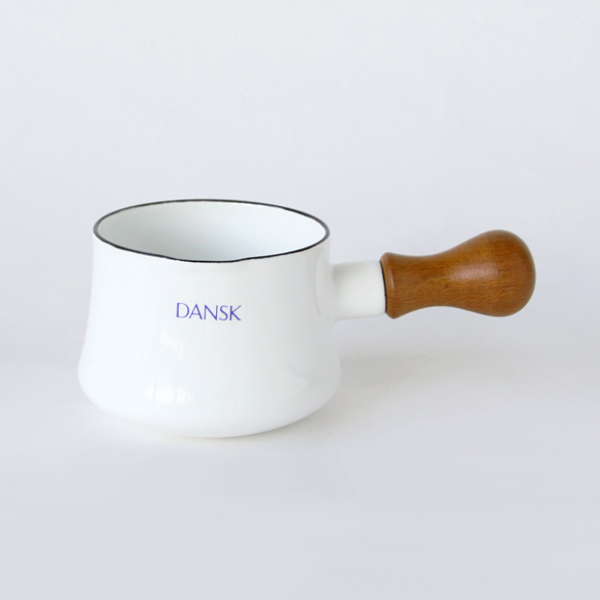
Butter Warmer / DANSK
Despite its name, this butter warmer isn't just for warming butter—it's also the perfect size for heating milk for one or two servings, boiling eggs or sausages for breakfast, or even enjoying cheese fondue or chocolate fondue. Because it's so small, it's also handy for making baby food or sauces, which can be tricky in a large pot. With its charming appearance, it's the kind of piece you could bring straight to the table when making a single serving of soup or pot-au-feu.
A Repertoire of Uses, Enjoyed Both "Hot" and "Cold"
One of the great things about enamelware is that a single container can be used for both heating and cooling. Naturally suited for storage, it can also go directly on the flame or in the oven, so you can take it straight from the fridge to reheat or cook. It's also handy for storing a big batch of side dishes made over the weekend, all together in one enamel container. Thanks to its simple, beautiful shape, it can also be used as tableware, and some people even use it as a lunch box.
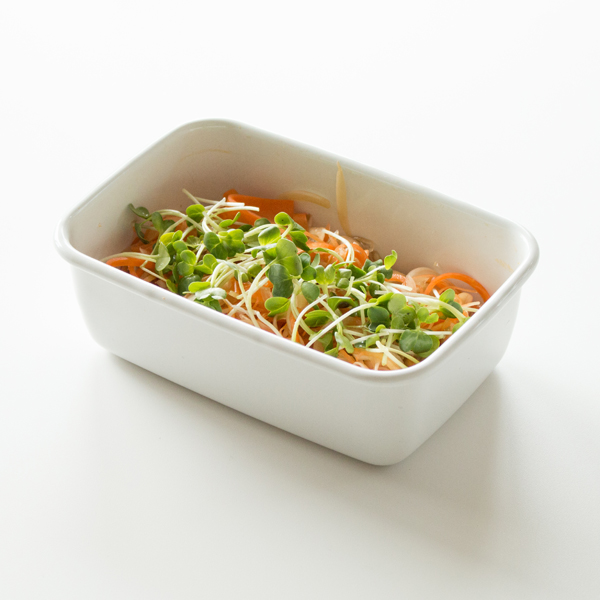
Another key point is that enamelware also holds up well against vinegar and oil. This makes it well suited for storing pickles, umeboshi (pickled plums), and jams. Because its surface is glass-like, it doesn't easily alter the flavor or quality of food, and it's resistant to picking up odors even when storing strongly scented ingredients.
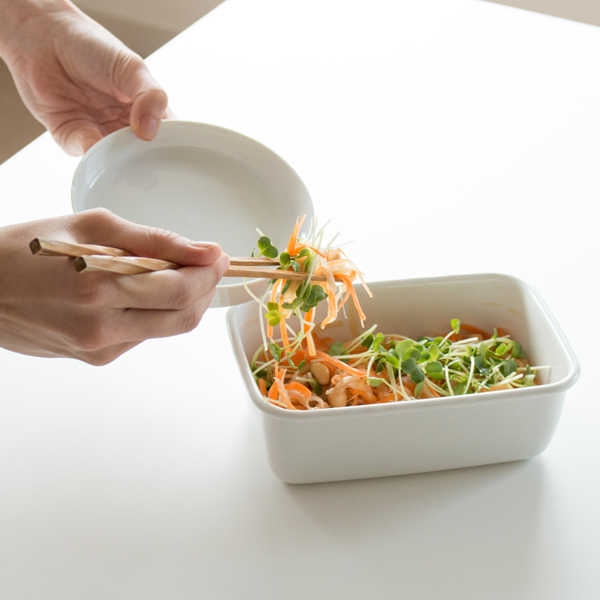
In addition to refrigeration, freezing is also possible. You can make a large batch of stew, curry, or dashi (Japanese soup stock) and freeze it in individual portions.
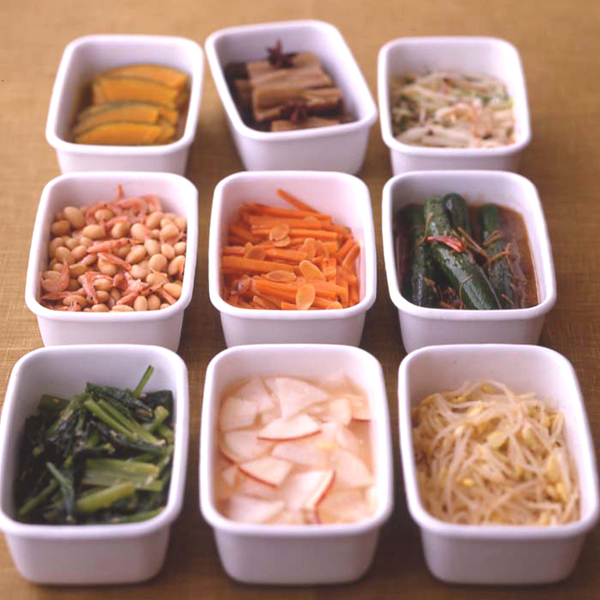
Enamelware doesn't offer the convenience of a machine that does the work for you at the push of a button, but it embodies the simple versatility that a traditional material can offer—a quality that has been cherished across generations. Gathering simple tools that last a long time may well be the first step toward making everyday cooking both more efficient and more enjoyable. Noda Horo's pure white enamel containers, brimming with possibility, are the kind of tool that makes you look forward to thinking, "What should I make next?"
Use It, Enjoy It: Enamel Containers
White Series Rectangle Deep Type
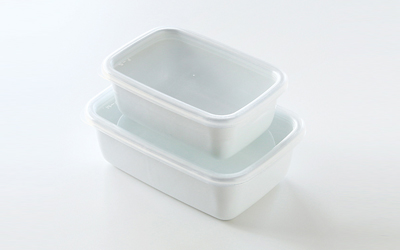
The S size is great for storing 200g of butter, everyday side dishes, or tarako (salted cod roe). The M size is ideal for meat, fish fillets, a block of tofu, or curry.
White Series Square
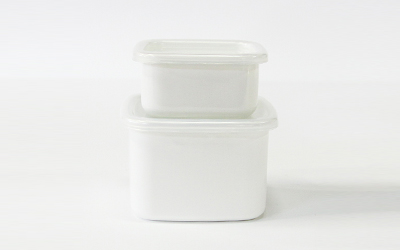
The S size is suited for one serving of curry, one and a half servings of dashi, shirasu (whitebait), or tarako. The M size works well for four servings of dashi or soup, or for storing simmered dishes.
Vat (All White)
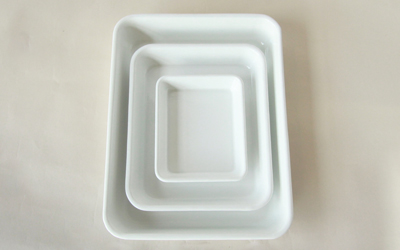
Perfect for meal prep, such as marinating or preparing ingredients for frying. Available in five sizes in total.
White Series Round
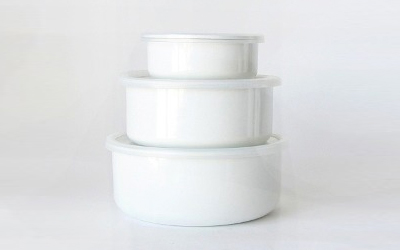
The 12cm size is perfect for storing ham, the 14cm for cut fruit, and the 16cm is ideal for senmaizuke (thinly sliced pickled turnip) or simmered dishes.
Stocker with Handle, Square
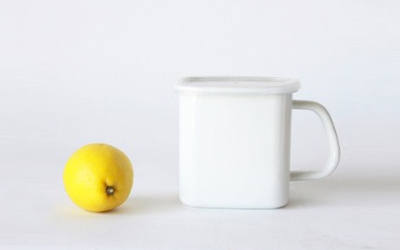
The perfect size for storing miso. Once you take it out of the fridge, you can hold it with one hand while cooking.
Stocker with Handle, Round
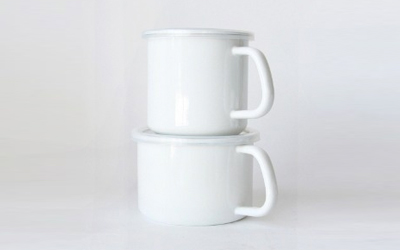
Easy to take things out of, and truly versatile. The handle makes it convenient to place directly on the flame for cooking as well.
TUTU L Size
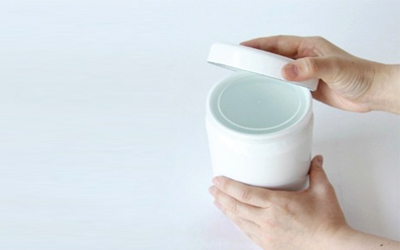
A lidded stocker that's convenient for storing short pasta or seasonings.
▽More ZUTTO Reading You Might Enjoy
Convenient and Clean: Making the Most of Horo (Enamelware)
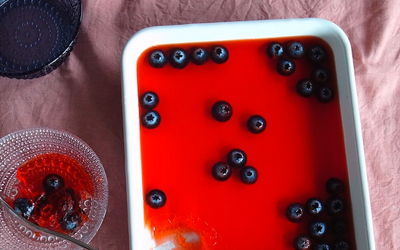
▽Click here for the Noda Horo brand page
GUIDE »
CATEGORIES »
- + Gifts by recipient
- + Gifts by scene
- + Clothing
- + Bags / Backpacks
- + Wallets / Card cases
- + Jewelry
- + Shoes
- + Rainy day outfits
- + Kitchen
- + Home
- + Babies / Kids
- + Japanese products
Earn Miles


Payment & Security