.webp)


.webp)


.webp)


.webp)


Welcome to ZUTTO
Free shipping for newsletter subscribers (some areas excluded)
- トップページ/
- ZUTTO Journal/
- 選び方・使い方/
- Choosing Vases an...

A Beginner's Guide to Choosing Vases and Flowers.
When flowers are part of everyday life, they can lift your spirits, and even a single bloom can transform the atmosphere of an otherwise plain room—all thanks to the mysterious power flowers hold. Taking a little time out of a busy day to arrange flowers is, in a way, a form of self-care.
Choosing a vase goes hand in hand with displaying flowers. Since it's not practical to keep a huge collection of vases on hand, we asked a flower specialist how to choose the one vase that will always serve you well.

For this feature on choosing vases and flowers, we spoke with kado (Japanese flower arranging) artist Taichi Tamano.
He teaches at vocational schools and holds ikebana classes, pursuing—without being bound by fixed "forms"—moments and spaces where the heart is enriched through flowers.
The most important thing is not to put your vase away.

We gathered a selection of vases featured on ZUTTO, and Tamano-san kindly prepared the flowers. As he arranged the blooms—thinking about which flower would suit which vase—the most memorable thing he said was this: "You shouldn't stash away the vases you own. You need to enjoy their shape and color even when there are no flowers in them."
For someone like me, who had always tucked vases away in a cupboard—believing that a vase's purpose disappears once there are no flowers in it—this was an eye-opening idea.
"Ideally, when you decide you'd like some flowers and head to the flower shop, the moment you spot a bloom you like, a vase to put it in should immediately come to mind. If you keep your vases within sight even when they're not in use, choosing flowers becomes much easier."
I see—keeping vases in your field of awareness really does help when it comes to choosing flowers. In other words, this means displaying the vase itself as an object. You could simply place it on top of a shoe cabinet, near the TV stand, or on your desk—alongside postcards or other small items, for example. Having it in view might just be the spark that makes you think, "I'd like to put some flowers out."
As an example of displaying a vase even when it's not in use, Tamano-san offered a wonderful suggestion.

This is a highly designed vase shaped like a cross, and remarkably, he displayed it lying on its side. Seeing a vase enjoyed with this much creative freedom was, once again, an eye-opener.
We've talked about flowers and vases, and having first learned what to do when there are no flowers in the vase, let's move on to recommended vases and how to arrange flowers in them.
First, a medium-sized vase is a good place to start
For those who want to start incorporating flowers into daily life, or who are thinking of giving flowers as a gift, what size vase would you recommend first?
"Flowers aren't cheap, and even when buying them yourself, there aren't actually many occasions to display a large bouquet. So the first vase to have on hand should be a medium size—around 12 to 15 cm in height. Something in this range."
Old English Vase (Hyacinth H14cm) / HOLMEGAARD
*This size has been discontinued.

"This vase is just the right size and shape for arranging four or five stems, or even a single flower, so it's easy to use and well suited for beginners or as a gift. You can also grow bulbs in it, so it's nice that it works for more than just cut flowers."

Having chosen the flowers, Tamano-san then poured water in until it nearly overflowed from the vase—which took me by surprise. Why so much water?
"A clear glass vase is meant for enjoying the water as much as the flowers. If you fill it right up to the brim, it creates a sense of transparency and freshness, and depending on the season, can even give a cool, refreshing effect. Also, filling it with plenty of water makes it easier for the flowers to draw up water through osmotic pressure."

Flower Vase OMAGGIO H125 / KAHLER

At 12.5 cm tall, with a narrowed opening that keeps arranged flowers from flopping out too loosely, this is another easy-to-use design. That said, the striped pattern is both a defining feature of this vase and something that might feel a bit intimidating to a beginner.
What should you keep in mind to make good use of a patterned vase like this?
"The key is to link the color of the flowers you choose with the pattern on the vase. For example, this OMAGGIO has silver lines, so pairing it with silver-toned flowers works well. By 'silver-toned,' I mean flowers that are white or have a bluish tint. Dried flowers would also suit it nicely."


With that, he created an arrangement combining air plants with purple flowers.
Indeed, the whitish surface of the air plants reads as a silvery tone, matching the vase beautifully. And with a touch of purple added as an accent, the effect is even more striking.
What about something like this as well?
Flower Vase LYNGBY VASE GLASS (Clear H15cm) / Lyngby Porcelaen
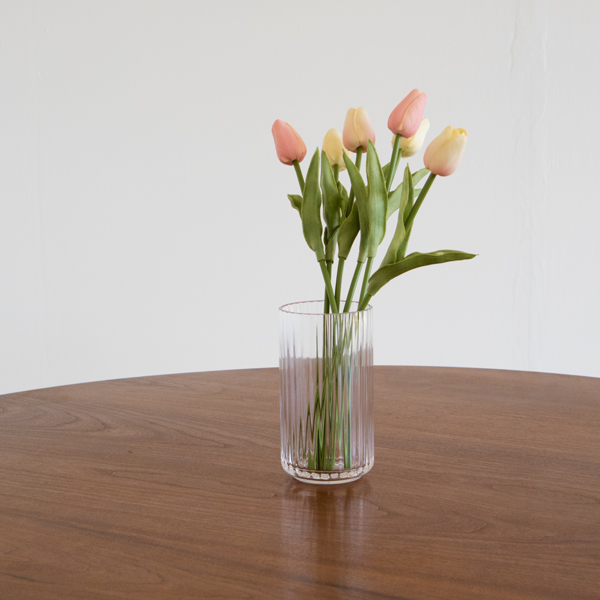
The LYNGBY VASE GLASS flower vase by Lyngby Porcelaen has a presence that feels functional and beautiful, with its restrained decoration and lovely wave-like form. It beautifully brings out the color and character of any type of flower. Glass vases are a material that lets the flowers themselves shine—you can enjoy the clear, fresh look of the water, and since the whole shape of the plant remains visible, it blends easily into any interior and looks wonderful even with just a single stem.
Suruga Sensuji Tsubomi Hanaire / Koh Chosai Kosuga
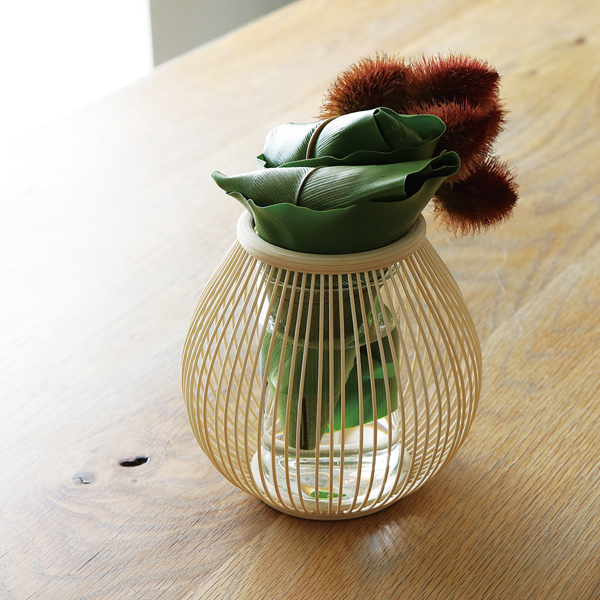
This bamboo flower vase is made using suruga sensuji zaiku, a traditional bamboo craft technique that has been designated as one of Japan's traditional crafts. Built by assembling thin round bamboo rods one by one, it charms not only with the delicate beauty it exudes, but also with its durability, longevity, and the way it gradually develops a rich amber patina over time.
The S size is easy to use on a tabletop, making it perfect for those who want to display flowers only occasionally, or for use in any location. It fits beautifully into modern interiors with a Japandi feel, and having a flower vessel with such a distinctly Japanese atmosphere is handy for year-end and New Year tables or celebratory occasions.
The second vase you need: a smaller size
Now that we know what size vase to get first, what should we get next?
"Flowers get smaller as time passes, don't they? With a single stem, you keep trimming it so it becomes shorter, and with a bouquet, you remove the flowers that have wilted, so it becomes smaller and sparser. That means that even if you start out with a medium or large vase, you'll eventually need a shorter or smaller one. No matter what kind of flowers you're displaying, it's good to have a small vase on hand. Flower lovers probably already have the size they use every day, so a smaller size also makes a great gift for them."
Flower Vase HAMMERSHOI Mini 3-Piece Set / KAHLER
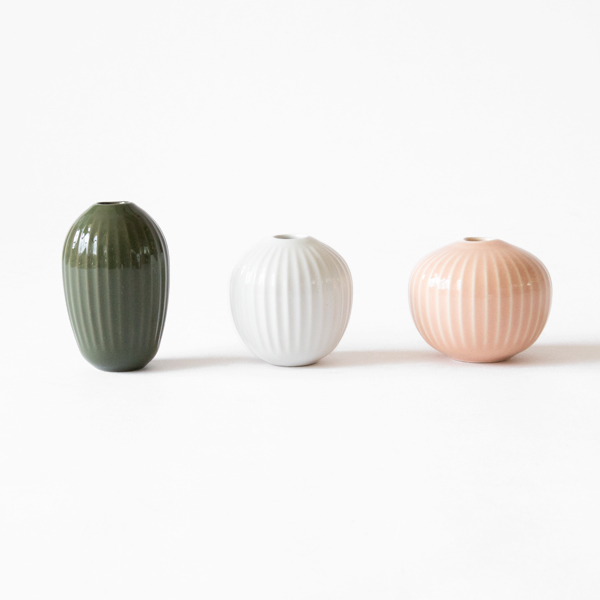
This is a set of three mini vases that differ in design, size, and color. As you enjoy your flowers and they become smaller or fewer, you can move them into these vases to display them right up until the very end.
"Just because it's a set of three doesn't mean you have to use them all together. You don't need to place them together, and it's perfectly fine to arrange flowers in just one or two of them. Here too, feel free to think creatively.
Also, with a series like this, using a tray can help bring a sense of unity when displaying them together. It creates a rhythm and gives them more presence."

*This color has been discontinued.
Since these are small vases, this mini 3-piece set is perfect for setting on a kitchen counter, in the bathroom, or in a corner of a bookshelf.
And this 3-piece set is also ideal for enjoying as decorative objects even when you're not displaying flowers in them.

*This color has been discontinued.
Old English Vase (Flower Bowl, 19cm diameter) / HOLMEGAARD
*This size has been discontinued.

"A shallow, wide-mouthed shape might seem difficult to arrange flowers in, but it's actually one of the most useful shapes to have. What makes this flower bowl so distinctive is that even something as simple as cutting flowers short when they're near the end of their life and floating them in water creates a space that's beautifully elegant."


Beyond flowers, you can also use it as a vessel for serving sweets or fruit, or as a display piece for your interior—since it doesn't need to be put away when you're not arranging flowers in it, it can simply be displayed as part of your room's decor.
Its unobtrusive height makes it easy to place in the center of a dining table or on a low table in the living room.
How about something like this as well?
Life Shells Vase / Hakusan Toki
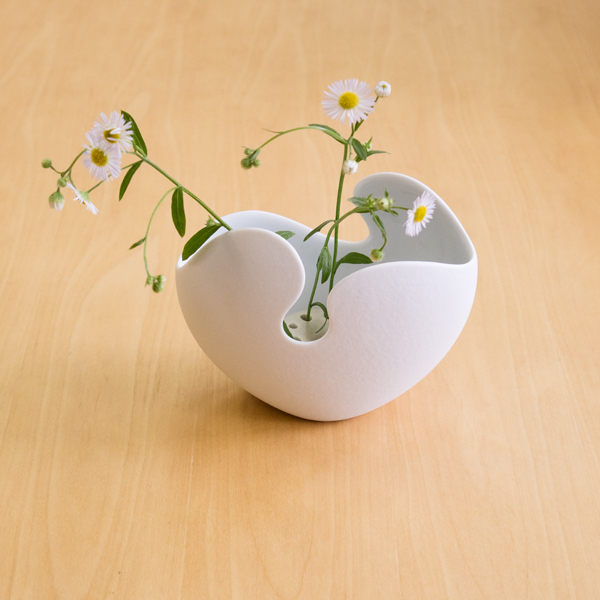
Its egg-shell-like, design-forward shape—which hardly looks like a vase at first glance—is wonderfully stylish. Because it comes in a single white color, its distinctive design isn't overemphasized, and it seems to gently accompany the flowers or plants without getting in their way, rather than overpowering them. Its size fits comfortably in both hands, and its shallow depth is another nice point, making it easy to place on a wall shelf or in a corner of a room. It also comes with a flower holder, so it's easy to combine different flowers and arrange them exactly where you like.
Needle-less Kenzan S Plate Set / KAMAHACHI
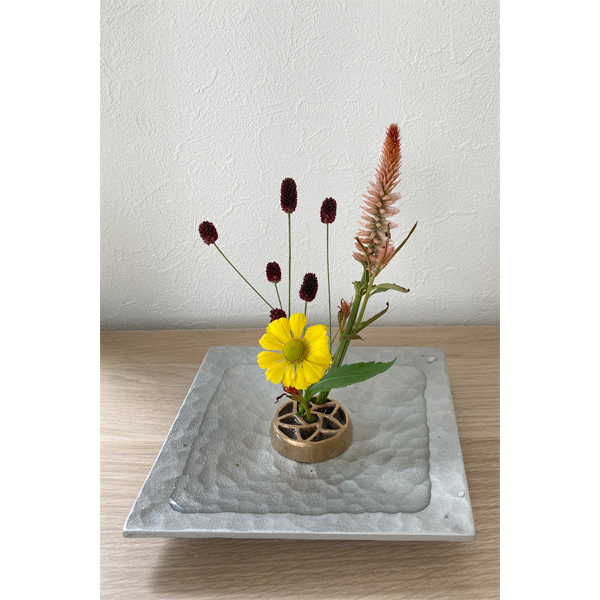
KAMAHACHI's Needle-less Kenzan S Plate Set is handmade one by one by craftspeople using traditional sand-mold casting.
Despite being called a kenzan (flower frog), it has no needles at all—instead, it features a unique design in which you insert flowers into holes, letting you arrange them freely while still creating a beautiful composition. Even those unfamiliar with flower arranging can easily enjoy flowers with it, and since there's no risk of the vase tipping over, it's also perfect for households with cats or small children.
Should Flower Beginners Buy a Bouquet? And a Recommendation for Single-Stem Vases
Small bouquets, the kind you often see at flower shops. Since they combine flower materials with matching colors and textures, I had always assumed they would be easy to arrange at a glance. So I asked Tamano-san: shouldn't beginners at flower arranging start with bouquets like these?
"Flower shop bouquets are designed with flowers chosen so you can arrange them just as they are, but they often combine leftover or discounted stock, which can sometimes end up looking a bit unrefined. Instead, why not lower the hurdle even further and start with just a single stem?
Just one flower that you like. Even a single stem, if it's a flower you truly love, can have real presence—and more than that, choosing it yourself is a fun way to confirm your own sense of taste. Don't you think spending a few days facing that single stem feels like a rich kind of time?"

I had always thought small bouquets were convenient and nice, but I also sensed a certain "just picked something" feeling about them. It turns out that even with just a single flower, choosing it yourself and arranging it in a lovely vase gives you a genuine sense of satisfaction in appreciating flowers.
The key to choosing a flower for a single-stem arrangement is to pick "one stem with few branches and a clean, upright form." Rather than vaguely selecting several stems, the idea is to "look for the one that matches your own taste and mood." Since single-flower vases tend to be slender and tall, it's also important to choose a flower that doesn't disrupt that elegant silhouette.
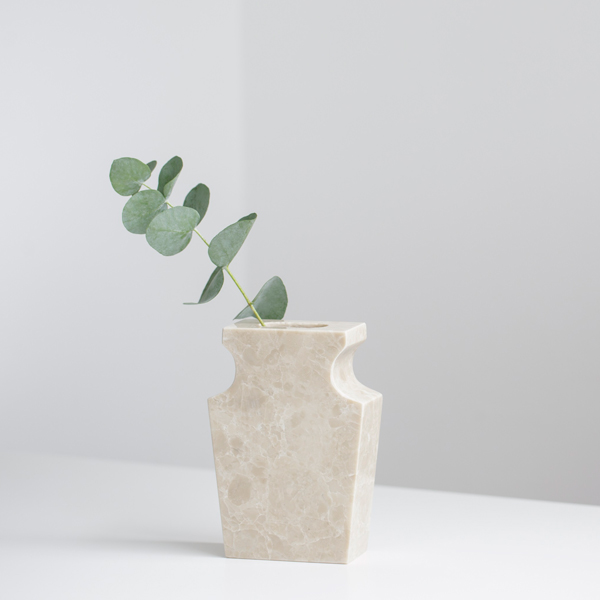
"Of course, if you do end up buying or receiving a bouquet, rather than displaying it as is, try untying the rubber band and taking it apart if you can. Check each stem individually—it's fine to rearrange the combinations, or even display some of them as single stems."
she says. Thinking about your own way of arranging flowers—rather than relying on something someone else has already put together—seems to be part of what makes it enjoyable.
Q&A: Curious Questions About Flowers
We also asked about a few other things we were curious about when it comes to flowers.

・Is there anything to be careful about when choosing where to display flowers?
It's best to avoid spots where they'll be exposed directly to sunlight or the airflow from an air conditioner.
・What's the trick to making cut flowers last longer?
Keeping the water clean is essential. Change the water once every one to two days, and re-cut the stems regularly so they stay fresh—this prevents bacteria from building up on the cut surface, which can otherwise make it harder for the stems to absorb water.
・How much water should I put in the vase?
Fill the vase about 70-80% full with water.
Having plenty of water helps the stems draw it up more easily thanks to the water pressure. It also gives the vase better stability, even when the arrangement has some height to it.
・What kind of vase makes a good gift?
A size that lets you enjoy displaying one or two stems, and one that isn't too large, works well.
As for materials, ceramic and glass are both easy to use. Between the two, clear glass lets you enjoy the water itself, but it also requires more attention to how the stems are arranged inside, so ceramic might be a better choice for beginners.


Flowers aren't something you can't live without, but their presence makes a real difference to the richness of daily life. That's surely not only because the flowers themselves bring comfort, but because you come to find value in the time spent choosing them and caring for them.
A vase, existing alongside such flowers, is an essential vessel that transforms a room into a space where flowers belong. Whether or not it holds flowers at any given moment, choose one you can love like an object in its own right.
GUIDE »
CATEGORIES »
- + Gifts by recipient
- + Gifts by scene
- + Clothing
- + Bags / Backpacks
- + Wallets / Card cases
- + Jewelry
- + Shoes
- + Rainy day outfits
- + Kitchen
- + Home
- + Babies / Kids
- + Japanese products
Earn Miles


Payment & Security