


.webp)


.webp)


.webp)


.webp)


Welcome to ZUTTO
Free shipping for newsletter subscribers (some areas excluded)
- トップページ/
- ZUTTO Journal/
- ブランドストーリー/
- ZUTTO's wool inne...

Wool innerwear made by ZUTTO. Tank tops and long-sleeve tees alike—this winter, get through the cold without relying on synthetic innerwear.
The weather has been swinging between cool and warm, typical of the changing seasons, but the forecast finally points to temperatures settling into true autumn. The crisp morning and evening air of fall is such a pleasant feeling this time of year.
Now, innerwear is essential for the season ahead. Since it touches your skin directly, many people want to be particular about how it feels to wear.
Our newly arrived ZUTTO original Soft Wool Telco series was planned by a staff member who, through everyday experience, came to feel strongly that comfort in innerwear really matters. In the second half of this article, you'll find a roundtable discussion with staff members about their experiences with innerwear. We hope their perspectives—more than half of them have sensitive skin—will be helpful as you choose your innerwear for this fall and winter.
▼Table of Contents
・Revisiting the merits of wool innerwear
・Two types of ZUTTO wool innerwear
・A staff roundtable. Does wool's itchiness bother you?
Revisiting the merits of wool innerwear

Have you ever struggled with what to wear on a day when the temperature suddenly dropped? At times like that, warm innerwear is what you can rely on. If your innerwear already handles the cold, it becomes much easier to choose a top even when it looks a little chilly on its own.
That said, you'd rather avoid layering so many pieces that you can't move freely, or ending up with stiff shoulders and neck. For anyone in that situation, wool innerwear is a great option. If any of the points below apply to you, we think this article will be worth reading.
・Poor circulation/sensitivity to cold
・Those who dislike the itchiness of wool
・Sensitive skin
・Those wondering whether to keep wearing synthetic-fiber innerwear as is

Wool innerwear creates a layer of air beneath your top, giving it insulating properties. Wool also has a high air content and low thermal conductivity, which means it keeps you warm in cold weather and cool if chosen for summer—a clever material that keeps you comfortable year-round.
Some people choose synthetic-fiber innerwear for the cold season, but in fact, synthetic innerwear generally doesn't absorb sweat well, which can lead to a stuffy, uncomfortable feeling. That trapped sweat can also draw heat away from the body and leave you feeling chilled. Some serious mountaineers even consider wool innerwear standard equipment for harsh cold, which clearly speaks to its superior performance.
Planning staff member M: "Until a few years ago, I wore synthetic innerwear from a major brand without giving it much thought. But once I discovered how good non-itchy wool innerwear feels, I got rid of all my old pieces. Now I wear a mix of wool and cotton innerwear."
.jpg)
"When I wasn't thinking much about it and just wore synthetic-fiber innerwear, I didn't notice the problem. But because it doesn't dry easily once you sweat, my underarms and back would get cold and clammy—it just felt unpleasant. As I got older, dryness became more of a concern too, but once I switched to wool innerwear, those worries disappeared. I created the Soft Wool Telco series this time hoping it could become a new option for people who have simply been choosing synthetic-fiber innerwear out of habit."
Two Types of ZUTTO Wool Innerwear
This time, we're comparing two types of wool innerwear: the newly completed Soft Wool Telco series, and the already popular Super120s Wool series. Even within the single category of "wool," the feel against your skin can vary greatly, so we hope this comparison will be useful.
NEW! "Soft Wool Telco Series Tank Top"
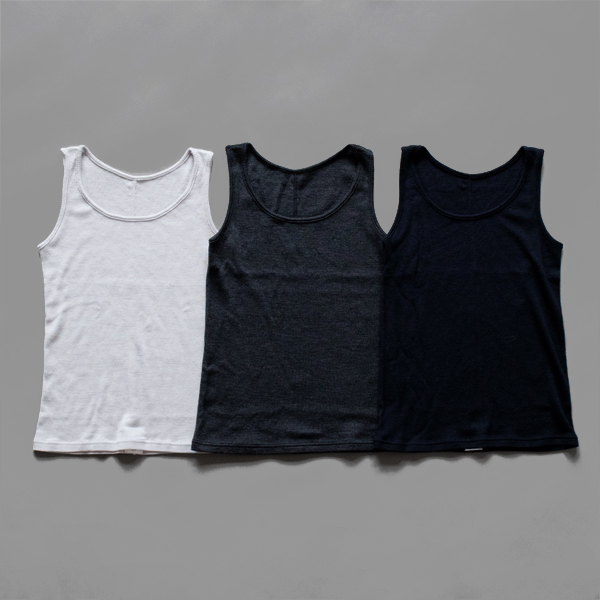

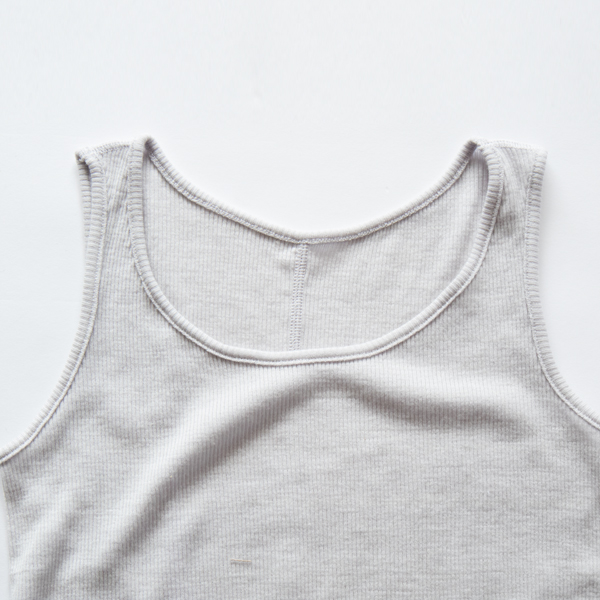
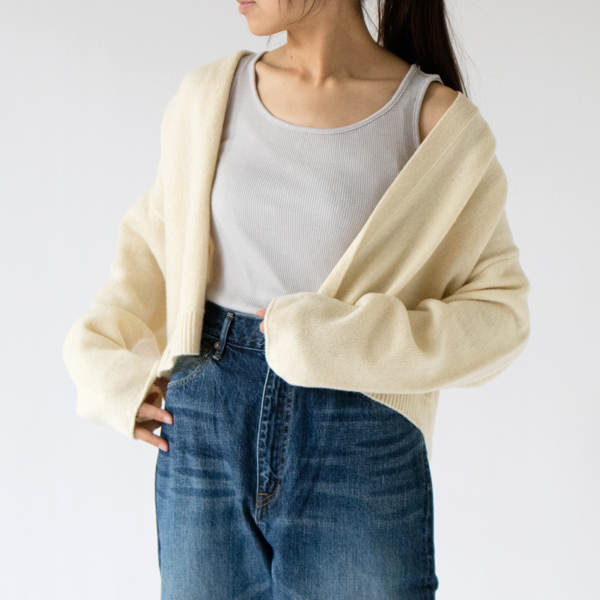
Soft Wool Telco Padded Tank Top We've also prepared a version with a built-in cup that can be worn on its own.
This series uses fine, delicate wool yarn that's gentle against the skin. With minimal fuzziness, it has a smooth, moist texture that's especially welcome in the dry winter months, along with a beautiful, silk-like sheen that gives it a luxurious feel. It's remarkably soft and plush, offering a wonderfully comfortable fit, and you won't need to worry about see-through fabric either.
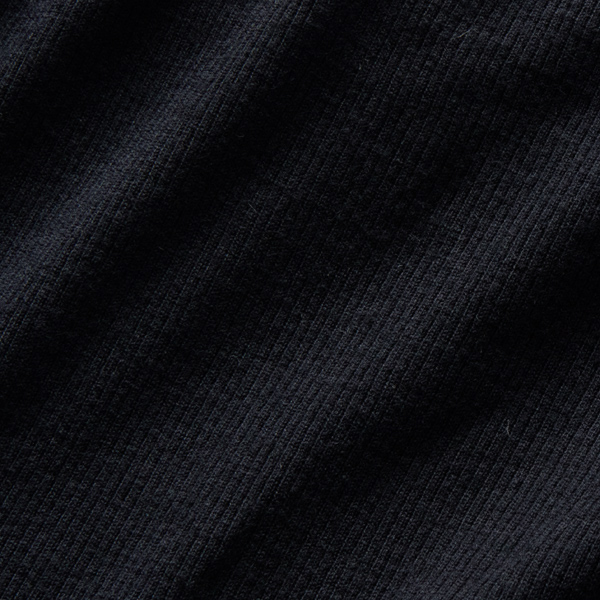
The staff member who planned this item has sensitive skin. After discovering the benefits of wool innerwear a few years ago, she switched all her innerwear over to wool entirely. Even though she used to dislike that "itchy" feeling, she was won over by this fabric's texture. She built in several details with comfort as the top priority.
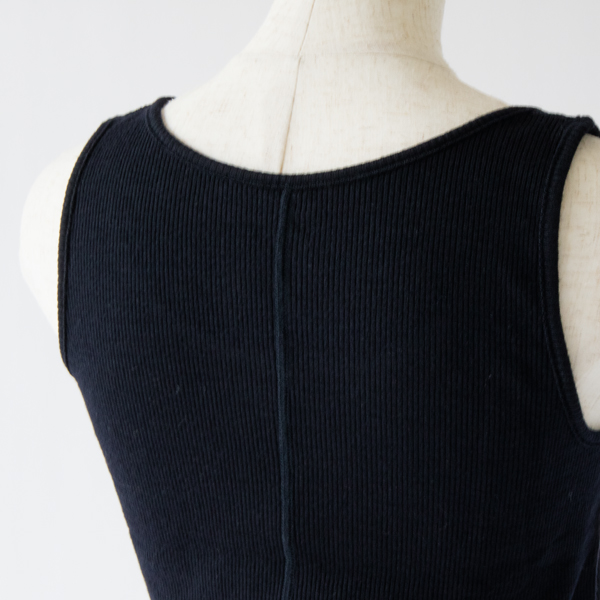
Seams placed at the back instead of the sides, so it's wearable even for sensitive skin.
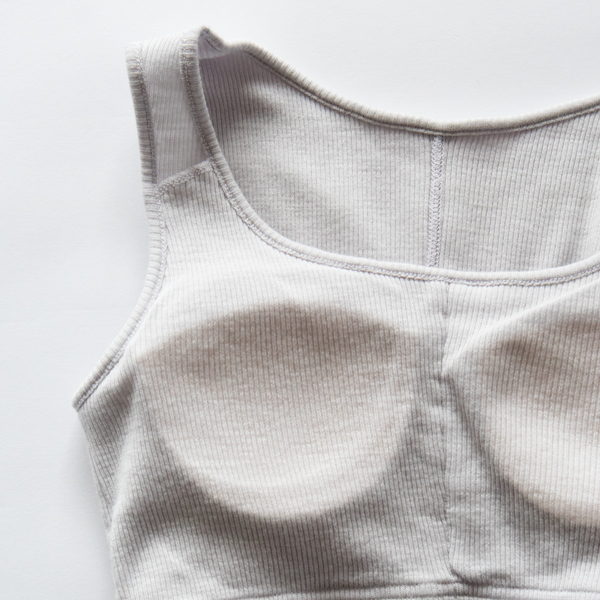
Planning staff member M: "In winter, dryness makes skin even more sensitive. Since this is something you wear directly against your skin, we paid careful attention to the placement of seams, which can be irritating. The underarm area, where seams commonly sit, has thin skin that's especially prone to irritation, so we had the seams moved to the back instead."
Designed to prevent quality tags from touching the skin, with a two-point fastening so the tag can be easily removed.
"I'm particularly sensitive to itchiness, and even with clothes I otherwise love, if they're wool, itchiness is the most important thing I check for. Since my skin is naturally sensitive, tags at the underarm would even make me itch, so I always cut them off. Thinking that many people probably feel the same way, this time we placed the tag at the hem instead."
.jpg)
「2点留めにすることで、簡単に外しやすいように。付けたままでも構いませんが、着心地を考えると取っていただいた方がストレスフリーだと思います。」
Great for relaxing at home—there's also a version with a built-in cup.
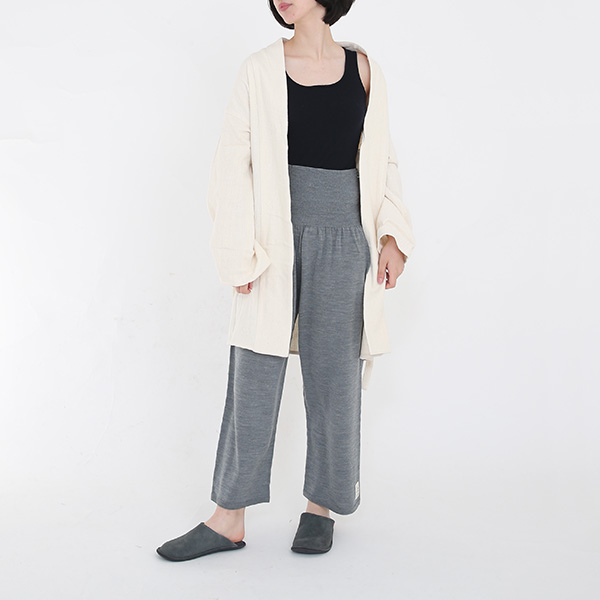
Sometimes layering a camisole over a bra can end up feeling more irritating rather than less. With that in mind, we've also prepared a version with a built-in cup. It's perfect not only for days spent relaxing at home, but also for when you want to wear a top that shows a bit of your innerwear.
"Super120s Wool Series Long-Sleeve Tee" (Crew Neck & Mock Neck)

Left: Crew Neck Top, Right: Mock Neck Top
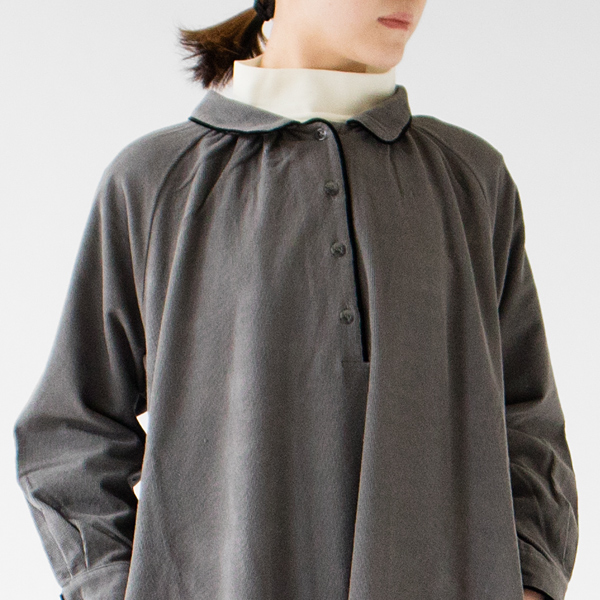
The Super120s Wool Series is innerwear made with jersey fabric using Super120s wool, produced by a long-established fabric maker with a history spanning more than 150 years. Jersey knit is a knitting method typically used for cotton or linen cut-and-sew garments, resulting in fabric that's stretchy, easy to move in, and comfortable to wear. On top of that, since the raw fibers have an extremely fine average diameter of 17.5μm, the fabric doesn't feel scratchy against the skin even in direct contact, giving it a soft, smooth texture.
.jpg)
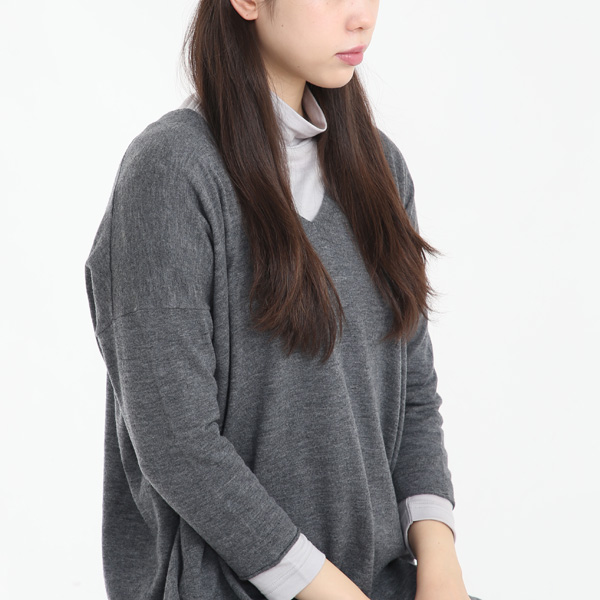
We paid close attention to the hem finish and the openness of the design, so you can wear it on its own or as a base layer under a sweater. It's a series that comes in handy from the early chill of autumn through the depths of winter, and even into the still-cool days of early spring.
A staff roundtable discussion. Does wool's scratchiness bother you?

Taking the launch of the new product as a good opportunity, we decided to have the staff talk among themselves about the innerwear they usually wear and how they choose it. Out of a total of 8 people, when we asked "Would you say your skin is sensitive?" half of the staff raised their hands. Let's hear about their actual innerwear habits.
How much scratchiness can you tolerate?
Normal skin (any material is fine)/Staff O: I'm not a fan of wool's scratchy feeling, but my skin isn't particularly sensitive, so I can wear pretty much any material.
Somewhat sensitive skin/Staff K: I'm not that sensitive, but I'm not fond of scratchy wool. If it's good quality and smooth, I can wear it without any issues.
Somewhat sensitive skin/Staff U: I'd say my skin is on the sensitive side. But if the wool has fine fibers or a smooth texture, it doesn't bother me. When I layer a long-sleeve inner under a scratchy sweater, sometimes the wool pokes through and gives a slight prickle, but that level is tolerable for me.
Sensitive skin/Staff F: I think people who say it bothers them but still avoid wool entirely might be a minority. My skin is sensitive, and hair/wool materials generally bother me in terms of texture. Tags and seams can bother me too sometimes.
Sensitive skin/Staff H: My skin is quite sensitive too, so I'm not good with scratchiness. I basically don't choose wool.
Normal skin/Staff O: Since my skin isn't weak, I think I tend to choose based on functionality. I wear a lot of synthetic innerwear, but static electricity bothers me.
Normal skin/Staff I: I'm also the type who can wear anything, and regardless of the season I've mostly worn polyester or nylon items. This year, heading into winter, I'm considering bringing in some wool or cotton innerwear.
Sensitive skin/Staff F: They really come in handy during the cold winter, don't they. I choose them often. The texture is smooth so it's not uncomfortable to wear, but they do seem to wear out quickly and get stretched out of shape.
Sensitive skin/Staff H: I might be especially sensitive—when I used to wear moisture-absorbing heat-generating innerwear, I'd get itchy and develop redness. Since then, I've stuck to natural materials.
What materials do you actually wear most often?
Somewhat sensitive skin/Staff K: I alternate between synthetic fiber items and cotton ones. Synthetic innerwear bothers me because it stretches out and gets worn-looking, so I often replace it each season.
Sensitive skin/Staff F: I prioritize functionality, so I'd say it's mostly synthetic fiber innerwear for me. Even though my skin is sensitive, the texture is smooth so it's easy to choose. I have a bit of an aversion to wool, though...
Sensitive skin/Staff H: I wear cotton regardless of the season. I make a point of choosing cotton for anything that touches my skin directly.
Trying out the Soft Wool Terry and Super120s wool by touch, and by wearing them.

From the conversation, it seems many staff members reach for cotton or synthetic fiber innerwear in winter. So now let's have them actually try touching this new wool innerwear.
NEW! Soft Wool Terry Series
Staff with somewhat sensitive skin: I don't feel any scratchiness at all. It's so fluffy!
Somewhat sensitive skin/Staff T: I always thought wool was inherently scratchy, but I guess that was just a fixed idea. My impression has completely changed.
Slightly sensitive skin type/Staff U: It has a soft, slightly plump texture, doesn't it? The body has a relaxed fit with no feeling of tightness, so it seems like you could wear it comfortably.
Sensitive skin Staff F & H: We can feel a bit of prickliness, but the wearing comfort is excellent—we think we could wear it.
Sensitive skin/Staff F: It's not that there's absolutely no prickliness, but it's smooth enough that I feel like giving it a try. Since I originally had a resistance to wool, it's far better than I imagined, so I think this would be just right for someone who has never tried a wool inner to challenge themselves with.
Sensitive skin/Staff H: I feel the same way. There is some prickliness, but it seems wearable! If my skin were irritated, I'd probably choose my usual cotton material, but under normal conditions, this seems fine to wear. The fact that the seam is at the back is a really nice point for sensitive skin—it reduces the prickliness.
Normal skin/Staff O: The natural fit and soft texture felt great. It also has good stretch, making it easy to move, so it seems easy to wear for both work and housework.
Normal skin/Staff I: When I actually put it on, there was a pleasant cool feeling at first, but it quickly conformed to my skin.
Super120s Wool Series
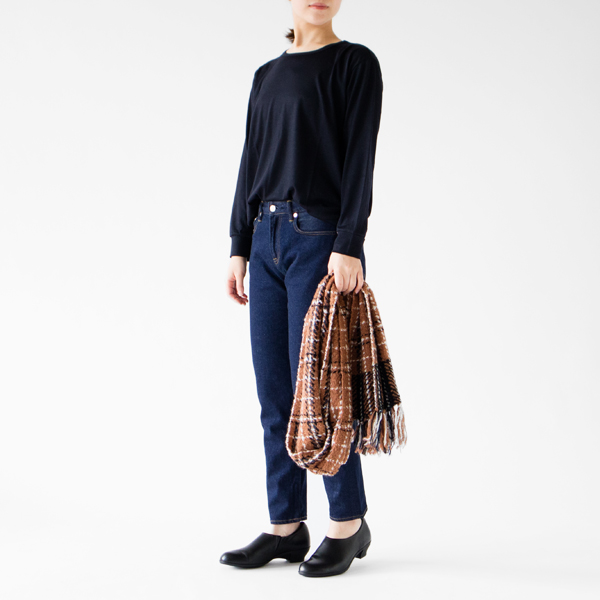
Slightly sensitive skin type/Staff K: The texture was so different from the tank top that I wondered if it was really the same wool. Compared to the plump, soft Soft Wool Telco series, the Super120s Wool series is smooth and silky. It's really smooth, isn't it?
.jpg)
Sensitive skin Staff F & H: Less prickliness than the Soft Wool Telco.
Sensitive skin/Staff H: It's not completely free of prickliness, but since it's a long-sleeved crew neck, I think it would be fine to wear over the tank top I normally wear! There's no itchiness around the neck either, so I feel like I could wear it with peace of mind. Compared to the wool people generally imagine, it's smooth enough that I think it would surprise you.
Do you prefer tank tops with a built-in cup, or without?
.jpg)
Sensitive skin/Planning Staff M: I wear a cup-equipped inner almost every day. For the past few years, I haven't been able to handle the tightness of a bra—by evening, the underwire area turns red and itchy. After that started happening, I initially used wireless bras, but I gradually became bothered by having both the bra straps and camisole straps on my shoulders. These days, it's almost always a cup-equipped camisole or tank top.

▲A cup-equipped camisole in cotton from Tenimuhou, loved by our staff too.
Normal skin/Staff I: I only own one cup-equipped inner. I choose it only on days when the tightness of a bra bothers me, or when I'm wearing clothes where the camisole and bra straps might show.
Sensitive skin/Staff H: I'm not good with bras that feel tight, so I favor either wireless bras or cup-equipped inners. Lately, I often alternate between a bra and a cup-equipped inner.
.jpg)
The pads can be inserted and removed through an opening in the shoulder strap on the inside.
Normal skin/Staff I: The cups don't shift out of place much, and the elastic band under the bust is less constricting than the one I currently have. There's no feeling of tightness either, so it seems easy to use every day! Wearing comfort varies among cup-equipped inners, but I think this one is very easy to wear.
This roundtable discussion revealed both common ground and fresh discoveries among staff with different skin types. To sum up, here's who we'd recommend each of the two inner types introduced this time for. Since the shapes differ as well, your choice will also depend on how you want to incorporate wool into your wardrobe.
▼The Soft Wool Telco series is recommended for

・Those new to wool inners
・Those who already love wool inners and are looking for another one
・Those who like plump, soft inners
・Those who want to wear a cup-equipped inner comfortably
>>Soft Wool Telco Padded Tank Top
▼The Super120s Wool series is recommended for
.jpg)
・Those who want to try wool clothing
・Those who prefer a smooth texture
・Those looking for a warm inner layer for layering
>>Super120s Wool Crew Neck Top
>>Super120s Wool Mock Neck Top
For garments that touch the skin directly, such as inners and tops, simply changing the material can completely transform the wearing comfort. It might be a good idea to reconsider your current inners before winter arrives.
▼See more ZUTTO original wear

GUIDE »
CONTENTS »
CATEGORIES »
- + Gifts by recipient
- + Gifts by scene
- + Clothing
- + Bags / Backpacks
- + Wallets / Card cases
- + Jewelry
- + Shoes
- + Rainy day outfits
- + Kitchen
- + Home
- + Babies / Kids
- + Japanese products
Earn Miles


Payment & Security




